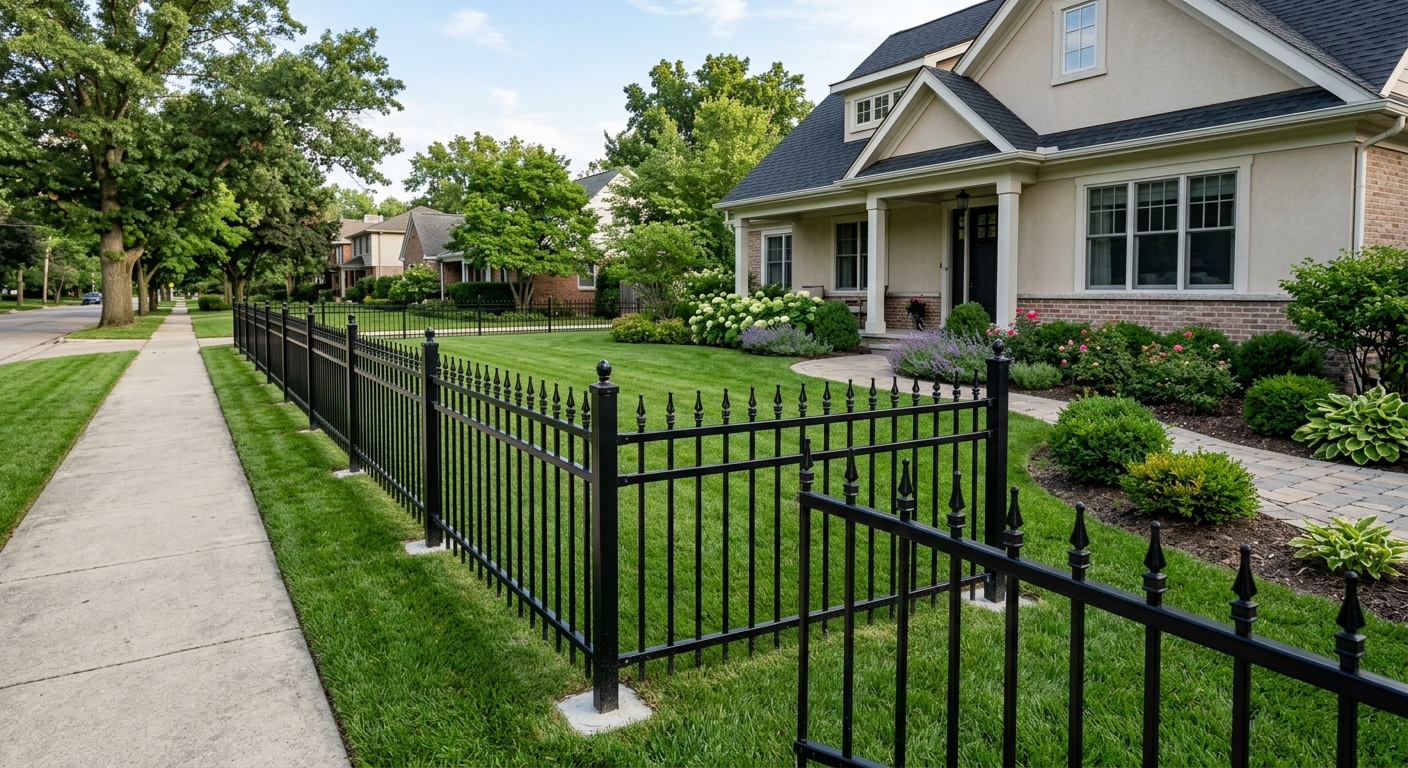
Fencing options and costs in Valleyview
Valleyview has a lot of straightforward reasons to fence: keeping kids and pets safe, defining property lines, and carving out privacy in a small-town neighbourhood. With 68.9% of local households owning their homes (Statistics Canada, 2021 Census), fencing tends to be an easy home-improvement win—especially for single-detached properties, which make up 57.6% of dwellings. That ownership pattern is one reason fencing contractors are often busiest around peak spring install windows, when homeowners are ready to open up yards and schedule post digging.
In the Athabasca–Grande Prairie–Peace River region, pricing is strongly shaped by exposure and ground conditions. Winter frost commonly pushes the frost line to roughly 4–6 feet, so posts must be set deep to avoid frost heave, leaning, and gaps opening up after freeze–thaw cycles. Add in prairie wind loading around the Grande Prairie–Peace River area and you’ll see heavier privacy panels (wood or vinyl) priced with tighter post spacing and sturdier components. Access also matters in Valleyview—if you’re near wooded pockets or have limited machine entry, labour time can rise quickly.
Trade demand is especially noticeable in and around the core residential streets of Valleyview, where infill lots and side-yard privacy are common. From there, most homeowners compare materials and want predictable ballparks, so the table below breaks down typical options and installed pricing.
| Material |
Lifespan |
Maintenance |
Privacy Rating |
Price per Linear Foot |
| Pressure-treated pine (standard wood) |
10–15 years |
Stain/seal every 2–3 years; check rails and pickets after freeze–thaw |
High (solid or close-board) |
$35–$70 |
| Cedar (natural rot resistance) |
15–25 years |
Light staining/brightening every 3–4 years; inspect for warping |
High (solid boards) |
$50–$85 |
| Vinyl / PVC (no-maintenance) |
20–30 years |
Minimal—rinse/clean; replace cracked sections if impact damage occurs |
High (privacy style panels) |
$40–$80 |
| Chain-link (galvanized steel) |
25–40 years |
Occasional wash; tighten/replace damaged links |
Low to Medium (open mesh) |
$25–$50 |
| Aluminum ornamental |
25–35 years |
Occasional cleaning; inspect gates and latches |
Low to Medium (semi-open pickets) |
$45–$90 |
| Composite / recycled material |
20–30 years |
Low—wash; check for movement in extreme cold |
High (privacy profiles available) |
$55–$95 |
Prices are estimates only and vary by project scope, site access and material selection.
What affects the price of fencing in Valleyview
In Valleyview, you can see the same fence style quoted 30–50% apart across the Athabasca–Grande Prairie–Peace River region because the installed price is driven by labour depth and how the material handles wind and cold. Two jobs with the same linear footage can still diverge sharply if one yard has hardpan/rock pockets, another needs deeper concrete-set posts, and another has multiple gates or a yard that’s hard to access with augers and brackets.
First, the frost line depth sets how deep posts must be installed. In Alberta and many cold-climate parts of the region, crews typically set footings about 1.5–2.0 m into the ground (roughly 4–6 feet frost conditions) to reduce heaving and prevent leaning. That means longer posts, deeper augering and often more concrete—pushing the installed cost toward the higher end of wood (for example $35–$70 per linear foot) and vinyl (for example $40–$80 per linear foot) ranges. Second, open Prairie winds tend to behave like a “sail,” so privacy fences require tighter post spacing and sturdier rails, while chain-link can span a bit farther between posts because it has less surface area (often landing closer to $25–$50 per linear foot).
Concrete examples from Valleyview-area jobs: a privacy fence on clay-heavy soil usually takes longer augering and more labour time, increasing the total installed price even if the material is the same. A yard with rock near the surface can force larger holes and additional concrete to stabilize posts, again nudging cost upward. Conversely, if your ground is sandy and machine access is clear—no trees in the line, equipment can reach the trenching points smoothly—labour can be faster, and your per-foot cost can sit nearer the low end of the band.
| Price Factor |
Why It Matters |
Cost Impact |
| Fence length in linear feet |
Most materials and labour scale directly with footage, including posts, rails and hardware |
Highest driver; small footage changes affect overall bid quickly |
| Post depth required |
Frost line determines hole depth and post length needed to prevent heaving |
Deeper posts usually move pricing toward the high end of bands |
| Post setting method |
Concrete, gravel packs, or driven posts change labour time and material use |
Concrete-set typically costs more but improves stability in freeze–thaw |
| Material choice |
Vinyl/wood require different rails, spacers and wind bracing; chain-link and metal are lighter |
Switching from chain-link to vinyl or cedar can materially raise per-foot cost |
| Gate count and type |
Gates need heavier posts, different latching and more precise alignment |
Extra gates often add disproportionate cost vs. fence-only sections |
| Grade and terrain |
Sloped yards require stepped panels or raked rails, increasing layout time |
More labour and more hardware; may increase waste |
| Old fence removal and disposal |
Demolition time, hauling and tipping fees vary by material and condition |
Can add a noticeable fixed cost to the project |
| Permit fees and survey / property line locate |
Locates prevent encroachment issues and reduce redesigns |
Generally a smaller line item, but can impact timelines and total price |
Permits & regulations in Alberta
In Alberta, fence rules are typically tied to height, property lines and municipal requirements. As a practical threshold, fences above about 2.0 m (6.5 ft) at the rear and roughly 1.0–1.2 m (3–4 ft) at the front or corner often need a building permit, depending on your municipality’s bylaw and how the fence is positioned. Even when a permit is not triggered, you still must keep the fence on your property and respect setbacks where applicable.
Before any post-hole digging in Valleyview, call for utility locates through Alberta One-Call so you don’t hit underground services. You’ll also want a survey or at least a locate of your property pins before install—this reduces neighbour disputes and avoids encroachment claims when lines aren’t obvious on the ground.
Shared fence ownership issues are handled by Alberta line-fences legislation, but the exact rights and responsibilities can depend on where the fence sits and who maintains it. If you’re unsure, ask your contractor to put property-line assumptions in writing.
How to verify contractor compliance in Alberta (step-by-step): (1) Confirm licensing/registration through the contractor’s own credentials and any applicable provincial or municipal listings you can access online. (2) Request a current certificate of liability insurance and verify it covers fencing work and sufficient limits. (3) Ask for WCB/WSIB coverage documentation (where applicable) before work begins—your contractor should provide proof, not just a statement. (4) Get those documents dated and match the named insured to the business on the contract.
Choosing the right fence material for Valleyview
The right fence material in Valleyview comes down to balancing privacy, maintenance comfort, upfront budget and how the fence holds up through long Alberta freeze–thaw cycles and winter snow loads. Pressure-treated pine is usually the most budget-friendly starting point, but to keep it looking good and reduce weathering you should plan on staining or sealing about every 2–3 years. Cedar costs more up front, yet it’s naturally more rot-resistant and tends to weather more attractively, though you still need periodic maintenance. Vinyl/PVC has the appeal of low maintenance, but in extreme cold it can become more brittle and may crack if struck—so post stability and proper spacing matter. Chain-link is the longest-lasting “set it and forget it” option and usually provides the lowest installed price, but it won’t give you true privacy without add-ons like slats or a screen. Aluminum ornamental sits in the middle-to-higher range, gives a clean look without rust, and handles winter well, but it’s not a full privacy solution.
For all materials, frost line conditions in the Athabasca–Grande Prairie–Peace River region mean posts must be set deeply—typically around the 4–6 foot frost range—to reduce heaving. Concrete-set posts are often the best insurance policy in colder soils, especially for privacy panels that create more wind load. In open, windy placements, heavier privacy styles should also use tighter post spacing and sturdier rails to resist sail-like loading.
Dollar-wise, the price gap can be justified. For example, if a chain-link option is closer to $25–$50 per linear foot and you’re considering vinyl at roughly $40–$80 per linear foot, that extra cost usually buys you real privacy (and a different look) without ongoing staining. If you want privacy but minimal upkeep, cedar or vinyl with correct post depth is often the most “set-and-maintain” compromise.
| Material |
Cold Tolerance |
Lifespan |
Annual Maintenance |
Best For |
Price Band |
| Pressure-treated pine |
Good (if posts are set deep and properly sealed/stained) |
10–15 years |
Inspect each spring; expect staining/sealing every 2–3 years |
Budget privacy with willingness to maintain finish |
$35–$70 |
| Cedar |
Very good (natural resistance to rot with proper installation) |
15–25 years |
Light maintenance every 3–4 years; inspect after heavy winters |
Natural look, longer-lasting wood option |
$50–$85 |
| Vinyl / PVC |
Good (cold-tolerant if installed correctly; avoid impacts) |
20–30 years |
Minimal—rinse/clean as needed; check for damaged sections |
Low-maintenance privacy in windy lots |
$40–$80 |
| Chain-link |
Excellent |
25–40 years |
Occasional wash; tighten hardware and replace bent areas |
Security and boundary marking with no privacy need |
$25–$50 |
| Aluminum ornamental |
Excellent (won’t rust) |
25–35 years |
Minimal—cleaning and latch checks |
Front-yard curb appeal with semi-open sightlines |
$45–$90 |
| Composite / recycled |
Good (handles cold well; stabilised products still need solid posts) |
20–30 years |
Low—wash and visual inspections |
Privacy with reduced upkeep |
$55–$95 |
How to choose a fencing contractor in Valleyview
Choosing a contractor in Valleyview is mostly about verifying coverage and making sure the quote reflects how your site actually behaves in Alberta winters. Start by confirming Alberta compliance: ask for proof of liability insurance and verify the certificate shows coverage for fencing installation (and that it matches the legal business name). Then request WCB/WCB-style coverage documentation where applicable—your contractor should be able to provide a current clearance or coverage proof before work starts. Don’t rely on a verbal “we’re covered.”
Next, get 2–3 itemised written quotes, not one lump-sum estimate. A good fencing quote breaks out labour and materials (posts, rails, panels, hardware, concrete/setting materials, gates, and any removal/disposal). It should also clearly state what’s excluded: permit pull, utility locates, survey/locate costs, and whether the contractor is responsible for backfilling and cleanup.
Warranty matters in cold climates because freeze–thaw can expose workmanship issues. Ask about the workmanship warranty length, and separately what the manufacturer warranty covers for materials. Confirm whether the warranty is transferable to future owners if you sell your home.
Payment scheduling should be conservative in Alberta: never pay more than 10–15% upfront. For larger projects, hold back the balance until substantial completion and final inspection are done.
- Ask who sets your posts and what method is used (concrete vs. gravel pack vs. driven posts).
- Confirm the quote includes fence line layout and adjustments for slope (stepped vs. raked).
- Check whether gate hardware and hinges are rated for wind loading and heavy use.
- Require a written start date and completion estimate.
- Make sure disposal/removal is either included or explicitly excluded.
- Confirm utility locate responsibility (usually you call Alberta One-Call; confirm the contractor won’t dig blindly).
- Look for a detailed materials list: gauge/height for chain-link, board thickness for wood, and rail specs for privacy fences.
- Verify permits are handled if required—don’t assume.
- Request proof of liability insurance and WCB coverage before scheduling equipment.
- Keep an eye on pricing that’s “too good to be true” versus the local bands (for example, vinyl typically doesn’t land well below $40 per linear foot in installed bids).
- Check for clear warranty terms in writing, including what counts as a defect vs. normal wear.
- Ensure the payment schedule is aligned with progress, not milestones that leave you exposed.
Red flags I commonly see in Valleyview include: quotes with no post-setting depth details, vague scope (“fence install” with no gate and disposal wording), missing or outdated insurance/WCB documents, warranty terms only provided verbally, and scheduling promises without a written start/completion window—especially when spring digging depends on ground frost conditions.
Frequently asked questions — fencing in Valleyview
Can I install a fence on a slope in Valleyview?
Yes, you can install on a slope in Valleyview, but the “how” changes the cost and the final look. Contractors usually choose either stepped panels (each section follows grade changes in small increments) or raked rails (rails angle to match the slope). Stepped layouts often look better on uneven yards and help keep privacy boards from creating wide gaps. Expect extra layout time because installers must measure runs carefully and keep post spacing consistent for wind resistance. In colder Alberta ground, deeper post holes are still required—sloped yards don’t reduce frost-heave risk; the fence just needs more careful elevation and bracing. If your quote is unusually low for a sloped yard, ask whether the contractor is pricing real stepped/raked execution or planning to “make it fit.”
What is the most weather-resistant fence for Valleyview's climate?
For Valleyview-area winter conditions, chain-link and properly installed aluminum ornamental are often the most weather-resistant because they tolerate freeze–thaw without rot and don’t require staining. Chain-link typically sits around the $25–$50 per linear foot range installed, and when the tensioning and post depth are correct, it can last decades. Cedar and pressure-treated wood can also perform very well when posts are set deep (frost conditions in the region are a major driver) and when you maintain the finish, but they’re not as maintenance-free. Vinyl/PVC is also durable, but it still depends on strong post foundations in windy, snow-loaded placements—otherwise panels can loosen and crack at stress points. If you want the best “lowest hassle” option, chain-link or aluminum are usually the top choices.
How do I prevent wood fence rot in Valleyview?
Wood rot prevention in Valleyview is mostly about installation and routine maintenance, not just choosing the right board. First, make sure the contractor sets posts deep enough for frost conditions (often 4–6 feet of practical frost range in this region) and uses stable post bases—concrete-setting is commonly used to resist heaving and leaning. Second, ask for correct fastening: use exterior-rated fasteners and avoid trapping water at board ends. Third, keep the surface finish protected: pressure-treated pine generally needs staining or sealing every 2–3 years to reduce grey weathering, while cedar still benefits from periodic treatment even though it resists rot. Finally, inspect after spring melt and heavy snow—fixing a loose rail early prevents water from wicking into joints. If your fence is 40+ years old (many homes locally pre-date 1981), rot often starts at the ground line and at gate corners first, so those are the places to check first.
What is the cost per linear foot for fencing in Valleyview?
In Valleyview, your installed cost per linear foot depends on material, post depth and gate complexity, but local typical ranges line up with the regional price bands. Chain-link is commonly about $25–$50 per linear foot, while wood installation often lands around $35–$70 per linear foot. Vinyl/PVC privacy typically falls in the $40–$80 per linear foot range, and aluminum ornamental commonly ranges from $45–$90 per linear foot. Real projects can vary because frost-depth footing, wind loading and site access can push costs toward the high end. If you’re comparing bids, ask each contractor to show post-setting method, whether concrete is included, and how many gates are priced.
Should I repair or replace my old fence in Valleyview?
Repair can be the right call when the fence posts are still plumb and sound, and the damage is limited to a few rails or pickets. In Valleyview’s freeze–thaw climate, however, rot and post movement can spread quickly—so if posts have leaned, fasteners are failing repeatedly, or sections sag after winter, replacement is usually more cost-effective than patching. A quick way to decide is to check the lowest 2 feet of wood posts (where rot often starts) and examine gate corners—those areas take the most stress. If your existing fence is showing widespread joint failure and multiple sections need recurring fixes, ask contractors for an itemised assessment and a phased replacement option. Given Valleyview’s housing age profile (46.2% of dwellings built before 1981, Statistics Canada, 2021 Census), older fences are common candidates for full replacement rather than repeated repairs.
How do I handle a fence dispute with a neighbour in Alberta?
Fence disputes in Alberta are best handled calmly and with documentation. First, confirm the fence location versus your property line—if you don’t have a recent survey, ask for a property pin locate before arguing over placement. Next, review the basic expectations around shared fence ownership under Alberta line-fences legislation, since responsibilities can depend on whether the fence is truly “shared” and who built/maintains it. Keep everything in writing: photos, measurements, and any messages. If you intend to replace or change the fence, communicate your plan in advance and ask what portion (if any) your neighbour is responsible for. Because installation requires digging, utilities must be located via Alberta One-Call before any post holes are dug. If the dispute escalates, consider getting legal advice before you spend money on a fence that might not align with the agreed boundary.