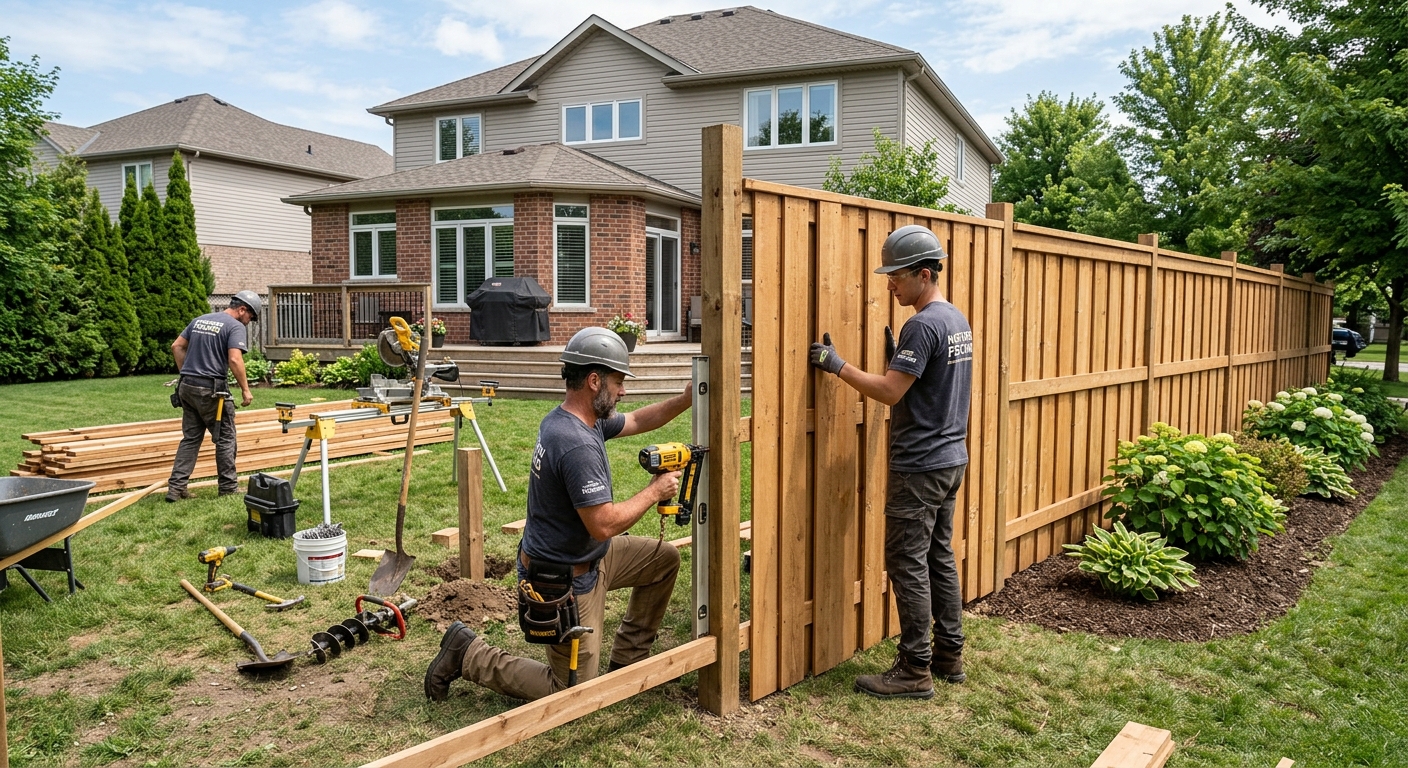
Fencing options and costs in Lac La Biche
Fencing in Lac La Biche usually starts with one key decision: how much privacy you want, because that drives panel style, post spacing, and how much concrete is needed for stability. With a 2021 population of 2,314, you’ll find fewer contractors than in major centres—so scheduling can be tighter, especially during spring lead-ins when ground conditions improve (Statistics Canada, 2021 Census). Demand also tracks with local housing form; every detached property is a potential fence customer, which is one reason fence work tends to cluster in residential pockets close to busier access roads and lake-view subdivisions.
Although Lac La Biche sits on a different geography than the Calgary core, it shares the Prairie continental pattern: long freeze–thaw cycles and open wind exposure. In practice, that means contractors price frost protection and wind-loading first, then choose materials. In the Calgary market context, posts are commonly set about 4 ft (≈120 cm) deep to get below the frost line, often with concrete footings for 6 ft privacy fences and gate posts. That foundation requirement pushes labour and excavation time up compared with milder regions where frost penetration is less deep. Pricing also reflects how material weight behaves in wind: solid wood and vinyl panels resist privacy goals but catch wind, so they usually need sturdier post framing and closer spacing than chain-link.
Trade demand is especially noticeable around residential growth areas such as the Lac La Biche townsite where yards are a mix of older lots and newly improved boundaries. From there, you can compare typical material lifespans and per-foot pricing in the table below.
| Material |
Lifespan |
Maintenance |
Privacy Rating |
Price per Linear Foot |
| Pressure-treated pine (standard wood) |
10–15 years |
Stain/seal every 2–3 years to reduce greying and warping |
High (solid picket/board) |
$40–$70 |
| Cedar (natural rot resistance) |
15–25 years |
Light cleaning; stain/coat every 2–4 years |
High (solid styles) |
$55–$85 |
| Vinyl / PVC (no-maintenance) |
20–30 years |
Rinse only; inspect for impacts |
High (privacy panels) |
$45–$90 |
| Chain-link (galvanized steel) |
25–35 years |
Occasional washing; tighten hardware as needed |
Low to Medium (airflow) |
$25–$55 |
| Aluminum ornamental |
30–40 years |
Wash; touch up minor dents |
Low (visual/open) |
$70–$120 |
| Composite / recycled material |
20–30 years |
Minimal; wash and check fasteners |
High (solid boards) |
$75–$115 |
Prices are estimates only and vary by project scope, site access and material selection.
What affects the price of fencing in Lac La Biche
In Lac La Biche, you may see quotes for the “same” fence vary by 30–50% once you compare how each contractor handles foundations, wind-load bracing, and on-site constraints. The sticker shock often isn’t the boards—it’s the labour and excavation tied to Prairie freeze–thaw cycles. Even when material choices look similar on paper, post depth, concrete volume, and how a crew deals with soft spots or uneven grade can swing your total cost substantially. That’s also why contractor availability and scheduling matter: when crews are busy, labour rates and mobilization costs can shift between quotes.
The frost line depth is the biggest structural driver. A typical rule of thumb used across the region is to set posts about 4–6 inches below the design frost depth to reduce heaving risk. In cold Alberta conditions, that often lands around 1.5–2.0 m into the ground, requiring longer posts, deeper holes, and more concrete—so your material bill rises and your installation time increases. Wind exposure on the Prairies also affects design: solid wood and vinyl privacy panels usually need tighter post spacing and sturdier rails to prevent racking, while chain-link can stay more economical because it sheds wind loads.
Here are a few realistic Lac La Biche examples that change pricing. If your yard has sandy soil or seasonal softness near the fence line, crews may recommend additional concrete at corners and gate posts—raising excavation and concrete costs. If you’re installing 6 ft privacy sections near tall trees or structures that create turbulence, expect more bracing, which can push wood or vinyl toward the upper end of the $40–$80 (wood) and $45–$90 (vinyl) bands. On the other hand, a shorter run with a simple chain-link layout on flatter grade can keep you closer to the lower–mid range of $25–$55.
Local housing age can matter too: older lots sometimes have buried debris or non-standard property pins, which adds time to locate boundaries before digging. In dollars, that’s often the difference between a “straightforward” install and one with extra locate work and re-staking—commonly a meaningful slice of the final quote.
| Price Factor |
Why It Matters |
Cost Impact |
| Fence length in linear feet |
Most costs (posts, rails, panels, labour) scale directly with total run |
High |
| Post depth required |
Frost protection determines hole depth and post length |
High |
| Post setting method |
Concrete footings cost more than gravel pack or driven posts, but resist heaving better |
Medium to High |
| Material choice |
Vinyl/cedar are higher material cost; chain-link is lighter and faster to install |
Medium to High |
| Gate count and type |
Walk gates need different hardware than double drive-through gates and often require heavier posts |
High |
| Grade and terrain |
Slopes require stepped panels or raked rails, increasing labour and cutting time |
Medium |
| Old fence removal and disposal |
Demolition, hauling, and dealing with broken posts can add time and equipment |
Medium |
| Permit fees and survey / property line locate |
Some fence heights and boundary situations trigger paperwork and verification work |
Low to Medium |
Permits & regulations in Alberta
In Alberta, fences above common height thresholds—often around 2.0 m (6.5 ft) at the rear and about 1.0–1.2 m (3–4 ft) in front or corner areas—can require a building permit, depending on the municipality and the lot context. Even when a permit isn’t triggered, your fence still needs to respect property lines and municipal setback bylaws. Because fence mistakes are expensive, start by confirming where your boundary actually runs before you dig.
Step 1: Call for utility locates before any post holes. In Alberta, use Alberta One-Call so underground services are marked—this is essential before excavation near driveways, sidewalks, or buried services.
Step 2: Get a survey or locate your property pins. If you rely only on old fence remnants, you can end up building slightly over the line and create neighbour disputes.
Step 3: Verify shared fence rules if this is a boundary fence. In Alberta, shared fence ownership and maintenance responsibilities are handled under provincial line-fences legislation, so your agreement with the neighbour should be clear before construction begins.
Verification checklist for a fencing contractor in Lac La Biche: confirm their Alberta licence/registration where applicable, request a certificate of liability insurance, and ask for proof of coverage (WSIB/WCB) for workers on site. Look for the policy expiry date, coverage limits, and the name/address match on the certificate. If anything is unclear, ask for a clearance letter or updated documents before mobilization.
Choosing the right fence material for Lac La Biche
Choosing fencing in Lac La Biche is mainly about matching your priorities—privacy, low maintenance, budget, and lifespan—to what our cold season does to materials. Pressure-treated pine is the budget-friendly route, but you should plan for staining or sealing every 2–3 years to slow greying and reduce board movement. Cedar looks better and resists rot naturally, but it still benefits from regular coating and proper airflow around the posts. Vinyl/PVC offers real low-maintenance convenience, yet in extreme cold it can become brittle if the system is under-framed or posts aren’t set solidly for frost movement. Chain-link is usually the longest-lasting low-cost option with the least maintenance, but it won’t deliver privacy without adding landscaping or privacy slats. Aluminum ornamental gives an attractive, rust-resistant look, but it won’t block views much.
Frost protection and wind matter more than most homeowners expect here. For most runs in the region, post depth around the 4 ft (≈120 cm) range is common, with concrete footings especially for privacy fences and gate posts. That foundation is what keeps heavier panels from shifting when freeze–thaw cycles occur. In windy exposure, solid wood and vinyl benefit from tighter post spacing and robust rails to reduce racking—so your upfront cost tends to sit mid-to-upper in the local bands.
As a practical dollar example: if you’re comparing wood at roughly $40–$70 per linear foot versus cedar at $55–$85, spending the extra can be justified when you want longer aesthetics and less early rot risk. The “cheapest” install that skips proper post setting is rarely the cheapest over time in our climate, because repairs and re-level jobs can add up.
| Material |
Cold Tolerance |
Lifespan |
Annual Maintenance |
Best For |
Price Band |
| Pressure-treated pine |
Good (if set on solid footings and stained) |
10–15 years |
1–2 checkups; stain/seal every 2–3 years |
Budget-focused privacy where you’re willing to maintain |
$40–$80 |
| Cedar |
Very good (naturally rot-resistant in freeze–thaw cycles) |
15–25 years |
1 checkup; stain/coat every 2–4 years |
Natural look with better long-term appearance |
$55–$95 |
| Vinyl / PVC |
Good (best with proper framing and secure post settings) |
20–30 years |
Visual inspection; rinse as needed |
Low-maintenance privacy |
$45–$90 |
| Chain-link |
Excellent (galvanized steel resists cold impacts) |
25–35 years |
Minimal; tighten hardware |
Security, pets, and long runs on a budget |
$25–$55 |
| Aluminum ornamental |
Excellent (doesn’t rust; handles thermal cycling well) |
30–40 years |
Wash; check fasteners |
Front yard curb appeal |
$70–$120 |
| Composite / recycled |
Good (resists rot; supports stable rails) |
20–30 years |
Minimal; inspect and clean |
Solid look with reduced rot concerns |
$75–$115 |
How to choose a fencing contractor in Lac La Biche
Choosing the right fencing contractor in Lac La Biche starts with verifying coverage and qualifications. Ask for their Alberta licence/registration where applicable and confirm they carry liability insurance—request a certificate of insurance and ensure it names the project owner or has the correct insured party listed. Next, verify WSIB/WCB coverage so you know workers are covered on site. If you see “general paperwork only” or documents that can’t be tied to the exact job, pause and request updated proof before work begins.
Then get 2–3 itemised written quotes. You want line items for labour and materials (posts, rails, panels, gates, hardware, concrete, and any removal/disposal). A fair quote explains what’s excluded, such as permit pulling, property-line locating, grading adjustments, and whether old fence removal is included. If a contractor says “we’ll figure it out later,” it’s usually where cost creep happens.
Warranty matters for both workmanship and products. Ask for the workmanship warranty length and what it covers (for example, post movement, level issues, or hardware failures), and whether the product warranty is manufacturer-based and transferable if you sell your home. For payment, never pay more than about 10–15% upfront. Hold back the balance until the job is completed and cleaned up. Finally, confirm an expected start date and completion estimate in writing—especially important in a northern Alberta schedule where weather can pause excavation.
- Request proof of liability insurance and verify coverage dates and project details.
- Confirm WSIB/WCB (worker coverage) for anyone who will be on site.
- Ask for Alberta business licence/registration details where applicable.
- Get 2–3 itemised quotes (labour + materials), not one lump-sum number.
- Confirm post depth and whether footings are concrete-set for privacy sections and gate posts.
- Ask how they handle frost protection and uneven grade (stepped vs raked sections).
- Clarify whether permit pulling is included or excluded.
- Clarify survey/property pin locating and who is responsible for locate fees.
- Confirm if old fence removal and disposal are included (hauling charges, not just “demo”).
- Check warranty terms: workmanship duration and manufacturer warranty transferability.
- Set payment milestones—limit deposits and define a completion holdback.
- Request a written timeline with start date and estimated completion date.
Red flags I see around fencing jobs in Lac La Biche: (1) vague scopes like “standard installation” with no post-depth or footing details, (2) refusing to provide insurance/WSIB/WCB proof, (3) offering an unusually low price while skipping concrete at gate posts or corner braces, (4) asking for a large upfront payment (more than 10–15%), and (5) not providing a written start/completion schedule.
Frequently asked questions — fencing in Lac La Biche
How much does a fence cost in Lac La Biche?
In Lac La Biche, typical installed pricing depends heavily on materials, fence height, gate count, and how crews set posts for frost protection. As a practical reference, wood privacy fences often land around $40–$80 per linear foot, while vinyl/PVC privacy typically runs about $45–$90 per linear foot. Chain-link is usually the budget-friendly option at roughly $25–$55 per linear foot, because it’s lighter and lets wind pass through. In our climate, heavier privacy styles are more sensitive to wind loading, so contractors may price additional bracing and concrete footings for corners and gate posts, which is where many quote differences come from. (Statistics Canada, 2021 Census)
How deep should fence posts be for Lac La Biche's frost?
Because Lac La Biche experiences freeze–thaw cycles common across cold Alberta, fence posts usually need to be set below frost-affected soil to reduce heaving. In the Calgary regional market context, crews commonly set posts about 4 ft (≈120 cm) deep, and guidance often treats the effective target as placing posts about 4–6 inches below the design frost depth. That’s why privacy fences and gate posts frequently use longer posts and concrete footings. The exact depth can vary by soil and site conditions, so the safest approach is to confirm the contractor’s plan in writing (post length, hole depth, and whether concrete is used) before digging starts.
Wood vs vinyl vs aluminum fence — which is best?
“Best” depends on what you value most. Wood (pressure-treated pine or cedar) is a classic choice for privacy and blends well with many residential styles, but it typically needs periodic staining—often every 2–3 years for pine to slow greying. Vinyl/PVC is the lowest-maintenance privacy option, usually with higher upfront cost (often $45–$90 per linear foot), and it performs best when the whole system is well-framed and properly footed for frost and wind. Aluminum ornamental is usually the best for curb appeal and long-term rust resistance, but it provides limited privacy and typically sits higher (often $70–$120 per linear foot). For many Alberta homeowners, vinyl or cedar privacy makes sense if you want fewer maintenance weekends during the long cold season.
Do I need a permit to build a fence in Alberta?
In Alberta, permits are commonly required for certain fence heights and locations—for example, fences around 2.0 m (6.5 ft) at the rear and about 1.0–1.2 m (3–4 ft) in front or corners often trigger permitting depending on municipal rules. Even when a permit isn’t required, setbacks and property line requirements still apply. Before construction, you should also arrange utility locates via Alberta One-Call and confirm property pins or use a survey to avoid building on the neighbour’s side. If your contractor claims “no permit ever,” ask them to specify the height and location details that determine whether a permit is required in your situation.
How long does a wood fence last in Lac La Biche?
Wood lifespan in Lac La Biche can vary based on whether the fence is pressure-treated pine or cedar, how it’s built, and how it’s maintained. With proper post depth, concrete-set gate/corner posts, and reasonable airflow, pressure-treated pine often lasts around 10–15 years, while cedar can reach 15–25 years. Maintenance matters: staining or sealing every 2–3 years for pine helps reduce surface greying and warping from sun and moisture cycling. In a cold Alberta climate, the biggest early killer of wood fences is usually not the board type—it’s insufficient footing depth or inadequate bracing that allows movement during freeze–thaw cycles.
Who owns and maintains a shared fence?
In Alberta, shared fence ownership and maintenance are handled under provincial line-fences legislation, and responsibilities can depend on how the fence is situated along the boundary and what the neighbours agreed to historically. Practically, you should expect to coordinate: who repairs storm damage, who pays for replacement, and how decisions are made when one side wants a higher privacy style or different material. If you’re building or replacing a shared section in Lac La Biche, get agreement in writing before construction. A clear plan helps avoid boundary disputes and reduces the risk that one homeowner pays for upgrades the other neighbour didn’t request.