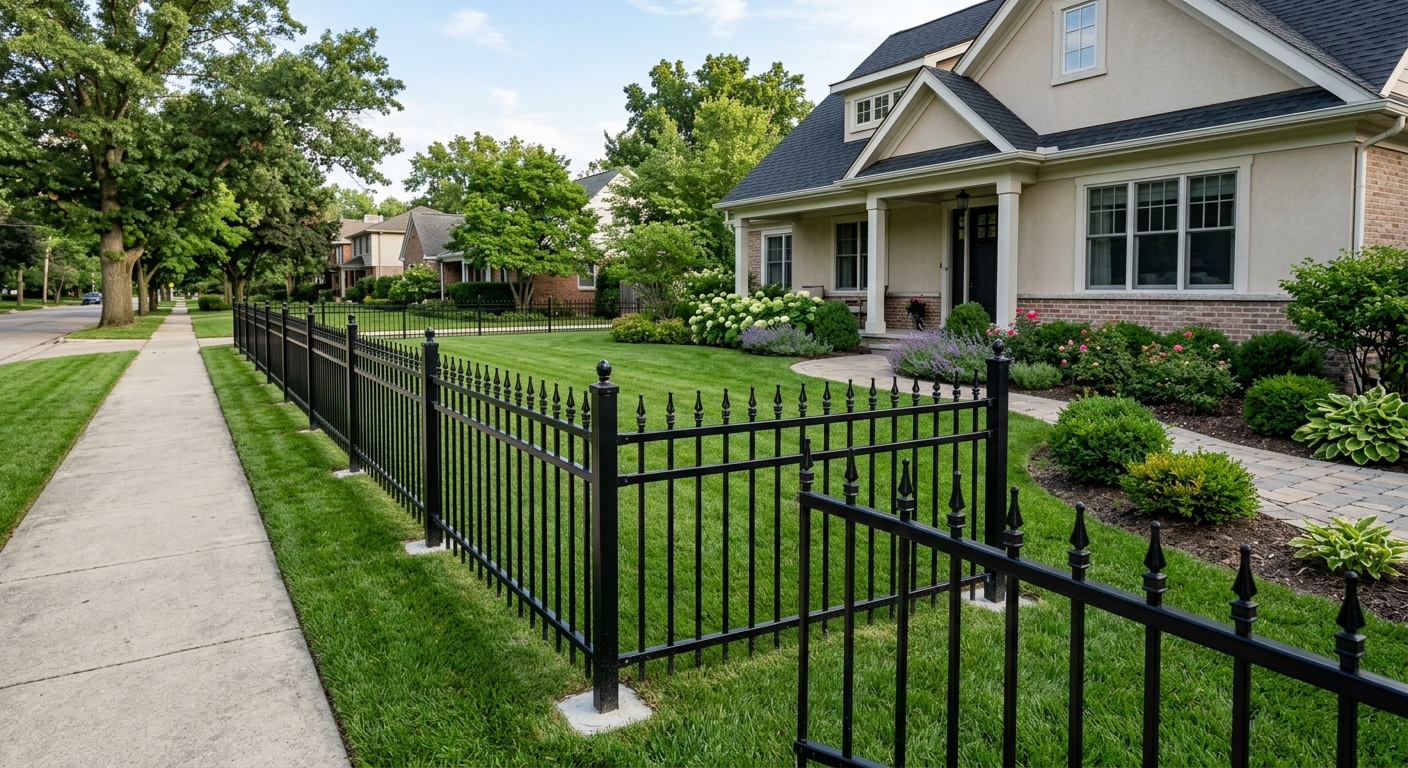
Fencing options and costs in Wainwright
Fencing costs in Wainwright tend to track your choice of material, but the final price is usually set by how much work it takes to build a fence that can handle prairie wind and Alberta freeze-thaw cycles. With Wainwright’s housing stock split heavily toward single-detached homes—66.4% of dwellings are detached—there are plenty of properties that need privacy, yard separation, and secure pet areas. Homeownership is also strong (70.2% of households own), which typically means more long-term fencing upgrades rather than short-lived “temporary” installs (Statistics Canada, 2021 Census).
In the Camrose–Drumheller region, the climate is a cost driver because frost depth is often in the 1.5–2.1 m (5–7 ft) range across much of Alberta. That means permanent residential fence posts are typically set deeper (commonly around 90 cm or more, and at least ~15 cm below the frost line) and installed with correct concrete placement where needed. Prairie wind exposure also matters: closer post spacing and heavier posts are often used for privacy fences so panels don’t rack or get blown out.
Depending on where you are in town, demand can be especially high in more exposed areas around the Vermilion River County edge and on larger acreage-style lots near the outskirts where wind is persistent. If you’re comparing options, start with the table below for typical lifespan, maintenance expectations, privacy performance, and per-linear-foot pricing in Wainwright.
| Material |
Lifespan |
Maintenance |
Privacy Rating |
Price per Linear Foot |
| Pressure-treated pine (standard wood) |
10–18 years |
Stain/seal every 2–3 years; inspect posts after heavy winters |
Medium–High (solid sections) |
$45–$80 |
| Cedar (natural rot resistance) |
15–25 years |
Top up stain every 2–4 years; still needs weather protection |
High (solid/close-board) |
$55–$95 |
| Vinyl / PVC (no-maintenance) |
20–30 years |
Wash as needed; check fit in extreme cold |
High (solid privacy styles) |
$70–$120 |
| Chain-link (galvanized steel) |
20–35 years |
Minimal; occasional tightening/repairs |
Low (unless add-on privacy slats) |
$30–$60 |
| Aluminum ornamental |
25–40 years |
Minimal; wash and inspect fasteners |
Low–Medium (decorative spacing) |
$65–$110 |
| Composite / recycled material |
20–30 years |
Low; occasional cleaning |
Medium–High (solid privacy panels) |
$75–$125 |
Prices are estimates only and vary by project scope, site access and material selection.
What affects the price of fencing in Wainwright
In Wainwright and the broader Camrose–Drumheller area, two “similar” fence projects can land 30–50% apart because the quote is driven less by panel price and more by site conditions and labour details. In Alberta, frost depth and post installation requirements force contractors to build for freeze-thaw movement and for structural wind loads on the Prairies. That’s why a basic chain-link line can be cheaper, while privacy fences in vinyl or wood often cost more even when they look comparable at first glance. Your budget can also swing depending on whether the crew can set posts efficiently (level access, easy dig conditions) or has to adjust for clay-heavy soil, rocky ground, and gate openings.
Frost is the biggest reason. A practical rule of thumb is posts typically need to be set roughly 4–6 inches below the design frost depth, which in Alberta can mean posts going about 1.5–2.0 m into the ground. That often pushes contractors toward concrete setting (and longer posts), raising both material cost and hole-digging time. Wind exposure then affects engineering: taller, solid fences may require tighter post spacing and heavier hardware so the fence doesn’t rack over the first few winters.
Here are a few local examples that change pricing in Wainwright. First, older homes (with 47.3% of dwellings built before 1981) can have more mature landscaping and buried obstacles, which can slow digging and add locating time. Second, clay or poorly draining spots can require deeper holes and more concrete per post to stabilize footing. Third, more exposed yards at the town edge can lead to deeper-set corner/end posts for extra wind capacity—often noticeable in a higher end of the $65–$110 range for aluminum/metal or the $70–$120 range for vinyl privacy.
| Price Factor |
Why It Matters |
Cost Impact |
| Fence length in linear feet |
More runs and more posts directly increase labour and materials |
High (primary driver) |
| Post depth required |
Frost protection determines hole depth and required post length |
High (longer posts, deeper digging, more concrete) |
| Post setting method |
Concrete-set posts are typically more stable than gravel packs in freeze-thaw |
Medium–High (materials + labour) |
| Material choice |
Vinyl and metal require different framing, wind-rated hardware, and installation |
Medium–High (drives your price band) |
| Gate count and type |
Drive-through double gates add heavier frames and more hardware |
Medium–High (often a major add-on) |
| Grade and terrain |
Sloped yards require stepped rails/panels or raked sections |
Medium (extra fabrication time) |
| Old fence removal and disposal |
Haul-away, disposal fees, and repair to affected areas |
Low–Medium (can spike with concrete/fasteners) |
| Permit fees and survey / property line locate |
Some fence heights and locations require documentation and accurate locating |
Low–Medium (varies by scope) |
Permits & regulations in Alberta
In Alberta, fence permits are often tied to height and location. As a practical guideline used by many municipalities, fences above roughly 2.0 m (6.5 ft) at the rear and 1.0–1.2 m (3–4 ft) at the front or corner frequently fall into “permit may be required” territory. Even when a permit isn’t required, your fence must still respect property lines and any municipal setback rules.
Before you dig any post hole, you must arrange utility locates. In Alberta, the appropriate call is through Alberta One-Call (utility marking service). If you’re unsure where your property boundary sits, get a survey or locate your property pins so you don’t accidentally build on a neighbour’s land.
Shared fence rules are governed by provincial line-fences legislation: if you’re building or repairing a shared boundary fence, the obligations and cost-sharing can depend on the specific situation and location of the boundary. For your project paperwork, don’t skip a written agreement if the work touches a shared line.
How to verify your contractor in Wainwright before signing: ask for their Alberta licence details (where applicable for the trade activity), then request a current certificate of insurance showing liability coverage and confirm their workers’ compensation coverage (WCB) if they use employees. You should also look for recent credentials or registry listings online, and keep a copy of their insurance certificate and any clearance documentation they provide.
What typically DOES require a permit: taller fences (around the rear 2.0 m threshold and higher than front/corner limits), fences that change conditions near rights-of-way, or any project your municipality flags during pre-checks. What typically does NOT: straightforward replacement of like-for-like fencing at typical residential heights, but always confirm based on your location and final height.
Choosing the right fence material for Wainwright
Choosing the right fence material in Wainwright is about matching your priorities—privacy, low maintenance, budget, and how long you want to go before replacing boards or rails—while also respecting Alberta’s freeze-thaw cycle and prairie wind. Pressure-treated pine is often the budget-friendly option, but you’ll usually want to stain or seal every 2–3 years to prevent grey weathering and to keep the surface from breaking down. Cedar looks great and naturally resists rot, yet it still needs ongoing maintenance to keep its finish and prevent surface checking.
Vinyl/PVC is popular for low maintenance and strong privacy styles, but it can be more expensive upfront (commonly within the $70–$120 installed range). Extreme cold can make materials slightly less forgiving, so proper post spacing and installation quality matter—especially around corners, where wind pressure is highest. Chain-link typically costs the least (often $30–$60), lasts a long time, and is great for pet containment and boundary marking, but it doesn’t provide real privacy unless you add slats or screening. Aluminum ornamental is usually rust-resistant, mid-range priced (often $65–$110), and ideal if you want an attractive look without the heavy build-up of privacy panels. Composite/recycled options can be durable and tidy-looking, though the best value depends on whether you’re buying true privacy panels or decorative runs.
On post depth: in Wainwright, plan on frost-protected footings. In practice, that means deeper hole excavation and often concrete-set posts, particularly for tall privacy fences, gate posts, and end/corner posts. If you want a clear budget example: switching from chain-link to a vinyl privacy fence can add roughly $40–$60 per linear foot in many installs—worth it if you need windbreak and visual privacy, but less justified if your primary goal is only boundary marking.
| Material |
Cold Tolerance |
Lifespan |
Annual Maintenance |
Best For |
Price Band |
| Pressure-treated pine |
Good (surface must be sealed) |
10–18 years |
Seasonal inspection; stain/seal every 2–3 years |
Lower budget with acceptable maintenance |
$45–$80 |
| Cedar |
Good (responds well when maintained) |
15–25 years |
Inspect and re-stain every 2–4 years |
Appearance + rot resistance |
$55–$95 |
| Vinyl / PVC |
Very good (install quality matters in deep cold) |
20–30 years |
Wash as needed; check post hardware after winter |
Low maintenance privacy |
$70–$120 |
| Chain-link |
Excellent |
20–35 years |
Minimal; tighten/repair localized damage |
Security and containment on a budget |
$30–$60 |
| Aluminum ornamental |
Excellent |
25–40 years |
Minimal; periodic cleaning |
Attractive borders with no rust worries |
$65–$110 |
| Composite / recycled |
Good (choose reputable systems for cold) |
20–30 years |
Low; occasional cleaning |
Clean look with low upkeep |
$75–$125 |
How to choose a fencing contractor in Wainwright
When you hire a fencing contractor in Wainwright, don’t focus only on the lowest number—focus on proof, scope clarity, and workmanship. In Alberta, you should verify the contractor’s coverage and compliance before the first hole is dug. Ask for their liability insurance certificate (confirm the policy is active and matches the type of work), and if they use employees, confirm workers’ compensation coverage (WCB). If the contractor provides subcontractors, you want those details too. Look for licence/registration information through official online resources and request that they send you an up-to-date clearance or proof package before work begins.
Next, get 2–3 itemised written quotes. The best quotes break down labour and materials separately, specify post depth/setting method (concrete-set vs gravel pack), list hardware and gate components, and call out disposal and restoration. If the company is vague—“includes removal” without stating who hauls and what surfaces get repaired—that’s where budget creep happens.
Warranty matters: ask for the workmanship warranty length and whether it covers fence line movement, leaning, or post failure due to improper installation. Also confirm product/manufacturer warranty and whether it transfers to you if you sell the home. For payment schedule, never pay more than 10–15% upfront; keep a holdback until the job is complete and cleaned up. Finally, request a written timeline: start date, expected duration, and weather-related contingencies for frost and site conditions.
- Provide an itemised quote: posts, rails, panels, gates, concrete, hardware, labour, and disposal.
- Confirm post depth approach for frost protection (ask what “below frost line” means in their plan).
- Require concrete-set vs gravel-pack details for your soil type.
- Ask how they handle wind load on end/corner/gate posts (often oversized and deeper-set).
- Get gate hardware specifications (hinge type, latch type, frame strength).
- Check warranty: workmanship term in writing, plus product/manufacturer warranty terms.
- Insist on a payment schedule: 10–15% max deposit, holdback until completion.
- Ask what’s excluded: permit fees, survey/locates, stump/rock removal, turf restoration.
- Confirm disposal included (old fence haul-away and tipping fees).
- Request start and completion dates in the contract, plus weather contingencies.
- Verify liability insurance and WCB coverage; keep certificates on file.
- Ask for references or recent Wainwright/area jobs with photos of posts after winter.
Red flags I see in Wainwright: (1) a quote that won’t state post depth or setting method, (2) refusing to provide insurance/WCB proof, (3) “lump sum only” pricing with no scope exclusions, (4) promises that ignore frost-depth requirements for privacy fences, and (5) asking for most of the money upfront with no holdback.
Frequently asked questions — fencing in Wainwright
How much does a fence cost in Wainwright?
In Wainwright, installed fencing costs are typically estimated by material plus the realities of post installation in Alberta’s freeze-thaw conditions. As a quick benchmark, wood fence installs commonly land around $45–$80 per linear foot, while vinyl privacy fencing often falls in the $70–$120 range. Chain-link is usually the most budget-friendly at roughly $30–$60 per linear foot, but it won’t provide privacy unless you add slats or screening. Your final price will depend on total length, number and type of gates, how deep posts must be set for frost protection, and how challenging the digging is due to soil (for example, clay patches). Home access and whether an old fence is removed can add cost as well.
How deep should fence posts be for Wainwright's frost?
For Wainwright-area installs, post depth should be planned around frost protection, not just “standard” deck-style depths. In Alberta, frost lines commonly fall around 1.5–2.1 m (5–7 ft) in many locations, so permanent residential fences typically require posts set roughly 90 cm or deeper and at least about 15 cm below the local frost line to reduce heaving and leaning over time. In practice, that also means longer posts than you might expect and often concrete setting, especially for privacy fences, corner/end posts, and gate posts exposed to wind. If your soil is clay-heavy or drains poorly, deeper holes and more concrete can be needed to stabilize footing. A contractor should explain their frost-depth method clearly before you sign.
Wood vs vinyl vs aluminum fence — which is best?
“Best” depends on what you want most in Wainwright: privacy, appearance, or low maintenance. Pressure-treated wood is usually the most budget-friendly approach (often around $45–$80), but it typically needs staining/sealing every 2–3 years to slow weathering and maintain a clean finish. Vinyl/PVC is a strong choice for low maintenance and privacy, often in the $70–$120 range; just make sure the installer uses proper post spacing and hardware for Alberta cold and prairie wind. Aluminum ornamental is rust-resistant and low maintenance, usually sitting in the $65–$110 range, but it provides less privacy due to decorative spacing. If you’re wind-exposed on the Prairie edge, all three work better when end/corner/gate posts are built sturdily and set deep for frost.
Do I need a permit to build a fence in Alberta?
In Alberta, permits can be triggered by fence height and placement. A common guideline used across municipalities is that fences above about 2.0 m (6.5 ft) at the rear and around 1.0–1.2 m (3–4 ft) at the front or corners often require a permit check. Even when you don’t need a permit, you still must follow property line rules and municipal setback bylaws. Before digging, you should also arrange utility locates through Alberta One-Call, and confirm your boundary with survey pins so the fence doesn’t encroach on a neighbour’s land. For permits, your contractor should tell you whether your proposed height will require paperwork before you schedule post holes. If your fence touches shared boundary areas, shared-line responsibilities may also apply.
How long does a wood fence last in Wainwright?
A wood fence in Wainwright often lasts about 10–18 years for standard pressure-treated pine when it’s built with correct post depth and kept maintained. With cedar, many installs hold up longer—often 15–25 years—because of cedar’s natural rot resistance. Lifespan depends heavily on installation details: posts set deep enough for frost protection, good concrete placement where needed, and proper drainage around footings all matter. Maintenance affects longevity too. If you keep staining/sealing on schedule (typically every 2–3 years for pressure-treated wood, sometimes every 2–4 years for cedar), you reduce surface breakdown and warping. Heavy prairie winds can also stress rails and fasteners, so hardware quality and post spacing are important.
Who owns and maintains a shared fence?
Shared fences in Alberta are usually governed by provincial line-fences legislation, which can affect who maintains the fence and how costs may be shared. In Wainwright, the exact responsibilities can vary based on where the fence sits relative to the boundary and how it was originally built or established. If the fence is truly on the shared line, both adjoining property owners may have responsibilities for maintenance and repairs, especially when the fence is needed for boundary use. The best step is to determine the location first—confirm property pins or get a survey—then put the agreement in writing before repairs start. If you’re building or upgrading a shared fence, ask your contractor to document the scope (posts, rails, panels, and any replacement sections) so you can align it with the shared-fence plan.