Fencing options and costs in Hounsfield Heights/Briar Hill
In Hounsfield Heights/Briar Hill, Alberta, homeowners typically choose fencing based on wind exposure, privacy needs, and how well the fence survives long freeze–thaw cycles. With a 2021 population of 2,470 residents (Statistics Canada, 2021 Census), demand is steady, especially as many lots support backyards that need clear boundary definition and child/pet containment. Local housing stock also means a lot of detached properties—each one is a potential fencing project when families upgrade privacy or replace aging rails.
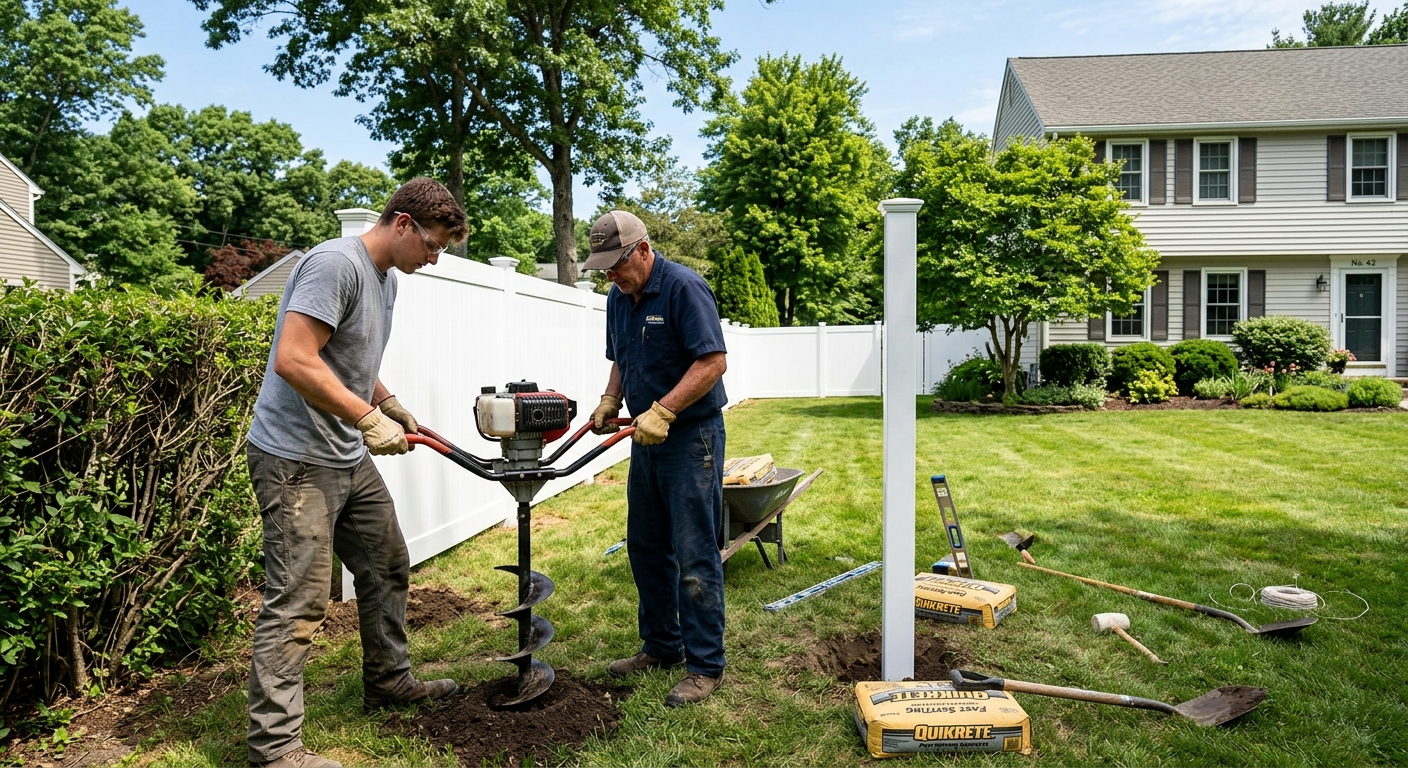
Calgary’s Prairie continental climate is the big cost driver. Long winter cold and repeated thawing create frost action, so posts usually must be set to about 4 ft (≈120 cm) deep to sit below the regional frost line. That requirement increases excavation time, concrete volume, and overall labour—particularly for 6 ft privacy fences and gate posts, where racking from wind is harder to control. Open Prairie exposure across the area also amplifies wind loading; solid panels (wood or vinyl privacy) generally need sturdier posts and closer spacing than more open styles.
In Hounsfield Heights/Briar Hill, trades often see higher turnaround demand near the busier residential pockets around 14–17 Avenue and along the arterial approaches where homeowners request front-yard upgrades and gate repairs. When you start comparing options, the installed price swings because of material stiffness, post depth, and how each fence handles wind.
Below is a practical side-by-side comparison to help you benchmark quotes before you ask contractors for measurements and a post depth plan.
| Material |
Lifespan |
Maintenance |
Privacy Rating |
Price per Linear Foot |
| Pressure-treated pine (standard wood) |
10–15 years |
Stain/seal every 2–3 years |
High (6 ft privacy) |
$40 – $80 |
| Cedar (natural rot resistance) |
15–25 years |
Light staining every 2–4 years |
High (6 ft privacy) |
$55 – $95 |
| Vinyl / PVC (no-maintenance) |
20–30 years |
Rinse as needed; inspect posts |
High (solid styles) |
$45 – $90 |
| Chain-link (galvanized steel) |
20–40 years |
Occasional tension checks |
Low–Medium |
$25 – $55 |
| Aluminum ornamental |
25–40 years |
Rinse; occasional panel tightening |
Low (open pickets) |
$70 – $120 |
| Composite / recycled material |
20–30 years |
Minimal cleaning; inspect framing |
Medium–High |
$60 – $105 |
Prices are estimates only and vary by project scope, site access and material selection.
What affects the price of fencing in Hounsfield Heights/Briar Hill
In Hounsfield Heights/Briar Hill and across the Calgary economic region, two quotes for what seems like the “same fence” can differ by 30–50% because contractors are priced for different site conditions, post construction, and wind/frost engineering. Even within Alberta, excavation conditions and the depth of required post setting can vary by lot, soil type, and how the design accounts for Calgary’s freeze–thaw cycles.
The regional frost line is the anchor. To prevent heaving, posts are typically set about 4–6 inches below the design frost depth—often meaning holes closer to 1.5–2.0 m in the ground. That pushes costs up through longer post lengths, additional concrete, and extra labour time. Wind exposure on the Prairies also affects how many posts you need: solid wood or vinyl privacy panels usually require sturdier posts and tighter spacing to resist racking, while chain-link can allow more airflow and typically comes in lower on labour/materials.
Cold conditions in Alberta also influence product selection. Vinyl can become more brittle in extreme cold if the system is undersized for loads, while wood needs proper post caps and a sound treatment/finishing plan. By contrast, coastal BC’s mild but wet climate tends to accelerate rot if boards aren’t properly treated, which is why coastal pricing patterns often differ—less about frost depth, more about moisture management.
Concrete examples from local projects: (1) a typical 6 ft privacy run with concreted 4 ft-deep posts costs more than a decorative front fence because both the excavation depth and gate hardware drive labour; (2) sloped backyards near the ravine-adjacent lots often require stepped/raked panels, which increases layout time and can raise installed pricing even if linear footage looks similar. If you’re choosing between chain-link (often $25 – $55 per linear foot) and wood privacy (commonly $40 – $80), the difference is usually justified by the added engineering for wind load, the privacy panel design, and the deeper, more concreted post plan.
| Price Factor |
Why It Matters |
Cost Impact |
| Fence length in linear feet |
More sections = more posts, rails, fasteners and labour hours |
Directly increases total cost; often the biggest driver |
| Post depth required |
Frost action requires posts to be set below the frost line |
Deeper holes increase excavation time and concrete volume |
| Post setting method |
Concrete vs. gravel pack affects stability and frost resistance |
Concrete setting adds cost but reduces long-term heaving/racking |
| Material choice |
Stiffness, airflow, and panel behaviour in wind change the structure |
Vinyl/cedar usually costs more than chain-link |
| Gate count and type |
Hinged, double and drive gates require heavier hardware and framing |
Gates add material + labour; double gates often cost significantly more |
| Grade and terrain |
Slopes need stepping, raking, or custom brackets |
Layout time and custom cutting raise installation time/cost |
| Old fence removal and disposal |
Hauling and teardown can be time-intensive depending on condition |
Can add a meaningful one-time charge to the project |
| Permit fees and survey / property line locate |
Setbacks and accurate boundaries prevent rework and disputes |
Varies by scope; survey/lociate can be a significant line item |
Permits & regulations in Alberta
In Alberta, permit requirements for fences usually start when you’re above common height thresholds. While exact municipal rules can vary by location and fence placement, a practical guideline homeowners use in many Alberta settings is that fences taller than about 2.0 m (6.5 ft) at the rear and around 1.0–1.2 m (3–4 ft) at the front or corner often trigger a building permit requirement. Even when a permit isn’t required, the fence must still respect property lines and municipal setback bylaws.
Before anyone digs post holes in Hounsfield Heights/Briar Hill, call for utility locates through Alberta One-Call. You can’t safely assume where power, gas, telecom, or irrigation lines run. It’s also smart to obtain a survey or at least confirm your property pins/locates so the fence doesn’t end up on a neighbour’s land—encroachment disputes are more expensive than doing it right at the start.
Shared fence ownership rules are guided by Alberta’s line-fences legislation, so if you’re dealing with an existing boundary fence or planning to share costs, document agreement and maintenance responsibilities early.
Step-by-step for verifying your contractor: (1) check their Alberta licence status through the appropriate online registry; (2) ask for a current certificate of insurance showing liability coverage for fencing work; (3) confirm workers’ coverage via WSIB/WCB documentation (request proof, not just a statement); and (4) keep a copy of the clearance/coverage letter for your records.
Choosing the right fence material for Hounsfield Heights/Briar Hill
Choosing the right fence material in Hounsfield Heights/Briar Hill is about matching your priorities to Calgary’s Prairie freeze–thaw climate and wind loading. Pressure-treated pine is usually the best budget entry point, but it needs consistent sealing/staining every 2–3 years to prevent grey weathering and to keep boards looking straight. Cedar offers better natural rot resistance and appearance, but it still benefits from periodic finishing to protect against drying and surface checks. Vinyl/PVC can be very low maintenance, yet in extreme cold it can crack if the fence isn’t engineered with proper post spacing and hardware strength.
Post depth matters regardless of material. In Calgary, posts are commonly set about 4 ft (≈120 cm) deep (or deeper depending on design frost depth and site), often with concrete for privacy fences and gate posts. That concrete setting improves resistance to heaving and reduces rocking in wind. For chain-link, the structure can be more forgiving because airflow reduces wind pressure on the mesh, so it often performs well while staying lower cost.
Local wind and snow loads also influence which style holds up. Solid privacy panels take more force from gusts and benefit from heavier posts and tighter spacing. Open styles—chain-link and ornamental aluminum—let air pass through, which generally improves wind performance but lowers privacy.
As a dollar example: if you’re deciding between chain-link at $25 – $55 per linear foot and a wood privacy fence at $40 – $80, the extra cost is usually justified when you need full backyard privacy, stronger visual screening, and the sturdier post-and-rail build required for Calgary’s wind. If privacy isn’t essential, chain-link can be the economical, long-lived choice.
| Material |
Cold Tolerance |
Lifespan |
Annual Maintenance |
Best For |
Price Band |
| Pressure-treated pine |
Good with proper installation and finishing |
10–15 years |
Check staining, touch up as needed (0.5–1.5 days) |
Budget privacy with regular upkeep |
$40 – $80 |
| Cedar |
Very good; handles cold and moisture well |
15–25 years |
Light reseal/stain checks (0.5–1 day) |
Better curb appeal and rot resistance |
$55 – $95 |
| Vinyl / PVC |
Good if engineered for wind and cold |
20–30 years |
Rinse and inspect posts/hardware (0.25–0.5 day) |
Low-maintenance privacy |
$45 – $90 |
| Chain-link |
Excellent; steel mesh handles cold well |
20–40 years |
Tension/straightness checks (0.25–0.5 day) |
Security with minimal maintenance |
$25 – $55 |
| Aluminum ornamental |
Excellent; no rust from freeze conditions |
25–40 years |
Rinse; tighten as required (0.25 day) |
Decorative front-yard lines |
$70 – $120 |
| Composite / recycled |
Good; stable boards in cold with correct framing |
20–30 years |
Minimal cleaning; inspect framing (0.25–0.5 day) |
Low-maintenance privacy and longer life |
$60 – $105 |
How to choose a fencing contractor in Hounsfield Heights/Briar Hill
When you hire a contractor for fencing in Hounsfield Heights/Briar Hill, you want proof of compliance, not just a good quote. In Alberta, verify licensing (where applicable for the contractor’s scope), ask for current liability insurance, and confirm WSIB/WCB coverage. To check: (1) search online for the contractor/licence details tied to their business name; (2) request a certificate of insurance and verify the coverage is active and matches your project location; and (3) ask for WSIB/WCB clearance or coverage documentation for the period of the work. If they won’t provide documentation, that’s a major warning sign.
Next, get 2–3 itemised written quotes. You want separate line items for excavation and post depth/concrete, rails, labour for assembly, gate hardware, and materials like boards/rails/posts. Avoid lump-sum quotes that don’t clarify what’s included—especially disposal, topsoil reinstatement, and whether the price assumes level ground or includes racking/stepped panels.
Read the scope for exclusions: What happens if buried utilities are located, or if the existing fence base is deeper than expected? Does the contractor pull the permit (if needed) or is that your responsibility? Ask about warranty terms: workmanship warranty length (commonly 1–2 years), product/manufacturer warranty for materials, and whether the warranty is transferable to future owners.
For payment scheduling, never pay more than 10–15% upfront. Use a holdback until the job is complete and you’ve confirmed alignment, proper gate operation, and that post holes/backfill are properly finished. Always request a written start date and an estimated completion timeline tied to weather/curing realities in Calgary winters.
- Provide Alberta documentation: licence details (if applicable), liability insurance certificate, and WSIB/WCB coverage proof.
- Quote includes exact fence height, total linear footage, and number/type of gates.
- Post depth and setting method are stated (e.g., concreted posts and target hole depth).
- Material grade/spec is listed (board thickness, rail size, hardware type).
- Removal/disposal is itemised (dump fees, hauling, and stump/base removal if applicable).
- Permit responsibility is clear: permit pull included or homeowner responsibility noted.
- Scope states whether property line locate/survey costs are included or excluded.
- Grade/terrain solution is explicit (stepped vs. raked panels for sloped lots).
- Warranty is in writing, including workmanship duration and product warranty coverage.
- Payment schedule capped (10–15% upfront) with a holdback for punch-list completion.
- Site protection and restoration details included (topsoil replacement, cleanup, broom finish).
- Start date and completion estimate provided in writing, plus weather caveats.
Concrete red flags I often see around Hounsfield Heights/Briar Hill: (1) they refuse to specify post depth and concrete setting, (2) they quote “standard spacing” without discussing wind load and privacy panel racking, (3) they don’t itemise gate hardware and instead roll it into a vague line, (4) they ask for large upfront payments, and (5) they can’t provide insurance/coverage documentation when requested.
Frequently asked questions — fencing in Hounsfield Heights/Briar Hill
What is the most weather-resistant fence for Hounsfield Heights/Briar Hill's climate?
For Calgary-area freeze–thaw conditions in Hounsfield Heights/Briar Hill, chain-link and aluminum are often the most weather-resistant overall because they’re less dependent on surface finishes and generally handle wind loading well. A well-installed galvanized chain-link fence with proper tensioning and correctly set posts can last decades, especially with posts set below frost influence. For privacy, the most weather-resistant “solid panel” option is typically cedar or a well-built vinyl privacy system with properly concreted, frost-protected posts and sturdy framing—those structural choices matter as much as the material. If you’re budgeting, chain-link is commonly in the lower band (about $25 – $55 per linear foot), while privacy materials move higher once you add deeper, more engineered post work.
How do I prevent wood fence rot in Hounsfield Heights/Briar Hill?
Wood rot prevention in Alberta comes down to keeping water out of the right places. First, ensure posts are set below frost action and ideally concreted (especially for 6 ft fence sections and gate posts) so the base doesn’t heave and stay in wet contact. Second, use correct board treatment and install with proper spacing so boards can dry, plus tight hardware placement that doesn’t trap moisture. Third, apply a quality stain/sealer and keep up with re-coating on a cycle (often every 2–3 years in Calgary’s conditions) because weathering makes boards more vulnerable. Finally, use good post caps where appropriate and inspect after harsh winters—small gaps turn into rot starting at the bottom rails and fastener points.
What is the cost per linear foot for fencing in Hounsfield Heights/Briar Hill?
In Hounsfield Heights/Briar Hill, fencing costs are commonly quoted per linear foot and then adjusted for gates, terrain, and post construction depth. As a practical benchmark for Calgary’s frost-and-wind requirements, wood privacy often lands around $40 – $80 per linear foot, vinyl privacy around $45 – $90, while chain-link is typically the lowest at about $25 – $55. Aluminum ornamental is higher, often around $70 – $120. If your quote is much lower than these bands for a privacy fence, ask how they’re handling frost protection (post depth, concrete setting) and wind load—those details drive real installed durability.
Should I repair or replace my old fence in Hounsfield Heights/Briar Hill?
In Alberta, the decision usually depends on how the posts and bottom rails are holding up after winter cycles. If posts are still solid (not leaning, not heaving, not rotted at ground level), you may be able to replace only the rails/panels and keep costs down. However, if you see multiple failing posts, significant leaning, or repeated looseness at hardware points, repair often becomes a temporary fix. Replacement is usually the better value when wind racking is noticeable across several sections or when the fence base has moisture damage. A good contractor will assess post plumb, check for rot at the lowest boards, confirm whether the fence is encroaching, and propose either panel-level replacement or full rebuild with correct frost-depth setting.
How do I handle a fence dispute with a neighbour in Alberta?
Start by confirming the boundary before debating style or cost. Use your property pins/survey and ask for an accurate locate rather than relying on visual assumptions, because even small boundary errors can become expensive. In Alberta, shared fence ownership is influenced by line-fences legislation, so document any agreement—who pays, what gets maintained, and who repairs damage. Communicate in writing (email or letter) and keep photos of the condition, weather-related damage, and installation history. If the dispute involves safety or significant encroachment, consider getting a formal survey and a contractor report in writing. Finally, if a permit is involved for height, setbacks, or alterations, clarify which side is responsible before work begins.
What fence style offers the best wind resistance in Hounsfield Heights/Briar Hill?
Wind resistance in Hounsfield Heights/Briar Hill usually comes from two things: structure (posts set deep and securely) and design airflow. Open styles like chain-link generally perform better in strong Prairie winds because air passes through the mesh, reducing racking forces. Solid privacy fences (wood or vinyl) can be very wind-stable too, but they need stronger engineering—correct post depth for frost protection (often around 4 ft/≈120 cm or deeper based on frost design), adequate post spacing, and proper rail framing so the panel can’t twist. If you’re choosing between privacy and wind resilience, chain-link is often the most forgiving. If privacy is required, ensure your contractor specifies concreted footings and correct bracing rather than trying to “save” cost on post depth.