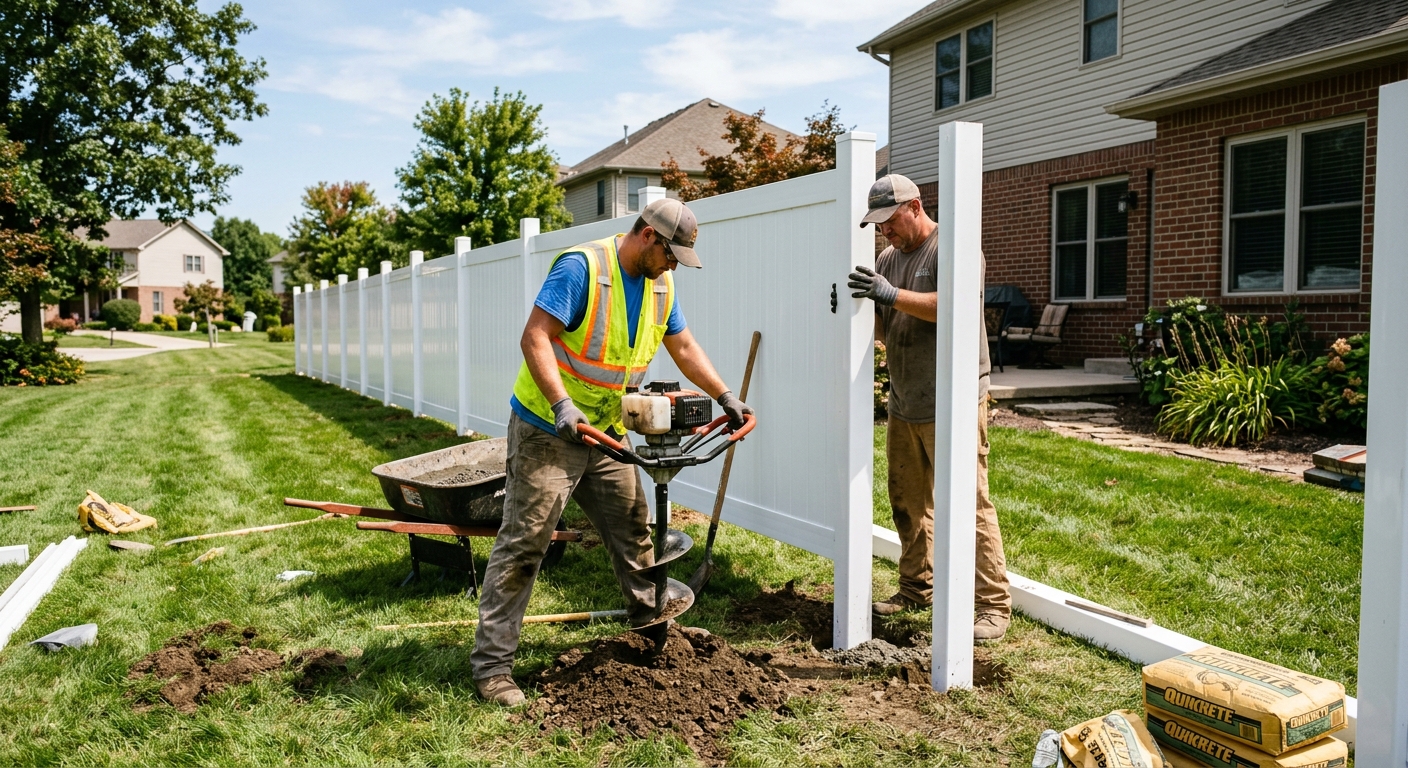
Fencing options and costs in Homesteader
In Homesteader, Alberta, choosing a fence usually starts with privacy needs, wind exposure, and how often you want to maintain the system. With a small local population of 3,277 (Statistics Canada, 2021 Census), there are fewer neighbourhood-scale contractors, so scheduling can tighten when multiple projects run at the same time. Demand is also closely tied to the number of detached homes in the Calgary economic region—each detached property is a potential fencing customer, which helps explain why quote turnaround can vary by season and crew availability (Statistics Canada, 2021 Census). In practice, the biggest cost differences here come from Calgary’s Prairie continental freeze–thaw swings: contractors often set posts about 4 ft (≈120 cm) deep (or deeper where site conditions require) and use concrete footings for 6 ft privacy fences and gate posts to resist frost heaving. That increases excavation, concrete volume, and labour compared with milder Canadian regions. The open Prairie exposure also means wind-loading matters; solid panels typically need tighter post spacing and heavier hardware to prevent racking.
You’ll often see the trade busiest in more open, edge-of-neighbourhood lots where wind is noticeable—around the Homesteader area closest to main road corridors and farm edges—because fences are both functional (windbreak/privacy) and visible (curb appeal). If you’re comparing options, the table below summarizes typical lifespan, maintenance, privacy performance, and the per-linear-foot ranges you’ll hear for installed fences in this market. Use it as your baseline before you request itemised quotes.
| Material |
Lifespan |
Maintenance |
Privacy Rating |
Price per Linear Foot |
| Pressure-treated pine (standard wood) |
12–20 years |
Stain or seal every 2–3 years; inspect posts annually |
High (solid panels) |
$40 – $80 |
| Cedar (natural rot resistance) |
18–25 years |
Seal/stain every 2–4 years; periodic fastener checks |
High (solid boards) |
$55 – $95 |
| Vinyl / PVC (no-maintenance) |
20–30 years |
Wash as needed; inspect pickets/posts for impact |
Medium–High (solid styles) |
$45 – $90 |
| Chain-link (galvanized steel) |
25–40 years |
Rare; rinse/build-up removal and periodic tension checks |
Low (airflow through mesh) |
$25 – $55 |
| Aluminum ornamental |
25–45 years |
Occasional wash; check gates and hinges |
Low–Medium (open design) |
$70 – $120 |
| Composite / recycled material |
25–35 years |
Low; occasional cleaning and hardware inspection |
Medium–High (solid or lattice styles) |
$60 – $110 |
Prices are estimates only and vary by project scope, site access and material selection.
What affects the price of fencing in Homesteader
Fence quotes in Homesteader can vary by roughly 30–50% even when neighbours seem to want “the same fence,” because the underlying structure is different: post depth, concrete use, panel design, and how difficult the site is to excavate. In a freeze–thaw climate, a contractor’s base assumptions matter. Here, the frost line drives how deep posts must be set—typically 4–6 inches below the design frost depth—to prevent heaving and lift after winter thaws. In cold Alberta and Calgary, that often means posts going about 1.5–2.0 m into the ground, which requires longer posts, more digging, and usually concrete setting. That same job can still land in the mid range for lighter systems, while privacy boards with solid panels often climb toward the upper end of wood or vinyl ranges.
Wind exposure across the Prairies also drives cost: open chain-link can resist wind because airflow passes through, but solid wood or vinyl privacy panels need sturdier posts and fully concreted footings to prevent racking. By contrast, coastal BC’s wet conditions accelerate wood rot without proper treatment, which can shift relative pricing there—but in Alberta the battle is frost and wind, not salt-water rot. In Homesteader specifically, two practical examples that change price are (1) whether your fence is a 6 ft privacy run with gates (heavier loads and more concrete at hinge locations) versus a 4 ft decorative run, and (2) whether your yard requires stepped panels on grade or raked sections to keep the top line consistent.
If you’re comparing budgets, think in terms of installed bands: chain-link often lands around the lower–mid range, while wood and vinyl privacy typically sit toward the mid–upper range due to post spacing, concrete, and panel reinforcement. Even a small extension—like adding one gate bay—can push the total cost because gate hardware and heavier posts scale the install effort.
| Price Factor |
Why It Matters |
Cost Impact |
| Fence length in linear feet |
The full system scales labour, posts, rails, and materials |
High—often the biggest swing in total price |
| Post depth required |
Frost line determines hole depth and post length to reduce heaving |
High—can change excavation and concrete costs materially |
| Post setting method |
Concrete vs. gravel pack vs. driven posts affects stability in wind |
Medium–High—solid panel systems usually need concrete |
| Material choice |
Vinyl/wood need different framing and bracing than chain-link |
Medium—often shifts you between $25–$55 and $40–$120 bands |
| Gate count and type |
Drive-through double gates add hinges, latches, and heavier posts |
High—hardware and labour jump per gate |
| Grade and terrain |
Slopes require stepped or raked panels and more layout time |
Medium—layout labour increases plus extra hardware |
| Old fence removal and disposal |
Demolition, stump/pier removal, and hauling add time and cost |
Medium—often a separate line item |
| Permit fees and survey / property line locate |
Verification protects you from encroachment and rebuild costs |
Low–Medium—varies by job complexity and documentation needed |
Permits & regulations in Alberta
In Alberta, fence permits are typically tied to height and location. A common rule of thumb is that fences above about 2.0 m (6.5 ft) at the rear, and above 1.0–1.2 m (3–4 ft) at the front or corner, often trigger a building permit requirement. Exact thresholds can vary by municipal bylaw, so for Homesteader projects in the Calgary area you should confirm the fence height and placement (front/side/rear) before excavation.
All fences must respect property lines and municipal setback bylaws. Before you dig any post hole, call for utility locates through Alberta One-Call to mark buried services—this is essential even for “simple” runs. You should also obtain a survey or a locate of your property pins before installation; it’s the fastest way to avoid encroachment disputes with neighbours or costly rework.
Shared fence ownership rules generally fall under provincial line-fences legislation, meaning rights and responsibilities may be different when the fence is on a boundary line. On contractor paperwork: confirm the specific work that needs a permit—typically the installation of fences at higher heights (around the 2.0 m rear / lower front/corner triggers) rather than smaller, conforming residential fences.
To verify a contractor in Alberta, ask for their licence number (check the appropriate online registry), certificate of liability insurance (request the current COI and verify the insured address and coverage limits), and proof they have WSIB/WCB coverage as applicable for workers. If they can’t produce these documents quickly or refuse to show the COI and clearance/coverage status, treat it as a major red flag.
Choosing the right fence material for Homesteader
The right fencing material in Homesteader should match how you actually use your yard: privacy from neighbours, low maintenance, budget control, and the reality of Calgary’s wind plus freeze–thaw cycles. Pressure-treated pine is the budget-friendly starting point, but to keep it looking good and reduce premature weathering you typically need staining or sealing every 2–3 years. Cedar offers better natural rot resistance and often a more stable look, but it still benefits from maintenance and consistent fastener care. Vinyl/PVC is genuinely low-maintenance—no sanding or staining—but extreme cold can make some rails/panels more brittle, so proper installation details (fastening methods, correct rail support) matter. Chain-link is usually the least expensive to install and it performs well against high wind because air passes through the mesh; however, it provides little privacy unless you add privacy slats or plant screening. Aluminum ornamental is rust-resistant and long-lived, with a mid-range cost, but it’s also open by design.
For all solid fences, post depth and stability are non-negotiable in the Calgary market. Because frost protection is a primary cost driver, contractors commonly concrete-set posts at about 4 ft (≈120 cm) deep and often deeper depending on soil and local frost calculations—especially for 6 ft privacy fences and gate posts. In windy Prairie exposure, I strongly prefer tighter post spacing and solid bracing for wood and vinyl. Chain-link can sometimes be simpler because it breathes, but corner and gate posts still need to resist leverage.
As a concrete example of value: if you’re quoted near the wood range of about $40–$80 per linear foot for pressure-treated privacy, switching to cedar may land closer to roughly $55–$95 per linear foot. That upgrade is usually justified when you want a warmer look and longer weathering tolerance, but if your priority is minimum annual work, vinyl at about $45–$90 per linear foot can be compelling—provided the install details are right for cold snaps.
| Material |
Cold Tolerance |
Lifespan |
Annual Maintenance |
Best For |
Price Band |
| Pressure-treated pine |
Good when properly installed and kept sealed |
12–20 years |
Light inspection; stain/seal plan every 2–3 years |
Budget privacy with DIY-friendly upkeep |
$40–$80 |
| Cedar |
Good; performs well with consistent fastening and sealing |
18–25 years |
Inspect and seal/stain every 2–4 years |
Attractive privacy with better rot resistance |
$55–$95 |
| Vinyl / PVC |
Fair to good; correct installation prevents brittleness issues |
20–30 years |
Minimal—wash and hardware checks |
Low-maintenance privacy |
$45–$90 |
| Chain-link |
Excellent; withstands cold without rotting |
25–40 years |
Low—tension and occasional rinse |
Security and airflow in windy areas |
$25–$55 |
| Aluminum ornamental |
Excellent; designed for winter freeze cycles |
25–45 years |
Very low—wash and gate alignment checks |
Decorative curb appeal with durability |
$70–$120 |
| Composite / recycled |
Good; tolerates cold when installed on proper framing |
25–35 years |
Low—cleaning and hardware inspection |
Long-life privacy with minimal upkeep |
$60–$110 |
How to choose a fencing contractor in Homesteader
Choosing the right fencing contractor in Homesteader is mostly about paperwork plus details. First, verify they’re properly licensed for contracting in Alberta and that they carry liability insurance—request the current certificate of insurance (COI) and confirm the coverage is active for the job. Next, confirm WSIB/WCB coverage for workers. The practical homeowner approach is to ask for (1) their licence number, (2) the COI showing their business name and coverage dates, and (3) proof of WSIB/WCB clearance status or equivalent confirmation. If anything is missing or “we don’t provide that,” move on.
Then get 2–3 itemised written quotes rather than a single lump sum. You want a labour + materials breakdown, plus line items for post supply, concrete/footings, rails, gate hardware, and any site prep. Read exclusions carefully: is permit pulling included (if required), is old fence removal included, and is disposal/hauling included? For warranties, separate workmanship warranty length from product/manufacturer warranty length, and ask whether the product warranty is transferable if you sell your home.
Payment schedule matters. Never pay more than 10–15% upfront; hold back a portion until the job is complete and inspected (especially gates, alignment, and post stability). Ask for an agreed start date and a completion estimate in writing, since weather windows in Calgary affect excavation and concrete curing.
- Ask for the Alberta licence number and confirm it online.
- Request a COI and verify it covers general liability for the contractor.
- Confirm WSIB/WCB clearance or coverage status in writing.
- Get itemised quotes: posts, rails, panels, concrete, hardware, labour.
- Ensure the quote specifies post depth and setting method (concrete vs. gravel pack).
- Verify gate hardware is included (hinges, latch, posts, reinforcement).
- Check whether disposal/hauling of old fence materials is included.
- Confirm who pulls permits if your fence is above height thresholds.
- Ask how they handle slope—stepped panels vs. raked panels.
- Get a written workmanship warranty and ask what it covers.
- Agree on payment milestones tied to inspection checkpoints.
- Confirm site protection and utility locate responsibility before digging.
Concrete red flags I see in Homesteader include: “too-good-to-be-true” pricing well below the typical $25–$55 chain-link and $40–$80 wood ranges without explaining post depth; refusing to state post depth/concrete setting in writing; vague quotes that lump everything together (no itemised labour/materials); no proof of liability insurance or WSIB/WCB coverage; and pushing for a large upfront payment (over 10–15%) before posts are set.
Frequently asked questions — fencing in Homesteader
How long does fence installation take in Homesteader?
In Homesteader, most residential fence installs move quickly once posts are laid out, but the full timeline depends on weather, excavation conditions, and whether the contractor has crews available. For a typical straight run, a crew can often install a smaller section (for example, 50–100 linear feet) within a couple of working days, assuming adequate access and no major obstruction. Larger privacy projects with concrete-set posts, multiple gates, and old fence removal can take closer to a week or more because drilling and concreting posts requires proper curing time and careful alignment in wind-exposed yards. If frost is present or ground is frozen, start dates can shift to protect workmanship and prevent post movement after thaw cycles. Always ask for a start date and completion window in writing when you book.
Can I install a fence on a slope in Homesteader?
Yes, you can install a fence on a slope in Homesteader, but it needs the right layout method to look straight and stay structurally sound through freeze–thaw cycles. The two common approaches are stepped fencing (each panel level changes in small increments) or raked fencing (a continuous slope). Stepped panels usually work well for privacy boards and keep the framework easier to build on uneven ground. Raking can look smoother visually but requires more precise rail and picket planning to avoid gaps and uneven loads. Because posts must be set below the local frost line, stepped designs also help ensure you’re not trying to “cheat” depth by only adjusting height at the top. Expect a small cost bump versus a flat yard due to layout time and possible extra hardware.
What is the most weather-resistant fence for Homesteader's climate?
For Alberta’s Prairie freeze–thaw and wind exposure, the most forgiving options are usually chain-link and properly built solid fences with concreted posts. Chain-link (galvanized steel) typically lasts 25–40 years and resists rot because it doesn’t rely on wood structure; it also handles wind better because air passes through the mesh. For privacy, vinyl and cedar can perform very well when posts are set to appropriate depth and the framing is braced for racking. If you’re choosing strictly on long-term performance and minimal maintenance, vinyl often appeals, commonly landing in the $45–$90 per linear foot installed range. If you want maximum rot resistance and a classic look, cedar is a strong choice, but it still benefits from periodic sealing. Whatever material you pick, the post depth and setting method in Calgary-area conditions is what protects the fence most over time.
How do I prevent wood fence rot in Homesteader?
Preventing wood rot in Homesteader comes down to installation details and maintenance, not just picking “rot-resistant” species. First, ensure posts are set correctly—concrete-set footings keep wood framing from sitting in wet soil and reduce frost-related movement that can open cracks. Second, use proper ventilation: avoid dense contact points where water can pool against the boards or rails. Third, fasteners matter—use exterior-rated hardware and avoid mixing incompatible metals that can accelerate corrosion and staining. For pressure-treated pine, plan on staining or sealing every 2–3 years to prevent grey weathering and water penetration. Cedar naturally resists rot better, but it still isn’t maintenance-free; seal/stain every 2–4 years is typical. If you’re quoted for wood privacy in the $40–$80 per linear foot range, confirm the contractor includes proper post depth/concrete setting and fastener/hardware quality—those details are what protect the system.
What is the cost per linear foot for fencing in Homesteader?
In Homesteader (Calgary economic region market), installed fencing costs generally follow the typical bands contractors use for budgeting. Chain-link is commonly the lowest, often in the $25–$55 per linear foot range, because it uses lighter panels and benefits from wind airflow. Wood privacy typically lands around $40–$80 per linear foot, while vinyl/PVC is often $45–$90 per linear foot due to material pricing and bracing needs for solid styles. Aluminum ornamental fences are usually higher, around $70–$120 per linear foot, because of materials and more complex gate hardware. Your final figure depends on post depth, concrete setting, gate count, removal of old fencing, and terrain (slopes and access). If you want a realistic estimate, ask for an itemised quote that shows labour + materials, not just a single per-foot number.
Should I repair or replace my old fence in Homesteader?
In Alberta’s freeze–thaw climate, the decision to repair or replace often hinges on post condition and how far the problem has progressed. If the fence posts are still solid (no noticeable leaning, lift, or significant rot at the base), repairs like replacing a few boards, rails, or fasteners can be cost-effective. However, if posts are heaving, concrete footings have failed, or the fence has widespread board rot from trapped moisture, partial repairs can become a repeating cycle—especially after winter thaws. With solid privacy fences, wind-loading on the Prairies can also make small structural issues worse over a season. A practical approach is to ask your contractor to assess how many posts are beyond salvage and whether the remaining system is plumb. If you’re considering a rebuild, compare your repair total to a new installed budget in the wood or vinyl ranges (roughly $40–$80 or $45–$90 per linear foot, depending on material and height) so you’re not spending nearly as much for a fence that may not last.