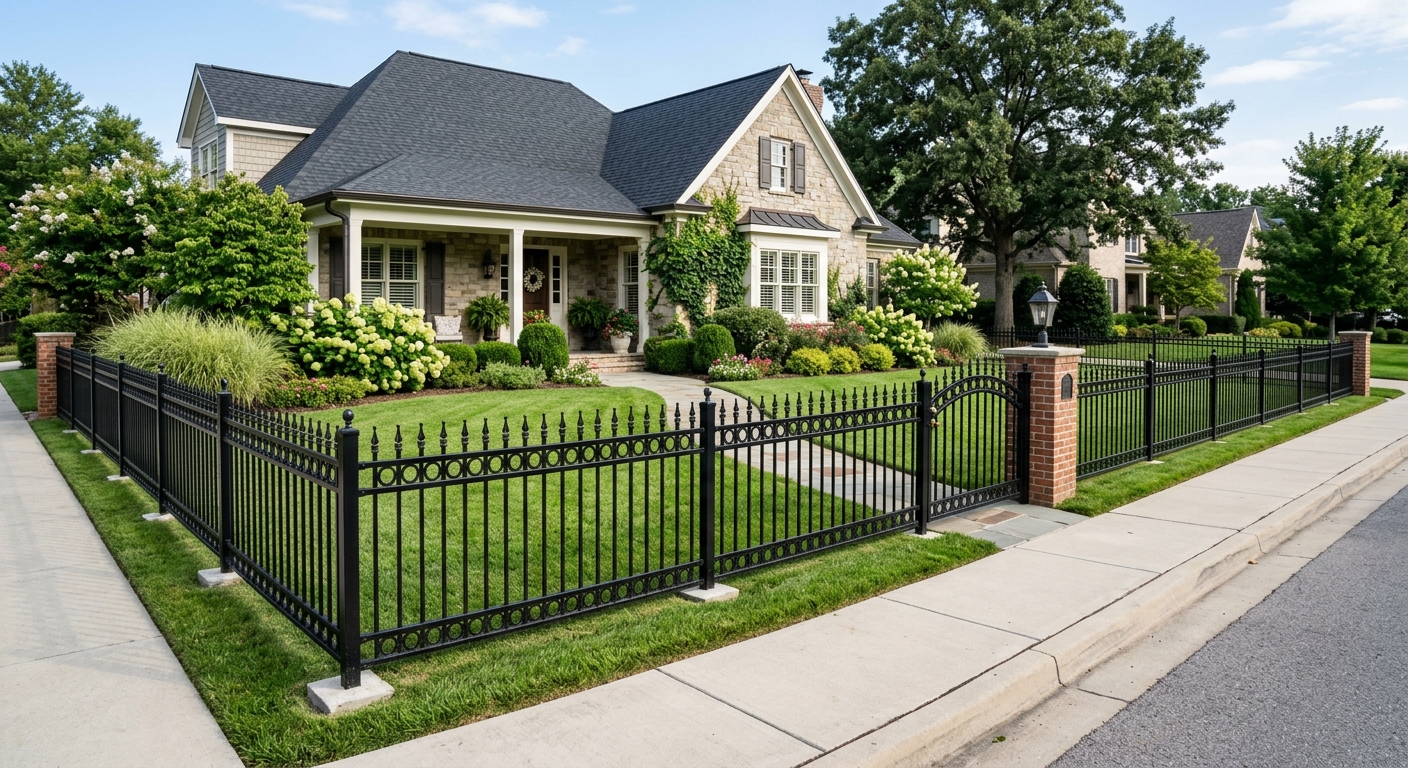
Fencing options and costs in Edmonton
Edmonton homeowners have a wide range of fencing choices, but the installed cost usually comes down to the same reality: how wind, winter freeze, and access affect post depth and labour time. With about 252,150 homeowner households in the Edmonton region (Statistics Canada, 2021 Census), demand is strong not just for new builds, but also for fence replacements on older properties—especially since 40.5% of homes were built before 1981 (Statistics Canada, 2021 Census). Those older lots often have aging posts, sagging rails, and uneven grades that take longer to rebuild correctly.
In Edmonton, contractors typically design for frost heave risk by setting posts below the local frost depth, which commonly means deeper holes and more frequent concrete-set posts on taller privacy builds. Wind exposure on the Prairies also matters: wider spacing and lighter framing can lead to panel racking, so many installers tighten post spacing and use sturdier hardware—especially for full-height privacy fences. Work can be busier in neighbourhoods with lots of mature single-detached housing, such as parts of southwest Edmonton near Windermere and surrounding residential pockets where boundary and backyard privacy upgrades are common. All of that is why two “similar” fences can land in different price bands.
Use the guide below to compare typical lifespan, maintenance, privacy performance, and Edmonton-area installed price ranges before you request an itemised quote.
| Material |
Lifespan |
Maintenance |
Privacy Rating |
Price per Linear Foot |
Price Range |
| Pressure-treated pine (standard wood) |
8–15 years |
Stain/seal every 2–3 years |
Medium–High (solid boards) |
$20–$30 |
$3,000–$6,500 |
| Cedar (natural rot resistance) |
12–20 years |
Seal or stain every 2–3 years (recommended) |
High (solid boards) |
$25–$40 |
$3,500–$7,500 |
| Vinyl / PVC (no-maintenance) |
20–30 years |
Occasional wash only |
High (privacy styles available) |
$30–$55 |
$3,500–$8,000 |
| Chain-link (galvanized steel) |
15–25 years |
Minimal; rinse/inspect |
Low (unless add-ons are used) |
$15–$25 |
$2,000–$4,500 |
| Aluminum ornamental |
20–40 years |
Minimal; clean and check fasteners |
Low–Medium (open pickets) |
$25–$45 |
$4,000–$9,000 |
| Composite / recycled material |
20–30 years |
Low; wash and inspect |
High (solid privacy styles) |
$28–$50 |
$3,800–$8,200 |
Prices are estimates only and vary by project scope, site access and material selection.
What affects the price of fencing in Edmonton
In Edmonton, you can see the same fence concept come in 30–50% apart across quotes because the “hidden” factors drive the install time: post depth, concrete use, wind bracing, grade work, and how accessible the backyard is for hauling materials. Edmonton’s housing stock is also diverse—when you’re working around older foundations, mature trees, or uneven lots (common in established neighbourhoods), the labour and planning time increases even if your fence length is the same. With median household income around $90,000 (Statistics Canada, 2021 Census), many homeowners still choose longer warranties and sturdier framing for privacy, but the final price swings based on the site.
Frost depth is a big driver. Even when plans look straightforward, posts must be set below the design frost depth to reduce heaving—commonly around 4–6 inches below the design frost depth, which in Alberta often translates to roughly 1.5–2.0 m into the ground. That pushes material cost (longer posts) and labour (deeper holes), and it often means concrete-setting rather than dry gravel-only methods for taller fences. Wind exposure on the Prairies also affects design: contractors typically tighten post spacing and use heavier rails to limit racking, which is why wind-sturdy privacy builds often align with the higher end of the $3,000–$6,500 wood band or the mid-to-upper end of the $3,500–$8,000 vinyl band.
Concrete examples from Edmonton installs: (1) A 6-foot privacy fence on a flat lot with easy access might stay in the low-to-mid wood range, but (2) the same fence on a sloped yard often requires stepped sections and extra bracing, increasing labour and sometimes materials. (3) If your existing fence needs removal and disposal before the new install, the quote usually rises because of haul-away time and stump/post extraction—especially on older posts that have been set for decades. If the home is a pre-1981 build, aged underground utilities, old anchors, and settlement issues can also add time (Statistics Canada, 2021 Census).
| Price Factor |
Why It Matters |
Cost Impact |
| Fence length in linear feet |
The more feet you build, the more posts, rails, and fasteners you need. |
High (major driver) |
| Post depth required |
Frost conditions determine hole depth and post length to prevent heaving. |
High (often changes concrete and labour) |
| Post setting method |
Concrete vs. gravel pack vs. driven posts changes labour time and material costs. |
Medium–High |
| Material choice |
Vinyl, cedar, composite, and chain-link have different material and hardware costs. |
High (shifts you between bands) |
| Gate count and type |
Drive-through (double) gates need stronger frames and hardware. |
Medium–High |
| Grade and terrain |
Slopes require stepped or raked panels, plus extra labour for alignment. |
Medium |
| Old fence removal and disposal |
Pulling old posts, cutting rails, and hauling debris adds labour. |
Medium |
| Permit fees and survey / property line locate |
Locates and surveys prevent encroachment and clarify shared boundaries. |
Low–Medium (can become High if complex) |
Permits & regulations in Alberta
In Alberta, fences above a local height threshold—often around 2.0 m (6.5 ft) for rear areas and about 1.0–1.2 m (3–4 ft) for front or corner areas—may require a building permit. Exact requirements depend on where the fence sits relative to streets and property boundaries, so the safe approach is to confirm with the City of Edmonton before you order materials, especially if you’re planning a full privacy fence.
All fences must respect property lines and applicable setback rules. Before you dig any post hole, you must have utility locates completed (Alberta One-Call). It’s also strongly recommended to obtain a survey or at least verify property pins/markers prior to installation; this reduces the chance of rebuilding on a neighbour’s side or encroaching into a utility or drainage easement.
Shared fence ownership and maintenance are typically handled through provincial line-fences legislation. Practically, that means clarifying who pays for repairs and how costs are shared if the fence is on a boundary.
To verify an Edmonton contractor for Alberta work, ask for: (1) their Alberta business licence/contractor registration if applicable to their scope, (2) proof of liability insurance (certificate of insurance), and (3) confirmation of coverage for workplace safety (WSIB/WCB coverage, as applicable). Look for the certificate expiry dates, the insured legal name matching the quote, and whether they can name the project address on the COI. If they won’t provide documentation in writing, that’s a major warning sign.
Choosing the right fence material for Edmonton
Choosing the right fence in Edmonton means matching your priority—privacy, low maintenance, budget, and lifespan—to materials that can handle freeze-thaw cycles and Prairie winds. Pressure-treated pine is usually the budget option, but it needs staining or sealing every 2–3 years to limit grey weathering and surface cracking. Cedar looks great and resists rot better in damp freeze-thaw seasons, but it still benefits from regular sealing to keep it looking even and to extend service life.
Vinyl/PVC is the easiest option to maintain: wash it periodically and you’re generally done. The trade-off is upfront cost and the need for correct installation—posts and rails should be set properly and hardware should be compatible with Alberta’s cold snaps. Chain-link is typically the lowest installed cost and has good longevity, but it won’t provide privacy on its own unless you add slats or privacy screens. Aluminum ornamental offers rust resistance and a clean look, but it’s an open design; if you want privacy, you’ll need taller styles or a different material. Composite/recycled panels often deliver strong privacy with low upkeep, but they still require proper post installation for Edmonton’s frost requirements.
For frost heave control, Edmonton installs often set posts below the frost line (commonly about 1.5–2.0 m into the ground in practical terms), and many privacy projects use concrete-set posts. Wind and snow load can push fences at the corners and gate openings, so sturdier post spacing and rigid framing are recommended on exposed lots.
Dollar reality check: if a wood privacy fence lands near $3,000–$6,500, moving to vinyl privacy typically lands in the $3,500–$8,000 band. That extra cost is often justified when you want minimal maintenance over 15–20+ years—particularly if you’re tired of re-staining on a busy schedule.
| Material |
Cold Tolerance |
Lifespan |
Annual Maintenance |
Best For |
Price Band |
| Pressure-treated pine |
Good with proper post depth and sealing |
8–15 years |
Plan for staining/sealing every 2–3 years |
Budget privacy and classic look |
$3,000–$6,500 |
| Cedar |
Good; handles freeze-thaw well with care |
12–20 years |
Seal or stain every 2–3 years (recommended) |
Appearance + natural rot resistance |
$3,500–$7,500 |
| Vinyl / PVC |
Good in cold when installed correctly |
20–30 years |
Occasional wash/inspection |
Lowest maintenance privacy |
$3,500–$8,000 |
| Chain-link |
Excellent; steel is durable through winters |
15–25 years |
Minimal (rinse, check tension) |
Security and long-term value |
$2,000–$4,500 |
| Aluminum ornamental |
Excellent for cold and moisture |
20–40 years |
Minimal (clean/check) |
Curbs appeal with open views |
$4,000–$9,000 |
| Composite / recycled |
Good; relies on proper installation |
20–30 years |
Low; wash and inspect |
Privacy with reduced upkeep |
$3,800–$8,200 |
How to choose a fencing contractor in Edmonton
Choosing a fencing contractor in Edmonton is mostly about documentation, workmanship standards, and how clearly they price the real scope. First, verify Alberta coverage and legality: request their Alberta licence/registration details (if applicable to their business), a current certificate of liability insurance, and proof of workplace coverage (WSIB/WCB as applicable). Where to look: the insurer’s certificate should list the project address or at least confirm the legal entity and coverage limits; for coverage specifics, ask for the clearance/coverage documentation your contractor is required to carry. If they can’t provide a certificate in your name/contractor legal name, treat that as a risk.
Next, get 2–3 itemised written quotes rather than a lump sum. Ask for a line-by-line breakdown showing labour, materials, rail/post specs, gate hardware, post setting method (concrete vs gravel pack), and disposal/removal costs. Watch the exclusions: confirm whether the quote includes utility locate coordination, permit pulling if required, and removal of the old fence. A good warranty should clearly separate workmanship from product warranty—workmanship warranties often cover alignment and hardware issues for a defined term, while manufacturer warranties cover material defects. Ask whether warranties are transferable if you sell your home.
Finally, insist on a sensible payment schedule: don’t pay more than 10–15% upfront, and use a holdback until completion and final walkthrough. Get the start date and completion estimate in writing so winter weather doesn’t turn into open-ended delays.
- Ask for a current certificate of liability insurance and verify expiry dates.
- Confirm workplace safety coverage (WSIB/WCB as applicable) before work begins.
- Get the Alberta business/registration details (and matching legal name on the COI).
- Request itemised pricing: posts, rails, fasteners, concrete, gates, labour, and disposal.
- Confirm post setting method and hole depth approach for frost protection.
- Ask how they handle sloped yards (stepped vs raked) and corner alignment.
- Verify who orders/coordinates utility locates before digging.
- Check if a permit pull is included or excluded (especially for taller/privacy fences).
- Review gate specs: latch type, hinge type, and whether it’s built as double/drive-through when needed.
- Confirm disposal haul-away is included for old fence removal.
- Ask for workmanship warranty length and what it covers (and for how long).
- Use a payment plan with 10–15% max upfront and a holdback until final acceptance.
Red flags to watch for in Edmonton include: vague quotes that don’t specify post depth or setting method, refusal to provide insurance/coverage documents, pressure to pay large upfront deposits, missing disposal details for old fences, and promises to “avoid concrete” on privacy installs without explaining frost heave risk.
Frequently asked questions — fencing in Edmonton
Do I need a permit to build a fence in Alberta?
In Alberta, a permit may be required when a fence exceeds certain height thresholds, commonly around 2.0 m (6.5 ft) for rear areas and roughly 1.0–1.2 m (3–4 ft) for front or corner locations. The exact requirement can depend on where the fence sits relative to streets and municipal rules, so for Edmonton projects it’s smart to confirm with the City of Edmonton before ordering materials. If the fence is below the threshold, many routine backyard fences typically do not require a building permit, but set-backs and property line rules still apply. Also, before digging, make sure utility locates are completed through Alberta One-Call. Finally, if you’re replacing a fence that crosses into a boundary or drainage/easement area, a survey or property pin locate can save you from costly rework.
How long does a wood fence last in Edmonton?
For Edmonton’s freeze-thaw cycles and wind exposure, the lifespan of a wood fence depends heavily on post depth, post setting method, and how well the boards are maintained. A pressure-treated pine fence often lasts about 8–15 years when posts are properly set below the frost line and staining is kept up every 2–3 years. Cedar generally performs better, commonly reaching 12–20 years with similar maintenance. If you skip sealing or if posts are set too shallow, frost heaving can loosen posts and rails much sooner—especially on taller privacy fences. Cost-wise, wood installations often fall in the $3,000–$6,500 band, but spending toward better framing, correct post depth, and quality fasteners usually improves performance in Alberta winters.
Who owns and maintains a shared fence?
Shared fencing on Alberta boundaries is typically handled under provincial line-fences legislation, meaning ownership and maintenance responsibilities can be shared depending on the situation. In practice, homeowners should clarify: is the fence truly on the boundary line, and is it a shared structure or solely on one property? That’s why verifying the property line using survey pins/markers (or a survey) matters before repairs. Maintenance responsibilities usually follow the shared ownership expectations—neighbours may agree on splitting costs for repairs or replacement, but the exact approach depends on the boundary status and local circumstances. For Edmonton lots with older fencing, it’s common to find disputes arising from vague past installs, so document condition and location before work starts.
How do I find my property line before fencing?
In Edmonton, the safest way is to locate your property pins and verify boundary markers before you install or replace a fence. Many disputes come from fences built a little too far in one direction and then left in place for years—until someone notices. If you’re unsure, order a survey or request a property line locate that identifies corner pins and boundary points. You should also review any existing boundary agreements if the fence is meant to be shared. Before digging post holes, arrange utility locates through Alberta One-Call so you don’t hit services. Once you know the boundary, ask your contractor to set the line string and confirm fence layout in writing. This reduces the risk of rework and expensive “move the whole fence” scenarios.
What's the most low-maintenance fence?
For Edmonton homeowners, vinyl/PVC is usually the most low-maintenance option: wash occasionally, inspect for loose hardware at the posts, and you’re generally done. Composite/recycled privacy panels can be similarly low-maintenance, while aluminum ornamental is also minimal upkeep because it doesn’t rust like steel can corrode. Pressure-treated wood and cedar require more attention—typically staining/sealing every 2–3 years—to prevent weathering and prolong service life. In terms of cost, vinyl privacy commonly lands in the $3,500–$8,000 band, which can feel higher than wood at $3,000–$6,500, but many people choose the upfront difference for fewer annual tasks and a longer dependable look through Alberta winters.
How tall can my fence be in Edmonton?
Fence height rules in Edmonton typically depend on whether the fence is in a rear yard versus a front or corner area, and on the height threshold that triggers permitting. Many Alberta contexts treat rear fences as potentially allowed at around 2.0 m (6.5 ft) before permits are required, while front/corner fences often fall around 1.0–1.2 m (3–4 ft) for lower thresholds. Because rules can vary with placement and local considerations, you should confirm with the City of Edmonton or have your contractor check requirements before finalising your design—especially for tall privacy fences and dog runs. If you’re near a property line, also confirm setbacks and your exact boundary location to avoid a compliant height that still violates placement rules.