Fencing options and costs in Whitehorn
Fencing in Whitehorn is a practical investment for homeowners, especially with steady residential demand—Whitehorn’s population was 11,085 in the 2021 Census (Statistics Canada, 2021 Census). In Calgary’s broader area, the long-service, family-focused housing stock means lots of yards get “topped up” over time with new privacy panels, gates, and boundary repairs. That demand is particularly visible around the neighbourhoods that sit closer to the more exposed wind corridors; in Whitehorn, I often see the strongest call volume for upgrades along the back lanes and rear yards where privacy and wind protection matter most.
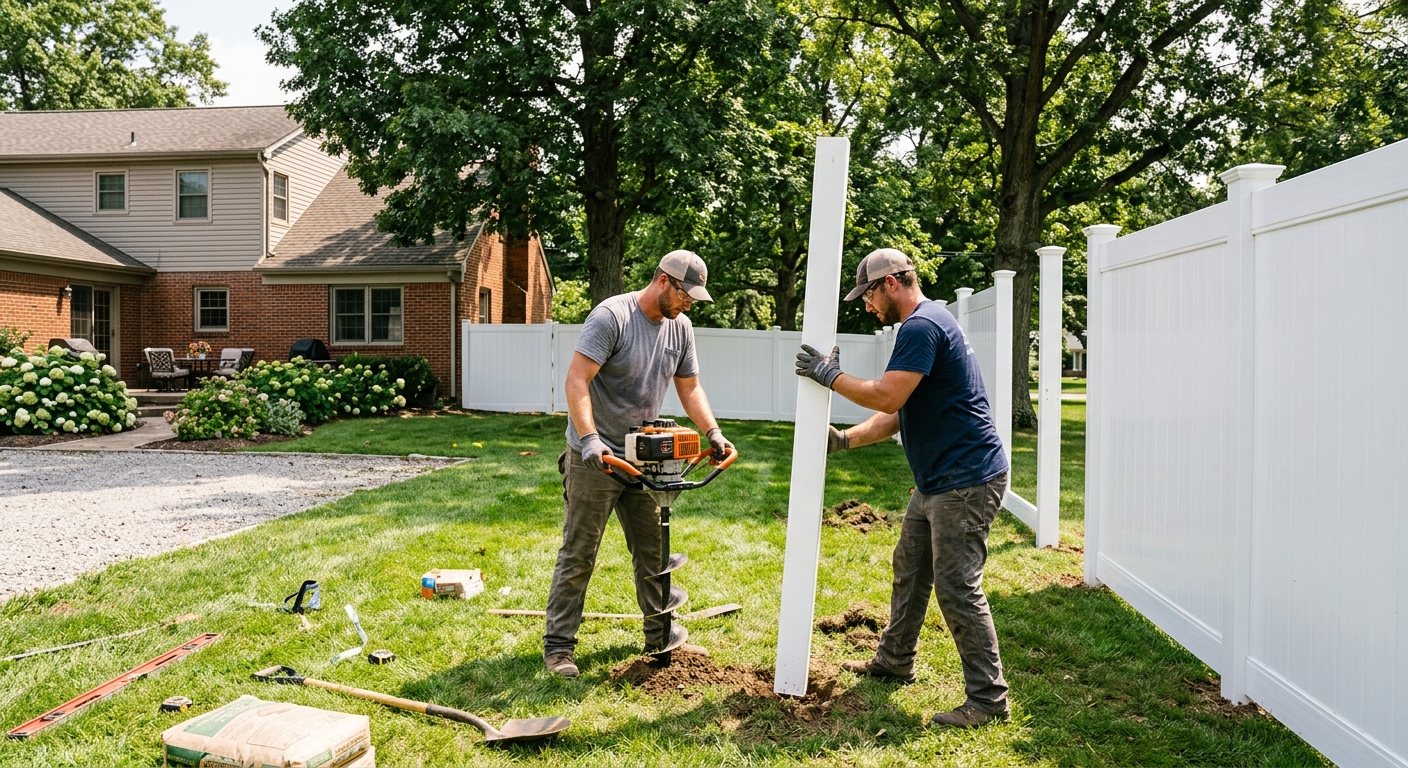
Cost is shaped by the Calgary economic region’s Prairie continental climate: long freeze–thaw cycles, wind exposure, and deep frost impacts how far posts must be set. For privacy fences (typically solid wood or vinyl), posts often need to be set about 4 ft (approximately 120 cm) deep, with concrete footings—this increases excavation time and material costs, but it’s what helps prevent heaving and racking. Chain-link can be cheaper because it’s lighter and more wind-permeable, while aluminum tends to run higher due to hardware and panel/rail build quality.
Below are realistic starting ranges per linear foot for common options in the Whitehorn market. Use them as a budgeting baseline, then we’ll refine for your height, gate count, and yard access.
| Material |
Lifespan |
Maintenance |
Privacy Rating |
Price per Linear Foot |
| Pressure-treated pine (standard wood) |
10–15 years (typical), longer with proper care |
Stain/seal every 2–3 years; inspect posts after winters |
High (solid board style) |
$40–$80 |
| Cedar (natural rot resistance) |
15–25 years (with periodic sealing) |
Seal 1–3 years depending on sun/age; check for splits |
High (solid board style) |
$55–$95 |
| Vinyl / PVC (no-maintenance) |
20–30 years (with correct post spacing and hardware) |
Minimal; rinse as needed; avoid impacts in cold snaps |
High (privacy slat or solid panel) |
$45–$90 |
| Chain-link (galvanized steel) |
20–35 years (coatings hold up well when installed correctly) |
Occasional inspection; tighten and straighten as needed |
Low to Medium (privacy screens optional) |
$25–$55 |
| Aluminum ornamental |
25–40 years (powder-coated systems) |
Wash and spot-clean; no rust with quality coating |
Low to Medium (decorative picket spacing) |
$70–$120 |
| Composite / recycled material |
20–30 years (depending on board quality and installation) |
Very low; clean periodically; ensure proper fasteners |
High (solid styles) |
$85–$125 |
Prices are estimates only and vary by project scope, site access and material selection.
What affects the price of fencing in Whitehorn
In Whitehorn and the wider Calgary economic region, two similar fences can come in 30–50% apart even when the footage looks the same. The difference is usually a mix of (1) how deep and how precisely posts must be set for the region’s frost behaviour, (2) wind-load requirements that drive tighter spacing and stronger framing for solid panels, and (3) job complexity—terrain, gate hardware, and whether old fence removal is included. Contractor availability can also swing pricing during peak seasons because excavation and concrete setting crews are booked faster when everyone’s replacing winter-damaged sections at once.
Frost protection is the big cost lever. In cold Alberta regions, posts generally need to go about 1.5–2.0 m into the ground (often with concrete setting) to prevent heaving, which means longer posts, deeper holes, more concrete volume, and more labour. Wind exposure on the Prairies also means privacy fences typically require sturdier posts and fully concreted footings to stop racking. That’s why solid wood or vinyl is commonly closer to the mid–upper ranges (for example, wood often aligns with the $40–$80 band), while chain-link stays lower because it sheds wind load.
Two common Whitehorn examples: a rear-yard privacy fence with a walk gate usually costs more than the same length of chain-link because each gate adds framed hardware and extra bracing. Also, if your yard has a slope and we need stepped installation, labour increases and material waste can rise—sometimes offsetting the expected savings if you choose the lowest-cost option. Conversely, a straight, accessible run with good ground access and no removal can keep costs near the lower end of the $25–$55 chain-link band.
| Price Factor |
Why It Matters |
Cost Impact |
| Fence length in linear feet — the primary cost driver |
More linear footage increases posts, rails, brackets and finish labour |
Higher footage typically increases total cost proportionally |
| Post depth required — frost line determines post length and hole depth |
Deeper holes mean more excavation and concrete (or heavier support systems) |
Deeper frost protection can add significant labour and materials |
| Post setting method — concrete vs. gravel pack vs. driven posts |
Concrete is more common for solid privacy fences to resist frost heave and racking |
Concrete-setting generally raises costs versus gravel-only methods |
| Material choice — vinyl vs. cedar vs. chain-link |
Solid materials require stronger frames; aluminum/vinyl can have higher hardware costs |
Often shifts you between the $45–$90 vinyl range and the $25–$55 chain-link range |
| Gate count and type — walk-through vs. drive-through (double) |
Gates require stronger hinges, latches, bracing and sometimes custom sizing |
Each gate can add a noticeable lump to the total budget |
| Grade and terrain — sloped yards require stepped or raked panels |
Slopes affect panel layout, rail alignment and sometimes extra materials |
Can increase labour and waste, especially on privacy fences |
| Old fence removal and disposal |
Demolition adds labour, hauling, and recycling/disposal handling |
Removal can add cost even when the new fence is modest |
| Permit fees and survey / property line locate |
Some higher fences may require a permit; accurate boundary info reduces rework |
May add administrative and locate costs to the project |
Permits & regulations in Alberta
In Alberta, fence rules depend on location, height, and where the fence sits relative to the front/corner versus the rear yard. As a practical homeowner guideline, fences above a height threshold—often around 2.0 m (6.5 ft) at the rear and 1.0–1.2 m (3–4 ft) near the front or corners—may require a building permit. Even when a permit isn’t required, every fence must respect property lines and municipal setback bylaws, which are where mistakes get expensive.
Before you dig any post holes, call for utility locates using Alberta One-Call. That step helps avoid hitting buried services (and it also protects you from costly delays). If your boundary isn’t clear, get a survey or at least a property pin locate so you’re not building on a neighbour’s side. Shared fence ownership rules are governed by provincial line-fences legislation—so if you’re replacing a shared boundary fence, confirm who maintains it and how costs are split before work begins.
Homeowner steps to verify your contractor: (1) check their Alberta business licensing status through the appropriate online channels and confirm the company can legally do the work; (2) ask for a current Certificate of Insurance showing liability coverage; and (3) request proof of WSIB/WCB coverage for workers—look for the certificate details and expiry date on the insurance/clearance paperwork. If anything can’t be provided up front, treat it as a major risk.
Choosing the right fence material for Whitehorn
Choosing the right fencing material in Whitehorn comes down to matching your priorities—privacy, low maintenance, lifespan, and upfront budget—to the realities of Calgary’s deep freeze–thaw cycles and windy Prairie exposure. Pressure-treated pine is the budget-friendliest option, but it typically needs staining or sealing every 2–3 years to prevent grey weathering and help slow surface breakdown. Cedar looks great and resists rot better, but it still benefits from periodic sealing, particularly on sunnier faces and exposed edges.
Vinyl/PVC offers genuine low maintenance for most homeowners, yet it can crack if panels are unsupported or if the system wasn’t designed for cold-season movement. That’s why correct post depth and spacing matter as much as the material. Chain-link is the lowest-cost, longest-life “structure” option in many yards, but it provides minimal privacy unless you add slats or a privacy screen. Aluminum ornamental fencing is rust-resistant and tidy-looking, but because it’s open picket style, it usually isn’t a full privacy solution.
For Calgary’s frost line, many privacy fences end up on concrete-set posts to keep alignment through freeze–thaw and stop racking in wind. If you’re comparing wood vs. vinyl: a common justification is durability and maintenance—spending toward the $45–$90 vinyl range can be worth it if you don’t want to re-stain (whereas wood may start in the $40–$80 band and then needs ongoing upkeep). For example, on a privacy run, the vinyl premium can often be rational if you plan to keep the fence long-term and your site makes regular painting inconvenient.
| Material |
Cold Tolerance |
Lifespan |
Annual Maintenance |
Best For |
Price Band |
| Pressure-treated pine |
Good if posts are concreted and boards are properly fastened |
10–15 years typical |
1–2 inspections; stain/seal every 2–3 years |
Budget-focused privacy with planned upkeep |
$40–$80 |
| Cedar |
Good; performs well when fastened and sealed for Alberta winters |
15–25 years |
Minimal—seal as needed (often every 1–3 years) |
Attractive privacy with better natural resistance |
$55–$95 |
| Vinyl / PVC |
Very good when installed with correct post depth and spacing |
20–30 years |
Usually none; occasional rinse/inspection |
Low-maintenance privacy in cold/windy conditions |
$45–$90 |
| Chain-link |
Excellent; corrosion-resistant when galvanized properly |
20–35 years |
Inspect tension and posts; tighten as needed |
Security/containment with long service life |
$25–$55 |
| Aluminum ornamental |
Excellent; powder-coated systems handle freeze–thaw well |
25–40 years |
Wash and spot-clean |
Curb appeal and boundaries without rust |
$70–$120 |
| Composite / recycled |
Good when installed with correct fasteners and expansion allowances |
20–30 years |
Very low; clean periodically |
Premium privacy with minimal routine work |
$85–$125 |
How to choose a fencing contractor in Whitehorn
Choosing a fencing contractor in Whitehorn starts with verification. First, confirm Alberta licensing/authorization for the business and trades they claim to perform. Second, request liability insurance and check that the Certificate of Insurance is current (and shows coverage relevant to property work). Third, verify WSIB/WCB coverage for their workers—ask for clearance documentation or proof with dates, and make sure the information matches the contractor’s legal name.
Next, get 2–3 itemised written quotes, not lump sums. A good fence quote should separate labour from materials, list post and rail quantities, state whether posts are concrete-set, and identify what’s included for gates. Read the scope carefully: ask if permit pulling (when required for taller fences) is included, whether old fence removal and disposal is included, and how they handle property line location costs if a survey is needed.
Warranty matters in fencing because cold weather testing happens every winter. Look for a workmanship warranty length (how long they stand behind installation), plus any product/manufacturer warranty for materials and components. Ask whether the warranty is transferable to future owners and keep the paperwork. On payment, never pay more than 10–15% upfront; use a holdback until the job is fully complete and inspected. Finally, request a written timeline with a start date and completion estimate so you can plan around winter-delivery realities in Calgary.
- Ask for the contractor’s legal business name, address and proof of coverage before any work starts.
- Verify liability insurance is active and covers property damage and third-party claims.
- Confirm WSIB/WCB coverage for workers; request clearance documentation.
- Get 2–3 itemised quotes with labour and materials separated.
- Confirm post setting depth and method (concrete-setting is common for privacy fences in this region).
- Ensure quote lists exact fence height, panel type, post spacing and gate hardware.
- Clarify inclusions: removal, hauling, disposal, and any site restoration.
- Ask whether permit pull is included (if your height triggers it) or handled as an add-on.
- Confirm who locates/handles property line staking or survey requirements.
- Check warranty terms: workmanship duration, product coverage, exclusions and transferability.
- Use a payment schedule: small deposit, progress payments, and a holdback until completion.
- Require an agreed start date and completion window in writing.
Red flags in Whitehorn include: vague scopes that don’t specify post depth or setting method, refusing to provide proof of insurance/WSIB/WCB, quoting “all-in” pricing without showing materials breakdown, pressuring for a large upfront deposit (beyond 10–15%), and promising permit-handling that isn’t written into the contract.
Frequently asked questions — fencing in Whitehorn
Do I need a permit to build a fence in Alberta?
In Alberta, permits are more likely when fences exceed certain height thresholds—commonly around 2.0 m (6.5 ft) in the rear and roughly 1.0–1.2 m (3–4 ft) nearer the front or corners. In Whitehorn (Calgary area), your best move is to confirm the height and placement against the applicable municipal setback and fence-height rules before you book materials. If you’re building a taller privacy fence that may be near or above those common thresholds, ask your contractor to include permit handling in the quote or clearly state whether you’re responsible for pulling it. Also plan for utility locates before digging post holes—Alberta One-Call is the standard step—and keep your property line information current to avoid costly corrections.
How long does a wood fence last in Whitehorn?
A wood fence can last well in Whitehorn, but lifespan depends heavily on post setting and maintenance through Alberta winters. For pressure-treated pine, many homeowners see around 10–15 years when posts are set correctly and the fence is stained/sealed about every 2–3 years to reduce weathering. Cedar often performs longer—often 15–25 years—because of natural rot resistance, though it still needs periodic sealing. In Calgary’s freeze–thaw conditions, improper post depth or skipping concrete setting for solid panels can lead to heaving or racking sooner than expected. Budgeting within the wood range (often $40–$80 per linear foot) can work well if you’re realistic about upkeep.
Who owns and maintains a shared fence?
Shared fence ownership and maintenance in Alberta are addressed under provincial line-fences legislation, but the practical outcome depends on how your boundary fence is treated and what was agreed with neighbours at the time of installation or replacement. For homeowners in Whitehorn, the key is to confirm: who owns the fence line assets, who is responsible for repairs versus full replacement, and how costs are divided if you’re upgrading height or replacing damaged sections. If you’re replacing a shared boundary fence, don’t rely on verbal agreements—get written confirmation of scope, materials, and cost-sharing before work starts. Your contractor should also help document measurements and fence line location so you’re not rebuilding on the wrong side.
How do I find my property line before fencing?
To find your property line before fencing in Whitehorn, start with the most reliable information: your survey (if you have one) and the locations of your property pins. If you don’t have a survey, request a property pin locate or order a survey so you can set fence posts accurately. Before any digging, call Alberta One-Call for utility locates—this doesn’t replace boundary verification, but it prevents dangerous and expensive hits to underground services. When contractors quote fencing, a good practice is to include the plan for how they’ll confirm the line (survey versus locate) and whether property line accuracy is part of their scope. This reduces the risk of encroachment disputes that can force rework in a winter-heavy climate where adjustments are costly.
What's the most low-maintenance fence?
For most Alberta homeowners in Whitehorn, vinyl/PVC is the most consistently low-maintenance option—once installed properly, it typically needs little more than occasional rinsing and an annual visual check. The trade-off is upfront cost: vinyl often lands in the $45–$90 per linear foot range, whereas pressure-treated wood is commonly in the $40–$80 band but needs staining/sealing every 2–3 years. Chain-link can also be low-maintenance, especially for longevity, but it usually won’t provide privacy unless you add screens. The biggest “hidden” maintenance factor across all materials is installation quality: in Calgary’s wind and freeze–thaw cycles, correct post depth and alignment reduce future repairs. That’s why choosing a contractor who gets the structural details right is as important as choosing vinyl.
How tall can my fence be in Whitehorn?
Fence height limits in Whitehorn generally depend on whether the fence is in the front/corner area or the rear yard, because bylaws typically treat those zones differently. A common practical threshold in Alberta is that fences around 2.0 m (6.5 ft) at the rear are more likely to trigger permit requirements, while front or corner heights may be limited to about 1.0–1.2 m (3–4 ft). The safest approach is to check the municipal setback and height rules for your exact location before ordering panels. If you’re planning a privacy fence—especially a solid wood or vinyl design—also consider structural needs in Calgary’s wind: even if a height is allowed, solid panels often require more robust posts and concrete-set footings to prevent racking through winter cycles.