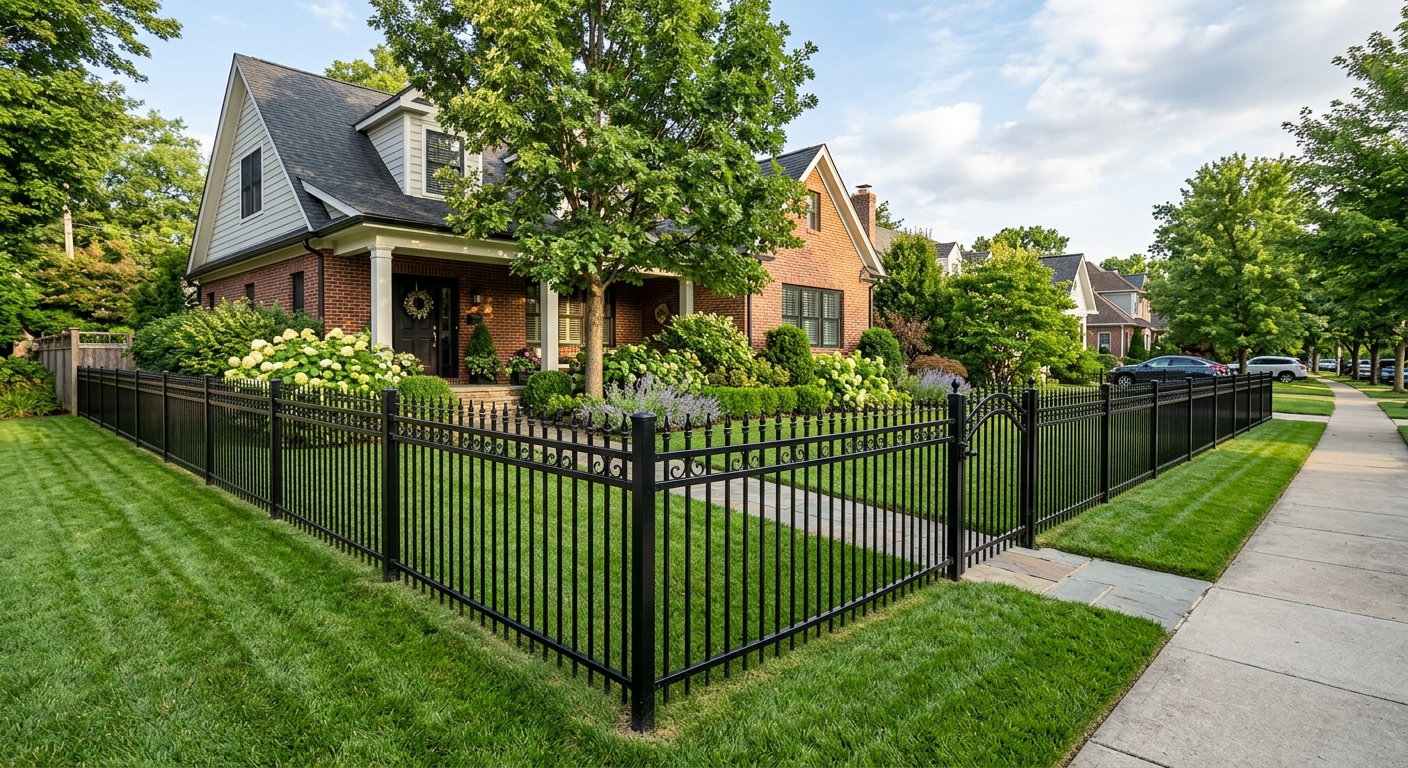
Fencing options and costs in Crestmont
Crestmont, Alberta is a small community (2,275 people as of the 2021 Census, Statistics Canada), but homeowners still ask for the same basics: privacy, curb appeal, and a fence that survives the long Prairie winters. In a neighbourhood with mostly detached homes and family lots, every backyard boundary can mean a new gate, a straight run, or a full replacement—so demand stays steady, especially in windy pockets where panels take a beating. The Calgary economic region’s Prairie continental climate brings repeated freeze–thaw cycles, and that’s one reason fencing prices can feel higher here than in milder parts of Canada: frost protection and wind loading drive deeper post installs and sturdier framing.
In Crestmont and nearby Calgary areas, we often see extra labour because posts must be set about 4 ft (≈120 cm) deep to get below the regional frost line and help prevent heaving. Solid privacy styles (wood or vinyl) also tend to need closer post spacing to resist racking in open exposure. Chain-link usually costs less because airflow reduces wind stress, while ornamental aluminum sits in the higher range due to component price and detail work.
If you’re budgeting, local installed pricing across Calgary commonly lands around 25–100 per linear foot depending on material and site conditions, which is why it’s smart to compare apples to apples. The table below breaks down common options so you can align lifespan and maintenance with a realistic per-foot budget.
| Material |
Lifespan |
Maintenance |
Privacy Rating |
Price per Linear Foot |
| Pressure-treated pine (standard wood) |
10–15 years (often 15+ with regular staining) |
Stain or seal every 2–3 years; periodic hardware checks |
High (solid boards) |
$40–$80 |
| Cedar (natural rot resistance) |
15–25 years |
Light staining/conditioning every 2–4 years to slow grey weathering |
High (solid boards) |
$55–$95 |
| Vinyl / PVC (no-maintenance) |
20–30 years (panel and rail integrity dependent on installation) |
Minimal: rinse as needed; inspect for cracking after extreme cold snaps |
High (lattice optional) |
$45–$90 |
| Chain-link (galvanized steel) |
20–35 years |
Occasional tension checks; keep gates aligned |
Low to Medium (privacy slats add coverage) |
$25–$55 |
| Aluminum ornamental |
25–40 years |
Minimal: wash down; repaint only if you change finishes |
Low to Medium (best with inserts/planters) |
$70–$120 |
| Composite / recycled material |
20–30 years |
Wash and inspect; fewer stains than wood, but still needs care |
High (solid styles available) |
$60–$105 |
Prices are estimates only and vary by project scope, site access and material selection.
What affects the price of fencing in Crestmont
In Crestmont, it’s common to see quotes for the “same” fence land 30–50% apart across Calgary and the broader Alberta market. The gap usually isn’t the showroom material—it’s how contractors handle frost depth, wind exposure, and how much labour is buried in the details. Prairie freeze–thaw cycles push us to set posts deeper and often use more concrete footings, and that single change can add both excavation time and material cost. Even when you choose wood in the typical $40–$80 band, the installation method can push your total toward the upper end if soil conditions are hard or access is tight.
On top of that, open exposure on the Prairies increases wind loading. For privacy fences, that means tighter post spacing and sturdier framing so panels don’t rack under gusts. In milder climates, wood rot risk and drainage may be the main cost driver, but here it’s the structure staying plumb through winter heave and spring thaw.
Concrete examples from Crestmont/Calgary-area installs: (1) if your yard has frozen ground plus rocky subsoil, post-hole excavation takes longer—so labour rises and concrete quantities can change with deeper, cleaned holes; (2) if you want a 6 ft privacy fence in a more exposed run, we often increase post spacing and use heavier rails, which moves costs closer to the mid–upper end of wood or vinyl pricing; (3) removing an old fence and hauling it away can add a disposal line item that looks “optional” on a call but becomes significant at the site.
So when you compare bids, ask how they’re setting posts (and how deep), not just what they’re building. That’s also why chain-link can sit lower at $25–$55, since it can tolerate wind with less internal stress on the framing than solid privacy panels.
| Price Factor |
Why It Matters |
Cost Impact |
| Fence length in linear feet — the primary cost driver |
Materials (posts, rails, panels) and labour scale directly with footage |
Typically the biggest driver; longer runs can move total by thousands |
| Post depth required — frost line determines post length and hole depth |
Deeper installs reduce heaving in freeze–thaw cycles |
More excavation time, more post material, more concrete (often +$ per foot) |
| Post setting method — concrete vs. gravel pack vs. driven posts |
Concrete helps lock posts; gravel/driven methods may shift under heavy wind |
Concrete set is usually higher cost but often better for privacy and gates |
| Material choice — vinyl vs. cedar vs. chain-link |
Different material and hardware pricing, plus installation complexity |
Can swing you between low/mid (chain-link) and mid/upper (wood/vinyl) bands |
| Gate count and type — walk-through vs. drive-through (double) |
Gates require heavier hinges, latching, and often reinforced posts |
Each gate can add significant labour and hardware beyond fence-only pricing |
| Grade and terrain — sloped yards require stepped or raked panels |
Slopes need custom panel fitting and sometimes additional rails |
Can add labour and waste; may increase the number of components used |
| Old fence removal and disposal |
Hauling and dump fees are real site costs |
Often a notable add-on if you have multiple sections to remove |
| Permit fees and survey / property line locate |
Accurate layout protects you from encroachment disputes |
Small line item sometimes, but can delay work if not planned |
Permits & regulations in Alberta
In Alberta, fence permitting depends largely on height and location. As a homeowner in Crestmont, treat this as a “verify before you dig” item: fences above a typical threshold of about 2.0 m (6.5 ft) at the rear and about 1.0–1.2 m (3–4 ft) at the front or corners often require a building permit. Even when a permit isn’t required, your fence still must respect property lines and any municipal setback requirements that apply in your area.
Before installing any fence posts, you should call for utility locates. Use Alberta One-Call (utility marking) to reduce the risk of hitting underground services. Also, if you don’t have clear pin positions, obtain a survey or have the property pins located so your layout matches the legal boundary. This helps prevent neighbour disputes, which can be costly if adjustments are required after concrete is set.
Shared fence ownership is governed by provincial line-fences legislation, so confirm responsibilities for maintenance and replacement—especially if the fence is on or near a boundary. For contractor verification: check an Alberta licence (where applicable for fencing contractors), request a current certificate of liability insurance, and confirm workers’ compensation coverage (WCB) before work starts. Where to look: ask for documents directly, and verify licence status through the relevant online registry; keep copies for your records.
Choosing the right fence material for Crestmont
The right fence material in Crestmont is mostly about balancing privacy, maintenance, and how the product handles Alberta’s cold snaps and long freeze–thaw cycles. Pressure-treated pine is the typical budget choice, but to keep it looking good you should plan on staining or sealing about every 2–3 years to prevent rough grey weathering. Cedar offers better natural rot resistance and a warmer appearance, yet it still benefits from periodic conditioning so it weathers evenly. Vinyl/PVC is attractive for low effort—no regular staining—but it can be more sensitive in extreme cold if it’s not installed with correct expansion allowances and solid anchoring.
For visibility and long service life, chain-link is the lowest-cost option and tends to perform well in wind because air passes through. The trade-off is privacy: chain-link alone reads “open,” though privacy slats can improve coverage at an added cost. Aluminum ornamental is a premium-looking choice; it won’t rust like some metals and offers a clean, durable finish, but it’s usually less private unless paired with plantings or infill.
Post depth matters across all materials. In Calgary’s Prairie climate, we still plan for posts set below the frost line—often around 4 ft (≈120 cm) deep—with concrete footings commonly used for privacy fences and heavier gate posts. That helps the fence resist heaving and keep gates from sagging over multiple winters. If you’re deciding between options with a dollar difference, a practical example is this: a standard wood privacy fence can fit within the $40–$80 per-foot band, while vinyl often starts higher but can be worth it if you want to skip staining for decades—especially on long, exposed runs.
| Material |
Cold Tolerance |
Lifespan |
Annual Maintenance |
Best For |
Price Band |
| Pressure-treated pine |
Good when posts are deeply set and hardware is galvanized |
10–15 years (often 15+ with proper staining) |
Low to moderate: inspection plus stain/repair every 2–3 years (not every year) |
Budget-conscious privacy with a classic look |
$40–$80 |
| Cedar |
Good; performs well in cold with proper spacing and solid posts |
15–25 years |
Low: conditioning/staining typically every 2–4 years |
Natural appearance and long service life |
$55–$95 |
| Vinyl / PVC |
Good, but needs correct installation for cold contraction |
20–30 years |
Very low: rinse and quick hardware check |
Low-maintenance privacy and tidy appearance |
$45–$90 |
| Chain-link |
Excellent; galvanized steel handles winter cycles well |
20–35 years |
Low: occasional tension/hinge alignment |
Security with airflow and lowest upfront cost |
$25–$55 |
| Aluminum ornamental |
Excellent; won’t rust and tolerates temperature swings |
25–40 years |
Very low: wash down as needed |
Curb appeal with boundary definition |
$70–$120 |
| Composite / recycled material |
Good; stable profiles when installed to manufacturer specs |
20–30 years |
Low: periodic cleaning and inspection |
Privacy with fewer staining hassles |
$60–$105 |
How to choose a fencing contractor in Crestmont
Choosing a contractor in Crestmont starts with proof and paperwork—especially in Alberta where you’ll want coverage for on-site work. Ask for an Alberta licence (where applicable), a certificate of liability insurance naming you as an additional insured if the company offers it, and confirmation of workers’ compensation coverage (WCB). How to check: request the documents before signing, verify licence status through the relevant online registry, and review the insurance certificate for coverage limits and expiry date. Don’t accept “we’re insured” without seeing the certificate.
Next, get 2–3 itemised written quotes, not lump sums. A good fence proposal breaks out labour and materials (posts, rails, panels, gate hardware, concrete/setting method, and disposal/removal if included). Read the scope line-by-line: what’s excluded (landscaping, uneven demolition, rock removal, permit pulls), is permit work included or your responsibility, and is waste hauling/disposal part of the price? Clear scope prevents surprises once post holes are dug.
Warranty matters: ask for a workmanship warranty length and whether product warranties are manufacturer-backed and transferable to you if the company changes ownership. Payment schedule should protect you—never pay more than about 10–15% upfront; hold back a portion until the job is complete and inspected. Finally, request a written start date and a realistic completion timeline; in our winters, weather windows and curing time for concrete footings affect schedules.
- Confirm WCB coverage is active before work begins.
- Ask for current liability insurance and verify the certificate details.
- Require an itemised quote showing post-setting method and concrete quantity assumptions.
- Ensure the quote states the intended post depth (frost protection target) and whether holes are concreted.
- Check gate pricing separately (walk-through vs double drive) and verify reinforced hinges/posts.
- Confirm whether permit/utility locates are included or billed separately.
- Ask how they handle slopes: stepped vs raked panel method and who supplies the materials adjustments.
- Verify old fence removal and disposal is included (or provide a separate line item).
- Review warranty: workmanship duration, what’s covered, and how claims are handled.
- Confirm payment terms in writing, including your holdback amount.
- Request a start date and completion estimate in the contract or work order.
- Ask about cleanup: final haul-away of debris and site restoration expectations.
In Crestmont, typical red flags include quotes that don’t specify post depth or setting method, missing insurance/WCB documentation, “lump sum” proposals with unclear exclusions, promises that the fence will be built “exactly on the line” without a locate/survey plan, and warranties that cover materials but not workmanship—or that are vague about what happens if panels rack in wind within the first season.
Frequently asked questions — fencing in Crestmont
How tall can my fence be in Crestmont?
In Crestmont, your allowable fence height depends on where it sits (front/corner vs rear) and whether you’re within a threshold that triggers a permit. A common Alberta approach is that rear fences around 2.0 m (6.5 ft) and higher may need a building permit, while front or corner fences often have lower typical thresholds (about 1.0–1.2 m or 3–4 ft). Before you order materials, confirm your plan with the municipal requirements that apply to your location and ask your contractor to include the permit step if needed.
As you budget, taller privacy fences also increase wind load on rails and the need for robust posts and deeper setting. That can move you toward the mid-range of the wood/vinyl bands (often within the $40–$80 or $45–$90 per-foot areas, depending on material and gate count).
Should fence posts be set in concrete here?
In the Calgary economic region, we typically recommend concrete-set posts for privacy fences and gate posts, mainly because of frost heave risk through long freeze–thaw cycles. Local guidance often targets about 4 ft (≈120 cm) post depth so posts sit below the regional frost influence. For many homeowners in Crestmont, that means excavating deeper holes and using concrete footings to stabilize posts and reduce movement over multiple winters.
Concrete doesn’t automatically mean “always more expensive,” but it does change labour and material costs, so it should be specified in the quote. If you see a low bid for a 6 ft privacy fence that doesn’t explain how posts are protected from heaving, that’s a red flag. Chain-link can sometimes tolerate lighter settings because airflow reduces wind stress, but solid panels generally perform better with a firm foundation.
What's the best fence for privacy?
For privacy in Crestmont, solid-panel fences usually win—wood (pressure-treated pine or cedar) and vinyl/PVC privacy styles give the highest coverage. The “best” choice depends on your willingness to maintain: pressure-treated pine typically needs staining or sealing every 2–3 years to keep it from greying and weathering, while cedar often looks great but still benefits from periodic conditioning. Vinyl is popular when homeowners want low maintenance, but it should be installed correctly for Alberta cold contraction and wind loading.
Because the Prairies are exposed, privacy fences also need sturdier framing and close post spacing. That’s why total costs for privacy fences tend to land mid to upper in their bands rather than at the low end. As a starting point, expect wood privacy to fall in the $40–$80 per-foot range, with vinyl commonly in the $45–$90 range depending on height, gate count, and terrain.
How do I compare fencing quotes?
Compare quotes like a contractor: not just the final price, but how each one builds the fence. Ask for an itemised breakdown (labour and materials) and confirm what’s included for post depth, post setting method, rails, and gate hardware. The big variable in Crestmont/Calgary area pricing is frost protection—posts are typically set about 4 ft (≈120 cm) deep, often with concrete footings for privacy fences—so make sure each bid uses similar assumptions. If one quote sets posts shallower or leaves concrete out, it may look cheaper but can perform worse after freeze–thaw cycles.
Also check terrain assumptions (slopes and stepped/raked sections), whether old fence removal and disposal are included, and whether permit pull and utility locates are your responsibility. A fair quote should read the same scope and include the same inclusions, not just a number that lands within the $25–$55 chain-link or $70–$120 aluminum ranges.
How long does fence installation take in Crestmont?
Installation time varies by length, site access, and how much excavation is needed for frost-safe post depth. For an average Crestmont back-yard project, crews often plan for multiple days when you have deeper holes, concrete curing time, and at least a couple of gates. If you’re replacing an old fence, removal and haul-away can add time—especially when winter conditions slow ground work or when subsoil is rocky.
A good contractor should give you a written start date and completion estimate based on linear footage and access. Ask whether they’ll schedule concrete setting to manage curing and reduce rework. To compare timelines, make sure each quote reflects similar post depth and the same gate hardware scope; a “fast” quote that omits concrete setting or reinforcement usually leads to longer fixes later, particularly in wind-exposed yards.
Can I install a fence on a slope in Crestmont?
Yes—you can install a fence on a slope in Crestmont, but the method matters. Most fencing systems handle grade changes using either stepped panels (matching the slope with discrete level sections) or raked panels (one continuous angle). Your contractor should propose the approach that keeps the fence plumb and stable in wind, while still respecting height rules and the overall look you want.
Sloped yards can raise costs because you may need additional labour for layout, more precise trimming, and sometimes extra rails or post adjustments. It also increases the importance of consistent post depth so the fence doesn’t lean after freeze–thaw cycles. Make sure your quote explicitly states how it will manage the slope and whether the fence height will stay consistent from grade to grade. If you’re aiming for privacy, the extra stability requirements usually push the project toward the mid-range of wood or vinyl pricing (for example, wood often within the $40–$80 band), depending on terrain and gate count.