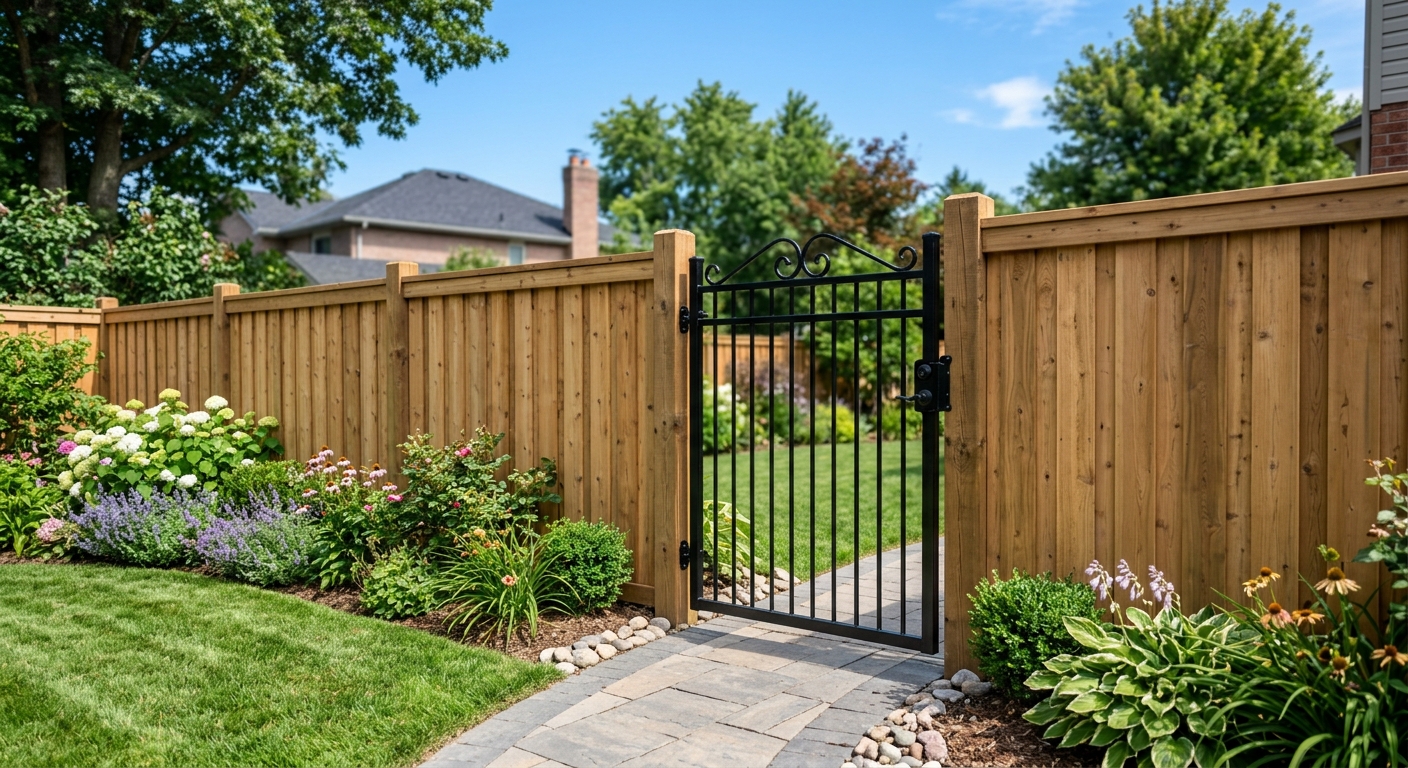
Fencing options and costs in Whitecourt
Whitecourt homeowners typically shop for fencing by balancing privacy, maintenance, and budget, and the local housing mix strongly influences demand. With 68.4% of households owning their homes and 52.5% of dwellings being single-detached, a lot of yards are tied to long-term upgrades—replacement panels, new gates, and boundary upgrades after settling or weathering. That “replace-and-improve” rhythm is visible across the Edmonton economic region, where many installs follow the same seasonal pattern: spring thaw work, summer panel builds, and fall touch-ups before the freeze sets in. (Statistics Canada, 2021 Census)
In Whitecourt, fencing quotes are shaped less by material alone and more by Edmonton-area site conditions. Alberta frost drives the need for posts set below the frost depth—often requiring deeper holes and concrete setting. Wind exposure on more open lots also increases panel stress, which can mean tighter post spacing and heavier fasteners for privacy fences. Contractor availability can swing with the broader region’s workload, so scheduling during peak summer weeks often adds labour pressure. You’ll commonly see the strongest demand in neighbourhoods with newer subdivisions and expanding boundary coverage, including areas around downtown Whitecourt and the newer residential edges where lots are wider and gate installs are frequent.
Below is a practical comparison of common fencing materials and what many Whitecourt homeowners budget for installed work.
| Material |
Lifespan |
Maintenance |
Privacy Rating |
Price per Linear Foot |
| Pressure-treated pine (standard wood) |
10–15 years |
Stain/seal every 2–3 years |
Medium to High |
$13–$22/ft |
| Cedar (natural rot resistance) |
15–25 years |
Light stain or seal every 2–4 years |
High |
$18–$30/ft |
| Vinyl / PVC (no-maintenance) |
20–30 years |
Wash as needed (typically 1–2x/year) |
Medium to High |
$18–$33/ft |
| Chain-link (galvanized steel) |
25–35 years |
Minimal (inspect tension and coating) |
Low |
$11–$18/ft |
| Aluminum ornamental |
25–35 years |
Wash as needed |
Low to Medium |
$18–$38/ft |
| Composite / recycled material |
20–30 years |
Very low (rinse and inspect) |
High |
$20–$38/ft |
Prices are estimates only and vary by project scope, site access and material selection.
What affects the price of fencing in Whitecourt
Even when two homeowners want the “same” fence, Edmonton-area bids can differ by 30–50% due to site and foundation conditions. A straightforward backyard run on level ground with easy access may land near the lower end of wood pricing, while a longer boundary with grade changes, a lot of posts, and concrete-set requirements can push the job closer to the higher end. Labour and materials also respond to frost-season planning: deeper post holes and extra setting time aren’t optional in Alberta if you want to reduce heaving risk.
In practical terms, Edmonton’s frost depth drives excavation and post depth—posts are typically set about 4–6 inches (100–150 mm) below the design frost depth to help prevent heaving. In colder Canadian regions that often translates to posts being set roughly 1.5–2.0 m into the ground, which increases both material (longer posts) and labour (deeper holes, more concrete if specified). Wind exposure on the Prairies matters too: more open lots can mean tighter post spacing and sturdier assemblies, especially for privacy fences where panels act like sails. In Whitecourt, you’ll often see this on corner lots and more exposed edges near treelines that still allow wind to funnel.
Cost swings can be very concrete. For example, a 100 ft wood privacy run with gravel pack might price much closer to the lower wood band (often in the $3,000–$6,500 total range), but the same length with concrete-set posts and a double gate can land higher. Similarly, vinyl or PVC often starts around the $3,500–$8,000 total range, but add grade-stepping and wind-rated hardware and the job can move toward the top end. On older homes (32.6% built before 1981 in the broader profile), you may also encounter harder-to-locate services, older fence remnants, or irregular yard grades that add excavation time.
| Price Factor |
Why It Matters |
Cost Impact |
| Fence length in linear feet |
Most components scale directly with total run length |
High (primary driver) |
| Post depth required |
Frost conditions determine hole depth and minimum post length |
Medium to High |
| Post setting method |
Concrete vs. gravel pack vs. driven posts changes time and material |
Medium to High |
| Material choice |
Vinyl, cedar, and chain-link have different costs and assembly approaches |
High |
| Gate count and type |
Drive-through double gates require extra framing and hardware |
High |
| Grade and terrain |
Slopes require stepping, raking, or additional labour for alignment |
Medium to High |
| Old fence removal and disposal |
Hauling debris and rebuilding around remaining posts adds time |
Medium |
| Permit fees and survey / property line locate |
Admin time and third-party locating can be required before digging |
Low to Medium |
Permits & regulations in Alberta
In Alberta, fences are generally tied to property lines and local setback rules, and permits can be required when you exceed typical height thresholds. A common rule of thumb used by many municipalities is that fences over about 2.0 m (6.5 ft) for rear yards and about 1.0–1.2 m (3–4 ft) for front yards or corner areas often trigger permit requirements. Because exact thresholds and wording can vary by municipality and situation, confirm with the City/municipal office for Whitecourt before ordering materials or digging post holes.
Before any digging, call for utility locates through Alberta One-Call. This step is for protecting you and your contractor from underground surprises. For boundaries, it’s also smart to obtain a survey or locate property pins before installing—this helps avoid encroachment disputes when neighbours disagree on the line. Shared fence ownership and maintenance responsibilities are handled under provincial line-fences principles; the practical outcome is that shared boundaries often require coordination on repairs, replacement timing, and cost sharing.
What usually requires a permit: taller fences (often around/above 2.0 m rear and 1.0–1.2 m front/corner) and situations where a municipal review is triggered by height and location.
What typically does not: lower, standard-height backyard fences that stay within the typical height limits and do not involve special variances—however, you still must respect setbacks and property lines.
Step-by-step checks for your Whitecourt contractor: (1) verify their Alberta licence on the appropriate online registry for fencing/contracting authority your project type uses; (2) request a certificate of insurance showing general liability for the work—confirm the policy dates align with your installation window; and (3) confirm WCB/WCB clearance coverage (or the applicable coverage status) and keep proof with your contract paperwork (often in the form of clearance letters or confirmation documents). If they won’t provide documentation, that’s a red flag.
Choosing the right fence material for Whitecourt
Choosing a fence material in Whitecourt is really choosing a maintenance schedule that fits your tolerance for winter impacts. Whitecourt weather—and the wider Edmonton-region freeze-thaw cycle—means posts must be installed deep enough to reduce heaving, and the fence needs assemblies that handle wind and temperature swings. Pressure-treated pine is usually the best budget entry point, but it commonly needs staining or sealing every 2–3 years to slow grey weathering and keep boards looking consistent. Cedar has natural rot resistance and often looks better longer, but it still benefits from periodic staining or sealing to maintain colour and reduce checking. Vinyl/PVC is popular for low maintenance, yet in extreme cold it can become brittle if installed with poor temperature practices or flexible spacing. Chain-link is the lowest-cost, longest-life option, but it offers no privacy; it’s best when security matters more than visual screening. Aluminum ornamental sits in the mid-range: it won’t rust and it handles our cold well, but it won’t provide the privacy of solid panels.
On frost depth: in Edmonton-area builds, concrete-set posts are often recommended for stability where soil is prone to heaving, especially for privacy fences. That doesn’t mean every project must be concrete-set everywhere, but if the grade is uneven or the site is exposed, concrete setting and heavier bracing typically protect alignment over freeze-thaw seasons. Wind and snow loads also influence hardware choice—privacy layouts especially benefit from sturdier post spacing and rigid top/bottom rails.
For a simple dollars-and-sense example: a pressure-treated pine privacy fence commonly lands closer to the wood installation band (about $3,000–$6,500 installed), while a vinyl privacy build can land in the $3,500–$8,000 range. The difference can be justified when you want to reduce annual maintenance work and keep labour time predictable—especially for homeowners who would rather spend weekends on the house than on fence staining.
| Material |
Cold Tolerance |
Lifespan |
Annual Maintenance |
Best For |
Price Band |
| Pressure-treated pine |
Good with proper post depth and sealing |
10–15 years |
Stain/seal every 2–3 years |
Budget-friendly privacy |
$3,000–$6,500 |
| Cedar |
Very good; handles Alberta winters well |
15–25 years |
Light seal/stain every 2–4 years |
Premium look with natural durability |
$4,000–$8,000 |
| Vinyl / PVC |
Good if installed correctly in cold temps |
20–30 years |
Wash as needed (1–2x/year) |
Low maintenance privacy |
$3,500–$8,000 |
| Chain-link |
Excellent; stable in cold |
25–35 years |
Minimal inspection/repairs |
Security on a tight budget |
$2,000–$4,500 |
| Aluminum ornamental |
Excellent; won’t rust |
25–35 years |
Wash as needed |
Curb appeal with limited privacy |
$4,000–$9,000 |
| Composite / recycled |
Good; resists rot better than wood |
20–30 years |
Very low (rinse and inspect) |
Durable privacy panels |
$4,500–$9,000 |
How to choose a fencing contractor in Whitecourt
Choosing a fencing contractor in Whitecourt starts with proof, not promises. In Alberta, you should verify that the contractor is properly licensed for their contracting activities, carries liability insurance that covers the job (and matches the installation timeframe), and has WCB/WCB clearance or coverage documents in place. How to check: (1) look up their Alberta licence using the relevant online registry for the contractor’s type of work; (2) request a certificate of insurance and confirm the insurer name, policy number, and effective dates; and (3) ask for WCB/WCB clearance or confirmation paperwork and keep it with your contract. If a contractor can’t produce these documents quickly, move on—fencing work involves excavation, moving materials, and risk around property lines.
Next, get 2–3 itemised written quotes. You want a breakdown that separates labour, materials, post depth and setting method, gates (including hardware), and any site prep or removal. Avoid “lump sum” pricing with unclear inclusions. Read the scope carefully: is permit pulling included if required, and who pays for utility locates? Is old fence removal and disposal included, or is it extra? For warranty, ask for two pieces: a workmanship warranty (how long the contractor stands behind installation) and the manufacturer/product warranty (for fence rails, panels, boards, or coated wire). Also confirm whether the warranty is transferable if you sell your home.
Finally, the payment schedule matters. A common homeowner-safe approach is never more than 10–15% upfront, with a holdback until the job is complete and any punch-list items are addressed. Get a start date and an expected completion window in writing so you’re not left waiting through Edmonton-region seasonal weather.
- Confirm licence details and scope of work before they dig
- Request a COI (certificate of insurance) and verify policy dates
- Ask for WCB/WCB coverage or clearance documentation in writing
- Insist on utility locates being called before any post holes
- Get an itemised quote (posts, rails, gates, hardware, setting method)
- Confirm post depth and whether posts are concrete-set or gravel-packed
- Ask who supplies and places the fence on the correct property line
- Clarify inclusions: permit pulling, survey locate, and property-pin locating
- Specify disposal: dump fees and haul-away of old fence
- Request a written workmanship warranty length and what it covers
- Confirm payment terms and avoid paying more than 10–15% upfront
- Get the installation schedule and completion estimate in your contract
Red flags I see in Whitecourt: contractors who won’t provide licence/insurance/WCB documentation, quotes that don’t specify post depth or setting method, vague scopes that exclude removal or disposal, pricing that lists “fencing” but omits gate hardware details, and crews that start without utility locates or any plan to protect landscaping and driveways.
Frequently asked questions — fencing in Whitecourt
How much does a fence cost in Whitecourt?
In Whitecourt, the total installed cost usually depends on linear footage, gate count, and how much excavation is needed for frost stability. For many typical backyard runs, wood installations commonly land around the region’s $3,000–$6,500 band, while vinyl/PVC often sits in the $3,500–$8,000 range. If privacy isn’t required, chain-link can be lower, frequently in the $2,000–$4,500 range, and aluminum ornamental tends to cost more, often around $4,000–$9,000 depending on spacing and gates. Also remember that older yards in Alberta can have irregular grades and buried service surprises—those site realities can push even a “simple” fence toward the upper part of the band. (Statistics Canada, 2021 Census)
How deep should fence posts be for Whitecourt's frost?
For Alberta frost conditions, fence posts should be set below the design frost depth to reduce heaving. In practice for Edmonton-region builds, that usually means installing posts roughly 1.5–2.0 m into the ground, with holes dug so the post base lands about 4–6 inches (100–150 mm) below the design frost line. The exact depth can vary by soil, drainage, and how exposed the site is, so your contractor should state the post depth and setting plan in writing. For many privacy fences, concrete-set posts are recommended because deeper holes and stable foundations help the fence keep its alignment through freeze-thaw cycles. Always confirm utility locations before digging.
Wood vs vinyl vs aluminum fence — which is best?
“Best” depends on what you value most. Wood (pressure-treated pine) is typically the most affordable route—often near the $3,000–$6,500 installed band—but it usually needs staining or sealing every 2–3 years to keep it looking good. Cedar costs more but offers better natural rot resistance and a warmer look; it still benefits from periodic maintenance. Vinyl/PVC is popular when you want low maintenance and long service life, often within the $3,500–$8,000 band, but it must be installed correctly to handle cold contraction. Aluminum ornamental is a great rust-resistant option for curb appeal and longevity (often $4,000–$9,000), but it won’t give you the same privacy as solid wood/vinyl panels. For wind-exposed corners in Whitecourt, sturdier spacing and rigid hardware often matter as much as material.
Do I need a permit to build a fence in Alberta?
In Alberta, permits can be required when fences exceed common height thresholds—often around 2.0 m (6.5 ft) at the rear, and about 1.0–1.2 m (3–4 ft) at the front or corner. Even when a permit isn’t triggered, you must still respect property lines and municipal setback bylaws. Before you install, call for utility locates through Alberta One-Call and consider obtaining a survey or locating property pins so you’re working on the correct boundary. For shared fences, provincial line-fences principles can affect maintenance and repair expectations with neighbours. The key step for Whitecourt homeowners: ask your contractor to clearly state whether permit pulling is included, and verify the fence height and location before digging.
How long does a wood fence last in Whitecourt?
A wood fence’s lifespan in Whitecourt is strongly affected by how deep the posts are set, whether boards are properly treated, and how often you maintain surface protection. With pressure-treated pine and good installation practices, a typical expectation is about 10–15 years. Maintenance timing matters: homeowners who plan to stain or seal every 2–3 years usually slow down weathering and board checking. Cedar generally lasts longer—often 15–25 years—because of natural rot resistance, though it still benefits from periodic sealing. If your fence is on an exposed wind lot, consider sturdier post spacing and better bracing; wind can loosen hardware and increase stress on rails faster. For yards with older soils or uneven ground, concrete-set posts may help keep alignment through Alberta freeze-thaw cycles.
Who owns and maintains a shared fence?
Shared fence ownership in Alberta is commonly handled under provincial line-fences rules, which can determine maintenance responsibilities and how replacement costs are coordinated between neighbours. In practice, many homeowners agree that both sides share upkeep when the fence is truly on the shared boundary and used as a dividing structure. If repairs are needed, it’s best to communicate early: agree on scope (posts, rails, pickets/panels, gates), confirm whether replacement is required versus partial repairs, and document the agreement in writing. For Whitecourt properties, where post depth and wind exposure can cause earlier alignment issues, early maintenance discussions often prevent one neighbour from bearing the full replacement cost later. If you’re unsure about the boundary line, using a survey or pin locate helps avoid disputes.