Fencing options and costs in Chinook Park
Chinook Park, Alberta is a small neighbourhood with a lot of backyard real estate, so when homeowners plan upgrades, fencing is often one of the first projects to come up. With a population of 1,535 (Statistics Canada, 2021 Census), demand isn’t “mega-city” high, but it is consistent—especially because many properties are detached homes that typically need boundary fencing, privacy screens, and gates at the same time as landscaping. In addition, Calgary’s Prairie continental climate brings long freeze–thaw cycles and frequent wind, which affects both how contractors build fences and how much material and labour you’ll pay for.
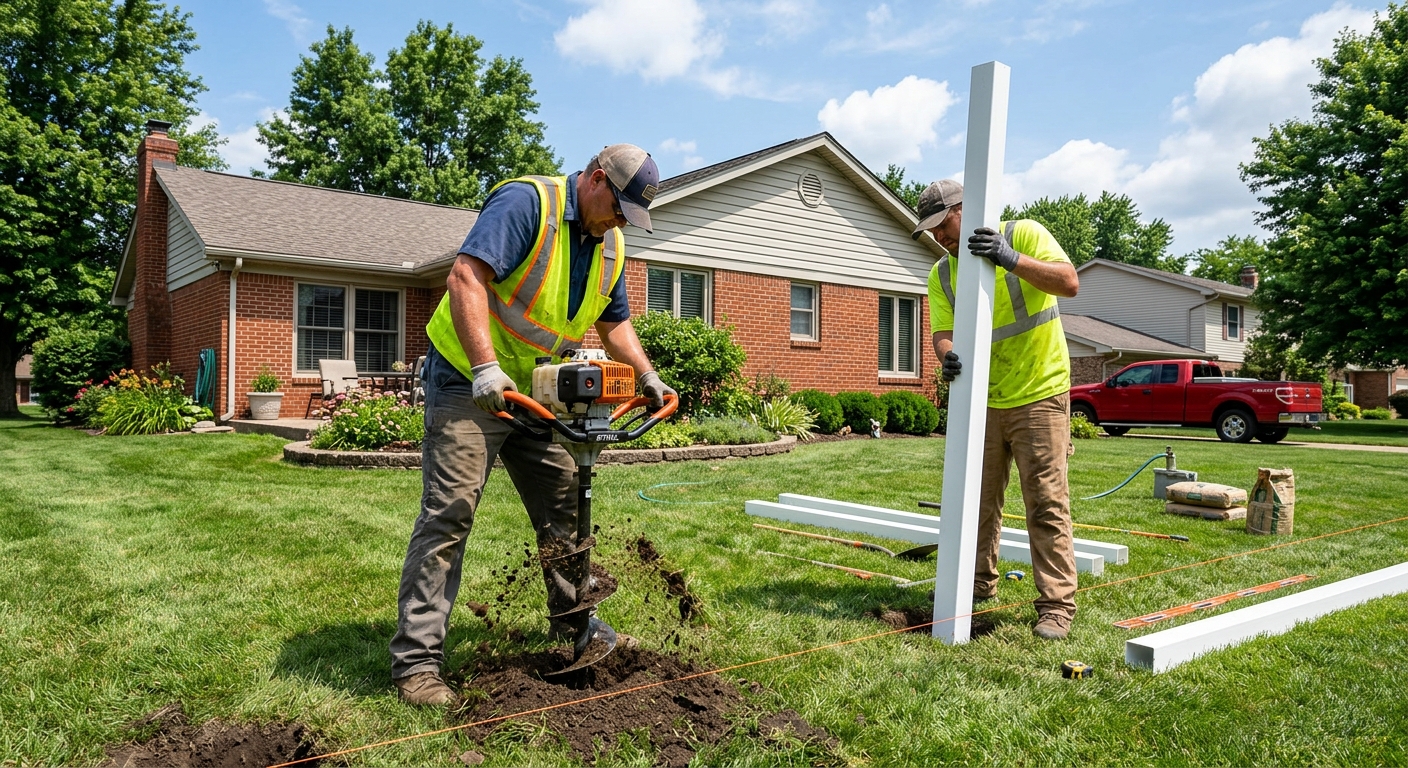
In Chinook Park and the surrounding Calgary area—particularly around the more exposed lots near community edges—solid fence styles like wood privacy and vinyl panels face higher wind loading. That usually means closer post spacing, sturdier rails, and fully concreted footings to resist racking. Post depth also drives pricing: contractors commonly set posts roughly 4 ft (≈120 cm) deep (about the practical requirement to get below the regional frost line), which increases excavation time, concrete volume, and the cost of longer posts.
If you’re comparing options, it helps to think in terms of the installed “per linear foot” rate and how each material performs through Calgary’s cold snaps. For a quick shortlist, use the table below as a price-and-performance guide for Chinook Park projects.
| Material |
Lifespan |
Maintenance |
Privacy Rating |
Price per Linear Foot |
| Pressure-treated pine (standard wood) |
10–20 years |
Stain/seal every 2–3 years; check posts and rails |
Medium–High |
$40,–$80 |
| Cedar (natural rot resistance) |
20–30 years |
Light sealing every 3–5 years; occasional board replacement |
High |
$55,–$95 |
| Vinyl / PVC (no-maintenance) |
20–30 years |
Minimal—occasional wash; inspect for impact cracks |
High |
$45,–$90 |
| Chain-link (galvanized steel) |
20–35 years |
Occasional rinse; tighten and repair sections as needed |
Low |
$25,–$55 |
| Aluminum ornamental |
25–40 years |
Minimal—wash and check hardware |
Low–Medium |
$70,–$120 |
| Composite / recycled material |
25–35 years |
Little to none—wash; keep fasteners inspected |
Medium–High |
$60,–$110 |
Prices are estimates only and vary by project scope, site access and material selection.
What affects the price of fencing in Chinook Park
Even when two homeowners in the Calgary economic region request “the same fence,” bids can swing by 30–50% because the cost drivers are rarely identical: run length, access for excavation equipment, how many corners are involved, what the ground is like (rock, clay, or fill), and how much wind exposure your layout creates. In Chinook Park, that wind and freeze–thaw cycle are consistent, so the biggest spread usually comes from how deep posts must be set, how the contractor addresses racking, and whether concrete footings are included by default.
Frost line depth is the practical reason fencing costs rise in Alberta. Contractors typically set posts about 4–6 inches below the design frost depth to prevent heaving; in colder Ontario and Alberta regions this translates to around 1.5–2.0 m into the ground. That means concrete setting, longer posts, more excavation, and more labour hours. Wind exposure on the Prairies further drives tighter post spacing and heavier panels for wood and vinyl privacy fencing, which pushes mid- to upper-range pricing (for example, wood often sits in the $40–$80 band, while vinyl commonly lands in the $45–$90 range). In contrast, chain-link can be cheaper because airflow reduces wind stress; it frequently trends closer to the $25–$55 band.
Concrete examples from Chinook Park-style backyards: (1) A 6 ft privacy fence with multiple gates often costs more than a straight run because each gate typically needs reinforced posts and extra bracing. (2) If your yard has a slope or requires stepped panels, contractors may have additional layout labour and more off-cuts, which adds cost even when linear feet stay the same. (3) If your existing fence is damaged and needs removal, disposal fees and additional time for post extraction can raise the total quote by a noticeable margin, especially with older, concrete-set posts.
| Price Factor |
Why It Matters |
Cost Impact |
| Fence length in linear feet |
Most costs scale directly with each additional foot (posts, rails, fasteners). |
High (primary driver) |
| Post depth required |
Frost line determines post length and hole depth to reduce heaving. |
High (excavation + materials) |
| Post setting method |
Concrete increases durability; gravel packs may be appropriate but depend on soil. |
Medium–High |
| Material choice |
Vinyl, cedar, and chain-link behave differently under wind and cold. |
Medium–High |
| Gate count and type |
Walk-through gates require sturdy framing; drive-through double gates require more hardware. |
High |
| Grade and terrain |
Slope means stepped/raked sections, extra layout time, and more material waste. |
Medium |
| Old fence removal and disposal |
Extraction and hauling add labour and tipping/disposal costs. |
Medium |
| Permit fees and survey / property line locate |
Front/corner placement and higher fences can trigger permit requirements and locate work. |
Low–Medium |
Permits & regulations in Alberta
In Alberta, fences are typically governed by property line rules and municipal setback bylaws, and some projects require a building permit. As a practical guide for Chinook Park homeowners, fences that exceed common height thresholds—often around 2.0 m (6.5 ft) at the rear and 1.0–1.2 m (3–4 ft) at the front or corner—are more likely to require a permit. The exact trigger can vary by placement, so treat height and location as your first checklist items.
Before any digging, you should call for utility locates through the appropriate provincial call centre (in Alberta, use Alberta One-Call). If you’re unsure where your property line sits, get a survey or have pins/locates confirmed—encroaching on a neighbour’s land can turn a fencing job into a dispute. Shared fence ownership and maintenance expectations are generally addressed through provincial line-fences legislation.
Here’s what usually does require extra approval: installing a fence that meets the height thresholds that commonly trigger permits, or placing it at front/corner areas where bylaws are strict. What typically does not require a permit: like-for-like fence replacements in the same footprint and height band (still verify with your contractor and the city’s requirements).
To verify your contractor in Alberta, ask for: (1) licence details (look for their business registration/licence information on the relevant online registry), (2) a current certificate of liability insurance naming you/your property as required, and (3) confirmation of WSIB/WCB coverage—request clearance or proof documents and confirm the dates match your project start.
Choosing the right fence material for Chinook Park
Choosing the right fence material in Chinook Park is less about what looks good on day one and more about what survives Calgary’s long freeze–thaw cycles, wind exposure, and occasional heavy snow loading. Pressure-treated pine is usually the most budget-friendly, but you should plan for staining or sealing every 2–3 years to slow grey weathering and protect the surface. Cedar costs more upfront, but it naturally resists rot and typically ages better visually in Alberta winters—still, it benefits from periodic maintenance. Vinyl/PVC offers low effort year-round, yet in extreme cold it can become more brittle at impact points, so you need solid post spacing and careful installation. Chain-link is the least expensive option with the longest life, but it provides little privacy unless you add slats or a privacy screen. Aluminum ornamental is rust-resistant and maintenance-light, but it won’t give the same privacy as solid wood or vinyl panels.
For all privacy fences—especially 6 ft styles—the local frost protection expectation matters. With Calgary’s frost depth and freeze–thaw behaviour, contractors often set posts deep (commonly about 4 ft / ≈120 cm) and frequently use concrete footings to reduce heaving risk. That’s one reason privacy fences often land in the mid- to upper range: for example, wood privacy frequently comes in around the $40–$80 band, while vinyl privacy typically sits around $45–$90. If your goal is maximum privacy with minimal upkeep, vinyl can be justified; if budget is tight and you’re willing to maintain, pressure-treated pine can make sense. Chain-link is often the better value for security-focused areas where airflow is acceptable and neighbours don’t require full visual screening.
Bottom line: match the material to your priorities, then ensure the build method (post depth, concrete setting, and wind bracing) is consistent with Alberta conditions.
| Material |
Cold Tolerance |
Lifespan |
Annual Maintenance |
Best For |
Price Band |
| Pressure-treated pine |
Good with proper sealing |
10–20 years |
Low—inspect; plan stain/seal every 2–3 years |
Budget privacy with DIY-friendly upkeep |
$40,–$80 |
| Cedar |
Good |
20–30 years |
Low—seal every 3–5 years |
Premium appearance and better rot resistance |
$55,–$95 |
| Vinyl / PVC |
Very good; avoid impact damage |
20–30 years |
Minimal—wash/inspect hardware |
Low-maintenance privacy |
$45,–$90 |
| Chain-link |
Very good |
20–35 years |
Very low—tighten/repair as needed |
Security and long-term value |
$25,–$55 |
| Aluminum ornamental |
Excellent |
25–40 years |
Low—wash and check fasteners |
Rust-free aesthetics |
$70,–$120 |
| Composite / recycled |
Good |
25–35 years |
Low—occasional wash |
Solid look with reduced maintenance |
$60,–$110 |
How to choose a fencing contractor in Chinook Park
Choosing the right fence contractor in Chinook Park starts with proof, not promises. In Alberta, you want three basics verified before the first shovel hits the ground: (1) licensing/business registration where applicable to fencing work, (2) liability insurance (request a certificate and confirm coverage amounts and dates), and (3) WSIB/WCB coverage—ask for a clearance letter or proof of active coverage. Don’t accept screenshots of policy dates; ask for documents that match your intended start date.
Next, get 2–3 itemised written quotes. Prefer quotes broken down by post depth and setting method, rail type, fencing panels/boards, gate hardware, and line-item costs for excavation, concrete, and disposal. Avoid lump-sum bids unless the scope is extremely detailed. Read the scope carefully for what’s excluded: permit pull (if needed), site grading, post-hole rock removal, and whether old fence disposal is included.
For warranties, ask for two parts: (1) the workmanship warranty (how long they’ll repair issues caused by installation) and (2) the product/manufacturer warranty (what defects in material are covered). If a warranty is transferable to a new homeowner, mention it in writing.
Payment schedule should stay conservative: never pay more than 10–15% upfront, and use a holdback until the work is complete and you’ve accepted the final grade, alignment, and gate operation. Confirm timeline details in writing: start date, weather contingencies typical to Alberta conditions, and a completion estimate.
- Ask for proof of current general liability insurance and confirm the policy is active for your project dates.
- Verify WSIB/WCB clearance or proof of coverage before work starts.
- Request an itemised quote (labour + materials) rather than a single lump-sum number.
- Confirm post depth and footing approach in writing (e.g., concrete set and the expected hole depth).
- Clarify how gates are braced and what hardware is included (hinges, latches, gate posts).
- Check whether permit pull is included if your fence height/location triggers it.
- Ask if old fence removal and disposal (and any tipping fees) are included.
- Confirm grade handling: stepped vs. raked panels and how uneven terrain will be measured.
- Review warranty terms: workmanship duration and manufacturer warranty details.
- Verify the fence type: board spacing, panel height, rail counts, and wind-rated bracing for solid privacy styles.
- Agree on a written start date, estimated completion date, and what happens during snow/freeze.
- Set a payment schedule with a small deposit and holdback until final inspection.
In Chinook Park, four common red flags I see are: contractors who won’t put post depth/footing method in writing, quotes that omit gate hardware details, refusing to provide insurance/coverage documentation, and asking for large upfront payments without a signed scope. If you hear “we’ll figure it out later” about permits, property lines, or disposal, pause and re-check the contract.
Frequently asked questions — fencing in Chinook Park
How much does a fence cost in Chinook Park?
In Chinook Park and the broader Calgary area, pricing typically lands within common per-linear-foot bands depending on material and how exposed your yard is to Prairie wind. As a reference point, chain-link often sits around $25–$55 per linear foot, while wood privacy commonly falls in the $40–$80 range and vinyl privacy is frequently around $45–$90. Your final number will depend heavily on total linear feet, gate count (especially double-drive gates), and whether the contractor includes deep frost-safe post holes and concrete footings. Terrain matters too: sloped yards in Calgary can add layout time for stepped panels, which can change the per-foot effective cost even if the measured lineal footage looks similar. (Statistics Canada, 2021 Census)
How deep should fence posts be for Chinook Park's frost?
For Chinook Park/Calgary conditions, fence posts are commonly set deep enough to sit below the practical frost movement zone to reduce heaving. Contractors typically aim for about 4 ft (≈120 cm) of embedment as a baseline, which aligns with local expectations to avoid post movement through freeze–thaw cycles. In some layouts, the effective recommendation is roughly 4–6 inches below the design frost depth, which can push you to around 1.5–2.0 m total depth depending on the engineering/site conditions. The key is that the quote should specify footing depth and how the concrete is installed (not just “posts will be concreted”). If the contractor proposes shallow holes to save time, you’re likely trading upfront savings for long-term alignment issues.
Wood vs vinyl vs aluminum fence — which is best?
“Best” in Chinook Park depends on your priorities. If you want privacy with a mid-range upfront cost, wood is often strong value, commonly in the $40–$80 per linear foot band, but plan to stain/seal every few years to limit weathering in Alberta’s dry-cold winters. Vinyl is a strong fit for homeowners who want low effort—commonly $45–$90—and it performs well against wind when installed with correct post spacing and sturdy bracing. Aluminum ornamental looks great and resists rust, but it usually won’t deliver the same privacy level (and it commonly sits toward the $70–$120 range). For most wind-exposed backyards, the build method matters as much as the material: deep, frost-protected posts and a layout that resists racking will outperform a “cheaper” material installed poorly. (Statistics Canada, 2021 Census)
Do I need a permit to build a fence in Alberta?
In Alberta, permits can be required depending on fence height and placement. As a practical rule for Chinook Park homeowners, fences above common thresholds—often around 2.0 m (6.5 ft) at the rear and 1.0–1.2 m (3–4 ft) at the front or corner—are more likely to need a permit. You also must follow setback rules and respect property lines. Before digging, always arrange utility locates through the provincial system (Alberta One-Call). A survey or locate your pins is strongly recommended if there’s any uncertainty about boundaries, because disputes can delay work or force changes. Ask your contractor upfront whether the permit pull is included in the scope or if you’re expected to handle it.
How long does a wood fence last in Chinook Park?
A wood fence in Chinook Park typically lasts about 10–20 years for standard pressure-treated pine when installed correctly with frost-safe posts and maintained on schedule. In a Prairie climate with repeated freeze–thaw, the lifespan is strongly influenced by embedment depth, rail integrity, and surface protection (stain/seal). Cedar can extend longevity, often into the 20–30 year range, because of better rot resistance. If you’re stretching maintenance—waiting longer between seal/stain cycles—expect faster greying, checking, and board warping, particularly near fence caps and high-sun or snow-contact sections. A contractor who specifies deep post holes and reinforces gates usually helps prevent early leaning that shortens usable life.
Who owns and maintains a shared fence?
For shared fences in Alberta, ownership and maintenance responsibilities generally follow provincial line-fences legislation and the way the fence sits relative to the property boundary. In practical terms, if the fence is truly on the boundary and both properties benefit from it, neighbours may share responsibilities—either informally or through agreements—especially for repairs like posts, rails, and damaged panels. If a fence is entirely on one property (or encroaches), that owner typically carries the maintenance obligation. In Chinook Park, the best approach is to confirm the fence location with a property locate/survey if there’s uncertainty, then agree in writing on responsibilities for inspections, repairs, and replacement timing. When in doubt, involve the contractor to document current conditions and provide a clear scope so any shared-cost discussion stays fair.