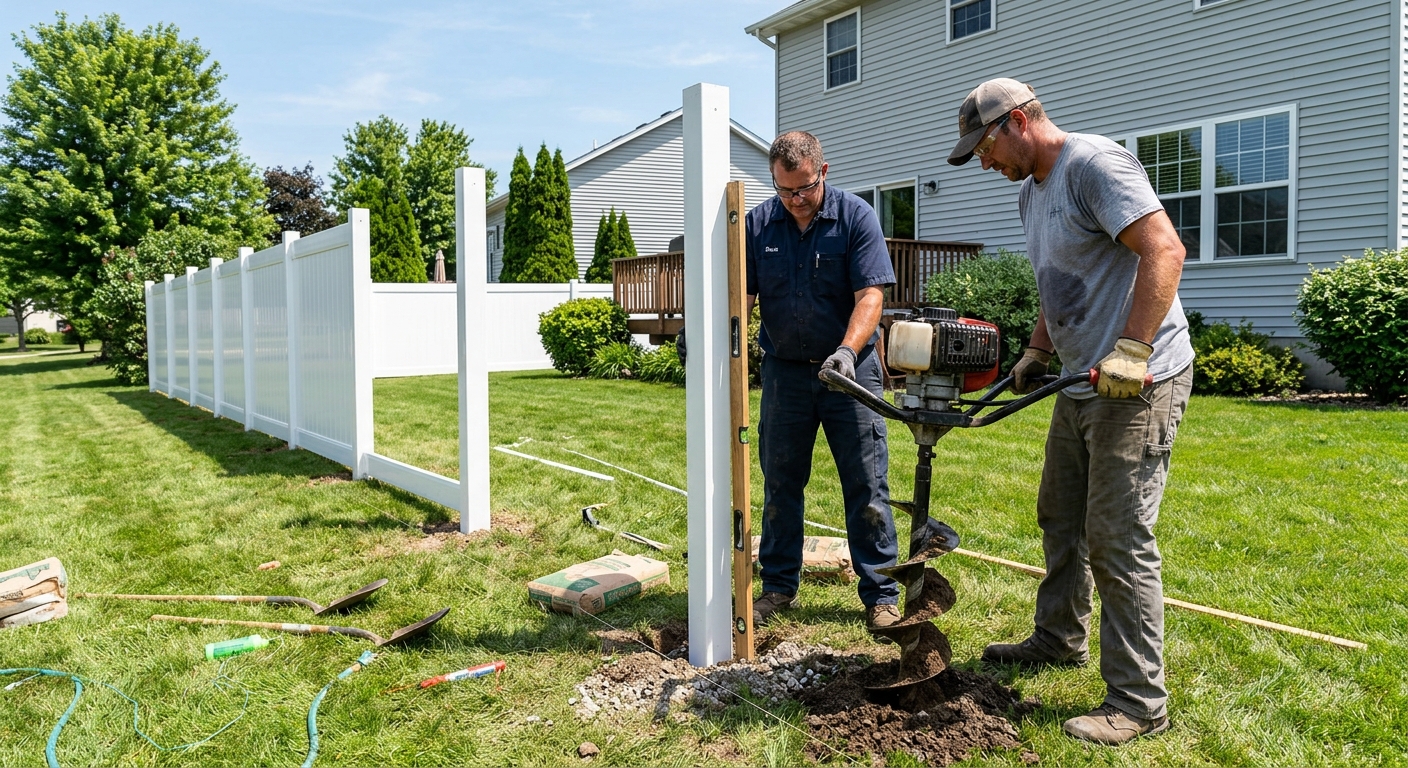
Fencing options and costs in Springbrook
In Springbrook, your fence choice comes down to privacy and durability versus upfront cost, and it also reflects the way homes are built and maintained in the area. Springbrook has 1,507 residents (Statistics Canada, 2021 Census), and that small-town scale means many homeowners rely on the same trusted installers for repeat seasonal work—especially when wind-driven spring weather shows up. The demand is typically strongest on newer or frequently improved properties—each detached home is a common candidate for backyard privacy upgrades, pool fencing, and dog runs.
Because Springbrook sits within the Calgary economic region’s prairie continental climate, pricing is strongly shaped by freeze–thaw cycles and wind loading. Frost protection is a primary cost driver: local guidance commonly expects posts set to about 4 ft (≈120 cm) depth to avoid heaving, using concrete footings for many privacy fences and gate posts. That excavation time and extra concrete generally push wood and vinyl privacy systems toward the mid-to-upper end of local pricing, while chain-link typically stays lower because it allows more airflow.
Contractor availability also tightens during peak season around Calgary-area communities like Rocky View County-adjacent builds and properties that require accurate fence-line work and utility coordination. For homeowners in Springbrook, budgeting is easiest when you start with a material range and then confirm the post depth, panel type, and gate hardware in a detailed estimate. Use the table below to compare typical options by lifespan, upkeep, and cost per linear foot, then we’ll break down what changes your final total.
| Material |
Lifespan |
Maintenance |
Privacy Rating |
Price per Linear Foot |
| Pressure-treated pine (standard wood) |
10–15 years |
Stain/seal every 2–3 years |
High (solid board) |
$40–$80 |
| Cedar (natural rot resistance) |
15–25 years |
Ongoing staining as desired (typically every 2–4 years) |
High (solid board) |
$55–$95 |
| Vinyl / PVC (no-maintenance) |
20–30 years |
Rinse as needed; check posts/gates |
High (privacy panels) |
$45–$90 |
| Chain-link (galvanized steel) |
25–40 years |
Occasional coating touch-ups (rare) |
Low to Medium (wind-permeable) |
$25–$55 |
| Aluminum ornamental |
25–40 years |
Wash as needed |
Low to Medium (open pickets) |
$70–$120 |
| Composite / recycled material |
20–30 years |
Low; wash and inspect annually |
Medium to High (board design-dependent) |
$65–$110 |
Prices are estimates only and vary by project scope, site access and material selection.
What affects the price of fencing in Springbrook
In Springbrook (and across the Calgary area), you can see 30–50% swings between quotes for what looks like the “same” fence. The most common reason is that contractors price around local realities—post depth, wind-rated construction, gate hardware, and how difficult it is to dig and set posts in frozen or rocky ground—rather than just counting linear feet. Even when the fence length is identical, prairie freeze–thaw conditions often force deeper excavation and sturdier bracing for privacy panels.
Post depth ties directly to frost protection. A practical rule contractors use is setting posts roughly 4–6 inches below the design frost depth (often requiring 1.5–2.0 m into the ground in colder Alberta regions). That means longer posts, deeper holes, and concrete setting, all of which increase labour and material costs. Wind exposure on the Prairies also drives tighter post spacing and heavier panels for solid wood or vinyl privacy fences to prevent racking. By contrast, chain-link often costs less because it’s more wind-permeable, reducing structural loads.
Concrete examples from Springbrook-style yards: (1) If your line runs near a driveway with compacted soil or old fill, excavation time increases and costs can rise even when the materials are mid-range (for instance, pressure-treated wood typically aligns with the $40–$80 band). (2) If gate posts must be fully concreted (commonly the case for drive-through or heavy walk-through gates), the concrete and labour bump can push the job into the vinyl/wood higher end—often closer to $45–$90 for vinyl privacy. (3) If you have clean, easy access and straight runs with minimal grade change, the same fence can land nearer the low-to-mid portion of the price band.
Housing stock matters too. Older properties sometimes have buried footings or irregular property-line fences from previous owners, which adds removal/disposal and can shift costs by hundreds of dollars before you even pick the material.
| Price Factor |
Why It Matters |
Cost Impact |
| Fence length in linear feet |
Primary driver of labour, posts, rails, and materials |
High (scales directly with total cost) |
| Post depth required |
Frost protection determines post length and hole depth |
High (deeper holes mean more labour and concrete) |
| Post setting method |
Concrete vs. gravel pack vs. driven posts changes stability |
Medium to High (concrete adds material + setup time) |
| Material choice |
Vinyl/cedar/wood vs. chain-link differs in panel weight and hardware |
Medium to High (can shift entire price band) |
| Gate count and type |
Drive-through and double gates require stronger posts/hardware |
Medium (often adds significant labour + hardware) |
| Grade and terrain |
Sloped yards need stepped or raked panels for a straight visual line |
Medium (extra labour and sometimes extra components) |
| Old fence removal and disposal |
Hauling, dump fees, and disposal time increase costs |
Low to Medium (can be High if access is poor) |
| Permit fees and survey / property line locate |
Verification work and administrative costs add overhead |
Low to Medium (varies by project scope) |
Permits & regulations in Alberta
In Alberta, fence requirements typically change once you get into higher-visibility installations. As a practical homeowner guide, fences above a height threshold—commonly around 2.0 m (6.5 ft) at the rear and 1.0–1.2 m (3–4 ft) at the front or corner—may trigger a building permit, depending on the municipality and the fence location. Regardless of permit needs, all fences must respect property lines and municipal setback bylaws.
Before you dig any post hole in Springbrook, call for utility locates through Alberta One-Call to confirm where power, gas, and telecom lines run. Also consider getting a survey or a property pin locate before installation; that extra step can prevent costly encroachment disputes if earlier boundary markers are worn or missing.
Shared fence ownership and responsibilities are handled under provincial line-fences legislation. If you’re replacing or building on a boundary, it’s smart to confirm who owns the fence line and whether your neighbour consents to the work and cost sharing.
How to verify your contractor’s compliance (do this before they start digging): (1) confirm their Alberta licence/registration status through the relevant provincial registry page for their trade (where applicable), (2) request a current certificate of liability insurance naming you as a certificate holder or additional insured as permitted, and (3) confirm their WCB/WSIB coverage where applicable (a clearance letter or coverage letter is what you want to see). If they can’t provide paperwork quickly, that’s a warning sign.
What usually DOES require a permit: higher privacy fences at common rear lots, corner/visibility installations that exceed local thresholds, and any work that alters grading or includes special structures. What typically does NOT: straightforward low-height boundary fences within standard limits, provided you remain within setbacks and property lines.
Choosing the right fence material for Springbrook
Choosing a fence material in Springbrook is easiest when you match it to your priorities: privacy, low maintenance, budget, and lifespan. The Calgary economic region’s freeze–thaw cycle and strong wind exposure mean the “best-looking” fence can fail early if it isn’t built with proper post depth and bracing. That’s why post depth (often around 1.5–2.0 m in colder Alberta projects to get below frost effects) and stable concrete setting for heavier privacy panels are such big parts of your cost.
Pressure-treated pine is the budget-friendly option, but it usually needs staining every 2–3 years to reduce grey weathering and cracking. Cedar offers a nicer appearance and better natural rot resistance, yet it still benefits from periodic maintenance to keep colour and prevent surface checking. Vinyl/PVC is genuinely low maintenance and handles weather well, but in extreme cold it can become brittle if the system is not installed correctly (for example, inadequate expansion allowance and flex at posts). Chain-link is the lowest cost and longest service life, but it won’t give you real privacy—unless you add privacy slats, which changes airflow and can increase wind-load requirements on posts. Aluminum is corrosion-resistant and doesn’t rust, but it provides mainly curb appeal and boundary definition rather than privacy.
Post-depth and concrete-set posts are often necessary for solid privacy fences here, especially for 6 ft privacy boards and gate posts, because wind racking is a real factor in prairie exposure. Concrete-set posts typically cost more than lighter methods, but they reduce the chance of heaving and wobble. For a clear example: upgrading from pressure-treated wood in the $40–$80 range to vinyl privacy in the $45–$90 range can be justified when you want fewer weekend tasks and a longer life—especially if you’re planning to stay in the home long enough to spread the upfront difference.
| Material |
Cold Tolerance |
Lifespan |
Annual Maintenance |
Best For |
Price Band |
| Pressure-treated pine |
Good with proper treatment and sealed top edges |
10–15 years |
Inspect and minor touch-ups; stain every 2–3 years |
Budget privacy with straightforward upkeep |
$40–$80 |
| Cedar |
Good; performs well in cold cycles when installed well |
15–25 years |
Light inspections; stain every 2–4 years |
Appearance-focused privacy with natural resistance |
$55–$95 |
| Vinyl / PVC |
Good if properly flexed/installed for cold |
20–30 years |
Rinse/wash; inspect fasteners and gates |
Low maintenance privacy in windy winters |
$45–$90 |
| Chain-link |
Excellent |
25–40 years |
Minimal; occasional cleaning |
Security and long service life |
$25–$55 |
| Aluminum ornamental |
Excellent |
25–40 years |
Wash as needed |
Curb appeal with modest security |
$70–$120 |
| Composite / recycled |
Good; depends on system design and post support |
20–30 years |
Low; inspect annually |
Low-maintenance privacy panels with long life |
$65–$110 |
How to choose a fencing contractor in Springbrook
Choosing a fencing contractor in Springbrook is mostly about proof: proof they can legally do the work, proof they’re insured, and proof your quote includes the details that protect your fence in Alberta’s freeze–thaw climate. Start with licensing and insurance. Ask for their Alberta trade licence/registration documentation (where applicable for their work), a current certificate of liability insurance, and confirmation of WCB coverage (a coverage letter or clearance letter is ideal). You should be able to verify these items without chasing—if they won’t provide documents, that’s a red flag.
Next, request 2–3 itemised written quotes. You want line items for labour, materials, and key inclusions like post depth, concrete setting details, gate hardware, and any privacy add-ons. Avoid lump sums with vague language. A good quote spells out what’s excluded—like permit pulling, survey/locate costs, disposal, and any adjustments for unexpected rocks or buried debris.
Warranty is another differentiator. Ask for a workmanship warranty length (for example, post setting and panel alignment) and the product/manufacturer warranty for rails, panels, and gates. Confirm whether warranties are transferable if you sell the home.
On payment, don’t pay more than 10–15% upfront for materials and scheduling. Hold back the remainder until the job is complete and inspected. Get a start date and completion estimate in writing, including weather contingencies typical for late spring freezing nights.
- Ask for WCB coverage confirmation before scheduling excavation.
- Request liability insurance and verify it’s current (certificate date matters).
- Ensure the quote includes post depth targets consistent with frost protection.
- Confirm concrete setting scope (especially for privacy fence posts and gate posts).
- Get details on fence line marking and how they locate property pins/boundary.
- Check if disposal/hauling of old fence is included.
- Ask how they handle underground utility findings after locates.
- Confirm gate hardware type (latches, hinges, post brackets) and alignment method.
- Look for wind/racking reinforcement notes for solid panels.
- Verify warranty terms in writing for workmanship and materials.
- Insist on itemised labour/materials instead of one lump number.
- Confirm payment schedule and retainage/holdback until completion.
Red flags I see around Springbrook include contractors who won’t show insurance/WCB paperwork, quotes that don’t specify post depth or concrete setting, vague “allowances” for materials that can spike later, missing scope items like disposal and gate hardware, and crews that start without confirming boundary pins or utility locates.
Frequently asked questions — fencing in Springbrook
How tall can my fence be in Springbrook?
In Springbrook and across Alberta, fence height rules are usually tied to where the fence sits (front/corner vs rear) and how it impacts visibility. A common threshold guideline homeowners plan around is about 2.0 m (6.5 ft) for rear fencing, while front or corner fences are often limited around 1.0–1.2 m (3–4 ft). If you’re aiming higher for privacy, assume you may need a building permit and confirm the setback/height limits with your municipality before digging. This matters more in Alberta because higher fences require more robust post setting in windy conditions, and permits can affect timelines—especially during spring install season.
Should fence posts be set in concrete here?
In the Springbrook area, many fences should have posts set with concrete, particularly for privacy panels and gates. The driver is frost protection: in colder Alberta projects, posts commonly need to be set below frost effects—often around 1.5–2.0 m into the ground—so they don’t heave during freeze–thaw cycles. Concrete setting also improves resistance to wind racking on prairie-exposed runs, which is a common issue with solid wood or vinyl privacy fences. While some lighter chain-link installs may use different methods, a quality privacy installation typically lands in the mid-range pricing tied to wind-strong construction—often aligning with the $40–$80 (wood) or $45–$90 (vinyl) bands due to extra excavation and materials.
What's the best fence for privacy?
For real privacy in Springbrook, solid-board wood or vinyl/PVC privacy fences are usually the best match. They block sightlines and, when built with correct post depth and spacing, hold up against prairie wind loads. Cedar is also a top choice if you want better natural rot resistance and appearance, but it still needs periodic maintenance. Chain-link can be made more private with slats, but it’s not the same as a solid privacy fence and can still experience more wind movement unless the system is engineered for it. If your budget is tight, pressure-treated wood in the $40–$80 range can work well; if you want low maintenance over time, vinyl in the $45–$90 range is often worth the jump, provided the contractor installs it correctly for Alberta cold.
How do I compare fencing quotes?
Compare Springbrook fencing quotes like a checklist, not like a single total. First, confirm the quotes are for the same height, material grade, and panel style. Then check for post depth and setting method—this is where costs can change dramatically in Calgary-region prairie climates. Make sure gate count and hardware are specified (latches, hinges, and reinforcement), and verify whether disposal of the old fence is included. Ask whether permits are included or excluded, and whether the contractor is handling property line locating (survey/pin locate). Finally, confirm warranties: workmanship and product warranty terms should be written clearly. If two quotes differ by 30–50%, it’s often because one included concrete-set posts and proper spacing while the other didn’t.
How long does fence installation take in Springbrook?
Most straightforward Springbrook installs—think a single straight run with standard gates—tend to fall within a few days once materials are on site and utilities are located. Multi-gate privacy fences, long runs, sloped yards requiring raked/stepped panels, and projects that include old fence removal typically take longer. Timing also depends on soil conditions: if freeze is still present in early spring, excavation can slow down even when weather looks warm. A proper contractor will provide a written start date and completion estimate and note weather contingencies. As a budgeting reference, chain-link installs are usually the fastest because they’re lighter and more wind-flexible, while solid wood or vinyl privacy fences take longer because of bracing, concrete setting, and alignment.
Can I install a fence on a slope in Springbrook?
Yes, you can install a fence on a slope in Springbrook, and in Alberta it’s very common. The key is how the fence is adjusted: most privacy fences use stepped or raked panels so the top rail stays straight visually while the bottom follows the grade. The method affects materials and labour—stepped sections often require more careful layout, and rails/posts may need extra shimming and reinforcement. A good contractor will show you how they plan to maintain privacy without creating gaps that ruin the look, and how they’ll keep alignment through the slope. Because snow and wind movement can stress uneven installations, proper post depth and secure setting are even more important on sloped yards.