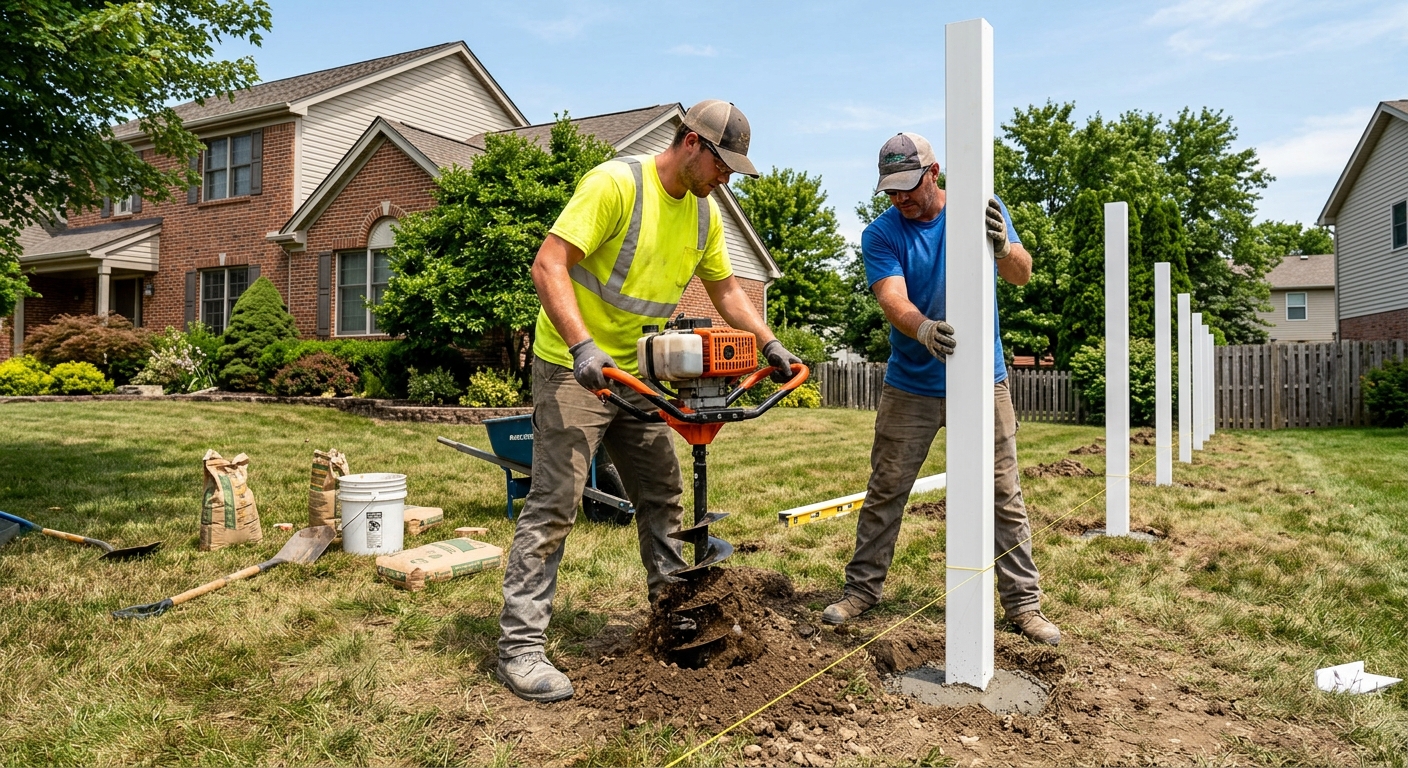
Fencing options and costs in Rocky Mountain House
Rocky Mountain House homeowners often ask which fencing option gives the best balance of cost and performance. With 6,765 residents and 70.7% of households owning their homes (Statistics Canada, 2021 Census), demand stays steady because detached properties make up 60.4% of local dwellings—each one is a potential perimeter project when wind, snow, or landscaping plans change. That matters in budgeting, because fence replacement and upgrades tend to cluster around the age of housing and yard “settling” after renovations. In Rocky Mountain House, homes built before 1981 account for 44.5% of the housing stock (Statistics Canada, 2021 Census), and older yards commonly have older, lean-prone fences that need re-setting rather than patching.
In the Banff–Jasper–Rocky Mountain House economic region, costs are shaped by cold-climate, mountain-foothills conditions: deeper frost protection, heavier bracing, and longer post installs are routine. Posts typically need to be set well below the frost zone to prevent heaving, which pushes both labour and concrete volume up compared with milder Alberta areas. Wind exposure can also lead to shorter bays and heavier rails, especially on open lots toward the Clearwater-area approaches. Trade availability is strongest in the town’s core and established subdivisions, including the Westview and Dovercourt corridors, where contractors can stage equipment and stage materials more efficiently.
Below is a practical cost comparison you can use when evaluating proposals for Rocky Mountain House.
| Material |
Lifespan |
Maintenance |
Privacy Rating |
Price per Linear Foot |
| Pressure-treated pine (standard wood) |
10–15 years |
Stain/seal every 2–3 years; inspect rails yearly |
Medium–High (solid boards) |
$45–$85 |
| Cedar (natural rot resistance) |
15–25 years |
Periodic staining; treat end-grain; yearly hardware checks |
High (solid cedar panels) |
$55–$95 |
| Vinyl / PVC (no-maintenance) |
20–30 years |
Minimal (wash); check for impact damage after storms |
High (privacy styles) |
$60–$110 |
| Chain-link (galvanized steel) |
25–40 years |
Occasional rinse; tighten/replace damaged sections |
Low (open mesh) |
$30–$55 |
| Aluminum ornamental |
25–35 years |
Occasional cleaning; inspect posts and caps |
Low–Medium (ornamental pickets) |
$70–$130 |
| Composite / recycled material |
20–30 years |
Low (wash); check board fastening after freeze–thaw cycles |
Medium–High (solid slats) |
$85–$135 |
Prices are estimates only and vary by project scope, site access and material selection.
What affects the price of fencing in Rocky Mountain House
In Rocky Mountain House and across the Banff–Jasper–Rocky Mountain House region, it’s common to see quotes for the “same” fence land 30–50% apart once you compare details like post depth, wind bracing, and whether the contractor is doing concrete-set posts. Even within Alberta, the variation is real: the cold-climate mountain-foothills environment means footings and bracing are engineered for freeze–thaw and lateral loads, not just aesthetics. When one contractor budgets a basic layout and another budgets deeper excavation with tighter spacing, your cost shifts quickly toward the higher end of the typical material price bands (for example, wood often tracks $45–$85 per linear foot, while vinyl commonly sits around $60–$110).
Two big cost drivers dominate pricing here:
- Frost protection and post depth: in cold Alberta, posts must go roughly 1.5–2.0 m into the ground (commonly at least 4 ft deep) to reduce frost heave risk. That translates to longer posts, deeper augering, more spoil removal, and more concrete setting.
- Wind exposure and panel strength: in open, windier pockets, contractors typically shorten bays, add heavier rails, and use stronger hardware. Open designs like chain-link cost less (often $30–$55) and generally tolerate wind better, but still need deep, well-braced footings.
Local conditions can raise or lower cost in very practical ways. For example, a rocky or compacted glacial soil base often forces slower augering and more labour per hole. Sloped yards near the town’s edges may require stepped or raked sections, which increases layout time and labour. Access also plays a role: if a fence line runs along a narrow driveway or treed area, equipment placement and spoil haul-off become more expensive. Finally, older fencing (common in areas with more pre-1981 homes) can require extra disposal fees and demolition time before a new run starts.
Those same factors also help explain why a chain-link install may be cheaper overall, while a privacy fence can move closer to the top end of the wood or vinyl band when extra bracing and concrete are included.
| Price Factor |
Why It Matters |
Cost Impact |
| Fence length in linear feet |
Main driver of materials, excavation and labour hours |
Very high (directly scales total cost) |
| Post depth required |
Frost line determines hole depth and post length to prevent heaving |
High (more digging, more concrete) |
| Post setting method |
Concrete-set posts resist freeze–thaw and lateral loads better than gravel-only packs |
Medium–high (concrete volume and labour time) |
| Material choice |
Different materials change rail thickness, hardware type, and install complexity |
Medium (e.g., vinyl vs chain-link) |
| Gate count and type |
Drive-through gates require heavier frames and stronger bracing |
High per gate (often adds substantial labour and hardware) |
| Grade and terrain |
Sloped yards need stepping/raking, extra layout time and cut labour |
Medium (layout + labour + waste) |
| Old fence removal and disposal |
Demolition, haul-away and disposal fees can be significant |
Medium–high depending on condition |
| Permit fees and survey / property line locate |
Some projects need paperwork before digging and building |
Low–medium (can spike if a locate is required) |
Permits & regulations in Alberta
In Alberta, fence requirements can vary by municipality, but a common threshold is that fences above roughly 2.0 m (6.5 ft) at the rear and around 1.0–1.2 m (3–4 ft) near the front or corner often trigger a building permit. Regardless of height, you still have to respect property lines and any applicable municipal setback rules. In Rocky Mountain House, the practical takeaway is simple: if you’re planning a tall privacy fence, corner fence, or anything that changes site visibility, confirm the permit requirement before post holes start.
Before digging, call for utility locates (Alberta One-Call) so the crew doesn’t hit buried lines. Also, get a survey or at least confirm your property pins/locate markers before installing—this avoids the most expensive kind of fencing problem: relocating after an encroachment dispute. For shared fence ownership, the province’s line-fences framework generally governs cost-sharing where fences serve adjoining lots, but the exact arrangement is often clearer once both neighbours confirm ownership and maintenance expectations in writing.
What typically requires a permit: building a fence over the height thresholds mentioned above, especially where it affects visibility at corners or where the municipality flags it for review. What typically does not: routine replacement of an existing fence that stays within the same height and alignment, provided it meets local bylaw requirements.
To verify your contractor in Rocky Mountain House, ask for: a valid Alberta business licence (where applicable), a current certificate of insurance (liability insurance naming you as certificate holder/additional insured if required), and proof of worker coverage (WSIB/WCB coverage as applicable for the contractor’s workforce). Where to look: check the provincial/appropriate registry for business standing, request the COI directly, and review the coverage documentation before work starts—don’t wait until the first day.
Choosing the right fence material for Rocky Mountain House
Choosing the right fence in Rocky Mountain House is mostly about matching material to your priorities: privacy, low maintenance, budget, and how long you want it to last through freeze–thaw cycles and wind. Pressure-treated pine is usually the lowest upfront option, but it typically needs staining or sealing every 2–3 years to prevent grey weathering and to protect fasteners. Cedar has better natural rot resistance and a warmer look, but it still benefits from periodic staining and good hardware—especially where the bottom rails sit near snow accumulation. Vinyl/PVC is popular for low maintenance, yet in extreme cold it can feel more rigid and can be susceptible to impact cracking after hail or snow-dislodging events. Chain-link is the “set it and forget it” option for security and longevity, but it won’t provide true privacy. Aluminum ornamental won’t rust and looks sharp, but privacy is limited unless you choose a solid or close-picket style. Composite/recycled materials can offer a balance of durability and appearance with low upkeep, but they often cost more than standard wood.
Post-depth and footing choices matter more than people expect in this region. With frost protection requirements commonly pushing posts 4 ft deep or more (and often deeper depending on local conditions), concrete-set posts are strongly recommended for most residential fences because they resist freeze–thaw movement and lateral racking better than tamped gravel. Wind and snow load considerations also influence design: for privacy fences, tighter spacing and heavier rails help keep panels from loosening over a few hard winters.
As a simple dollar example, a typical chain-link run can land around the $30–$55 per linear foot band, while a vinyl privacy fence is commonly closer to $60–$110 per linear foot. If you need screening from neighbours and wind, the higher vinyl or cedar cost is usually justified. If your goal is property boundary security with minimal maintenance, chain-link often provides better value.
| Material |
Cold Tolerance |
Lifespan |
Annual Maintenance |
Best For |
Price Band |
| Pressure-treated pine |
Good, with proper staining and hardware |
10–15 years |
Light (inspect + spot-touch); stain/seal every 2–3 years |
Budget-friendly perimeter + traditional look |
$45–$85 |
| Cedar |
Good to very good (better rot resistance) |
15–25 years |
Light (periodic stain; check boards end-grain) |
Natural appearance with privacy |
$55–$95 |
| Vinyl / PVC |
Very good (impact can be an issue if struck) |
20–30 years |
Very low (wash; inspect after storms) |
Low-maintenance privacy and clean curb appeal |
$60–$110 |
| Chain-link |
Excellent (galvanized steel performs well) |
25–40 years |
Low (rinse; occasional tension/repair) |
Security, pet control, longer-run value |
$30–$55 |
| Aluminum ornamental |
Excellent (no rust) |
25–35 years |
Low (clean; check hardware) |
Decorative boundary + durability |
$70–$130 |
| Composite / recycled |
Good (needs correct fastening and spacing) |
20–30 years |
Low (wash; check fasteners) |
Premium low-maintenance privacy |
$85–$135 |
How to choose a fencing contractor in Rocky Mountain House
When you’re hiring a fencing contractor in Rocky Mountain House, don’t just compare the “per foot” figure—compare how they build for cold-climate performance. Start by verifying Alberta coverage and responsibility. Request a current certificate of liability insurance and confirm it covers fencing work at your address (and whether you are listed as certificate holder/required contact). For worker coverage, ask for proof of WSIB/WCB as applicable to the contractor’s workforce, and ensure dates are current. Also ask for their Alberta business registration/licensing details and confirm the contractor is actively operating.
Next, get 2–3 itemised written quotes that break down labour and materials. A good quote should list the number and type of posts, rail spacing, gate hardware, the thickness/grade of material, whether panels are pre-assembled or field-cut, and the post setting method (concrete-set vs gravel pack vs other). Ask whether permits are included (where required), whether old fence removal and disposal are included, and how surplus materials and spoil are handled.
Pay attention to warranty. You want a clear workmanship warranty length (how long they stand behind straightness, loosened fasteners, and post movement), plus a manufacturer product warranty. Ask whether the workmanship warranty is transferable if you sell the house.
For payment, never pay more than 10–15% upfront. Use a holdback schedule tied to milestones (for example: posts complete, rails/panels complete, final gate alignment complete). Get a start date and a completion estimate in writing, and ask what happens if frost or weather slows excavation and concrete curing.
- Confirm written quote includes fence length, number of posts, and bay spacing.
- Verify post depth and whether posts are set in concrete for cold-climate stability.
- Ask for gate details: frame type, hinges, latch style, and reinforcement.
- Ensure quote states what’s included in excavation and spoil removal.
- Check whether disposal of old fencing is included and where it’s hauled.
- Confirm material specs (pressure-treated class, cedar grading, galvanized grade).
- Ask how they handle slopes: stepped vs raked design and how it affects spacing.
- Request a site plan or layout confirmation process before materials arrive.
- Verify concrete quantities and whether they include post brackets/fasteners.
- Confirm warranty terms for workmanship and manufacturer coverage.
- Review payment schedule in the contract (max 10–15% upfront; holdback).
- Get start/completion dates and a weather-related contingency statement.
Concrete red flags I see in Rocky Mountain House: (1) a quote that doesn’t specify post depth or setting method, (2) refusal to provide a certificate of insurance and proof of worker coverage, (3) “rock-bottom” pricing that omits concrete, bracing, or gate reinforcement, (4) no itemized breakdown (just one lump sum), and (5) asking for a large upfront payment with no schedule or written contract.
Frequently asked questions — fencing in Rocky Mountain House
How tall can my fence be in Rocky Mountain House?
In Rocky Mountain House, fence height rules often depend on where the fence sits (front/corner vs rear) and can affect whether a permit is required. A common Alberta guideline used by municipalities is around 2.0 m (6.5 ft) at the rear, and about 1.0–1.2 m (3–4 ft) near the front or corners—above those thresholds can trigger permit requirements. Your best next step is to confirm the applicable bylaw for your specific lot and fence location before you order materials, since height and visibility at corners are typically the first issues. If your existing fence is already at a certain height, ask the contractor to document that the replacement stays within the same height and alignment.
Should fence posts be set in concrete here?
Yes, for most residential fences in Rocky Mountain House, concrete-set posts are the safer, long-term choice. In this cold-climate mountain-foothills zone, posts typically need to be set at least 4 ft deep (and often deeper depending on local ground conditions) to reduce frost heave risk. Concrete setting helps resist freeze–thaw movement and lateral racking from wind and snow loads. A gravel-only approach can work in some mild, stable soil situations, but it’s a gamble where frost movement and rocky/compact soils are common. When comparing quotes, don’t just look at the material price band—ask if the contractor is setting posts in concrete and whether the depth is specified in writing.
What's the best fence for privacy?
For privacy in Rocky Mountain House, solid wood (cedar or pressure-treated) and vinyl/PVC privacy fences are usually the top performers. Cedar offers natural rot resistance and a premium look, while vinyl privacy fences are popular because they’re low-maintenance—typically washing instead of staining. In cold weather, solid panels also handle wind better when the contractor uses tighter spacing and heavier rails. If you need a ballpark, privacy vinyl often lands in the $60–$110 per linear foot range, while pressure-treated wood privacy commonly falls around the $45–$85 band depending on board spacing, gate count, and footing details. If you’re cost-sensitive, a cedar privacy fence can be a worthwhile middle ground when your long-term goal is appearance and fewer replacements.
How do I compare fencing quotes?
Compare quotes line-by-line, not just total price. Ask each contractor to itemize labour and materials, including the number of posts, post depth, rail spacing, gate hardware, and whether posts are concrete-set. In Rocky Mountain House, those details can change the quote by 30–50% because excavation time, concrete volume, and bracing requirements differ. Make sure the scope matches: is old fence removal and disposal included? Are permits included if required for the fence height? Are property line locate/survey work included or excluded? Finally, check warranty terms for workmanship and product coverage. If one quote is far below the others, the most common reason is that it’s missing concrete setting, bracing, or proper post depth.
How long does fence installation take in Rocky Mountain House?
Timing depends on fence length, site access, and how many gates you have. For a typical residential run, many crews can complete installation within several days once material delivery is ready, but excavation and post-setting are what control the schedule in Rocky Mountain House. Cold weather can extend timelines because concrete curing and ground conditions can slow down augering and setting. If your project includes removing an old fence, expect extra time for demolition and haul-away. Also, steep or rocky ground often requires more labour per hole. Ask the contractor for a written start date and completion estimate, and confirm how weather delays are handled so you’re not left with an unfinished fence schedule.
Can I install a fence on a slope in Rocky Mountain House?
Yes, you can install a fence on a slope in Rocky Mountain House, but you’ll want the design chosen carefully to avoid a “leaning” appearance and to keep panel stress under control. The two common approaches are stepping (where each section follows the grade with distinct steps) or raking (where the top follows the slope as a continuous angle). Stepped designs are often easier for privacy fences and can reduce stress on posts, while raked designs can look smoother but require more precise cutting and layout. Slopes also increase layout time and material waste, which can affect pricing. When you compare quotes, make sure the contractor specifies how they’ll handle the grade and includes the extra labour for stepping/raking in the scope.