Fencing options and costs in Walker
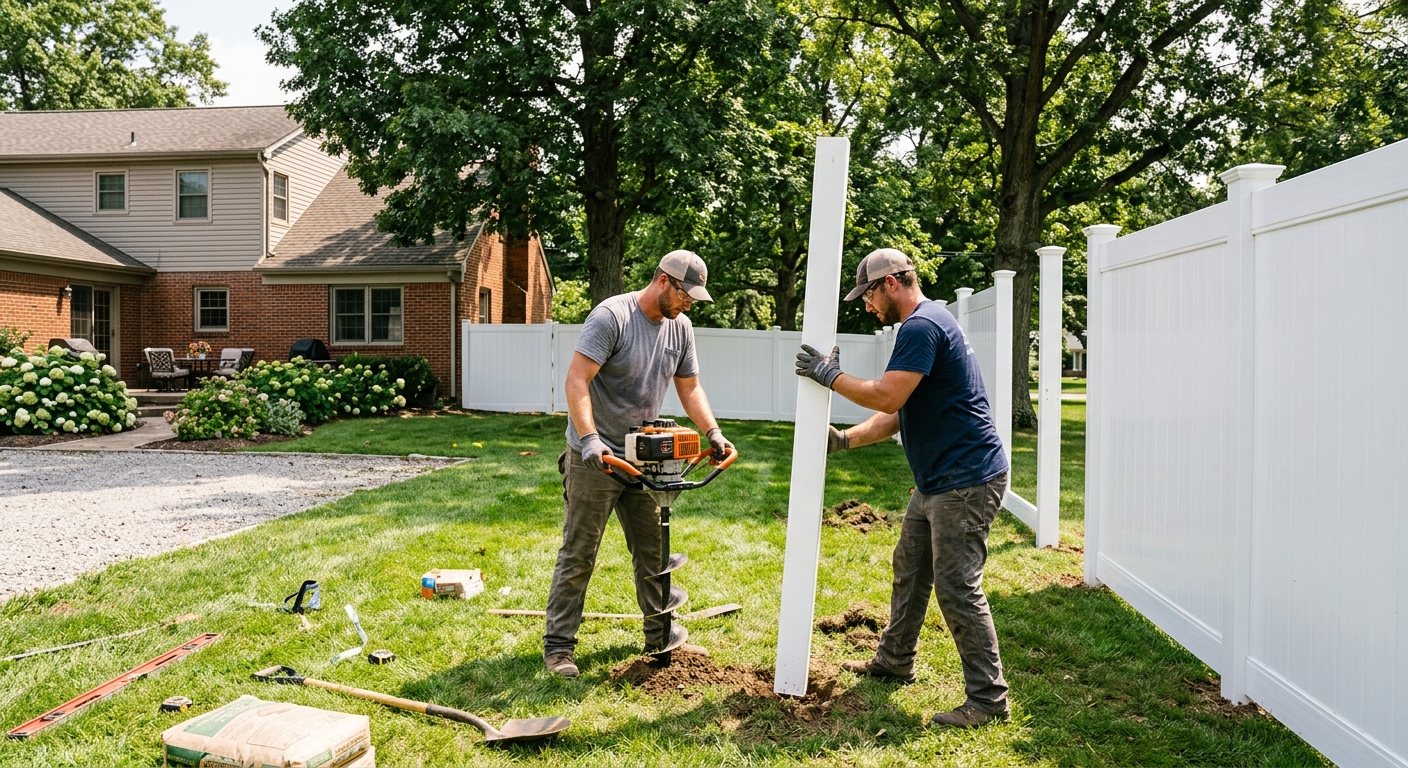
In Walker, Alberta, homeowners typically start with a straightforward goal—more privacy, safer pets, or clearer property boundaries—then compare fencing options side by side. With a small community population of 2,036 people (Statistics Canada, 2021 Census), demand clusters around newer subdivisions and the areas seeing ongoing infill and backyard upgrades. Walker’s housing mix also matters because each detached home is effectively a “potential fence project,” and in practical terms that’s what keeps local contractors busy during the spring and early summer booking window. The Calgary economic region shapes the pricing because we’re dealing with a Prairie continental climate: long freeze–thaw cycles and strong wind exposure. Those conditions push costs upward for privacy panels and gates because posts often need to be set deep (about 4 ft/≈120 cm) with concrete footings to reduce heaving and racking. Solid wood and vinyl also need tighter bracing because they catch more wind than chain-link. In Walker, trade demand tends to spike around family neighbourhoods near the newer residential pockets where backyards are larger and privacy fencing is most common, especially along busier access routes where equipment access is good.
Below is a homeowner-friendly comparison of typical materials you’ll see priced by linear foot in the Walker/Calgary market. Use it to sanity-check quotes before you lock in design details like height, gate count, and post depth.
| Material |
Lifespan |
Maintenance |
Privacy Rating |
Price per Linear Foot |
| Pressure-treated pine (standard wood) |
10–15 years |
Stain/seal every 2–3 years; inspect posts after winters |
High (solid boards) |
$40–$70 |
| Cedar (natural rot resistance) |
15–25 years |
Periodic staining or oiling; still requires post/fastener checks |
High (solid boards) |
$55–$85 |
| Vinyl / PVC (no-maintenance) |
20–30 years (with correct installation) |
Wash as needed; keep expansion gaps correct |
High (solid privacy styles) |
$50–$90 |
| Chain-link (galvanized steel) |
20–35 years |
Occasional rinsing; tighten hardware |
Low to Medium (airflow-friendly) |
$25–$55 |
| Aluminum ornamental |
25–40 years |
Wash occasionally; no rusting |
Low (visual openness) |
$70–$120 |
| Composite / recycled material |
20–30 years |
Minimal cleaning; inspect framing and fasteners |
High (solid composite panels) |
$65–$110 |
Prices are estimates only and vary by project scope, site access and material selection.
What affects the price of fencing in Walker
Even when two homeowners in the Walker area ask for the “same fence,” quotes can still swing by 30–50%. In the Calgary economic region, the big reasons are frost-depth excavation, wind-driven structural requirements, and the way each contractor prices labour, access, and footing details. A privacy fence isn’t just boards on posts: prairie exposure means panels rack under gusts, so sturdier posts, tighter spacing, and proper bracing come up often. Meanwhile, installers can price labour differently depending on whether they need to haul spoil, set many concrete footings, or work around mature landscaping and gates. That’s also why chain-link typically stays on the lower end—more airflow means less wind-loading—while wood and vinyl often land mid-to-upper range.
Frost line depth sets how deep posts must be set. In Alberta conditions, posts are commonly set about 4–6 inches below the design frost depth to prevent heaving. Practically, that translates to roughly 1.5–2.0 m into the ground for many perimeter installs, and that depth increases hole digging time, concrete volume, and the length of material purchased. Wind exposure in open prairie settings also pushes tighter post spacing, which can raise labour even if the material unit price looks similar.
Concrete examples from walker-style lots: (1) a 6 ft privacy run with 2–3 gate openings often costs more than expected because those gate posts usually need fully concreted footings and heavier hardware; (2) a sloped backyard that requires stepped panels can add extra framing time; (3) removing an old fence with buried posts or partial demolition can add disposal and additional excavation. If you’re budgeting, wood privacy fences often track the mid band around $40–$80 per linear foot, while vinyl commonly lands near $45–$90 depending on height and footing scope.
| Price Factor |
Why It Matters |
Cost Impact |
| Fence length in linear feet |
The longer the run, the more posts, rails and labour hours are required. |
Highest impact; length multiplies all other costs |
| Post depth required |
Frost protection determines how long posts must be and how deep excavation goes. |
Can add significant labour and concrete for 1.5–2.0 m holes |
| Post setting method |
Concrete setting stabilizes posts; gravel packs may be used in limited soil conditions. |
Concrete footings usually raise material and labour costs |
| Material choice |
Vinyl/wood privacy panels require more wind resistance; chain-link is lighter. |
Shifts pricing bands (e.g., chain-link vs wood/vinyl) |
| Gate count and type |
Gates require heavier posts, hinges, latches and often diagonal bracing. |
Typically the biggest jump after fence length |
| Grade and terrain |
Slope requires stepped, raked or custom panel fits. |
Adds layout time and sometimes extra framing |
| Old fence removal and disposal |
Demolition, hauling, and disposal costs vary with what’s buried and how accessible it is. |
Can add hundreds to over a thousand dollars depending on scope |
| Permit fees and survey / property line locate |
Some fence heights and locations trigger permit needs; locating lines avoids encroachment risk. |
Usually smaller than labour, but still meaningful and quote-dependent |
Permits & regulations in Alberta
In Alberta, many homeowners in Walker run into permits less often than people expect, but height and location still matter. As a practical rule of thumb, fences above a height threshold—often around 2.0 m (6.5 ft) at the rear and 1.0–1.2 m (3–4 ft) at the front or corner—can require a building permit. Even when a permit isn’t triggered, you still must respect property lines and municipal setback requirements. If you’re unsure, confirm the applicable requirements before you order materials.
Before digging any post holes, you should always arrange utility locates using Alberta One-Call. That’s non-negotiable for safety and to avoid expensive rework. Also, obtain a survey or locate your property pins before installing so you don’t end up rebuilding due to encroachment. Shared fence ownership rules are governed by provincial line-fences legislation, so it’s smart to understand whether the fence sits on a boundary line and how costs are shared.
What typically does require a permit: taller perimeter/privacy fences near typical rear thresholds, and any fence where height/location flags a requirement based on the local rules. What typically does not require a permit: shorter front yard privacy edging and many standard backyard fences that remain under the threshold, assuming they’re within setbacks.
For contractor verification: ask for their Alberta business registration details and ensure they carry liability insurance. Request a current certificate of insurance showing your property as an additional insured if possible. Confirm coverage for workers through WSIB/WCB documentation—your contractor should be able to provide a clearance or proof letter and an up-to-date policy summary upon request.
Choosing the right fence material for Walker
The right material in Walker comes down to what you want to prioritise: privacy, low maintenance, budget, and lifespan in a climate that cycles through freezing and thawing. Pressure-treated pine is usually the budget starting point, but it typically needs staining or sealing every 2–3 years to reduce grey weathering and protect fasteners and board edges. Cedar offers better natural rot resistance and often looks great longer, but it still benefits from periodic finishing to maintain its appearance and reduce surface checking. Vinyl/PVC is popular for “set and forget” maintenance, but in extreme cold it can become brittle if it’s not installed with correct expansion allowances—so it’s still about good workmanship. Chain-link is the lowest cost and extremely durable, but it won’t provide true privacy without privacy slats or an alternate screening solution. Aluminum ornamental gives a clean look and never rusts, though it’s typically not a privacy fence.
On post requirements: because Calgary-area frost protection is a major cost driver, many installs call for posts set around 4 ft (≈120 cm) deep, often with concrete footings for 6 ft privacy fences and gate posts. That supports both wood and vinyl against heaving and helps resist wind racking. For wind and snow load, solid panels usually require tighter spacing and heavier rails than chain-link systems, which is one reason chain-link often lands closer to the lower band while privacy wood/vinyl sit mid-to-upper.
A practical dollar example: if you budget a wood privacy fence near $40–$80 per linear foot and compare it to vinyl near $45–$90, the extra cost is often justified when you want to avoid regular staining on a long run or you’re planning to stay in the home long-term. If you’re cost-sensitive and can manage maintenance, pressure-treated pine can make sense—provided posts are concreted to the right depth for Alberta freeze–thaw conditions.
| Material |
Cold Tolerance |
Lifespan |
Annual Maintenance |
Best For |
Price Band |
| Pressure-treated pine |
Good when properly sealed and fastened |
10–15 years |
Inspect after winter; stain/seal every 2–3 years |
Budget privacy with manageable upkeep |
$40–$80 |
| Cedar |
Very good with correct installation and finishing |
15–25 years |
Clean and refinish as needed (often every 2–4 years) |
Longer-lasting natural look |
$55–$85 |
| Vinyl / PVC |
Good with expansion allowance and correct bracing |
20–30 years |
Minimal—wash as needed |
Low maintenance privacy |
$45–$90 |
| Chain-link |
Excellent for freeze–thaw; flexible mesh |
20–35 years |
Occasional rinse and hardware checks |
Security with airflow (limited privacy) |
$25–$55 |
| Aluminum ornamental |
Excellent (won’t rust in winter slush) |
25–40 years |
Minimal—wash occasionally |
Curb appeal and durability |
$70–$120 |
| Composite / recycled |
Good; performance depends on framing quality |
20–30 years |
Low—spot clean and inspect fasteners |
Privacy with reduced maintenance |
$65–$110 |
How to choose a fencing contractor in Walker
Choosing the right contractor in Walker is mostly about proof and clarity. Start by verifying Alberta coverage and legitimacy. Ask for their Alberta business registration details, then check liability insurance by requesting a current certificate of insurance—confirm the effective dates and policy limits. For worker coverage, request proof of WSIB/WCB coverage (or a clearance letter where applicable) so you’re not left holding the risk if a worker gets injured on your property. If they can’t provide documentation quickly, that’s a red flag.
Next, get 2–3 itemised written quotes that break labour and materials apart. You want line items for excavation, post setting (concrete vs other methods), rails/bracing, gates and hardware, fencing material, and any supply-and-delivery charges. Ensure the scope is complete: what’s excluded (for example, rock excavation, removal of buried posts, or tree trimming), and whether the contractor includes permit pulling and property line locating. Also confirm disposal—old fence removal often changes pricing depending on hauling and what’s recyclable.
Warranty matters. Ask for the workmanship warranty length and whether the product/manufacturer warranty is included and transferable to you. If you’re installing a privacy system, the installation warranty should cover post alignment and proper setting methods in Alberta freeze–thaw conditions. For payments, avoid paying more than 10–15% upfront; use a holdback until the job is complete and cleaned up. Finally, insist on a written timeline with a start date and a realistic completion estimate.
- Ask for proof of liability insurance and verify policy dates.
- Request WSIB/WCB coverage documentation or a clearance letter.
- Confirm who pulls permits (if required) and whether that’s included.
- Get itemised labour vs materials breakdown, not one lump-sum.
- Require explicit post depth and post-setting method in writing.
- Confirm gate type and hardware specs (hinges, latch, bracing).
- Ask how they handle slopes: stepped vs raked vs custom panel fitting.
- Specify cleanup and disposal of old fencing and debris.
- Verify warranty terms for workmanship and products, and if transferable.
- Agree on payment schedule: keep upfront under 10–15%.
- Insist on a start date and completion estimate in the contract.
- Confirm site protection (driveway protection, turf protection, neighbour communication).
Concrete red flags I see in Walker: (1) quotes that don’t specify post depth or footing method; (2) “low-ball” pricing that assumes gravel where concrete is required for 6 ft privacy and gate posts; (3) no itemised scope for disposal or permit pulling; (4) pressure to pay large deposits upfront; and (5) vague warranty language that only covers product, not installation workmanship.
Frequently asked questions — fencing in Walker
How do I compare fencing quotes?
In Walker (and across the Calgary region), comparing quotes is easiest when you line up the same scope side by side. Make sure each quote states: total linear feet, fence height, exact material type (e.g., pressure-treated pine vs cedar), post spacing, and the post setting method. Frost protection is a major driver in Alberta—good quotes should specify how deep posts will be set (often around 4 ft/≈120 cm) and whether concrete footings are included for privacy fences and gate posts. Also compare what’s included: disposal of the old fence, utility locating costs, and whether permit pulling is part of the work. If one quote lists “wood fence supply and install” but doesn’t mention labour details, you can’t judge apples-to-apples pricing. Finally, compare cost per linear foot bands: wood and vinyl privacy commonly sit mid-range, while chain-link is lower (for reference, chain-link often falls around $25–$55 per linear foot).
How long does fence installation take in Walker?
Installation timelines in Walker depend mostly on fence length, gate count, and how much excavation is needed. For a typical backyard run, a straightforward chain-link job can move quickly because the posts are lighter and the system is less rigid against wind loading. Privacy wood or vinyl generally takes longer because posts often require deeper excavation and concrete setting, and the contractor needs time for bracing, alignment and rail level checks—especially with prairie wind. Weather matters too: heavy frost conditions and wet ground can slow down digging, and freeze–thaw cycles can affect how cleanly footings can be formed. If you add gate hardware, plan for extra time for bracing and final adjustments. A realistic expectation: smaller sections (short runs or partial replacements) may be completed in a day or two, while longer perimeter privacy projects commonly take several days. Your contractor should provide a start date and completion estimate in writing.
Can I install a fence on a slope in Walker?
Yes, you can install a fence on a slope in Walker, but the method matters to avoid a fence that looks uneven or weak under winter stress. The two common approaches are stepped panels or raked sections. Stepped panels typically handle uneven ground better because each section maintains proper rail alignment, which helps with wind resistance in the Calgary region. Raked installations can be fine on gentler slopes, but the contractor must ensure posts remain stable and that the fence doesn’t end up with uneven load distribution. Before installation, the crew should survey the grade and mark where the height transitions will occur. Also confirm how the gate will be set—gates must sit square to work reliably in Alberta freeze–thaw conditions. If a quote doesn’t mention slope handling (stepped vs raked), ask for clarification because slope work can change labour time and framing material.
What is the most weather-resistant fence for Walker's climate?
For Walker’s Alberta freeze–thaw conditions and prairie winds, “most weather-resistant” usually means a combination of strong post footings and materials that handle cold without failure. Chain-link is extremely durable in winter because it’s flexible and relies on galvanized steel components; it can perform well for long periods with minimal maintenance. For full privacy where wind loading is higher, properly installed vinyl/PVC or cedar can be very weather-resistant—provided posts are set deep enough and spacing/bracing is appropriate. Wood can also last a long time when pressure-treated properly, fasteners are correct, and you maintain it (typically staining/sealing every 2–3 years). A big driver isn’t just material—it’s post depth and concrete setting in the frost zone. If you want a practical cost comparison: chain-link commonly fits lower bands (often $25–$55 per linear foot), while privacy options like vinyl typically sit higher (often $45–$90) because of structural requirements and heavier footing scope.
How do I prevent wood fence rot in Walker?
Wood rot prevention in Walker comes down to keeping moisture away from the wood and making sure posts don’t heave during freeze–thaw. First, pressure-treated pine should be used with proper fasteners and boards oriented so water doesn’t pool at joints. Second, ensure the posts are set to the right depth and aren’t sitting in a shallow, waterlogged zone—many Calgary-area installs need deep holes and often concrete footings (especially for 6 ft privacy and gate posts) to reduce movement that cracks seals over time. Third, staining or sealing matters: a typical schedule is every 2–3 years depending on sun exposure and how the boards weather. Fourth, check after major winters for loose rails, gaps at the bottom, or any areas where water is collecting. Finally, keep ground clearance appropriate—if wood is too close to soil or snowpack stays against it, rot risk increases even with pressure treatment. A good contractor should describe their post-setting and finishing approach in the quote.
What is the cost per linear foot for fencing in Walker?
In Walker, fencing costs generally follow the Calgary economic region’s banding because labour rates, wind exposure, and frost protection requirements are similar. Typical installed ranges you’ll see are: chain-link around $25–$55 per linear foot, wood privacy generally about $40–$80 per linear foot, and vinyl/PVC privacy about $45–$90 per linear foot. Aluminum ornamental tends to be the higher end, often about $70–$120 per linear foot. Your final price per linear foot will change with fence height, gate count, terrain, and—most importantly in Alberta—how deep the posts must be set and whether concrete footings are included. For example, adding a second gate or converting an open chain-link run into a solid 6 ft privacy fence usually increases both labour and materials because of heavier bracing and frost-safe post foundations. Always ask for an itemised quote so the “per foot” number reflects the same scope.