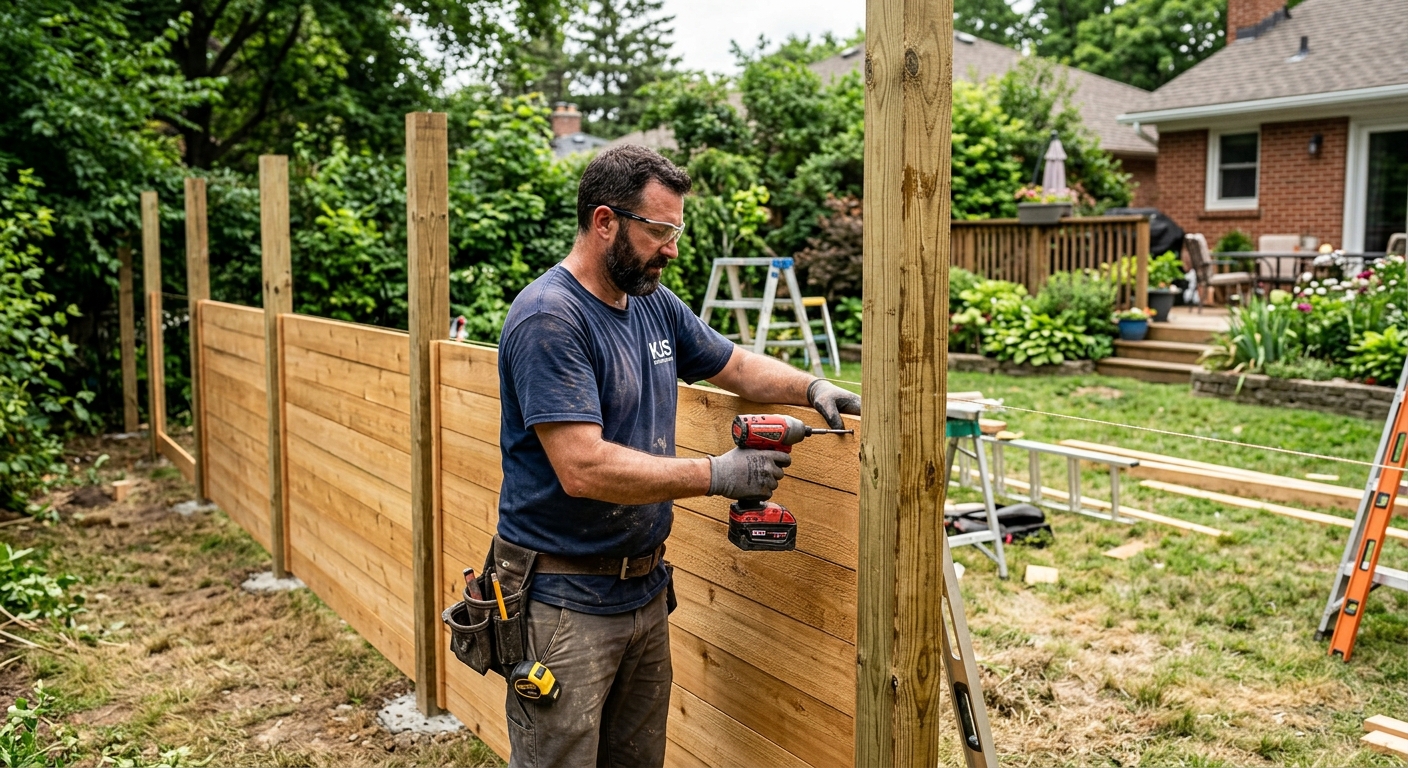
Fencing options and costs in Cold Lake
Cold Lake homeowners typically start with one big question: what fence can stand up to our winters, wind exposure, and long seasons of freeze-and-thaw? With 63.9% of local households owning homes (Statistics Canada, 2021 Census), and 65.7% of dwellings being single-detached houses, demand is consistent across most neighbourhoods—every detached property is a potential fencing project. Even so, quotes still vary because Wood Buffalo–Cold Lake conditions are tough on fast installs: posts must be set deeply to reduce frost heave, and crews often face frozen soils and uneven yards that add excavation and re-alignment time.
In this region, Prairie wind is a real cost driver. Taller privacy panels and vinyl systems can act like sails, so contractors usually tighten post spacing and choose more rigid frameworks. Meanwhile, chain-link and many metal options tend to be priced as lower “wind load” systems—less reinforcement is often needed. Contractor availability can also affect timing and price; when access is limited by snow coverage or thaw delays, scheduling premium work can push labour rates upward.
If you live near areas like Elizabeth Park, expect steady demand for replacement runs and back-yard privacy upgrades as lots age and fences near the end of their service life. The material you choose will strongly influence your budget and how often you’ll be back in maintenance mode, so it’s easiest to compare typical ranges side-by-side before you request a detailed site quote.
| Material |
Lifespan |
Maintenance |
Privacy Rating |
Price per Linear Foot |
| Pressure-treated pine (standard wood) |
10–15 years |
Stain/seal every 2–3 years; inspect for warping |
Medium–High (latticed/solid boards) |
$10–$16 |
| Cedar (natural rot resistance) |
15–25 years |
Light sealing or staining every 2–4 years |
High (solid pickets/boards) |
$14–$22 |
| Vinyl / PVC (no-maintenance) |
20–30 years |
Wash as needed; check fasteners after freeze periods |
High (solid privacy styles) |
$15–$26 |
| Chain-link (galvanized steel) |
20–35 years |
Occasional tension/repairs; rare re-staining |
Low (security only) |
$8–$14 |
| Aluminum ornamental |
25–40 years |
Rinse/clean; no rusting |
Low–Medium (open design) |
$16–$30 |
| Composite / recycled material |
20–30 years |
Wash/clean; check post connections over time |
Medium–High (solid styles) |
$18–$30 |
Prices are estimates only and vary by project scope, site access and material selection.
What affects the price of fencing in Cold Lake
In Cold Lake and across the Wood Buffalo–Cold Lake economic region, two contractors can price the “same” fence 30–50% differently because the real variables aren’t just material—they’re how the yard is built and how crews handle winter conditions. Labour and excavation dominate when soils are frozen, when access is tight, or when the terrain forces extra layout time. That’s why a straightforward run can sit near the lower end of the regional bands, while a rough-grade privacy fence with gates can push toward the top.
Frost depth is the biggest driver. In cold conditions, posts typically need to be set about 4–6 inches below the design frost depth, which often means digging and setting posts roughly 1.5–2.0 m into the ground. That depth usually leads to longer posts, deeper holes, and often concrete setting for stability—adding both material and labour. Wind exposure on the Prairies then affects design choices: tighter spacing and heavier rails for privacy fences, versus lighter frameworks more typical of chain-link.
Two local examples that commonly raise cost in Cold Lake are (1) uneven yards near driveways where the fence must be stepped or raked, requiring more custom panel alignment, and (2) older fence line removals where posts are frozen into the ground and disposal becomes time-consuming. On the other hand, cost can come down when the run is short, ground is relatively level, and you choose a lower wind-resistance system like chain-link—often aligning closer to the regional chain-link band of $30–$60 (installed) for simpler security layouts.
Housing age also matters. With 30.8% of local homes built before 1981 (Statistics Canada, 2021 Census), many lots have older fences, mature tree roots, and buried lines that slow excavation, which can shift a pressure-treated job toward the middle of the wood installation band of $40–$80 instead of the low end.
| Price Factor |
Why It Matters |
Cost Impact |
| Fence length in linear feet |
Most labour and material scale directly with length |
Highest impact; small increases in feet can move total by hundreds |
| Post depth required |
Frost line determines hole depth and required post length |
Deeper frost-season installs add excavation + post cost |
| Post setting method |
Concrete-set posts resist frost movement and wind loading |
Concrete setting typically adds material + labour versus gravel packs |
| Material choice |
Vinyl, cedar, and chain-link behave differently in wind and cold |
Switching from chain-link to vinyl/wood can raise material and frame requirements |
| Gate count and type |
Gates need stronger hinges, hardware, and tighter framing |
Each gate adds fabrication, labour, and reinforcement |
| Grade and terrain |
Slopes require stepping/raking and extra rails/bracing |
Uneven ground increases layout time and material waste |
| Old fence removal and disposal |
Breaking out old posts in frozen soil can be labour-intensive |
Haul-away and dump fees can be a meaningful add-on |
| Permit fees and survey / property line locate |
Locates reduce encroachment risk and rework |
May add direct admin cost and scheduling time |
Permits & regulations in Alberta
In Alberta, fence rules are a mix of provincial line-fence principles and local municipal bylaw thresholds, so it’s important to confirm the height and location before you dig. As a practical guide for Cold Lake projects, fences above a typical height threshold—often around 2.0 m (6.5 ft) in the rear and 1.0–1.2 m (3–4 ft) at the front or corner—may require a building permit, especially where visibility or safety considerations apply. Regardless of height, fences must stay within property lines and follow any municipal setback requirements.
Before digging any post hole, you should call for utility locates (Alberta One-Call). Then, obtain a survey or at least locate your property pins so you can confidently place posts on your side of the line-fence boundary. This avoids the most common homeowner problem we see: a fence built “where the old one was,” then challenged later.
Shared fence ownership and maintenance responsibilities are generally governed by Alberta line-fences legislation. In practice, that means you may need to coordinate repairs or replacements with the adjoining owner depending on the fence type and boundary arrangement.
Verification steps (what you can do before signing): Ask the contractor for their Alberta business details and check their licensing status through the appropriate online registry entry associated with their trade/contracting category, then request an up-to-date certificate of insurance showing general liability coverage. Confirm they have WSIB/WCB coverage (letter/clearance proof) and that the certificate lists you as an interested party if your insurer requires it.
Choosing the right fence material for Cold Lake
Choosing a fence material in Cold Lake is mostly about matching your priorities to what our winters do to fasteners, wood fibres, and polymer panels. Pressure-treated pine is often the budget starting point, but it typically needs staining or sealing every 2–3 years to prevent grey weathering and to keep boards from drying unevenly. Cedar looks better and naturally resists rot, but it still benefits from periodic sealing and careful fastening to reduce cracking at board ends.
Vinyl/PVC is popular for low maintenance—no annual staining—but it can become brittle in extreme cold if it isn’t rated for sub-zero conditions and installed with appropriate expansion allowances. Chain-link is the lowest-cost way to get long service and solid security; it also handles wind well because it doesn’t create the same sail effect, which is a real advantage in the Prairie exposures around Wood Buffalo–Cold Lake. Aluminum is mid-range: it won’t rust and it performs well through freeze-thaw cycles, but it’s more ornamental than private.
For privacy fences, post depth still matters. Because of frost heave risk, posts often need to be set around the design frost depth—commonly about 4–6 inches below it—with deep holes that may make concrete-set posts the safer choice for stability. In windy runs, heavier rails and tighter spacing help prevent wobble. Snow load and drifting can also stress fence lines near open areas, so proper bracing is worth budgeting for.
Here’s a realistic budgeting example: if you’re comparing a cedar privacy style versus vinyl, you might see cedar come in near the wood band (often within the $40–$80 installed range depending on height and labour complexity) while vinyl typically sits higher within the $55–$110 band. The extra upfront cost can be justified if you want fewer touch-ups across decades—just ensure the system is designed for cold Alberta and wind.
| Material |
Cold Tolerance |
Lifespan |
Annual Maintenance |
Best For |
Price Band |
| Pressure-treated pine |
Good in cold when properly fastened and sealed |
10–15 years |
Inspect; stain/seal every 2–3 years |
Lower upfront cost and traditional look |
$40–$80 |
| Cedar |
Very good; performs well with stable moisture control |
15–25 years |
Inspect; seal/stain every 2–4 years |
Natural appearance and strong curb appeal |
$55–$95 |
| Vinyl / PVC |
Good with proper cold-rated installation and allowances |
20–30 years |
Wash/inspect fasteners; usually minimal |
Low maintenance privacy with a clean profile |
$55–$110 |
| Chain-link |
Excellent; handles freeze-thaw without rotting |
20–35 years |
Rare repairs; check tension periodically |
Security and long-term durability |
$30–$60 |
| Aluminum ornamental |
Excellent; no rust in wet snow seasons |
25–40 years |
Wash/spot-check connections |
Decorative fencing with minimal upkeep |
$70–$140 |
| Composite / recycled |
Good; resists rot and uneven swelling |
20–30 years |
Wash/inspect; occasional hardware check |
Privacy look with longer maintenance intervals |
$65–$125 |
How to choose a fencing contractor in Cold Lake
To choose a fencing contractor in Cold Lake, start by verifying Alberta coverage and accountability before you compare prices. Ask for their certificate of insurance (general liability) and confirm it’s current for your project dates. Then request WSIB/WCB clearance or proof of coverage—don’t accept “we’re registered” without documentation you can review. If there’s a permit requirement for height or location, your contractor should also explain how they handle the paperwork and scheduling. You can further confirm their business details through the appropriate online registry listings associated with their contracting category.
Next, get 2–3 itemised written quotes that break labour and materials separately. You want line items for posts (including depth and setting method), rails/bracing, fabric/boards, gates and hardware, concrete/disposal, and any rework allowances for grading. A quote that’s a single lump sum with vague “site conditions included” is risky in winter because excavation and frozen soil time can change quickly.
Read the scope carefully: is permit pulling included or excluded? Is old fence removal and dump/disposal included, or is it charged separately? Ask about warranties: you should receive a clear workmanship warranty length, the manufacturer/product warranty term, and whether the warranty transfers to you. For payment, never pay more than 10–15% upfront; use a holdback and tie final payment to completion and cleanup. Finally, require a start date and completion estimate in writing so weather-related delays don’t turn into open-ended timelines.
- Provide their insurance certificate before work starts
- Provide WSIB/WCB proof or clearance letter (not just a statement)
- Show workmanship warranty in writing with duration and exclusions
- Confirm whether permits are required and whether they are included
- Request post depth and setting method in the scope (concrete vs alternatives)
- Ask for detailed gate hardware specs (hinges, latch, frame reinforcement)
- Verify they include line-locate or survey-based layout (or specify your responsibility)
- Confirm removal and disposal scope for the existing fence
- Ask about how they handle sloped yards (stepping vs raking) and add-ons
- Get material grade details (pressure-treated rating, vinyl type/cold rating, chain-link gauge)
- Check the quote is itemised: labour + materials, not a single total
- Agree on payment schedule with a holdback until final walkthrough
Red flags we frequently see in Cold Lake: contractors who won’t provide insurance/WSIB/WCB documents, quotes that omit post depth and concrete setting details, vague “permit included” wording with no scope, forcing large upfront deposits, and starting before they confirm layout/utility locates—especially when frozen ground makes rework expensive.
Frequently asked questions — fencing in Cold Lake
How long does a wood fence last in Cold Lake?
In Cold Lake, a well-built wood fence often lands around 10–15 years for pressure-treated pine and closer to 15–25 years for cedar, assuming posts are set deep enough for frost protection and boards are fastened correctly. The biggest reliability factor is how the posts are installed: in cold Alberta conditions, posts typically need to be placed below the frost influence to reduce heaving, and that usually means deeper holes and often concrete-set posts. Maintenance also matters—if you don’t stain or seal pressure-treated wood (commonly every 2–3 years), the surface weathers and board twisting can accelerate. If your home has older fencing common in lots developed in earlier housing waves (Statistics Canada, 2021 Census), you may see faster decline near rot-prone post zones where drainage or soil contact is poor.
Who owns and maintains a shared fence?
For shared boundary fencing in Alberta, ownership and responsibilities are typically governed by Alberta line-fences legislation and the specific agreement or boundary situation for that fence line. Practically, that means the adjoining owner may share responsibility for repairs or replacements depending on how the fence was established and whether it’s considered a boundary/shared structure. Before replacing a shared fence, communicate early with the neighbour and clarify scope: is the repair like-for-like, or are you upgrading height/material? A clear written agreement prevents misunderstandings later. If your contractor is used to boundary work in Cold Lake, they’ll also confirm your layout against property pins and will document what’s being replaced, so you’re not paying for something that belongs to the other side.
How do I find my property line before fencing?
Start with your survey, if you have one, and locate your property pins/markers. In Cold Lake, the safest approach is to confirm pins and/or request a property line locate so you can position posts on your side and avoid encroachment disputes. Before any digging, call Alberta One-Call for utility locates so you can prevent service strikes. If you’re unsure where the old fence sat (a common issue with older wood fences), don’t assume it’s correct—fences can drift over decades due to soil movement or previous mistakes. Ask your contractor to describe how they’ll verify layout on-site (pins, string lines, measurements) and document the placement before post holes are dug.
What's the most low-maintenance fence?
For most Cold Lake homeowners, vinyl/PVC is the lowest-maintenance “privacy” option because it doesn’t need staining and typically only requires occasional rinsing and a quick hardware check after freeze periods. Aluminum ornamental is also very low-maintenance, but it’s more decorative and usually doesn’t provide full privacy like a solid vinyl system. Chain-link is durable and low-maintenance too, but it won’t give privacy. As a pricing reference, vinyl/ PVC commonly falls within the regional band of $55–$110 (installed), while chain-link is often closer to $30–$60 depending on length, gates, and post depth. “Low maintenance” still depends on proper post installation below frost influence so panels stay aligned.
How tall can my fence be in Cold Lake?
Fence height limits depend on location (front/corner versus rear) and whether the fence triggers permit requirements. As a practical starting point in Alberta, fences above about 2.0 m (6.5 ft) at the rear and roughly 1.0–1.2 m (3–4 ft) at the front or corner may require a building permit, and setbacks and visibility rules can also apply. Because exact requirements can vary by municipal bylaw and site context, you should confirm the height and placement with your contractor and the city permitting office before ordering materials. If you’re planning a tall privacy fence, ask your contractor whether the permit pull is included in the quote and what documents they need from you.
Should fence posts be set in concrete here?
In Cold Lake, concrete-set posts are commonly recommended—especially for wood and privacy-oriented fences—because frozen soils and frost movement can cause lifting or leaning if posts aren’t stable. While some alternatives (like gravel packs with the right drainage) can work in milder climates, northern Alberta’s freeze-and-thaw conditions typically mean deeper holes and stronger anchoring. The key is matching your post depth to frost influence and using an appropriate setting method for your soil. A good contractor should specify the post depth and setting method in the written quote, rather than treating concrete as an optional add-on. If your quote is within the wood installation band ($40–$80), ask how much of that includes proper post installation—because that detail is what keeps a fence straight for years.