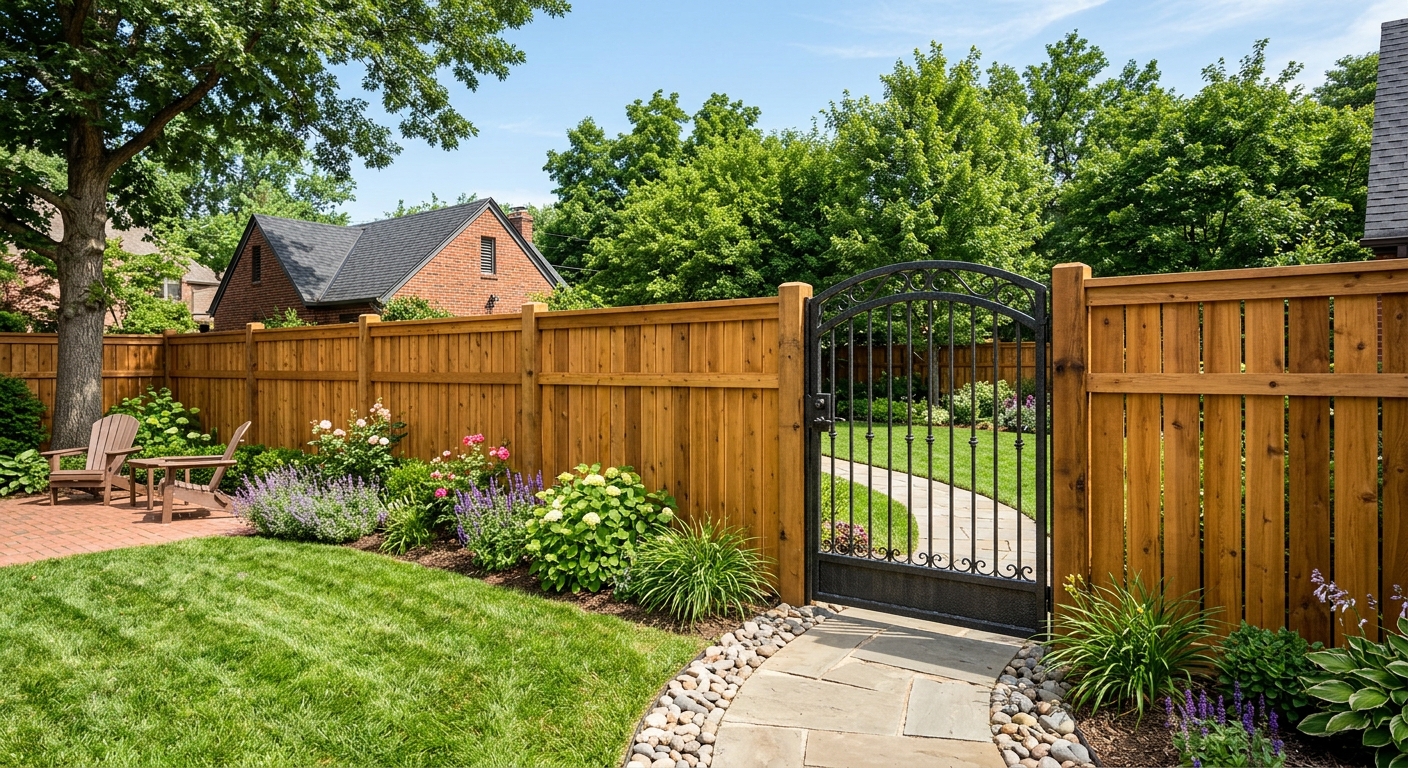
Fencing options and costs in Peace River
Peace River homeowners typically start their fencing search by balancing privacy, maintenance, and the reality of our long cold season. In a community of 6,619 people (Statistics Canada, 2021 Census), you can also see why demand stays steady: 59.1% of households are homeowners (Statistics Canada, 2021 Census), and 61.8% of dwellings are single-detached homes—each one is a potential fencing project when boundaries shift, pets need secure runs, or privacy is added for yard comfort.
In the Athabasca–Grande Prairie–Peace River economic region, pricing is strongly shaped by climate and exposure. Frost commonly pushes the effective frost line to about 4–6 feet, so fence posts must be set deep to prevent leaning and frost heave. Prairie winds also act like a sail, especially on open lots around the Peace River area and along rural approaches where gusts persist—this is why heavier privacy panels often need tighter post spacing and sturdier footings. Availability can vary seasonally: when ground is frozen, digging slows and contractors plan around equipment access, while summer work can cost less per hole but more for mobilization if travel routes are limited.
Contractors are often especially busy in established neighbourhoods like the River Heights area, where yards are common on sloped or uneven ground and property lines are frequently updated. Next, use the comparison below to estimate what different materials typically cost per installed style and why your final quote moves up or down after we inspect frost depth, wind loading, and access.
| Material |
Lifespan |
Maintenance |
Privacy Rating |
Price per Linear Foot |
| Pressure-treated pine (standard wood) |
10–15 years |
Stain/seal every 2–3 years |
High (solid boards) |
$35–$70 |
| Cedar (natural rot resistance) |
15–25 years |
Light staining yearly or every 2 years |
High (solid boards) |
$45–$85 |
| Vinyl / PVC (no-maintenance) |
20–30 years |
Occasional wash only |
High (solid/privacy styles) |
$40–$80 |
| Chain-link (galvanized steel) |
20–35 years |
Minimal (check tension annually) |
Low (open weave) |
$25–$50 |
| Aluminum ornamental |
25–40 years |
No rusting; rinse seasonally |
Low to Medium (decorative pickets) |
$45–$90 |
| Composite / recycled material |
20–30 years |
Wash and inspect fasteners |
Medium to High (panel dependent) |
$55–$100 |
Prices are estimates only and vary by project scope, site access and material selection.
What affects the price of fencing in Peace River
In Peace River and across the Athabasca–Grande Prairie–Peace River region, the same “style” of fence can land 30–50% apart depending on site conditions and how your posts are engineered. That variance is common in Alberta because winter demands deeper set depths and more labour when ground is hard or uneven. In practice, a straight run with easy machine access can come in near the lower bands, while a sloped lot with rock pockets and heavy privacy panels often pushes closer to the high end.
The frost line drives a major share of the cost. To prevent heaving and leaning, posts are typically set about 4–6 inches below the design frost depth; in cold Alberta soils, that often means holes and post immersion around 1.5–2.0 m into the ground. Deeper holes mean longer posts, slower augering, and frequently more concrete per post. Wind exposure on the Prairies also influences material choice: heavier privacy fences (wood/solid vinyl) usually need tighter post spacing and more robust rails so panels don’t rack and “oil-can” under gusts. By comparison, chain-link and some open ornamental styles can span a bit farther between posts because they present less wind load.
Local examples that raise cost in Peace River: (1) clay-heavy yards can require slower, more controlled excavation and additional backfill/compaction; (2) rocky or hardpan pockets can force smaller auger diameters or more labour to maintain true post alignment; (3) gate-heavy layouts add fabrication and extra bracing. Cost can lower when there’s straightforward access for a post-hole auger, when the run is relatively level, and when a simpler open style like chain-link is acceptable—often closer to the $25–$50 chain-link band. For higher-privacy options, budget for the $35–$70 wood range or higher depending on cedar/vinyl choice and post engineering.
Finally, housing age can indirectly affect your scope. With many homes built before 1981 (52.9% of dwellings, Statistics Canada, 2021 Census), older property boundaries and legacy fences can mean more line confusion, more old removal, and sometimes more time verifying where utilities and services cross.
| Price Factor |
Why It Matters |
Cost Impact |
| Fence length in linear feet |
Every additional foot adds materials, labour, and fastening |
Largest driver (commonly the base price) |
| Post depth required |
Frost heave prevention controls hole depth and post length |
Can swing cost noticeably due to concrete and labour |
| Post setting method |
Concrete setting vs gravel pack vs driven posts changes strength and time |
Concrete often increases per-post installed cost |
| Material choice |
Different materials have different rail stiffness, wind response, and longevity |
Vinyl/cedar typically higher than pine or chain-link |
| Gate count and type |
Double drive-through gates require heavier hardware and bracing |
Can add significant labour and metal work |
| Grade and terrain |
Slopes need stepped or raked panels; uneven ground adds layout time |
Often raises labour and material waste |
| Old fence removal and disposal |
Disposal fees, haul time, and salvage effort affect total cost |
May add a separate line item |
| Permit fees and survey / property line locate |
Some height/placement scenarios require extra verification work |
Added upfront cost; prevents costly corrections |
Permits & regulations in Alberta
In Alberta, whether you need a permit usually depends on fence height and placement. As a practical rule of thumb, fences above a typical rear-height threshold of about 2.0 m (6.5 ft) and above roughly 1.0–1.2 m (3–4 ft) near the front or corners often trigger a building permit requirement. Even when a permit isn’t required, you still must build within your property lines and follow municipal setback bylaws, which can vary by location.
Before any post holes are dug in Peace River, call for utility locates through Alberta One-Call. Also confirm property pins or obtain a survey/locate so you don’t encroach—fencing disputes are difficult and costly once concrete is poured. Shared fence ownership rules are governed by provincial line-fences legislation, so clarify responsibilities for maintenance and replacement when the fence sits on or near a boundary.
Typically DOES require a permit: taller fences (often above ~2.0 m rear and ~1.0–1.2 m front/corner), and any scenario where the fence could affect visibility or sits at a placement that your municipality flags. Typically does NOT: standard-height back or side fences built well within property lines where the municipality does not trigger a permit threshold.
To verify your contractor in Alberta, ask for: (1) an Alberta business/contractor licence number (check online via the appropriate provincial registry search tool), (2) liability insurance with clear coverage limits (request a certificate of insurance), and (3) proof of WCB/WSIB coverage (often shown through a clearance letter or WCB account verification). A reputable fencing company will provide these items promptly before work starts.
Choosing the right fence material for Peace River
Choosing a fence material in Peace River is mostly about matching your priorities to cold-weather performance. With frost routinely reaching about 4–6 feet in the Athabasca–Grande Prairie–Peace River region, fence posts must be set deep enough to resist heaving—regardless of whether you choose wood, vinyl, chain-link, or aluminium. In practice, we often recommend concrete-set posts for privacy fences and any heavier panel system, because wind-driven movement can stress weaker post bases over time.
Pressure-treated pine is the budget-friendly option, but it needs regular staining/sealing every 2–3 years to prevent grey weathering and keep the boards looking clean. Cedar costs more upfront yet offers natural rot resistance and better colour stability; it still needs periodic maintenance to protect the surface. Vinyl/PVC is attractive for low upkeep (wash and inspect), but in extreme cold it can become brittle if the system is undersized; proper rails, correct post spacing, and robust installation matter more than the material label. Chain-link is usually the longest-life low-cost fence, but it provides no privacy unless you add slats/mesh (which also changes wind behaviour). Aluminium ornamental looks great and won’t rust, but it’s a mid-range cost and typically only offers low-to-medium privacy depending on picket spacing.
Wind and snow load are also part of the material match. Privacy styles act like sails, so you’ll pay for tighter post spacing and stronger framing—this is where a higher privacy option can be worth it. For example, if wood in the $35–$70 band is close to what you’re willing to spend, switching to a cedar or privacy vinyl system can be justified when you want longer appearance life and fewer recurring board replacements. If privacy isn’t critical, choosing chain-link closer to the $25–$50 band can be a smarter spend.
| Material |
Cold Tolerance |
Lifespan |
Annual Maintenance |
Best For |
Price Band |
| Pressure-treated pine |
Good (with correct staining) |
10–15 years |
Minor checks; plan stain every 2–3 years |
Budget privacy where you’re okay maintaining |
$35–$70 |
| Cedar |
Good to excellent |
15–25 years |
Light stain/finish every 1–2 years |
Privacy with a better natural look |
$45–$85 |
| Vinyl / PVC |
Good (depends on design/rails) |
20–30 years |
Wash/inspect; no staining |
Low maintenance and consistent appearance |
$40–$80 |
| Chain-link |
Excellent |
20–35 years |
Minimal checks/tension annually |
Security at lowest cost |
$25–$50 |
| Aluminum ornamental |
Excellent |
25–40 years |
Occasional rinse and hardware checks |
Decorative security for front yards |
$45–$90 |
| Composite / recycled |
Good (select quality system) |
20–30 years |
Wash and inspect fasteners |
Low upkeep privacy panels |
$55–$100 |
How to choose a fencing contractor in Peace River
Choosing the right fencing contractor in Peace River comes down to verifying coverage, demanding clear scopes, and paying in a way that protects you. In Alberta, fencing work is labour-intensive and frost-depth installation quality affects performance for years—so you want proof that the company can legally operate, properly insure the work, and handle jobsite risks.
Start with licence and insurance checks. Ask for: (1) Alberta licence/business information (and verify it via the appropriate provincial registry search), (2) liability insurance certificate showing the contractor is covered for property damage and bodily injury, and (3) WCB coverage proof (a WCB clearance letter or equivalent clearance verification). Don’t accept “we’re covered” without documents you can review before any digging starts.
Next, get 2–3 written itemised quotes. “Itemised” means labour and materials separated—posts, rails, concrete setting (if included), gate hardware, fasteners, and any hauling/disposal lines. Read the exclusions carefully: is permit pulling included or your responsibility? Is removal/disposal of the old fence included? Are utility locates accounted for? A good quote answers those directly.
Warranty matters too. Ask for a workmanship warranty length and whether it covers post leaning, fastening failures, and gate alignment. Also confirm the manufacturer warranty on the fencing product and whether it transfers to you if you sell the home.
Finally, payment schedule: never pay more than 10–15% upfront. Hold back the remainder until the job is fully complete and inspected, including gate operation and alignment. For timing, request a written start date and a completion estimate that accounts for winter access and frost conditions.
- Confirm Alberta licence/business details before signing
- Request and review a certificate of liability insurance
- Ask for WCB clearance/coverage proof and keep a copy
- Get 2–3 quotes with labour/materials separated (not lump sum only)
- Verify whether concrete setting and per-post concrete are included
- Confirm post depth assumptions in writing (frost considerations)
- Ask how they handle sloped yards (stepped vs raked sections)
- Check gate hardware grade and whether bracing is included
- Make sure utility locate responsibility is identified
- Clarify old fence removal and disposal: included or separate
- Review warranty terms in plain language (workmanship vs product)
- Use a contract with a payment schedule and completion expectations
Red flags we see in Peace River include: quotes that skip frost-depth/post-setting details; “discount” offers that require large upfront payments; no insurance/WCB paperwork provided after you request it; vague scope language (no mention of disposal, permits, or gate hardware); and crews who won’t put start/completion timing in writing.
Frequently asked questions — fencing in Peace River
How do I handle a fence dispute with a neighbour in Alberta?
In Alberta, fence disputes usually come down to property line location, shared responsibility, and whether the fence height or placement complies with local rules. In Peace River, the best first step is to verify the boundary with property pins or a survey/locate before arguing about “who built where.” If you’re not sure, ask your contractor to mark proposed lines relative to the pins rather than estimating from visual landmarks. Next, review Alberta’s line-fences legislation for how shared fence ownership is handled and what costs typically fall to each party. Keep communications respectful and in writing (photos, measurements, and any prior agreements). If you can’t resolve it, consult a local professional for boundary clarification; once posts are concreted, adjustments become expensive and contentious.
What fence style offers the best wind resistance in Peace River?
For Peace River wind exposure, the most wind-resilient fences are usually the ones that “present less sail area” and are built with the correct framing stiffness. Open styles like chain-link and well-designed ornamental aluminium typically withstand gusts better because wind passes through, reducing racking forces. That said, privacy fences can still perform well when built properly: tighter post spacing, stronger rails, and robust footings reduce panel movement during freeze–thaw cycles. Installation quality is key—if posts aren’t set deep enough for the local frost conditions (often requiring concrete setting), even a good fence style can tilt over time. If privacy is essential, plan for heavier framing and more posts rather than trying to span long distances between supports.
How much does a fence cost in Peace River?
Fence costs in Peace River depend mainly on length, post depth and setting, gate count, and how exposed your yard is. For a typical homeowner scope, pricing commonly aligns with regional material bands: chain-link often comes in around $25–$50 per linear foot, while pressure-treated wood privacy fences are commonly in the $35–$70 per linear foot range. Vinyl/PVC privacy often sits higher, commonly around $40–$80 per linear foot, because of material and framing requirements. Your total can also swing due to removal/disposal of an old fence, sloped ground that needs stepped panels, and rocky or hardpan pockets that slow augering. Always ask for an itemised quote so you can see concrete and post-setting assumptions clearly.
How deep should fence posts be for Peace River's frost?
Peace River’s freeze conditions often mean fence posts must be set deeper than you’d guess from summer-only measurements. A common practical approach is to set posts approximately 4–6 inches below the design frost depth to reduce heaving risk. In cold Alberta soils, that often translates to post immersion around 1.5–2.0 m into the ground, but exact depth should be confirmed for your specific site conditions and soil. Because your fence can act like a lever under wind loads, shallow posts can lead to gradual leaning and gaps forming over a few seasons. Many privacy fence installs in this region use concrete setting to improve stability where frost heave potential is higher or where soils are clay or mixed with hard pockets.
Wood vs vinyl vs aluminum fence — which is best?
The “best” choice for Peace River depends on what you value most: privacy, maintenance, and lifespan. Wood (like pressure-treated pine) is often the best budget path, commonly matching the $35–$70 per linear foot band, but it typically needs staining/sealing every 2–3 years to keep it looking good. Cedar costs more but offers better natural rot resistance and a longer appearance life with maintenance. Vinyl/PVC is usually higher upfront (often $40–$80 per linear foot) and offers low maintenance, but it must be properly framed so it doesn’t get stressed in extreme cold and wind. Aluminium ornamental won’t rust and requires minimal upkeep, but it’s usually lower privacy (unless you choose a specific design with closer spacing). Many homeowners pick wood or vinyl for back/privacy and aluminium for front curb appeal.
Do I need a permit to build a fence in Alberta?
In Alberta, you may need a permit when a fence is above common height thresholds—often around 2.0 m (6.5 ft) for rear locations and roughly 1.0–1.2 m (3–4 ft) near the front or corners, depending on the municipality’s rules. In Peace River, the safest approach is to treat taller fences and boundary/visibility-sensitive placements as “permit likely,” and check directly with your municipality before building. Regardless of permit needs, you must respect property lines and setback bylaws, and you must call for utility locates before digging. Also consider that shared fence boundaries can carry responsibilities under Alberta line-fences rules, so clarify ownership and maintenance before installation. A reputable contractor should tell you early whether the plan triggers a permit and who pulls it.