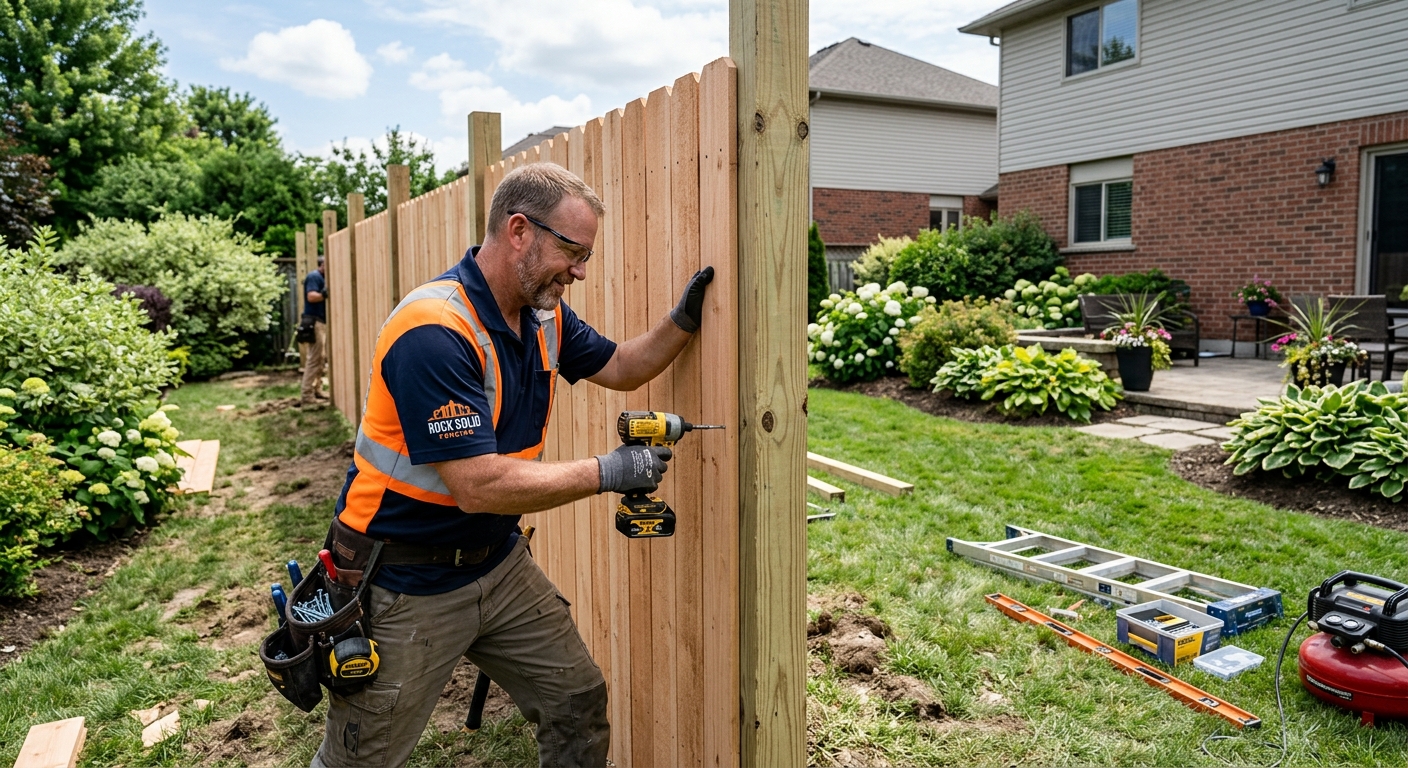
Fencing options and costs in Signal Hill
In Signal Hill, Alberta, homeowners typically choose between practical privacy panels, low-maintenance boundaries, and decorative metals—because your fence has to perform through long Prairie freeze–thaw cycles and regular wind. With a population of about 13,000 in the 2021 Census (Statistics Canada, 2021 Census), the area has a steady base of owner-occupied homes that keep boundary work in demand. Signal Hill’s housing mix also matters: detached homes are common in neighbourhood pockets, and each property line creates an opportunity for new builds, upgrades, or repairs after storms and winter heaving.
On the cost side, Calgary-area pricing is shaped by one big factor: frost protection. Crews often set posts around 4 ft (≈120 cm) deep (and sometimes deeper depending on the design frost depth) to sit below heave-prone soil. That means more excavation, more concrete where required, and longer posts for 6 ft privacy fences and gate posts. Open Prairie exposure also increases wind load, so solid wood and vinyl privacy systems usually need sturdier framing and closer post spacing than airy styles like chain-link.
In Signal Hill, work is especially active around the central residential sections near walking routes and cul-de-sacs, where yards are more enclosed and fences are more exposed to gusty blow-through winds. If you’re comparing options now, use the price ranges below as a starting point before we talk site access, height, and whether your yard requires stepped/raked sections.
| Material |
Lifespan |
Maintenance |
Privacy Rating |
Price per Linear Foot |
| Pressure-treated pine (standard wood) |
10–20 years |
Stain/seal every 2–3 years; inspect bottom rails |
High (solid panels) |
$40 – $80 |
| Cedar (natural rot resistance) |
15–25 years |
Occasional seal/stain; clean mildew spots |
High (solid boards) |
$55 – $95 |
| Vinyl / PVC (no-maintenance) |
20–30 years |
Rinse annually; replace warped panels if impacted |
High (solid privacy styles) |
$45 – $90 |
| Chain-link (galvanized steel) |
25–35 years |
Rinse; straighten after ice/wind events |
Low (open mesh) |
$25 – $55 |
| Aluminum ornamental |
25–40 years |
No rust; occasional wash |
Medium (ornamental pickets) |
$70 – $120 |
| Composite / recycled material |
20–30 years |
Minimal; follow manufacturer cleaning guidance |
High (solid styles) |
$60 – $105 |
Prices are estimates only and vary by project scope, site access and material selection.
What affects the price of fencing in Signal Hill
In Signal Hill, you can see the same fence spec come back 30–50% apart across the Calgary region because contractors price for risk: harder-to-reach yards, required frost-safe post depths, wind-load engineering choices, and how much labour time is needed to prep a straight line. One crew may offer a faster “standard” layout, while another builds for Prairie conditions by using fuller post spans, more bracing, and concrete setting for key posts. Material availability can also swing lead times—especially for privacy panels and custom gate hardware.
The frost line is the primary driver. In Alberta, post holes are commonly set about 4–6 inches below the design frost depth to reduce heaving risk. In practical terms, many installations end up with roughly 1.5–2.0 m in-ground post depth, which increases hole excavation and often concrete volume. Longer posts also raise material cost, and longer holes slow down installation.
Next is wind exposure. Open Prairie exposure means solid wood or vinyl privacy panels can rack in gusts if posts are spaced too far apart or if brackets aren’t rated. In Calgary’s winter freeze–thaw, wind-driven snow can further load rail systems, so bracing and post sizing matter. By comparison, chain-link allows airflow and tends to cost less upfront; you might budget within the $25 – $55 band for chain-link, while wood privacy commonly lands around $40 – $80 per linear foot depending on height and framing.
Concrete examples for Signal Hill: (1) a 6 ft privacy fence with concrete-set corner and gate posts usually costs more than a similar run with only certain posts concreted; (2) steep slopes that need stepped panels reduce fencing “linear efficiency,” adding labour; (3) removing an old fence and hauling it away can add haul-trip time and disposal fees that don’t show up in material-only quotes. If your current fence line was built with shallow post holes, replacement often costs more because we’re fixing the root cause, not just swapping boards.
| Price Factor |
Why It Matters |
Cost Impact |
| Fence length in linear feet |
More runs means more posts, rails, labour, and materials |
Largest driver (scales directly) |
| Post depth required |
Frost-safe depth prevents heaving and leaning |
Can add significant excavation and materials |
| Post setting method |
Concrete setting improves stability for privacy fences in wind |
Concrete vs gravel pack changes labour + consumables |
| Material choice |
Different framing needs and durability under Alberta conditions |
Shifts you between budget and premium bands |
| Gate count and type |
Gates require heavier posts, hinges, and latch hardware |
Often increases both materials and labour time |
| Grade and terrain |
Slope needs stepping/racking to keep a straight top line |
More layout time and extra labour |
| Old fence removal and disposal |
Haulage and disposal time increases total job hours |
Can add a noticeable one-time cost |
| Permit fees and survey / property line locate |
Verification protects you from encroachment disputes |
Adds administrative and specialist service costs |
Permits & regulations in Alberta
In Alberta, permit needs generally start with height. As a rule of thumb, fences above a height threshold—commonly around 2.0 m (6.5 ft) at the rear and about 1.0–1.2 m (3–4 ft) at the front or corner—often trigger a building permit requirement. Even when a permit isn’t required, your fence still must respect property lines and municipal setback requirements. Because Signal Hill is within the Calgary area, it’s smart to confirm the applicable setback zone before you order materials.
Before any post hole is dug, arrange utility locates. In Alberta, homeowners should use Alberta One-Call to mark underground utilities so you don’t hit electrical, gas, or communication lines. Then, get a survey or at least a locate of your property pins before installing; that step helps you avoid disputes and avoid rework due to an offset fence.
For a typical fence replacement or new installation, here’s the practical separation of what usually DOES vs does NOT require a permit: replacing the fence within existing height and setbacks typically does NOT require a new permit, while building a fence that exceeds the common height thresholds or installing a fence in a way that changes the boundary/placement often DOES. Shared fence ownership and boundary responsibility are influenced by provincial line-fences legislation, so keep documentation and photos.
Contractor verification steps: (1) check Alberta contractor licensing using the appropriate provincial online registry; (2) request a certificate of insurance naming you and confirming liability coverage limits; (3) confirm WSIB/WCB coverage—ask for a clearance letter or evidence of registration and good standing, and ensure your contractor provides it before work starts. If they can’t produce these documents, that’s a major credibility gap.
Choosing the right fence material for Signal Hill
Choosing the right fence material in Signal Hill comes down to matching your priorities—privacy, low maintenance, budget, and lifespan—with Alberta’s freeze–thaw cycles, wind exposure, and winter snow conditions. Pressure-treated pine is the most budget-friendly route, but it needs staining or sealing every 2–3 years to prevent grey weathering and to protect rail/bottom components where moisture collects. Cedar is naturally more rot-resistant and often looks better as it weathers, but it still benefits from periodic maintenance to extend service life.
Vinyl/PVC is popular for low-maintenance living because it doesn’t require staining; however, in extreme cold it can become brittle if the framing and panel support aren’t engineered correctly, especially for privacy styles in strong Prairie winds. Chain-link is usually the longest-life value option if you can live without full privacy; it’s also more forgiving under wind because it lets air pass through. Aluminum ornamental offers durability and a clean appearance with no rust, but it’s a medium-privacy choice and typically doesn’t “block” wind the way a solid panel does.
Post depth still matters across materials. With Calgary-area frost protection, posts often must be set well below the design frost depth; in practice many projects still end up at around 4 ft deep for stability and to reduce heaving. For solid privacy fences, concrete-set posts for corner and gate posts—and sometimes for all posts depending on your soil and layout—help resist racking.
A concrete budget example: if your quote for a chain-link boundary comes in around the $25 – $55 per linear foot band and upgrading to a wood privacy fence lands in the $40 – $80 per linear foot range, the higher cost is usually justified when you need visual screening, stronger wind bracing, and a “yard enclosure” effect. If privacy isn’t critical, chain-link can save money and still perform through winters.
| Material |
Cold Tolerance |
Lifespan |
Annual Maintenance |
Best For |
Price Band |
| Pressure-treated pine |
Good with proper staining and framing |
10–20 years |
Light inspection; re-stain every 2–3 years |
Budget privacy with a traditional look |
$40 – $80 |
| Cedar |
Very good; resists moisture-related decay |
15–25 years |
Seal/stain as needed; keep bottom rails checked |
Longer-lasting privacy with attractive grain |
$55 – $95 |
| Vinyl / PVC |
Good to very good when supported properly |
20–30 years |
Rinse; check for impact damage |
Low-maintenance solid privacy |
$45 – $90 |
| Chain-link |
Excellent in cold; metal handles freeze cycles well |
25–35 years |
Rinse; tighten hardware if needed |
Security with minimal cost |
$25 – $55 |
| Aluminum ornamental |
Excellent; won’t rust |
25–40 years |
Wash as needed |
Durable curb appeal |
$70 – $120 |
| Composite / recycled |
Good; performs well with correct anchoring |
20–30 years |
Minimal cleaning; follow manufacturer guidance |
Privacy with reduced maintenance |
$60 – $105 |
How to choose a fencing contractor in Signal Hill
When you’re hiring a fence contractor in Signal Hill, verify licensing and coverage before you discuss colour or upgrades. In Alberta, ask for proof of contractor licensing (use the provincial online registry to confirm the business name matches the quote), and request your certificate of liability insurance showing the coverage limit and that you’re listed as an interested party where applicable. For workers’ compensation, confirm WSIB/WCB coverage for the company and (if they sub-contract) for their trades as well—ask for a clearance letter or evidence of good standing. A contractor who can’t provide documents promptly is usually not set up to manage risk, which can lead to unfinished work or disputes.
Get 2–3 itemised written quotes. “Itemised” means a labour + material breakdown that lists posts, rails, panel type, hardware, concrete volume or post setting approach, gate components, and any excavation allowances. Check what’s excluded: permit pull, site grading, concrete rework, rock removal, and disposal of old fencing. If disposal is excluded, you may pay extra for hauling after the fact.
Warranty matters: confirm the workmanship warranty length (for installation issues like leaning or fastening failure) and the manufacturer/product warranty for material defects. Also ask whether warranties are transferable if you sell the home.
Payment schedule: never pay more than 10–15% upfront. Keep a holdback until completion and final walk-through. Timeline: insist on a start date and a completion estimate in writing so you can plan around winter access and driveway/yard constraints.
- Ask for Alberta licensing details and verify online against the quote name.
- Request a current certificate of liability insurance before any digging starts.
- Confirm WSIB/WCB clearance letter or equivalent proof of good standing.
- Require 2–3 written quotes with itemised labour and materials (not lump sums).
- Ensure the quote specifies post depth, post spacing, and whether posts are concrete-set.
- Confirm gate hardware brand/model and whether it’s included for both sides.
- Check whether permit fees (if needed due to height) are included or excluded.
- Verify whether excavation, rock removal, and site restoration are included.
- Ask who locates utilities and whether Alberta One-Call marking is part of the process.
- Confirm disposal/haul-away of old fence materials is included (or provide a separate line item).
- Get warranty terms in writing: workmanship duration and manufacturer coverage.
- Use a payment schedule with a small deposit and a holdback until final acceptance.
Red flags I see in Signal Hill: they won’t show insurance or WSIB/WCB proof, they refuse itemised pricing, they promise “same price no matter what” without noting frost-depth and site conditions, they start digging without confirmed property-line intent, or they ask for a large upfront payment (well beyond 10–15%).
Frequently asked questions — fencing in Signal Hill
What is the most weather-resistant fence for Signal Hill's climate?
In Signal Hill and the wider Calgary area, the most weather-resistant choices are typically chain-link and aluminum, because both are less affected by rot and moisture trapped at the base. Chain-link (galvanized steel) is also the budget value within the $25 – $55 per linear foot band, and it handles wind well because it allows airflow. Aluminum ornamental is often the longest-lasting “clean look” option, usually falling toward the $70 – $120 per linear foot band, and it won’t rust through winter salt cycles or thaw runoff. That said, a solid wood or vinyl privacy fence can perform very well if posts are set at frost-safe depth and the framing is built for Prairie wind load.
How do I prevent wood fence rot in Signal Hill?
Wood rot prevention starts below grade. In Alberta freeze–thaw conditions, the biggest mistakes are shallow post holes and weak bottom-rail protection. Ensure posts are set below the regional frost zone (often around 4 ft/≈120 cm deep for stability) and that key posts and gate posts are concreted where recommended by the design. Use quality pressure-treated materials, and keep the bottom rails well-drained and not in constant contact with soil. For maintenance, stain or seal on a schedule (commonly every 2–3 years) so water doesn’t penetrate and freeze-expansion doesn’t loosen fasteners. If you already have rot, focus on replacing compromised rails and connectors—not just patching boards—so the structure stays square in wind.
What is the cost per linear foot for fencing in Signal Hill?
For Signal Hill, most installed fence pricing trends align with the Calgary region bands. Wood fence installation commonly falls around $40 – $80 per linear foot depending on height, panel style, and how much concrete setting and bracing are used for wind. Vinyl/PVC is often close to that range but can extend higher, commonly around $45 – $90 per linear foot. Chain-link tends to be the lower-cost option, commonly around $25 – $55 per linear foot, while aluminum ornamental is usually the high end at about $70 – $120 per linear foot. Your final number can shift with frost-depth excavation, gate count, slope stepping, and disposal of an old fence.
Should I repair or replace my old fence in Signal Hill?
Repair makes sense if the fence line is still structurally sound—meaning posts are stable, rails are straight, and only boards or pickets are damaged from impact. In Alberta, once you see consistent leaning, loose posts, or widespread bottom-rail rot, replacement is often the better long-term value because the “cause” (post support and moisture at the base) isn’t fixed by swapping boards. I also recommend replacement when the existing fence was built with shallow post depths, because freeze–thaw heaving tends to return problems. If the fence is mostly intact but needs cosmetic board replacement, repairs can be worthwhile; for major post failure, plan for full rebuild with frost-safe post setting and improved bracing for Prairie wind load.
How do I handle a fence dispute with a neighbour in Alberta?
In Alberta, start with documentation: locate pins or get a survey and compare that to the fence line. Take dated photos showing where the fence sits, and keep any written communication with your neighbour. If your dispute involves property line boundaries or shared responsibility, the provincial line-fences legislation framework is what governs outcomes, so don’t rely on “verbal agreements” alone. Practical next steps for Signal Hill: (1) check whether the fence height and placement match municipal setback expectations; (2) confirm both parties’ understanding of who pays for which portion; and (3) bring a contractor who can itemise the scope and materials in writing so you’re not negotiating vague estimates. If the issue escalates, a surveyor’s report can prevent expensive guesswork.
What fence style offers the best wind resistance in Signal Hill?
For Signal Hill’s wind exposure, the best approach is usually a properly braced “solid privacy” system built to handle load, not a flimsy panel that traps wind. That means correct post depth and spacing, reinforced rails, and heavier gate hardware. Solid wood or vinyl privacy can be very wind-stable when installed with frost-safe posts (often around 4 ft/≈120 cm deep) and adequate concrete setting for corners/gates, which helps resist racking during gusts and snow load events. Chain-link is also wind-friendly in the sense that it lets air pass through, reducing pressure on the structure; however, it won’t provide privacy. The best result depends on your goal: maximum enclosure usually favours well-engineered privacy panels, while minimal wind strain and maximum durability often favours chain-link.