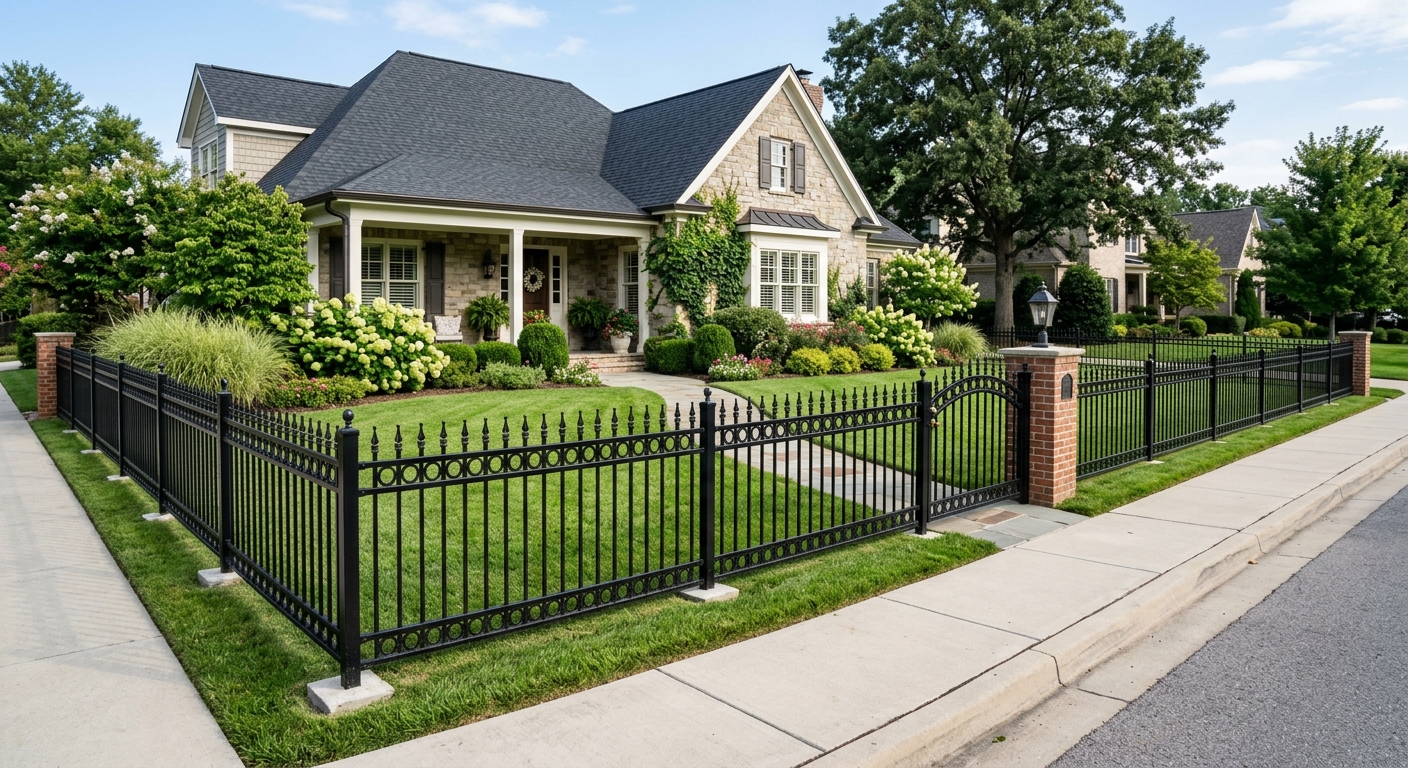
Fencing options and costs in Rio Terrace
In Rio Terrace, Alberta, choosing the right fence is usually about balancing privacy, wind performance, and the freeze–thaw reality of Calgary’s Prairie continental climate. With a population of 1,305 in the area (Statistics Canada, 2021 Census), you’ll often see a tighter pool of local trades compared with bigger Calgary neighbourhoods, which can influence availability during peak spring installs. Demand also tracks closely with housing type—Rio Terrace’s mix of single-family ownership creates steady ongoing replacement cycles, especially where older boundary fences have started to lean or lose pickets.
In the Calgary economic region, the big cost driver isn’t just the material—it’s what the weather forces you to build. Long freeze–thaw cycles and frequent wind exposure mean you’ll pay for frost protection and solid framing, particularly for 6 ft privacy fences. Contractor pricing can swing because frost-depth footing depth typically pushes post holes deeper (often around 4 ft / 120 cm or more to get below the regional frost line), and solid wood/vinyl privacy panels generally need tighter post spacing than lighter chain-link.
Trade demand tends to run higher around established residential pockets like near the Rio Terrace / 17 Avenue corridor, where many yards are being refreshed as owners upgrade privacy and improve curb appeal. From there, the simplest way to compare options is to look at typical lifespan, upkeep, and an all-in installed range per linear foot—so you can plan confidently before you request quotes.
| Material |
Lifespan |
Maintenance |
Privacy Rating |
Price per Linear Foot |
Price Range |
| Pressure-treated pine (standard wood) |
10–15 years |
Stain/seal every 2–3 years; inspect posts and rails |
High (solid or close pickets) |
$40–$80 |
$45 – $75 |
| Cedar (natural rot resistance) |
15–20 years |
Periodic staining or sealing; yearly inspection in windward sections |
High (solid boards) |
$55–$85 |
$55 – $90 |
| Vinyl / PVC (no-maintenance) |
20–30 years |
Rinse occasionally; check caps/posts after extreme cold snaps |
High (privacy panels) |
$45–$90 |
$50 – $95 |
| Chain-link (galvanized steel) |
20–35 years |
Minimal; wash down and inspect tension and gates |
Low–Medium (airflow-friendly) |
$25–$55 |
$28 – $58 |
| Aluminum ornamental |
25–40 years |
Rinse; inspect hardware occasionally |
Low–Medium (visual barrier) |
$70–$120 |
$75 – $125 |
| Composite / recycled material |
20–30 years |
Low maintenance; occasional cleaning; hardware checks |
High (board styles) |
$60–$110 |
$65 – $115 |
Prices are estimates only and vary by project scope, site access and material selection.
What affects the price of fencing in Rio Terrace
In Rio Terrace and across the Calgary economic region, two homeowners can get quotes that differ by 30–50% for what looks like the same fence because the “hidden” structural work changes with frost depth, wind loading, and site conditions. In Calgary-area installs, most of that swing shows up in excavation depth, concrete footing quantities, and how the contractor braces for racking on open prairie lots.
First, frost protection sets post requirements. Even when design frost depth varies by exact location, typical practice in cold Alberta is to set posts about 4–6 inches below the design frost depth to prevent heaving. That means longer posts, deeper hole excavation, and often concrete setting—especially for 6 ft privacy fences and gate posts. Second, wind exposure is a Prairie constant. Solid wood or vinyl privacy panels catch wind and can rack; contractors reduce panel “give” with tighter post spacing and more robust rails. That’s why chain-link often stays at the lower–mid range, since airflow reduces wind pressure. Third, access and terrain matter: sloped lots require stepping or raked panels, which increases labour time and sometimes adds extra rails and brackets.
Concrete examples from local pricing: a straight 100 ft run of pressure-treated pine can land around the $40–$80 per linear foot band, but the same length with 2 gate openings, deeper concrete-set holes, and yard access restrictions can push closer to the upper end. Likewise, vinyl pricing may sit mid-to-upper ($45–$90 per linear foot), yet it may climb if wind-bracing requires closer post spacing. And if you’re removing an old fence, disposal and backfill often add cost without changing the fence’s material look.
| Price Factor |
Why It Matters |
Cost Impact |
| Fence length in linear feet |
Most materials (posts/rails/panels) scale directly with length |
Highest impact (primary driver) |
| Post depth required |
Frost protection determines post length and hole depth in Alberta |
Can materially increase labour + materials (concrete/post length) |
| Post setting method |
Concrete vs. gravel pack vs. driven posts affects stability and cost |
Concrete footings typically cost more but reduce heaving risk |
| Material choice |
Vinyl/cedar/wood need different rails, spacing, and installation methods |
Shifts the project into different price bands (e.g., chain-link lower) |
| Gate count and type |
Drive-through double gates need stronger posts and hardware |
Often one of the largest adders after length |
| Grade and terrain |
Slopes require stepped frames or raked panels to stay level |
Increases labour, cutting, and bracing time |
| Old fence removal and disposal |
Demolition, hauling, and sometimes sorting materials |
Can add noticeable cost even if new fence is modest |
| Permit fees and survey / property line locate |
Ensures compliance and prevents costly encroachment corrections |
Varies by scope; can add a meaningful but one-time cost |
Permits & regulations in Alberta
In Alberta, fences above certain height thresholds often require a building permit. As a practical rule of thumb, many municipalities use thresholds around 2.0 m (6.5 ft) at the rear and 1.0–1.2 m (3–4 ft) in the front or corner, but the exact requirement can vary by location and fence position. Regardless of permit requirements, your fence must respect property lines and municipal setback rules.
Before digging any post holes, call for utility locates via Alberta One-Call (you should also confirm any provider-specific requirements). After that, get a survey or property pin locate so you install on the correct boundary and avoid neighbour disputes—especially important where older fences were placed “approximately” years ago.
What typically DOES require a permit: tall fences (commonly above the rear/front height thresholds), and any fence that otherwise triggers municipal review due to location, height, or special circumstances. What typically does NOT: low fences within common front/corner and rear height limits, standard replacement of an existing fence at like height, and temporary construction fencing (unless it meets a special local threshold).
To verify your contractor in Rio Terrace: check their Alberta licence/registration through the relevant online registry for trade authorization, confirm they carry liability insurance (ask for a current certificate of insurance showing adequate limits and your address/job name if available), and confirm WSIB/WCB coverage (in Alberta this is commonly WCB—ask for proof of account coverage). A clearance letter or account confirmation is often provided upon request—don’t skip it.
Choosing the right fence material for Rio Terrace
In Rio Terrace, Alberta, your best fence material depends on what you’re protecting against most: wind-driven snow, privacy needs, maintenance workload, and budget tolerance over the next 10–20 years. Pressure-treated pine is typically the most budget-friendly starting point, but it needs staining/sealing every 2–3 years to slow grey weathering and surface cracking. Cedar offers better natural rot resistance and usually looks better for longer, yet it still benefits from periodic maintenance. Vinyl/PVC is the “set it and forget it” option with low upkeep, but in extreme cold it can feel stiffer—meaning proper installation (and correct post spacing and bracing) matters. Chain-link costs the least and lasts a long time, but it offers no privacy unless you add privacy slats or screening.
Cold tolerance and freeze–thaw are why post installation details matter as much as material. Because Calgary-area frost cycles can heave weakly supported posts, most privacy fences are built with concrete-set posts and deeper footings (often around 120 cm / 4 ft into the ground, depending on the exact frost and local conditions). Solid panels are also affected by wind loading on the Prairie—so contractors commonly tighten post spacing versus chain-link, which benefits from airflow.
Here’s a dollar example: if vinyl is priced in the mid-to-upper range (commonly around $45–$90 per linear foot installed) and wood privacy is closer to $40–$80 per linear foot, the difference can be justified when you want to reduce recurring labour and keep the fence looking uniform without yearly staining. If your priority is maximum privacy and minimal maintenance, vinyl or cedar with concrete-set posts is usually the strongest match; if your priority is long-life at the lowest cost, chain-link with landscaping or slats often makes sense.
| Material |
Cold Tolerance |
Lifespan |
Annual Maintenance |
Best For |
Price Band |
| Pressure-treated pine |
Good (with proper sealing and post depth) |
10–15 years |
Check fasteners; spot-seal/stain as needed |
Budget privacy with periodic homeowner upkeep |
$40–$80 |
| Cedar |
Very good (natural resistance, but still needs care) |
15–20 years |
Light annual inspection; stain/clean periodically |
Premium look and rot resistance |
$55–$85 |
| Vinyl / PVC |
Good (proper installation reduces cold brittleness risk) |
20–30 years |
Occasional rinse; check gates/hardware |
Low maintenance privacy |
$45–$90 |
| Chain-link |
Excellent (galvanized steel holds up to freeze–thaw) |
20–35 years |
Minimal (tension checks, occasional wash) |
Security and airflow with lowest installed cost |
$25–$55 |
| Aluminum ornamental |
Excellent (won’t rust; stable in cold) |
25–40 years |
Occasional cleaning; hardware check |
Curb appeal with partial visual screening |
$70–$120 |
| Composite / recycled |
Good (choose quality hardware and correct spacing) |
20–30 years |
Low (wash and inspect fasteners) |
Durable privacy without staining |
$60–$110 |
How to choose a fencing contractor in Rio Terrace
Choosing a fencing contractor in Rio Terrace, Alberta is mainly about verifying proof and then comparing scope—not just price. Start with licensing and coverage. In Alberta, ask for their relevant trade authorization/registration (check the applicable online registry for the company name and individual details), then require a current certificate of liability insurance. Next, verify WCB/WCB coverage (ask for proof of account and/or a clearance letter). A contractor who can’t provide documentation quickly usually means you’re taking on risk.
For quotes, request 2–3 itemised written estimates with a labour + materials breakdown. You want to see line items for posts (lengths/quantities), rail systems, panel types, gate framing, concrete volumes/footings if used, and any surface hardware like hinges and latches. Read exclusions carefully: is permit pulling included if required, is old fence removal part of the price, and who handles disposal/hauling? Warranty matters too—ask for the length of workmanship warranty, the manufacturer’s product warranty, and whether the warranty is transferable to future owners.
Payment schedule should be conservative: never pay more than 10–15% upfront. Hold back a portion until the fence is complete, aligned, and gates operate properly. Finally, get a written timeline with a start date and an estimated completion date so weather delays and crew scheduling are clearly accounted for.
- Provide their proof of WCB coverage and liability insurance before work starts
- Give itemised quantities: post count, post spacing, and post depth assumptions
- Confirm footing approach (concrete-set vs. alternative) for Calgary-area frost protection
- List included gates hardware (hinges, latches, closers if requested) and their grade
- State who pulls any required permits and whether permit fees are included
- Include old fence removal and disposal details (and where debris goes)
- Spell out how they handle slopes (stepped vs. raked) and privacy board alignment
- Show how they locate property lines (survey/locate responsibility)
- Provide a workmanship warranty in writing (not just “we’ll stand behind it”)
- Clarify completion standards: gate swing, latch alignment, and post plumb
- Use a payment schedule with a small deposit and holdback until final walkthrough
- Include an installation start window and weather contingency language
Red flags I see in Rio Terrace include: (1) quotes with a lump sum and no post depth or footing method, (2) refusal to provide insurance/WCB documentation, (3) “topsoil backfill only” plans for privacy fences without discussing frost heave risk, (4) vague timelines like “this month” with no start/completion estimate, and (5) missing warranty details or a workmanship warranty that’s shorter than the product’s.
Frequently asked questions — fencing in Rio Terrace
How do I compare fencing quotes?
In Rio Terrace and the wider Calgary area, the fastest way to compare quotes is to standardize scope first. Ask each contractor for an itemised breakdown: total linear feet, post count and spacing, assumed post depth for Alberta frost protection, footing method (concrete-set vs. alternative), gate hardware, and disposal/removal. If one quote is $10,000 cheaper but omits concrete-set footings or uses different post depth assumptions, it’s not an apples-to-apples comparison. Also compare the material spec: pressure-treated grade, cedar board thickness, vinyl panel type, and chain-link gauge. As a reference point, many installed wood and vinyl privacy fences land roughly in the mid-to-upper band (for example, wood commonly around $40–$80 per linear foot, depending on height and access), while chain-link usually sits lower.
How long does fence installation take in Rio Terrace?
Most installations in Rio Terrace take anywhere from a couple of days to about a week, depending on fence length, number of gates, and site access. The biggest timeline variable is excavation and post setting—deeper hole digging and concrete curing add time, especially for 6 ft privacy fences and gate posts that need stronger support. Weather can also affect the schedule during spring thaw or heavy rain, since digging and concrete work can’t be done reliably on saturated ground. A straight run with minimal grade changes installs faster than a long run with sloped-grade stepping and multiple gate openings. When you request quotes, insist on a written start date and completion estimate so you can plan around crew availability.
Can I install a fence on a slope in Rio Terrace?
Yes—most fences can be installed on slopes in Rio Terrace, but the method matters. Contractors typically use stepped panels or raked panels to follow grade while maintaining privacy and structural integrity. Stepped installations look “tiered” and often suit board-style privacy fences; raked installations keep the fence line smoother along the slope but require careful bracing and consistent post heights/spacing. In Calgary-area wind and snow conditions, a sloppy slope approach can lead to racking over time, so the contractor should clearly explain how they’ll keep posts plumb and rails aligned while maintaining fence height. In your quote, ask how they’ll handle the slope and whether any added rails/bracing are included.
What is the most weather-resistant fence for Rio Terrace's climate?
“Most weather-resistant” usually means the best combination of strong framing, proper frost-depth post installation, and a material that won’t degrade quickly. In Rio Terrace and the Calgary region’s freeze–thaw cycles, chain-link and aluminum ornamental are naturally tough because they resist rot, and they handle temperature swings well. For privacy, vinyl/PVC and cedar perform well when posts are set correctly (often with concrete footings) and when wind-loading is addressed with tighter post spacing and stronger rails. The key is not just the material—it’s frost protection and bracing. A typical installed range can help you plan: aluminum/metal fencing often sits higher (commonly about $70–$120 per linear foot), while chain-link is usually lower (commonly $25–$55 per linear foot), with wood/vinyl privacy falling between.
How do I prevent wood fence rot in Rio Terrace?
Wood rot is usually prevented by separating the vulnerable areas from moisture and by using the right installation details for Alberta’s freeze–thaw. For Rio Terrace, focus on: (1) using pressure-treated lumber correctly and keeping cut ends protected, (2) ensuring posts are set below frost heave risk and typically concrete-set for stability, and (3) maintaining ventilation around pickets/boards rather than sealing everything in a way that traps moisture. Staining and sealing are important—many homeowners plan a full maintenance cycle every 2–3 years to slow weathering and cracking. Also inspect after big winter storms: if a post shifts or a rail loosens, that creates water pathways and speeds up failure. Ask your contractor to detail maintenance steps specific to the wood type in your quote.
What is the cost per linear foot for fencing in Rio Terrace?
For Rio Terrace, fencing costs follow the same practical price bands used across the Calgary economic region, and the main variables are fence height, material, gate count, terrain, and footing depth. As a quick planning reference, installed wood fencing is commonly around $40–$80 per linear foot, vinyl/PVC around $45–$90, chain-link around $25–$55, and aluminum/metal typically about $70–$120 per linear foot. Those ranges assume proper post setting for frost protection and typical residential access. If your yard is sloped, requires additional bracing, or includes gate work (especially drive-through double gates), your per-linear-foot effective cost can move upward even when the material line item looks similar. Always confirm what’s included in the quote—removal, disposal, and permit handling can shift totals.