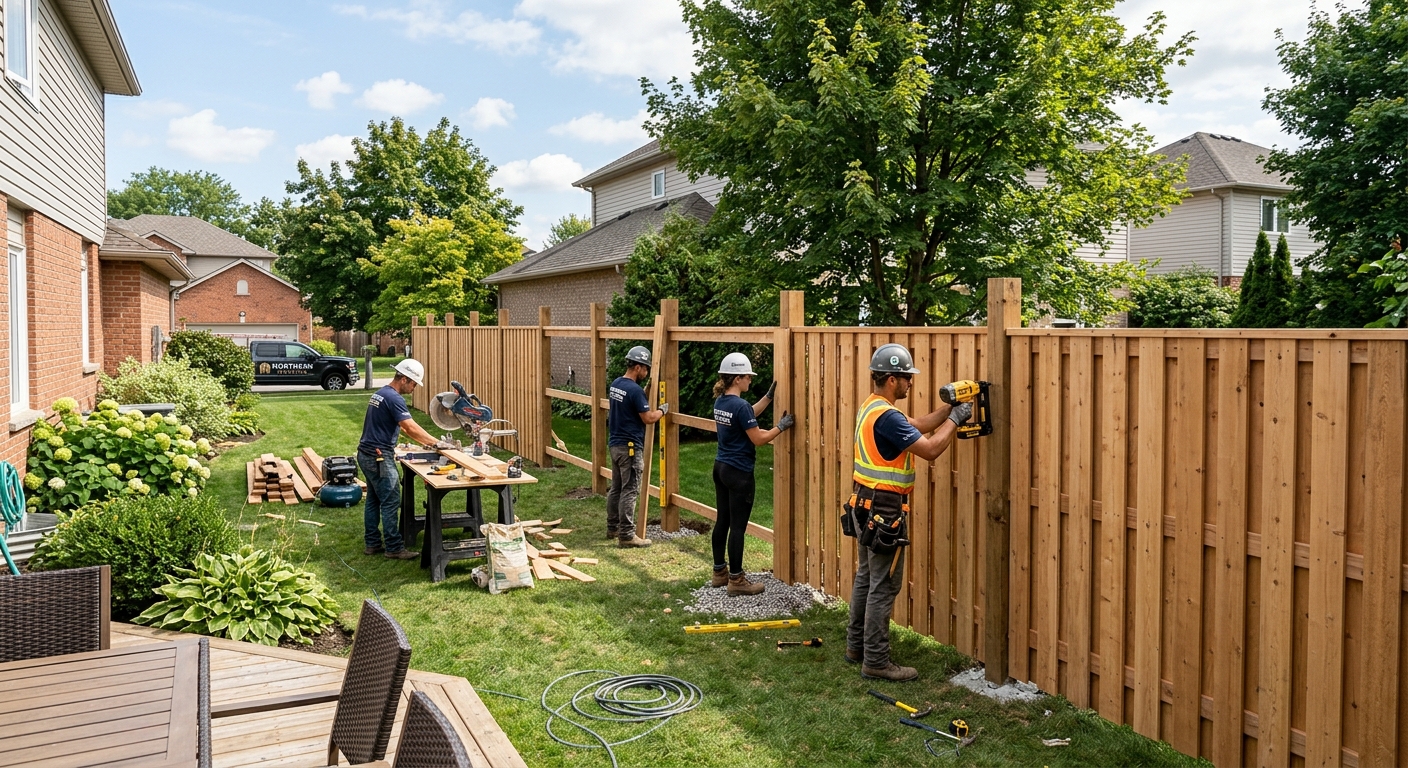
Fencing options and costs in Sexsmith
Sexsmith is a small community where fencing gets ordered year-round, especially when new builds or backyard upgrades go in. With 83.0% of local dwellings being single-detached homes (Statistics Canada, 2021 Census), most properties have a clear perimeter boundary that homeowners want to protect for kids, pets, and privacy. Ownership is also common—77.1% of households are homeowners—so demand tends to be steady and repeat customers are frequent.
In the Athabasca–Grande Prairie–Peace River economic region, fencing costs are strongly shaped by freeze–thaw conditions and wind exposure. The frost line in this part of Alberta commonly sits around 4–6 feet, which means posts need to be set deep (often with concrete) to reduce frost heave and long-term leaning. At the same time, open prairie winds can treat a fence like a sail. That pushes most projects toward tighter post spacing and sturdier frames for privacy-style panels, particularly on lots with direct wind lines (common around the north end of Sexsmith and along rural-access approaches).
Labour availability and mobilization also affect pricing. Deeper augering, longer posts, and access for trucks or mini-excavators can shift final costs noticeably versus a “flat” estimate. Because of these factors, two quotes for the same length can still land at different ends of the regional bands—so the table below is a good starting point before you compare contractor scopes.
| Material |
Lifespan |
Maintenance |
Privacy Rating |
Price per Linear Foot |
| Pressure-treated pine (standard wood) |
10–15 years |
Stain or seal every 2–3 years; inspect rails/posts |
Medium–High (solid/board-on-board styles) |
$35–$70 |
| Cedar (natural rot resistance) |
15–25 years |
Light staining/clear finish every 3–4 years (varies by sun) |
High (solid boards, tighter spacing) |
$50–$85 |
| Vinyl / PVC (no-maintenance) |
20–30 years |
Occasional wash; check fasteners after extreme cold |
Medium–High (with solid panel inserts) |
$40–$80 |
| Chain-link (galvanized steel) |
25–35 years |
Occasional rinse; replace damaged mesh/tensioner parts |
Low (open visibility) |
$25–$50 |
| Aluminum ornamental |
25–40 years |
No rust; occasional wash |
Low–Medium (depends on picket spacing) |
$45–$90 |
| Composite / recycled material |
20–30 years |
Low maintenance; periodic cleaning |
High (solid board styles) |
$60–$100 |
Prices are estimates only and vary by project scope, site access and material selection.
What affects the price of fencing in Sexsmith
In Sexsmith, the biggest reason two “similar” fencing quotes can differ by 30–50% across Athabasca–Grande Prairie–Peace River and Alberta is that the real work is driven by ground conditions, frost requirements, and wind-loading design—not just the fence material on the invoice. A crew may see pressure-treated pine and assume a straightforward install, but if your yard has rock pockets, a sloped grade, or limited truck access, the labour time and equipment time add up fast. On a tight budget, homeowners often compare vinyl/PVC (typically $40–$80 per linear foot) versus pressure-treated pine (often $35–$70), but the “difference” can narrow or widen depending on how many posts and what footing method is needed.
Frost depth is the anchor. In colder Alberta conditions, posts typically must be set about 1.5–2.0 m into the ground—commonly achieved by digging holes deeper than the surface frost effect—so frost heave doesn’t push posts upward and out of plumb. That often means longer posts, more auger time, and concrete setting rather than simple gravel backfill. Wind exposure on the Prairies also matters: for privacy-heavy styles, contractors may reduce post spacing and increase frame rigidity so panels don’t rack during gusts.
Concrete examples from Sexsmith-area jobs: if you’re installing along a sheltered backyard edge versus an exposed side yard, the exposed run usually needs stronger bracing and closer spacing. If your soil is clay-heavy, augering and concrete pour work takes longer and can increase installed cost. If you’re on firmer ground with good machine access, you may save time on hole preparation and get closer to the lower end of the material band.
| Price Factor |
Why It Matters |
Cost Impact |
| Fence length in linear feet |
More lineal footage means more posts, rails, and labour time |
Highest cost driver; scales directly with materials and install time |
| Post depth required |
Frost line determines hole depth and required post length for stability |
Deeper installs increase material, digging time, and sometimes concrete |
| Post setting method |
Concrete vs. gravel pack vs. driven posts affects footing strength |
Concrete typically adds cost but improves long-term plumb in freeze–thaw |
| Material choice |
Vinyl/cedar require different framing, fittings, and handling |
Moves you between typical bands (e.g., wood vs. chain-link vs. aluminum) |
| Gate count and type |
Gates need heavier posts, hinges, latches, and accurate alignment |
More gates can add substantial labour and hardware cost |
| Grade and terrain |
Slopes require stepped rails or raked panel layouts |
More labour and material waste can raise per-foot pricing |
| Old fence removal and disposal |
Hauling and disposal time depends on condition and accessibility |
Can add cost, especially with concrete footings or buried sections |
| Permit fees and survey / property line locate |
Accurate boundary confirmation prevents encroachment disputes |
May add a one-time cost, but can prevent expensive rework |
Permits & regulations in Alberta
In Alberta, fence rules depend on location and height. As a practical baseline, fences above a height threshold—often around 2.0 m (6.5 ft) at the rear and 1.0–1.2 m (3–4 ft) at the front or corner—can require a building permit. Your municipality may also apply setback and sightline limits, so it’s important not to assume “whatever height I want” is automatically allowed.
Before digging any post hole, call for utility locates through Alberta One-Call to avoid underground service conflicts. Also, get a survey or at least a formal locate of your property pins before installing. This reduces the chance of encroaching on a neighbour’s lot or crossing a utility easement. For shared fences, Alberta’s line-fences framework governs responsibilities—what each party can maintain and who pays for repairs varies by situation.
What typically DOES require a permit: tall rear/privacy fences above the common threshold, substantial structures attached to buildings, and projects where height combined with corner placement triggers local review. What typically does NOT require a permit: modest-height decorative or open fences under the common thresholds, assuming they stay within setbacks and respect property lines.
To verify a contractor before you sign in Sexsmith: check their Alberta licence (if applicable to their scope), request a certificate of liability insurance showing adequate coverage limits for fencing work, and confirm WSIB/WCB coverage documentation. Ask for a clearance letter or current account status; reputable contractors will provide it without pressure. Then compare quotes only after the paperwork matches.
Choosing the right fence material for Sexsmith
The best fence in Sexsmith is the one that matches your priorities while surviving Alberta’s cold snaps, frost heave risks, and prairie winds. Pressure-treated pine is usually the budget-friendly path, but it needs staining or sealing every 2–3 years to limit grey weathering and to keep the surface protected. Cedar looks better longer and resists rot naturally, but it still benefits from periodic maintenance to preserve colour and prevent surface checking. Vinyl/PVC is popular for low upkeep, but in extreme cold you want proper installation with correct fasteners and movement allowances—otherwise panels and components can be more prone to cracking at stress points.
For privacy, wood (pine or cedar) and solid composite boards tend to score highest. Chain-link is the lowest upfront option and can last a long time, but it won’t block views unless you add privacy slats or planters. Aluminum ornamental gives a neat, rust-resistant look with mid-range cost, but it’s inherently more open. In exposed yards, a “more open” style can be less vulnerable to racking, while a full privacy panel needs stronger bracing and closer post spacing.
Because frost commonly runs deep (often 4–6 feet), post-depth and footing design matter as much as the material. Even with premium materials, skipping proper deep setting (frequently concrete-set posts for long-term plumb) can lead to leaning after freeze–thaw cycles. If your soil is rocky or clay-heavy, expect deeper augering time and more concrete—this can shift the job toward the higher end of wood or vinyl bands.
Concrete value example: if vinyl/PVC is priced around $40–$80 per linear foot and cedar/wood privacy runs closer to $50–$85, the extra cost can be justified when you need a long-term “set it and forget it” look, fewer maintenance trips, and a fence designed for wind loading on your exposed side yard.
| Material |
Cold Tolerance |
Lifespan |
Annual Maintenance |
Best For |
Price Band |
| Pressure-treated pine |
Good (with proper post depth and sealing) |
10–15 years |
Low to moderate (clean/inspect; stain as needed every 2–3 years) |
Budget privacy with traditional look |
$35–$70 |
| Cedar |
Very good (rot resistance helps in freeze–thaw) |
15–25 years |
Moderate (light staining/finish every 3–4 years) |
Attractive privacy and durability |
$50–$85 |
| Vinyl / PVC |
Good (requires correct installation in extreme cold) |
20–30 years |
Minimal (wash and check hardware) |
Low-maintenance privacy |
$40–$80 |
| Chain-link |
Excellent (steel resists seasonal movement when set properly) |
25–35 years |
Low (rinse; repair tensioners when needed) |
Perimeter security and pets |
$25–$50 |
| Aluminum ornamental |
Excellent (no rust) |
25–40 years |
Low (wash; inspect for impact damage) |
Front yards and clean curb appeal |
$45–$90 |
| Composite / recycled |
Good (designed for freeze–thaw; still needs solid footings) |
20–30 years |
Low (periodic cleaning) |
High privacy with minimal upkeep |
$60–$100 |
How to choose a fencing contractor in Sexsmith
Choosing the right fencing contractor in Sexsmith is less about “who’s cheapest” and more about who will build the fence to survive our deep frost and wind. Start with Alberta compliance. Ask for proof of liability insurance (certificate of insurance naming you/your property as appropriate if required by the contract), and confirm WSIB/WCB coverage with documentation showing their current standing. If a contractor won’t provide certificates or clearance letters, treat that as a serious warning—especially on deep post installs where equipment damage or jobsite injuries are higher-risk.
Next, request 2–3 itemised written quotes. You want a breakdown that separates labour and materials (posts, rails, mesh/panels, brackets, hardware) and clarifies how posts will be set (concrete vs. gravel pack). Avoid lump-sum estimates without scope notes. Read exclusions carefully: Is old fence removal included? Is haul-off/disposal included? Is your locate/survey work included or “by homeowner”? A good contractor will also state whether permits are handled when needed and who pays.
For warranty, confirm two parts: workmanship warranty length (how long they stand behind installation) and product/manufacturer warranty on materials. Ask if the warranty is transferable if you sell the home. Regarding payment, never agree to more than 10–15% upfront; hold back a portion until the job is complete and measured. Finally, get a start date and completion estimate in writing so winter access delays are planned for rather than disputed later.
- Ask for Alberta licence details and confirm they’re set for fencing scope you’re hiring for
- Verify liability insurance certificate before any work starts
- Confirm WSIB/WCB coverage with a current clearance letter or acceptable account proof
- Get quotes itemised by labour and materials (not one lump number)
- Ensure post depth plan is stated (especially frost-depth driven depth)
- Confirm post setting method (concrete set vs. gravel pack) and where it’s required
- Check how gates will be framed and which latch/hinge hardware is included
- Ask for allowance details for sloped yards (stepped vs. raked panels)
- Confirm whether permit paperwork is included (when required)
- Clarify property line locate/survey responsibility and who orders it
- Review disposal: removal + haul-off included or extra
- Set a payment schedule with holdback until completion and cleanup
Red flags to watch for in Sexsmith: (1) quoting “surface frost depth” and refusing to discuss deep post setting, (2) no written scope/specs for post spacing and concrete setting, (3) inability or refusal to provide insurance + WCB/WSIB clearance documentation, (4) large upfront payments (well above 10–15%), and (5) vague warranties like “guaranteed” without a stated timeframe and terms.
Frequently asked questions — fencing in Sexsmith
What fence style offers the best wind resistance in Sexsmith?
In Sexsmith and the wider Athabasca–Grande Prairie–Peace River region, wind resistance comes down to how the fence is engineered—not just the look. Privacy boards and solid panels can handle wind well when post spacing is tighter, frames are properly braced, and posts are set deep enough for the local frost cycle (often 4–6 feet). Chain-link (properly tensioned on strong corners) can also perform very well because it’s more “open” and catches less wind pressure. If you’re trying to block wind for a patio area, consider a hybrid approach: a solid lower kick/rail section or dense privacy on the sheltered side, with more open mesh where you need wind to pass through. A contractor who designs for racking will usually outperform one who only swaps materials.
How much does a fence cost in Sexsmith?
Pricing in Sexsmith typically follows regional per-foot bands, then shifts based on posts, frost-depth footing, and site access. As a baseline, chain-link often lands around $25–$50 per linear foot, while pressure-treated wood commonly falls near $35–$70. Vinyl/PVC is commonly quoted in the $40–$80 range, and aluminum ornamental typically sits higher around $45–$90 depending on height and style. The frost line and required post depth usually push costs toward the upper end when concrete setting and deeper augering are needed. Projects with gates, sloped grades, or old fence removal can also increase the installed cost. The most accurate way to confirm budget is an itemised quote with post-setting and hardware details.
How deep should fence posts be for Sexsmith's frost?
For Sexsmith, you should plan for deep post placement to prevent frost heave and long-term leaning after freeze–thaw cycles. In colder Alberta conditions, that typically means setting posts about 1.5–2.0 m into the ground, which aligns with a common 4–6 feet frost expectation in the Athabasca–Grande Prairie–Peace River region. The exact depth also depends on soil type, fence height, and whether the design frost depth is higher for your specific lot. In practice, most durable installations use augered holes sized appropriately for the post diameter and backfill method, often with concrete setting to lock posts in plumb. If your contractor proposes very shallow holes or “gravel pack only” without explaining why, ask how they’re protecting against winter movement.
Wood vs vinyl vs aluminum fence — which is best?
“Best” depends on whether you value privacy, maintenance, or appearance. Wood (pressure-treated pine) gives classic privacy and often fits budgets near $35–$70 per linear foot, but it requires staining or sealing every 2–3 years to slow grey weathering. Cedar improves rot resistance and can last longer, yet still benefits from periodic finish work. Vinyl/PVC is a strong low-maintenance choice and typically falls near $40–$80, but it must be installed correctly in extreme cold with proper hardware and allowance for movement. Aluminum ornamental is durable and rust-resistant, typically around $45–$90, but it won’t provide the same privacy as board-style wood unless you choose a denser picket arrangement. In Sexsmith’s wind, the strongest results usually come from matching material choice with correct post depth, spacing, and bracing for your yard exposure.
Do I need a permit to build a fence in Alberta?
Sometimes, yes. In Alberta, fences above common height thresholds—often around 2.0 m (6.5 ft) at the rear and 1.0–1.2 m (3–4 ft) at the front or corner—often require a building permit, and municipal setback/sightline rules can also apply. Because rules can vary by placement and height, confirm with your local requirements before you order materials. Regardless of permit needs, you must respect property lines and setbacks, and you should call for Alberta One-Call utility locates before digging any post holes. It’s also wise to verify property pins or order a locate/survey to avoid boundary disputes. For shared fence responsibilities, line-fences rules affect maintenance and repair expectations. A reputable Sexsmith contractor will flag whether you’re likely in permit territory before starting.
How long does a wood fence last in Sexsmith?
A well-built wood fence in Sexsmith commonly lasts around 10–15 years for pressure-treated pine, and longer for higher-quality installs and materials such as cedar (often 15–25 years). Lifespan is heavily affected by post depth and footing method. Because frost heave is a real concern in our region—frost lines often reaching roughly 4–6 feet—posts must be set deep enough and typically benefit from concrete setting to stay plumb through freeze–thaw cycles. Maintenance also matters: staining/sealing every 2–3 years helps protect the wood surface from moisture cycling and sun exposure. Windy runs can shorten life if the fence is under-braced or has too-wide post spacing. If you want maximum service life, ask your contractor to spec deeper posts, correct post spacing, and a maintenance plan tailored to your yard’s sun and wind exposure.