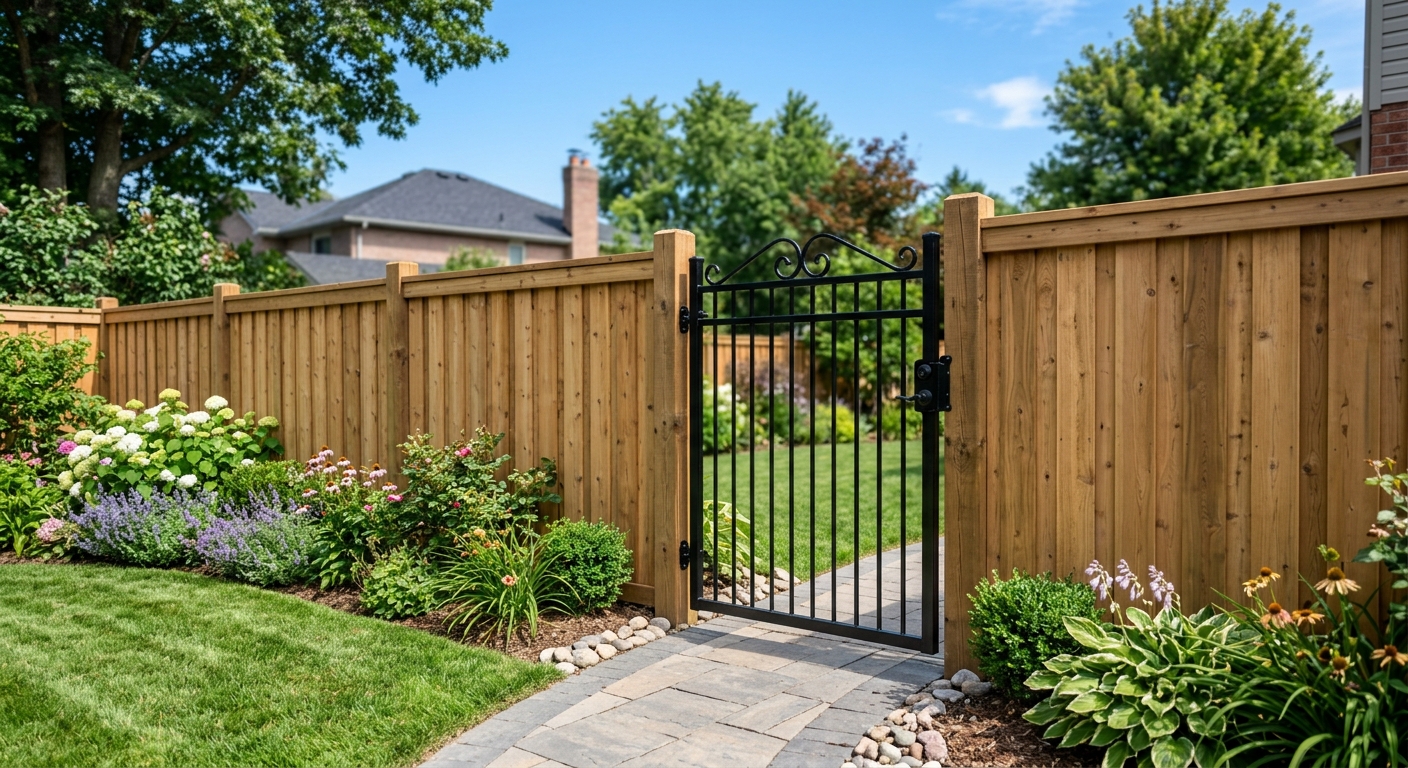
Fencing options and costs in Lago Lindo
Lago Lindo, Alberta is a community where homeowners commonly want curb appeal, backyard privacy, and practical wind protection—all of which show up directly in fence material choice. With a population of 3,987 (Statistics Canada, 2021 Census), demand is small enough that good installers can book out, but large enough that you’ll still see multiple crews bidding typical residential jobs. Most fencing work here is tied to private yards at detached homes, and each property line improvement is essentially a new “surface” needing posts, bracing, and frost-safe installation.
In the Calgary economic region, the Prairie continental climate drives up installed costs compared with milder parts of Canada. Long freeze–thaw cycles mean fence posts should be set roughly 4 ft (about 120 cm) deep to get below the regional frost line; for taller privacy fences and heavier gate posts, that usually translates to more excavation time, concrete volume, and longer posts. Open prairie exposure also creates higher wind loading—so solid wood or vinyl privacy panels often need sturdier spacing and fully concreted footings to prevent racking.
In Lago Lindo, fencing tends to be especially active around the more exposed residential stretches where wind can sweep across open lots—so you’ll often see homeowners upgrading to pressure-treated wood with concrete footings or switching from chain-link to vinyl/wood privacy after first experiencing gate sag or panel lean.
Below is a practical comparison of common options so you can frame what your quote should include before you compare contractor line-by-line costs.
| Material |
Lifespan |
Maintenance |
Privacy Rating |
Price per Linear Foot |
| Pressure-treated pine (standard wood) |
10–15 years |
Stain/seal every 2–3 years to limit grey weathering |
High (solid panels) |
$40–$80 |
| Cedar (natural rot resistance) |
15–20 years |
Light staining/maintenance every 2–4 years |
High (solid panels) |
$55–$95 |
| Vinyl / PVC (no-maintenance) |
20–30 years |
Wash as needed; check posts/bracing after severe freeze |
High (solid privacy styles) |
$45–$90 |
| Chain-link (galvanized steel) |
20–35 years |
Minimal; occasional tensioning/replacement of damaged sections |
Low–Medium (airflow-friendly) |
$25–$55 |
| Aluminum ornamental |
25–40 years |
No rust; rinse/spot-clean |
Low–Medium (open pickets) |
$70–$120 |
| Composite / recycled material |
20–30 years |
Low; periodic cleaning and hardware checks |
High (solid styles) |
$60–$110 |
Prices are estimates only and vary by project scope, site access and material selection.
What affects the price of fencing in Lago Lindo
In Lago Lindo, two quotes for the “same” fence can differ by 30–50% across the Calgary area because contractors price risk and complexity differently—especially around frost-proof footing depth, wind-bracing requirements, and how much excavation/removal is involved. Even when the material is the same, the install method (concrete-set versus gravel pack versus special post systems) and whether the job includes gates, removal, or line locating can swing the total budget quickly.
The biggest cost driver in Alberta is frost protection. Post holes are typically set about 4–6 inches below the design frost depth to prevent heaving, and in colder Alberta regions that often means digging roughly 1.5–2.0 m into the ground. That pushes material needs (longer posts) and increases concrete volume, labour time, and spoil hauling. On top of that, open Prairie exposure increases wind pressure; solid wood and vinyl privacy panels usually need tighter post spacing and heavier rail/bracing compared with chain-link, which allows airflow.
Climate comparisons that affect your quote: in cold Ontario and Alberta, frost depth forces deeper holes and more reinforcement; in coastal BC, mild temperatures but frequent wetting can accelerate wood rot if treatment isn’t premium and consistent. In Lago Lindo, you’re dealing with the freeze–thaw cycle and strong gusts, so even a mid-range wood or vinyl privacy fence tends to price closer to the $40–$80 (wood install band) or $45–$90 (vinyl/PVC band) side depending on height and gate size.
Concrete examples: (1) A 6 ft privacy fence with two large gates usually costs more because posts must be concreted and reinforced at every gate opening. (2) A short run on flat grade can land closer to the mid-to-lower end of the chain-link $25–$55 band because it typically avoids heavy bracing and uses lighter framework.
| Price Factor |
Why It Matters |
Cost Impact |
| Fence length in linear feet |
More footage means more posts, rails, and fasteners; it also increases excavation and material handling. |
Often the largest driver; can change total by hundreds quickly |
| Post depth required |
Frost line depth determines hole depth and post length to prevent heaving. |
Deeper frost-safe setting increases labour and concrete |
| Post setting method |
Concrete-set posts resist movement; gravel pack or other methods can reduce concrete use but may not suit solid panels. |
Concrete setting usually adds material and time |
| Material choice |
Vinyl and cedar often cost more upfront than pressure-treated pine; chain-link is typically lowest material cost. |
Shifts you across typical bands (wood/vinyl mid–upper; chain-link lower–mid) |
| Gate count and type |
Every gate requires reinforced posts, hinges, latches, and alignment adjustments. |
Walk gates add cost; drive-through (double) gates can add significantly |
| Grade and terrain |
Sloped yards require stepped or raked panels and extra labour for level appearance. |
Can raise costs due to layout, trimming, and waste |
| Old fence removal and disposal |
Demolition, haul-off, and post extraction add time and equipment use. |
Often increases the total by a noticeable percentage |
| Permit fees and survey / property line locate |
Locates reduce risk of encroachment; permits can apply at certain heights. |
Administrative and locating costs; reduces change-order disputes |
Permits & regulations in Alberta
For fences in Alberta, the need for a permit often starts with height. A practical rule of thumb many homeowners use is that fences above roughly 2.0 m (6.5 ft) at the rear and about 1.0–1.2 m (3–4 ft) at the front or corner often require a building permit. Regardless of permit requirements, your fence must still respect property lines and municipal setback bylaws, which can vary by location and lot configuration.
Before you dig any post holes in Lago Lindo, call for utility locates through Alberta One-Call. Then, get a survey or at minimum confirm your property line pins (where available) before installing—this is the fastest way to avoid encroachment disagreements with neighbours. Shared fence ownership issues are typically handled under Alberta’s line-fences framework, so if you’re building a boundary fence, confirm who owns the fence, who pays for replacement, and what portion is shared before work starts.
What usually DOES require a permit: taller fences in the threshold range, projects that involve significant structural elements near the front/corner, and any change that could affect safety or sightlines. What typically does NOT: small backyard sections well below the height threshold, straightforward fence replacement on the same footprint, and like-for-like repairs (still subject to setbacks).
To verify a contractor in Alberta step-by-step: (1) ask for proof of Alberta business licensing (or equivalent registration) and confirm it on the relevant online registry; (2) request a certificate of insurance showing liability coverage; (3) ask for proof of WSIB/WCB coverage (workers’ compensation) and ensure the clearance letter is current; (4) keep copies with your contract and check expiry dates before the crew starts.
Choosing the right fence material for Lago Lindo
Choosing a fence material in Lago Lindo is mostly about matching how you use the yard (privacy vs visibility) with Alberta’s freeze–thaw climate and Prairie wind. Pressure-treated pine is the budget-friendly choice, but it typically needs staining or sealing every 2–3 years to prevent grey weathering and keep the surface looking even. Cedar offers better natural rot resistance and a warmer appearance, yet it’s not “set and forget”—you still need periodic maintenance to keep colour consistent and boards from drying unevenly.
Vinyl/PVC is popular because it’s low maintenance, but cold snaps can make it more brittle than wood if it’s installed without proper bracing and aligned posts. In Calgary’s region, solid vinyl privacy panels usually benefit from concrete-set posts and careful post spacing to prevent racking under wind and snow load. Chain-link remains the most economical and airflow-friendly: it costs less, lasts a long time, and handles wind better because it doesn’t behave like a solid sail. Aluminum ornamental offers a clean, rust-resistant look and usually performs well in winter, but it won’t provide strong privacy.
Because fence posts are commonly set around the frost line (about 4 ft deep/120 cm in the region), the “real” cost difference between materials is often less about the panel material alone and more about the framing, gate hardware, and bracing required for the style. For example, moving from chain-link at $25–$55 to wood privacy at $40–$80 is usually justified if you want privacy, wind buffering, and a solid visual barrier—especially where neighbouring yards are close or exposed to wind.
| Material |
Cold Tolerance |
Lifespan |
Annual Maintenance |
Best For |
Price Band |
| Pressure-treated pine |
Good in cold; needs proper staining for longevity |
10–15 years |
Inspect and touch up every 1–2 years; full stain often every 2–3 years |
Budget privacy with a traditional look |
$40–$80 |
| Cedar |
Very good; responds well to winter exposure when installed correctly |
15–20 years |
Light maintenance 2–4 years; clean and check boards annually |
Premium appearance and natural resistance |
$55–$95 |
| Vinyl / PVC |
Moderate; brace properly in extreme cold |
20–30 years |
Minimal—wash and check alignment/hardware |
Low maintenance privacy |
$45–$90 |
| Chain-link |
Excellent; handles freeze–thaw with minimal material changes |
20–35 years |
Minimal—tension checks and spot repairs |
Security with airflow and lowest cost |
$25–$55 |
| Aluminum ornamental |
Excellent; non-rusting performance |
25–40 years |
Occasional rinse and hardware checks |
Front yards where curb appeal matters more than privacy |
$70–$120 |
| Composite / recycled |
Good; can be sensitive to installation quality and fasteners |
20–30 years |
Low—cleaning and periodic hardware checks |
Solid look with reduced maintenance |
$60–$110 |
How to choose a fencing contractor in Lago Lindo
Start by verifying your contractor’s Alberta credentials and coverage, because fencing is excavation work with real liability exposure. Ask for their certificate of insurance (liability) and confirm the coverage is active and matches the job scope. For workers’ compensation, request proof of WSIB/WCB coverage and look for a clearance letter that’s current—expired coverage is a common issue that can delay projects or shift risk back to you.
Then get 2–3 itemised written quotes rather than a single lump sum. A good fence quote breaks out: materials (posts, rails, panels, hardware), labour (layout, excavation, set, assemble), gate hardware, concrete quantity, and disposal/haul-off. Your scope should clearly state what’s included or excluded: permits (pull included or not), any property line locate/survey requirement, and whether the contractor removes your old fence and hauls it away.
Warranty matters for both workmanship and products. Ask for the workmanship warranty length and whether it covers post setting, racking, and gate alignment. Also request the manufacturer’s product warranty terms, and confirm if the warranty is transferable to future owners.
Payment schedules should be conservative: never pay more than about 10–15% upfront, and hold back the remainder until the job is complete and cleaned up. Get a written start date and completion estimate—especially important in Alberta where weather can shift timelines for excavation and concrete curing.
- Verify Alberta licensing/registration status in the relevant online registry and confirm it matches the quoted business name.
- Request a certificate of insurance showing liability coverage; confirm dates are current.
- Ask for WSIB/WCB clearance letter and confirm coverage is active.
- Get quotes with post depth, concrete setting method, and fence height stated clearly.
- Require a line-item breakdown: materials, labour, concrete, gates, and removal/disposal.
- Confirm whether utility locates and any site marking are included in the scope.
- Clarify whether permits are included or your responsibility (and who submits paperwork).
- Check for a stated warranty: workmanship duration and what defects are covered.
- Ask if the warranty is transferable to a new homeowner.
- Use a payment schedule that limits upfront payment to 10–15%.
- Insist on holdback until final walkthrough and punch-list completion.
- Get start date, estimated completion date, and weather contingency notes in writing.
Red flags I see around Lago Lindo include: quotes that don’t specify post depth or concrete setting method; “cheap” pricing that omits gate reinforcement or rail bracing; contractors asking for large deposits beyond 15%; refusal to provide insurance/WCB documentation; and vague scope wording like “all in” without disposal, permits, or locate responsibilities spelled out.
Frequently asked questions — fencing in Lago Lindo
What fence style offers the best wind resistance in Lago Lindo?
In Alberta and the Calgary region, wind loading is a major design factor, and that’s why chain-link often performs better than solid privacy styles when wind is consistently strong. Chain-link lets air pass through, reducing uplift and racking pressures on posts and rails. If you want more privacy while still improving wind behaviour, consider semi-solid designs or privacy panels with appropriate bracing and tighter post spacing—both of which should be priced transparently. For fencing budgets, chain-link typically lands in the lower–mid range (for example, $25–$55 per linear foot installed), while solid wood/vinyl privacy usually costs more because it needs sturdier framing and concrete-set footings for stability.
How much does a fence cost in Lago Lindo?
Pricing in Lago Lindo is driven mostly by total linear feet, fence height, gate count, and how deep the posts are set for frost protection. In the Calgary economic region, local installed pricing commonly falls within these practical bands: wood installs often sit around $40–$80, vinyl/PVC around $45–$90, and chain-link around $25–$55 per linear foot depending on style and terrain. Taller privacy fences and jobs with multiple gates or slope adjustments usually push toward the higher end because of reinforced posts, more rails, more excavation, and heavier hardware. Always ask for an itemised quote so you can compare concrete quantities, disposal, and gate hardware rather than comparing only the panel material.
How deep should fence posts be for Lago Lindo's frost?
For Lago Lindo in the Calgary region, post depth should be planned to sit below the regional frost line to prevent heaving. Local guidance commonly sets posts about 4 ft (approximately 120 cm) deep, especially for privacy fences and gate posts where movement can cause sagging or leaning. In practice, contractors may dig roughly 4–6 inches below the design frost depth, then use concrete footings for stability—particularly on heavier solid panel systems. The key is consistency: shallow or inconsistent post depth is where fences fail first during freeze–thaw cycles. Ask your contractor to state the planned hole depth, post type/length, and whether they’re using concrete or another tested setting method.
Wood vs vinyl vs aluminum fence — which is best?
“Best” depends on your priorities in Alberta: privacy, maintenance, wind/snow performance, and budget. Wood (pressure-treated pine) is usually a strong value for privacy and appearance, but it requires staining/sealing every 2–3 years to slow weathering (typical installed pricing often around $40–$80). Vinyl/PVC is low maintenance and can look consistent for years, but it should be installed with solid bracing and correct post setting in extreme cold; it often falls around $45–$90. Aluminum ornamental is excellent for curb appeal and rust resistance, but it’s open picket style so it won’t provide high privacy; aluminium pricing commonly sits higher (often $70–$120). If privacy is your top goal in Lago Lindo’s exposed yards, wood or vinyl is typically the better match—provided the posts are frost-set properly.
Do I need a permit to build a fence in Alberta?
Often, yes—depending on height and where the fence sits on your lot. In Alberta, fences above roughly 2.0 m (6.5 ft) at the rear and about 1.0–1.2 m (3–4 ft) at the front or corner frequently trigger a building permit requirement. Even when a fence is below the threshold, you must follow property line rules and municipal setbacks. Before digging, you must call for utility locates through Alberta One-Call, and it’s wise to confirm property pins or get a survey to avoid encroachment disputes. Ask your contractor whether they pull the permit and include permit costs in the quote, or if you’re responsible for it.
How long does a wood fence last in Lago Lindo?
Wood longevity in Lago Lindo depends on whether the posts are properly frost-set and whether the boards are maintained. With correct installation (typically frost-safe post depth and sturdy bracing for wind loading), pressure-treated pine fencing commonly lasts around 10–15 years. If you stay on top of maintenance—especially staining or sealing every 2–3 years to reduce moisture damage and grey weathering—you can improve the odds of reaching the upper end. Cedar can last longer (often 15–20 years) due to its natural rot resistance, though it still benefits from periodic maintenance. The fastest way to shorten lifespan in our freeze–thaw climate is inadequate footing depth or a contractor who underbuilds gate posts and corner bracing.