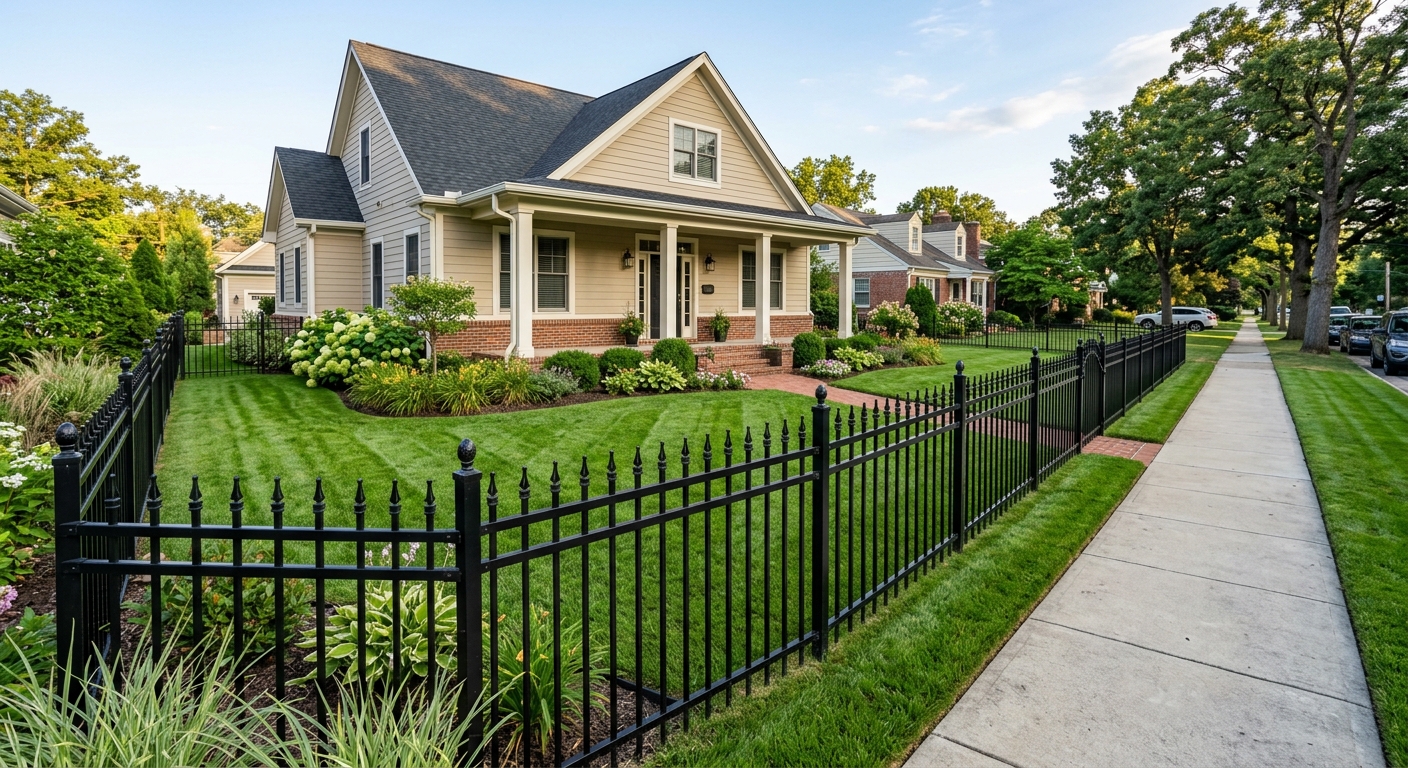
Fencing options and costs in Manning
In Manning, Alberta, the right fence starts with matching your yard’s exposure and your household needs to the local materials that actually hold up. With 78.7% of dwellings being single-detached houses, many homeowners are planning perimeter upgrades as part of routine property maintenance (Statistics Canada, 2021 Census). That demand matters because contractors in the Athabasca–Grande Prairie–Peace River region schedule work around the same frost-heavy season when accessibility is limited and post-setting takes longer.
Pricing here is strongly shaped by climate. Winter frost commonly pushes the frost line to about 4–6 feet in the region, so posts must be set deep (often with concrete) to prevent frost heave and gradual leaning. Prairie wind is also a real factor around the broader area—heavier privacy panels need tighter post spacing and more robust bracing—so the “cheapest option” can end up costing more over time if it’s not engineered for wind loading.
In practice, fencing tends to be especially in demand around newer residential pockets and growth areas where homeowners are putting in yards for kids and pets, such as the Manning hamlet area near main corridors and back-lot properties. From there, you’ll see typical installed pricing bands by material in the table below, with wood and vinyl often clustering higher due to deeper post requirements and labour-intensive installation.
| Material |
Lifespan |
Maintenance |
Privacy Rating |
Price per Linear Foot |
| Pressure-treated pine (standard wood) |
10–15 years |
Stain/seal every 2–3 years; inspect for warping |
Medium–High (solid panels) |
$35–$70 |
| Cedar (natural rot resistance) |
15–20 years |
Light staining/sealing every 3–4 years |
High (solid boards) |
$45–$85 |
| Vinyl / PVC (no-maintenance) |
20–30 years |
Rinse as needed; check for impact cracks |
High (solid privacy styles) |
$40–$80 |
| Chain-link (galvanized steel) |
20–30 years |
Occasional rinse; tension checks |
Low (limited privacy) |
$25–$50 |
| Aluminum ornamental |
25–35 years |
Wash yearly; check hinges/latches |
Low–Medium (decorative spacing) |
$45–$90 |
| Composite / recycled material |
20–30 years |
Minimal cleaning; periodic hardware checks |
High (solid styles) |
$60–$110 |
Prices are estimates only and vary by project scope, site access and material selection.
What affects the price of fencing in Manning
In Manning and the surrounding Athabasca–Grande Prairie–Peace River region, the same “standard fence” can come back 30–50% different from one quote to the next because contractors respond to different site conditions and install methods. Part of that spread is labour-driven: frost depth determines how deep posts must be set to resist heaving over time. As a practical rule, posts are typically placed about 1.5–2.0 m into the ground, which means deeper augering, more concrete (when concrete-set is chosen), and longer posts. In turn, material cost rises and installation time increases—especially when clay or rocky pockets slow down drilling.
Wind exposure is the other big driver. Prairie wind loads mean a privacy fence (wood or vinyl) often needs tighter post spacing and heavier rails to stay straight, while chain-link or ornamental aluminum can span farther safely, which is why chain-link usually stays closer to the lower band (often around $25–$50 per linear foot). By contrast, pressure-treated wood and vinyl tend to land higher because they’re built for solid panels that catch wind like a sail.
Two common Manning examples: (1) If your yard has hardpan or embedded rock, deeper holes can take longer and can push the project toward the higher end of the $35–$70 wood band due to extra rig time and labour. (2) If you’re replacing an old leaning fence, removal and disposal can add hours and disposal fees, moving the overall budget toward mid-to-upper pricing. With many homes here built earlier than 1981 (43.9% of dwellings), you also sometimes see older property layouts and irregular line runs that require more measuring time and post locations.
| Price Factor |
Why It Matters |
Cost Impact |
| Fence length in linear feet |
The main driver of materials, posts, rails, and labour. |
High (often the largest single line item) |
| Post depth required |
Frost line depth determines hole depth and post length. |
Medium–High (deeper holes increase labour + materials) |
| Post setting method |
Concrete vs. gravel pack vs. driven posts affects stability. |
Medium (concrete-setting costs more but reduces leaning risk) |
| Material choice |
Vinyl/cedar/wood vs. chain-link or aluminum impacts component costs. |
Medium (can swing the total budget 20–40%+) |
| Gate count and type |
Gates require heavier framing, hinges, and often concrete-set posts. |
Medium–High (double drive-through gates cost noticeably more) |
| Grade and terrain |
Sloped yards require stepped or raked panel alignment. |
Low–Medium (more layout time and possible extra rails) |
| Old fence removal and disposal |
Extra haulage, dumping fees, and labour for stripping old posts. |
Low–Medium (bigger on long, mixed-material fences) |
| Permit fees and survey / property line locate |
High fences or complicated boundaries can require formal verification. |
Low–Medium (varies by site and fence height) |
Permits & regulations in Alberta
In Alberta, fences above the local height threshold—commonly around 2.0 m (6.5 ft) at the rear and roughly 1.0–1.2 m (3–4 ft) at the front or corner—often require a building permit. The exact requirement can vary by municipal bylaw and lot placement, but the practical homeowner takeaway for Manning is this: if your plan is a tall privacy fence, don’t assume it’s “permit-free.” All fences must respect property lines and any municipal setback rules that apply to your lot.
Before you dig any post hole, you should have utilities located through Alberta One-Call to reduce the risk of striking buried services. Also, obtain a survey or property line locate so your contractor can position posts correctly—encroachment disputes are costly because fence lines are hard to “adjust after the fact.” Fence ownership and responsibility on shared boundaries are governed by provincial line-fences legislation, so it’s worth confirming whether the fence is truly shared and who maintains which side.
Verification steps for Manning homeowners: ask the contractor for (1) their current Alberta licence/registration details (where applicable), (2) a certificate of insurance showing general liability coverage, and (3) confirmation of WSIB/WCB coverage for workers. Where to look: review the insurer certificate directly (it should name the business and show adequate limits), and ask for WCB/WSIB clearance documentation or account confirmation before work starts. Keep these documents with your contract so you have proof if anything changes on site.
Choosing the right fence material for Manning
Choosing a fence material in Manning is mostly about balancing privacy, low maintenance, budget, and how the fence performs through deep frost and long freeze–thaw cycles. Pressure-treated pine is usually the best budget starting point, but it will weather: expect to stain or seal about every 2–3 years to limit greying and surface cracking. Cedar looks better longer and resists rot naturally, but it still benefits from periodic maintenance and proper airflow around posts and rails.
Vinyl/PVC is popular in Alberta for low maintenance and clean lines, yet it isn’t “indestructible.” In extreme cold, vinyl can become more brittle than wood and can crack if struck by moving equipment or heavy impact. It’s also heavier privacy styles need solid bracing, especially given Prairie wind loading—so you can’t skimp on post spacing. Chain-link is the lowest upfront option and typically the longest life with minimal maintenance, but it won’t give you much privacy. Aluminum ornamental offers a rust-resistant decorative look, and it performs well in freeze–thaw climates, though it won’t block views.
Regarding frost: in the Athabasca–Grande Prairie–Peace River region, posts often need deeper installation to manage heaving. Many projects use concrete setting for stability, particularly at corners and gate posts. That’s where you’ll feel the budget difference most. For example, if you’re comparing a wood privacy fence near the $35–$70 range to vinyl/PVC closer to $40–$80 per linear foot, the extra cost can be justified if you want fewer maintenance trips and longer-term consistency—especially if your yard is exposed and you’re likely to keep the fence for decades.
| Material |
Cold Tolerance |
Lifespan |
Annual Maintenance |
Best For |
Price Band |
| Pressure-treated pine |
Good (with proper sealing) |
10–15 years |
Inspect boards/fasteners seasonally; plan stain every 2–3 years |
Budget privacy with reasonable upkeep |
$35–$70 |
| Cedar |
Good (natural rot resistance) |
15–20 years |
Clean and re-stain about every 3–4 years |
Attractive privacy with moderate maintenance |
$45–$85 |
| Vinyl / PVC |
Good (avoid impacts in deep cold) |
20–30 years |
Rinse as needed; check hardware |
Low-maintenance privacy in exposed yards |
$40–$80 |
| Chain-link |
Excellent |
20–30 years |
Minimal; tension check every few years |
Security and pet containment |
$25–$50 |
| Aluminum ornamental |
Excellent (rust-resistant) |
25–35 years |
Wash yearly; check latch alignment |
Decorative curb appeal and boundary definition |
$45–$90 |
| Composite / recycled material |
Good (designed for temperature swings) |
20–30 years |
Minimal; hardware checks |
Solid privacy with low maintenance |
$60–$110 |
How to choose a fencing contractor in Manning
Picking the right fencing contractor in Manning is less about “lowest price” and more about verifying the basics that protect your home during digging, concrete setting, and winter-hardened installations. Start by confirming Alberta coverage and credentials: request their current business registration/licence details (as applicable), ask for a certificate of general liability insurance, and verify WSIB/WCB coverage for any workers. To check: view the insurance certificate directly (make sure the named insured matches the company quoting you), then ask for WCB/WSIB clearance or proof of coverage before work begins. If they can’t provide documentation quickly, treat it as a warning sign.
Next, get 2–3 itemised written quotes. You want a breakdown that separates labour and materials, identifies post depth and setting method (concrete vs. gravel pack vs. other), specifies rails/bracing type, and lists gate framing details. A lump-sum quote without line items is harder to compare, and in a region with 4–6 foot frost challenges, the post specification is usually where quotes diverge.
Read the scope for exclusions: is permit pulling included, is debris removal/disposal included, and who handles utility locates paperwork? Confirm warranty terms: workmanship warranty length (how long the installer stands behind alignment and post stability) and product/manufacturer warranty (what defects are covered). Also clarify whether warranties are transferable if you sell the home.
Payment schedule matters. In my experience, never pay more than 10–15% upfront; hold back a portion until gates are aligned, hardware works smoothly, and the final line is inspected. Get a start date and completion estimate in writing, including weather contingencies for freeze conditions and access limits.
- Confirm certificate of insurance and general liability limits before signing.
- Verify WSIB/WCB coverage with proof, not just verbal assurance.
- Ask for the exact post-depth plan (and how it relates to frost conditions).
- Require concrete-setting details for corners and all gate posts, where needed.
- Get a post spacing schedule for privacy fences (not “standard everywhere”).
- Ensure quotes state rail/bracing type and fastening hardware grade.
- Confirm if old fence removal and disposal are included or excluded.
- Ask whether utility locates are arranged and whether delays are billed.
- Request a gate quote that lists type (walk-through vs. double drive-through) and hardware.
- Require a line item for property line locate/survey if needed.
- Check warranty terms: workmanship start date and product defect coverage.
- Keep payment staged: small deposit, then progress payments after key milestones.
Red flags I commonly see in Manning include: quoting “standard depth” without mentioning frost-driven post length; skipping insurance/WSIB/WCB documentation; presenting a single lump-sum price with no material and labour breakdown; promising permit-free installation without checking fence height and setbacks; and asking for a large deposit (over 15%) before any footing or layout work starts.
Frequently asked questions — fencing in Manning
Should fence posts be set in concrete here?
In Manning and across the Athabasca–Grande Prairie–Peace River region, it often makes sense to use concrete setting, especially where frost heave risk is high. With frost lines commonly pushed to about 4–6 feet locally, posts typically need to be set deep enough to reduce movement over freeze–thaw cycles. Concrete helps stabilize corners, end posts, and gate posts that experience higher leverage and loading (wind and gate operation). That said, every site is different: sandy or very free-draining ground may be treated differently than clay or hardpan, and the right “post plan” depends on the soil you actually have and how the contractor intends to mitigate heaving. A solid contractor will explain the post depth, setting method, and why—rather than giving a one-size-fits-all answer.
What's the best fence for privacy?
For privacy in Manning, the usual top performers are solid wood privacy panels, cedar, or vinyl/PVC privacy styles—because they block sight lines. On the Prairies, wind matters, so a privacy fence needs tighter post spacing and robust rails/bracing to stay straight and avoid sagging. Vinyl and cedar often cost more upfront than chain-link; for example, installed vinyl/PVC privacy typically sits around $40–$80 per linear foot, while pressure-treated wood privacy often starts closer to $35–$70. If you want low maintenance, vinyl/PVC is often worth the premium; if you’re comfortable maintaining a wood fence every few years, pressure-treated pine can be a practical option. Also consider gate placement and the amount of exposed yard—heavier panel fences perform best when engineered for wind exposure.
How do I compare fencing quotes?
Compare quotes like a contractor would: line items first, not just the total. Ask each company to list material type/grade, rail count and size, post spacing, and the post-setting method (concrete set vs. gravel pack vs. driven posts). In Manning’s freeze–thaw conditions, the biggest differences usually come from post depth and how deep they actually drill holes. Confirm whether removal/disposal of the old fence is included, whether utility locates are handled, and whether permits (if required by fence height and location) are part of the scope. Make sure gate hardware is specified—especially for drive-through or double gates—because those add framing and often require stronger footing. If one quote is much lower but skips concrete setting, specifies wider post spacing, or doesn’t itemise labour and materials, you’ll often “buy” that cost later through repairs.
How long does fence installation take in Manning?
Typical installation timelines depend on length, number of gates, and site access. In a small-town setup like Manning, crews may mobilize efficiently, but longer digging days are common because posts need deep setting for frost resistance. If your project is a straightforward run with minimal obstacles, a short backyard privacy fence can often be completed in a few days; longer perimeter installs or work on uneven/rocky ground may stretch to a week or more. Weather is also a factor: heavy freeze conditions can slow excavation and concrete work, and snow storage or frozen ground can change access. A good contractor will give you a start date, a completion estimate in writing, and a clear explanation of what happens if frost conditions prevent digging on a scheduled day. Always ask whether the quote includes cleanup and final alignment checks.
Can I install a fence on a slope in Manning?
Yes, you can install a fence on a slope in Manning, and it’s fairly common in rural Alberta. The key is whether the contractor will use stepped panels (each section changes height) or raked panels (the entire fence follows the slope with angles). Stepped designs look cleaner when the grade changes more abruptly, while raked approaches may suit gentler slopes. Either way, you must keep consistent spacing and ensure posts are set to stable depths—especially with frost-driven footing. If a quote ignores the slope method and just says “we’ll make it fit,” that’s a problem. It can lead to uneven tension on rails, misaligned gates, and premature leaning. Ask to see examples of stepped/raked work they’ve done locally and how they handle drainage so water doesn’t undermine footings.
What is the most weather-resistant fence for Manning's climate?
For Manning’s deep-freeze conditions and wind exposure, chain-link and aluminum ornamental are often the most weather-resistant “set it and forget it” options because they resist rot and don’t rely on wood maintenance. Chain-link also has strong corrosion resistance when properly galvanized, and its typical maintenance is minimal—often just periodic checks and rinse. If you need a balance of weather resistance and security with more visibility blocking, cedar or vinyl privacy styles can perform well, but they require correct installation details (post depth, bracing, and proper hardware). For reference, chain-link frequently falls near $25–$50 per linear foot, while aluminum ornamental often lands closer to $45–$90. In practice, the most weather-resistant fence is the one installed with proper post footing for frost and correct tension/bracing for wind, regardless of material.