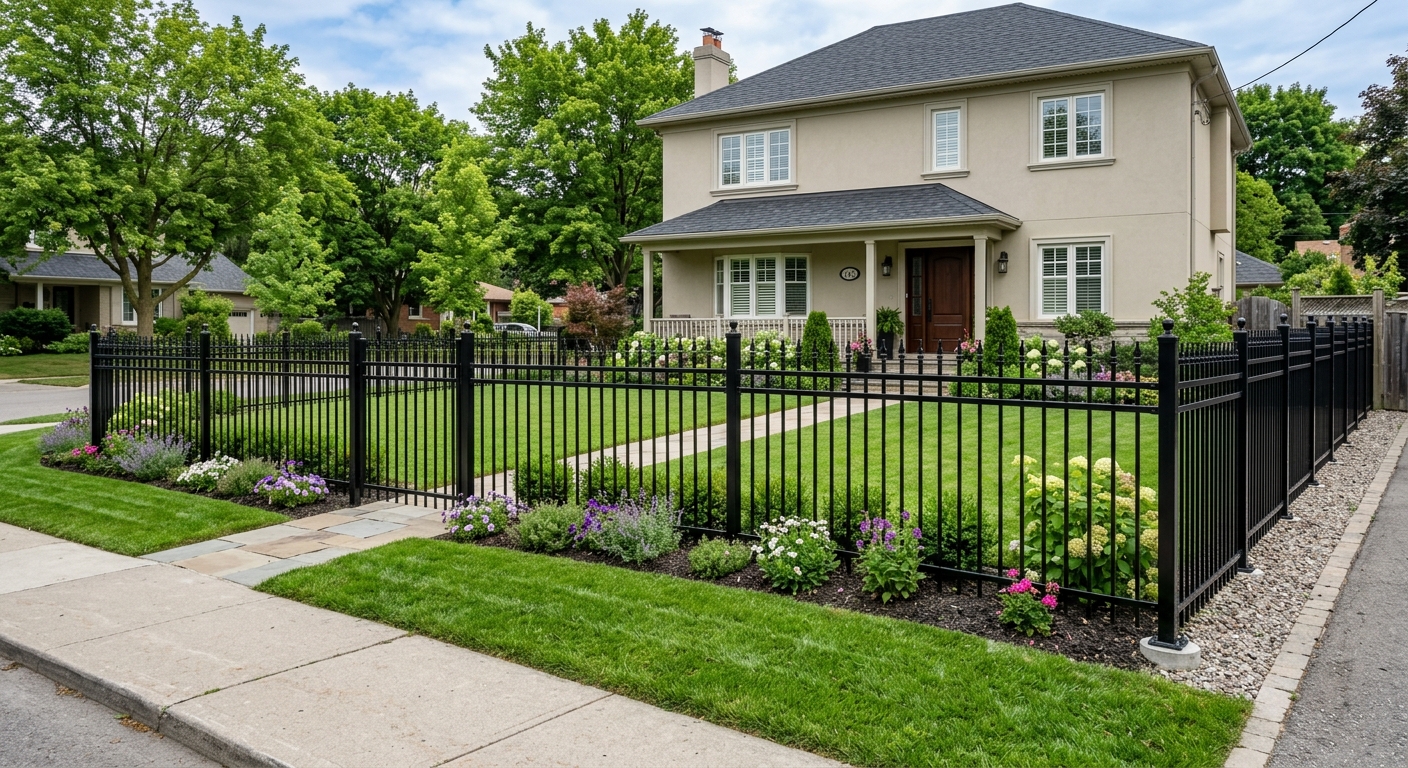
Fencing options and costs in Wedgewood Heights
Fencing costs in Wedgewood Heights are largely shaped by how cold Alberta winters interact with wind, frost, and the neighbourhood’s housing stock. With a population of 1,470 (Statistics Canada, 2021 Census), demand is concentrated around single-detached homeowners who are more likely to upgrade backyards, add gates, or replace older side fencing—making contractor availability and scheduling a real factor during peak season. In the Calgary economic region, the Prairie continental climate brings long freeze–thaw cycles and open exposure, so fence builders must plan for frost protection and wind loading, especially on privacy-style fences that have solid panels. That means the same fence height can price differently depending on whether you’re getting properly concreted footings, tighter post spacing, or a lighter open design.
In Wedgewood Heights—particularly around the newer infill streets where yards are still being fully landscaped—6 ft privacy fences and matching gate installs are especially in demand because homeowners often want consistent backyard enclosure before winter. On the Prairies, excavation and materials labour don’t just “add up”; they’re driven by post depth (commonly set around 4 ft deep) and whether the design includes wind-stiffening. As a result, most budgets fall into recognizable bands: chain-link tends to sit in the lower–mid range, while wood and vinyl privacy systems usually land mid-to-upper within the local market range.
Use the table below to compare typical options by lifespan, upkeep, and installed budget, then we’ll break down exactly what pushes your quote up or down.
| Material |
Lifespan |
Maintenance |
Privacy Rating |
Price per Linear Foot |
| Pressure-treated pine (standard wood) |
10–15 years |
Stain/seal every 2–3 years; check posts after freeze–thaw |
High (solid boards) |
$40–$80 |
| Cedar (natural rot resistance) |
15–20 years |
Seasonal inspections; stain optional but recommended for colour control |
High (solid boards) |
$55–$95 |
| Vinyl / PVC (no-maintenance) |
20–30 years |
Wash occasionally; inspect for cracking in extreme cold and wind strain |
High (privacy styles available) |
$45–$90 |
| Chain-link (galvanized steel) |
20–30 years |
Minimal; clear vines/debris and check tension |
Low–Medium (open mesh) |
$25–$55 |
| Aluminum ornamental |
25–40 years |
Occasional cleaning; inspect for loose brackets after storms |
Low–Medium (decorative pickets) |
$70–$120 |
| Composite / recycled material |
20–30 years |
Rinse periodically; follow manufacturer fastener guidance |
High (privacy panels) |
$80–$125 |
Prices are estimates only and vary by project scope, site access and material selection.
What affects the price of fencing in Wedgewood Heights
It’s common for two quotes in the Calgary economic region to differ by 30–50% even when you specify the same fence height. The main reason is that “the same fence” often hides different post requirements, footing choices, and labour intensity—especially in Alberta’s freeze–thaw conditions where frost protection is not optional. In Wedgewood Heights, contractors typically plan for posts to be set about 4 ft (≈120 cm) deep, often using concrete footings for 6 ft privacy fences and for gate posts. Deeper setting increases excavation time, concrete volume, and labour compared with milder regions where frost penetrates less.
Wind loading also plays a big role. Prairie exposure can rack lighter systems, so builders may tighten post spacing or upgrade hardware for solid wood or vinyl panels. In contrast, chain-link fencing allows airflow, which is why it often lands toward the lower–mid range (roughly $25–$55 per linear foot). Wood and vinyl privacy usually price mid-to-upper because they require sturdier framing and reliable anchoring (often reflecting the $40–$80 and $45–$90 bands, respectively).
Concrete examples from local projects: (1) A straight backyard run on level ground may keep your price closer to the mid band because less rock and fewer step adjustments are needed. (2) A yard with a slope usually adds cost for stepped rails or raked panel corrections, plus extra layout time. (3) If your run includes a double gate, the brace posts and hardware are heavier, and that pushes the quote upward more than many homeowners expect. Housing-stock age matters too—replacement fences tied into older, out-of-square property lines can require additional re-layout and demolition, which can add hundreds to over a thousand dollars depending on length and disposal volume.
| Price Factor |
Why It Matters |
Cost Impact |
| Fence length in linear feet |
The labour and materials scale directly with length. |
Largest driver; doubling length nearly doubles cost before mobilization charges. |
| Post depth required |
Frost line determines how long posts must be and how deep holes go. |
Deeper holes increase excavation and concrete; commonly the difference between a budget and a premium install. |
| Post setting method |
Concrete vs. gravel pack vs. driven posts affects stability in freeze–thaw. |
Concrete-set posts typically cost more upfront but reduce future leaning/heaving. |
| Material choice |
Different materials have different framing needs and weather behaviours. |
Often shifts the project into different local bands (e.g., chain-link lower–mid; wood/vinyl mid–upper). |
| Gate count and type |
Gates need heavier posts, bracing, and precise alignment. |
Walk-through gates cost less than drive-through/double gates; bracing can add significant labour. |
| Grade and terrain |
Slopes require stepping or raking and extra layout time. |
Stepped panels and off-level rails usually add cost versus a straight level run. |
| Old fence removal and disposal |
Demolition, haul-away, and disposal fees vary by material and condition. |
Can add a noticeable lump sum, especially for chain-link posts and concrete remnants. |
| Permit fees and survey / property line locate |
Some fence heights require permits and accurate placement matters. |
Survey/locates and permit handling increase administrative and labour time. |
Permits & regulations in Alberta
In Alberta, fence permit requirements often kick in when you’re building above common height thresholds—typically around 2.0 m (6.5 ft) at the rear and 1.0–1.2 m (3–4 ft) at the front or corner. The exact requirement can vary by municipal bylaw and the fence location on your lot, so your contractor should confirm whether your specific plan triggers a permit. Regardless of height, fences must respect property lines and any local setback rules.
Before you dig any post holes, you must call for utility locates (Alberta One-Call). That locate protects you from buried services and avoids costly damage and delays. Next, confirm your exact property line—either by obtaining a survey or by locating your property pins—so you don’t accidentally encroach, which can lead to disputes and removal costs.
Shared fence responsibilities are also important: line-fences and maintenance obligations are governed by provincial line-fences legislation, and practical outcomes depend on who installed the fence, what portion is shared, and what portion sits entirely on your property.
How to verify a contractor in Wedgewood Heights: ask for (1) Alberta licensing details where applicable for their trade/process, (2) proof of liability insurance, and (3) WSIB/WCB coverage. Look for a current Certificate of Insurance (COI) naming your household or the project (where required), and confirm the coverage is active for the installation period. If they provide a clearance letter or coverage verification number, match the dates and project location, not just the company name.
Choosing the right fence material for Wedgewood Heights
Choosing the right fence material in Wedgewood Heights comes down to balancing privacy, low maintenance, and how the Prairie climate treats fasteners and panels. With Calgary’s long freeze–thaw cycles and frequent wind exposure, a fence’s framing and post anchoring matter as much as the surface material. Pressure-treated pine is often the budget choice, but it typically needs staining or sealing every 2–3 years to limit weathering and keep boards looking even. Cedar offers better natural rot resistance and an attractive finish, but it still benefits from periodic maintenance to prevent colour fade and warping in the first seasons.
Vinyl/PVC is popular for “set it and forget it,” since it generally doesn’t require staining, and it can last 20–30 years when installed with correct spacing and hardware. However, in extreme cold snaps, vinyl can become more brittle and may crack if the system is under-stiffened or not properly anchored for wind and snow load. Chain-link is the lowest upfront option and tends to hold up well in the region because it allows wind to pass through—so fewer structural upgrades are needed—but it provides little privacy unless you add screening. Aluminum ornamental looks clean and resists rust, though it’s not meant for full privacy.
For Calgary frost protection, most builders set posts below the regional frost line (often around 4 ft deep) and use concrete-set footings for privacy panels and especially for gate posts. That’s where a wood-to-vinyl difference can be justified: if you’re already paying for deep, concreted posts, spending the extra on vinyl can reduce long-term labour compared with budgeting $40–$80 per linear foot wood that requires ongoing staining. If you want lowest cost and accept open sightlines, chain-link at about $25–$55 per linear foot is usually the best fit.
| Material |
Cold Tolerance |
Lifespan |
Annual Maintenance |
Best For |
Price Band |
| Pressure-treated pine |
Good with correct post depth and airflow management |
10–15 years |
Inspect boards and hardware; stain/seal every 2–3 years |
Value-focused privacy on a budget |
$40–$80 |
| Cedar |
Excellent in cold when properly fastened and ventilated |
15–20 years |
Light inspection; stain/coat as desired for appearance |
Premium look with natural rot resistance |
$55–$95 |
| Vinyl / PVC |
Good, but requires stiff framing for extreme cold and wind |
20–30 years |
Rinse/clean; check for panel stress after storms |
Low-maintenance privacy |
$45–$90 |
| Chain-link |
Very good; metal systems handle cold cycles well |
20–30 years |
Occasional tension and debris checks |
Security, pets, and long life with minimal upkeep |
$25–$55 |
| Aluminum ornamental |
Good; strong against freeze–thaw movement when anchored |
25–40 years |
Occasional cleaning; check fasteners after high wind |
Front-yard curb appeal with moderate separation |
$70–$120 |
| Composite / recycled |
Good; performs well if installed to manufacturer specifications |
20–30 years |
Rinse periodically; inspect for bracket fastener integrity |
Durable privacy with modern materials |
$80–$125 |
How to choose a fencing contractor in Wedgewood Heights
Choosing the right fencing contractor in Wedgewood Heights starts with verification and clear paperwork. In Alberta, you should confirm the contractor’s coverage and competence before they dig: ask for a current liability insurance certificate (COI) with effective dates covering your project, and verify WSIB/WCB coverage for their workers. To check this, request the COI directly and confirm the policy is active during the planned install window; if they provide a clearance letter or coverage verification, make sure the dates and company details match the work site. Avoid contractors who only say “we’re covered” without showing documents.
Next, get 2–3 itemised written quotes. Not lump sums—ask for line items that separate labour, excavation/post setting, concrete, fencing materials, gate hardware, and any removal/disposal. Check what’s excluded: for example, is permit pulling included if required, and does the quote include utility locate costs? Verify warranty terms too: you want a workmanship warranty (how long the contractor backs the install) and separate product/manufacturer warranty for the material system. Ask whether warranties are transferable if you sell your home.
Payment schedule matters. Never pay more than about 10–15% upfront, and hold back part of the payment until the job is complete and extras are resolved. Get a written start date and an estimated completion timeline so you’re not guessing during winter access delays.
- Request a written breakdown of labour vs materials (not a single number).
- Confirm post setting method (concrete vs gravel pack) and depth plan.
- Ask who pulls the permit (if applicable) and whether it’s included.
- Verify utility locate call is scheduled before digging (Alberta One-Call).
- Check COI for liability coverage and project-effective dates.
- Verify WCB/WSIB coverage for their crews (not just subcontractors’ certificates).
- Confirm warranty length for workmanship and product, in writing.
- Review the scope for old fence removal and haul-away/disposal.
- Ensure gate framing/bracing is included (especially for double gates).
- Ask how they handle slopes—stepped panels vs raked sections.
- Check for schedule realism: when materials arrive and when installs can begin.
- Use a payment plan with a small deposit and a holdback until completion.
Red flags I commonly see in fencing in Wedgewood Heights: “we’ll handle permits” with no written scope; refusing to provide COI or WCB/WSIB proof; quotes that don’t state post depth or setting method; charging large deposits (beyond 10–15%) before any work starts; and not listing whether removal/disposal is included—then adding surprise costs during teardown.
Frequently asked questions — fencing in Wedgewood Heights
How long does a wood fence last in Wedgewood Heights?
In Wedgewood Heights and the broader Calgary area, a properly installed wood fence typically lasts around 10–15 years for standard pressure-treated pine, and closer to 15–20 years for cedar. The biggest influencers are post depth and anchoring: because freeze–thaw cycles are hard on shallow installs, posts are usually set about 4 ft deep (≈120 cm) and often concreted for privacy fences and gate posts. If boards aren’t stained or sealed, you may see faster greying and warping after a couple of seasons. Expect extra attention after severe winters with heavy wind loads and snow build-up on solid panels. If you want a low-maintenance goal, comparing wood in the $40–$80 band to vinyl in the $45–$90 band can be worthwhile over the full lifespan.
Who owns and maintains a shared fence?
Shared fence ownership and maintenance in Alberta generally follow provincial line-fences legislation, and in practice it depends on how the fence sits on the boundary and what portion is considered shared. Even when a fence visually sits “between yards,” you should verify where the property line actually runs before assuming responsibility. If the fence is wholly on your side, maintenance is typically your responsibility; if it’s truly shared, obligations may be split based on the agreement and local rules. For Wedgewood Heights homeowners, the key step is documentation: keep any prior fence agreements, and confirm the boundary location through pins/survey before repairs. If you’re replacing an older boundary fence, clarify scope in writing—who pays for materials, what “repair” means, and whether you’re upgrading or just restoring.
How do I find my property line before fencing?
Before installing a fence in Wedgewood Heights, you should confirm the property line using either a recent survey or by locating the property pins yourself (or having a surveyor/locate service do it). The goal is to avoid encroachment disputes, especially when older fences don’t align perfectly with modern survey lines. Start by requesting a copy of any existing survey plans from your purchase documents; then match those reference points on-site. Ask your contractor whether they include a property line locate/survey step (some quotes include it, others don’t). Also remember: call for utility locates before digging. Even if you’ve found pins, a professional locate helps reduce the risk of trenching where services run, and it makes the layout accurate enough for gates to align and close properly.
What's the most low-maintenance fence?
For most Calgary-area homeowners, vinyl/PVC privacy is usually the lowest-maintenance option. It typically doesn’t require staining and only needs occasional washing and visual checks for panel stress after wind events. In the Wedgewood Heights climate, that translates into less recurring labour compared with wood, which commonly needs staining or sealing every 2–3 years. Chain-link is also low-maintenance, but it won’t provide privacy unless you add screening. If budget is your main concern, wood in the $40–$80 per linear foot band is workable, but you’ll pay back time in yearly upkeep. If you want to reduce maintenance planning without sacrificing privacy, comparing vinyl in the $45–$90 band to composite can be a smart long-term trade-off.
How tall can my fence be in Wedgewood Heights?
Fence height rules typically vary by where the fence is located on your lot (rear vs front/corner), and permits may be required when you exceed common thresholds. In Alberta, permit triggers are often around 2.0 m (6.5 ft) at the rear and roughly 1.0–1.2 m (3–4 ft) at the front or corner—so it’s important to confirm your exact plan before ordering materials. Your contractor should be able to tell you whether your configuration likely requires a permit and what documentation they’ll submit. Regardless of height, you must respect property lines and any setback bylaw requirements. Because Wedgewood Heights yards can be wind-exposed, solid tall fences also need proper post spacing and anchoring to prevent racking and leaning after storms.
Should fence posts be set in concrete here?
In Wedgewood Heights (Calgary region), concrete-set posts are very common and often recommended for privacy fences and gate posts because the soil experiences significant freeze–thaw movement. To prevent heaving, many installs plan for posts set around 4 ft deep (≈120 cm) or deeper relative to frost depth, and concrete helps stabilize the base. Gravel pack methods can work in some conditions, but only if designed correctly for local soil and drainage; otherwise, you may see leaning or uneven fence lines sooner. If your fence includes gates, concrete bracing is especially important due to higher loads on hinges and latches. While using concrete increases upfront excavation and material costs, it reduces the chance of early replacement. When comparing quotes, make sure you’re comparing the same post depth and setting method—this is where many price differences come from.