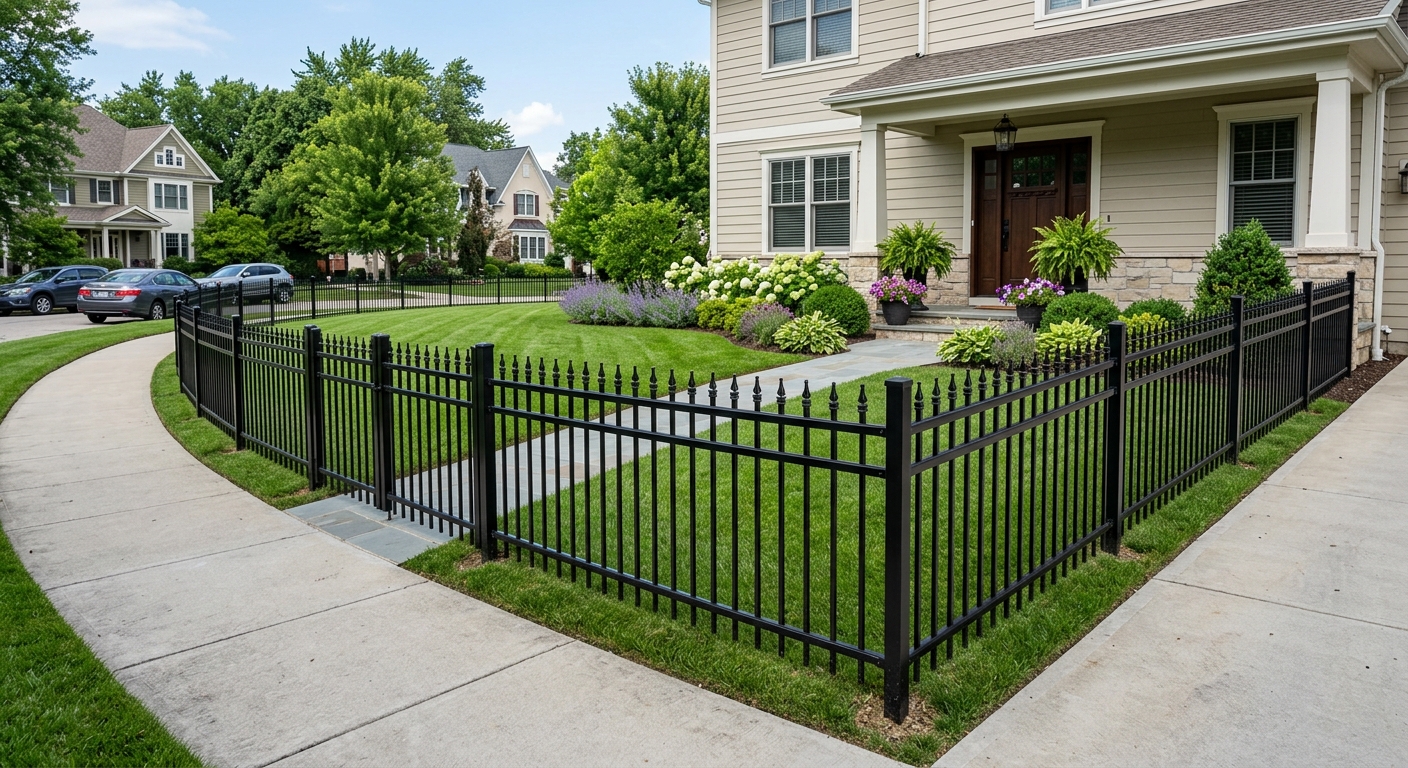
Fencing options and costs in Cedarbrae
Cedarbrae, Alberta is where many homeowners want a fence that looks sharp right away but still stands up to Prairie freeze–thaw cycles. With a population of 5,935 (Statistics Canada, 2021 Census), the area is relatively small, so contractors can book up quickly once spring and early fall appointment windows open. And because Cedarbrae is built around detached homes and family properties, each new backyard upgrade tends to translate into steady demand for privacy panels, gates, and fence replacement on busy streets and cul-de-sacs.
In the Calgary economic region, the biggest cost drivers are frost protection and wind loading. Local guidance commonly targets about 4 ft (≈120 cm) of post set depth to stay below the regional frost line and reduce heaving. For 6 ft privacy fences and heavier gate posts, that often means excavating deeper holes, using longer posts, and pouring concrete footings—work that raises both labour time and material consumption. Open Prairie exposure in nearby communities also increases racking risk, which typically pushes solid wood and vinyl installations toward tighter post spacing and fully concreted posts for stability. Chain-link is more forgiving in windy conditions because air flows through it, so it usually comes in lower.
If you’re in the Cedarbrae area around the busiest residential stretches where backyards face open fields, you’ll often see contractors prioritizing privacy fence work first—especially for replacements where old posts have shifted. Below is a quick comparison to help you map your priorities to a realistic budget before you request an itemised quote.
| Material |
Lifespan |
Maintenance |
Privacy Rating |
Price per Linear Foot |
| Pressure-treated pine (standard wood) |
10–15 years |
Stain/seal every 2–3 years |
High (solid board) |
$40–$80 |
| Cedar (natural rot resistance) |
15–25 years |
Light stain or oil every 2–4 years |
High (solid board) |
$55–$95 |
| Vinyl / PVC (no-maintenance) |
20–30 years |
Rinse as needed; minor repairs if impacted |
High (privacy styles) |
$45–$90 |
| Chain-link (galvanized steel) |
20–30 years |
Minimal (wash + occasional tension checks) |
Low to medium |
$25–$55 |
| Aluminum ornamental |
25–40 years |
Occasional cleaning; touch-ups if damaged |
Low (open picket) |
$70–$120 |
| Composite / recycled material |
20–30 years |
Low; keep free of debris |
Medium to high (depending on panel) |
$75–$125 |
Prices are estimates only and vary by project scope, site access and material selection.
What affects the price of fencing in Cedarbrae
Even when neighbours ask for “the same fence,” Cedarbrae quotes can differ by 30–50% across Calgary-area jobs because the scope isn’t truly the same once wind exposure, frost depth, and site conditions are accounted for. In our market, the difference is often less about the fence itself and more about what goes into making it stay straight: post length, excavation time, concrete volume, and how many gate posts must be structurally braced. Contractors also price terrain and access differently depending on whether they can use equipment or must do manual digging through tight landscaping.
Frost line depth is the clearest example. In cold Prairie winters, posts typically need to be set about 1.5–2.0 m into the ground (often translating to roughly 4 ft / ≈120 cm of embedment targets on local projects), which means longer posts and deeper holes than you’d see in milder regions. That depth drives concrete setting costs and increases labour hours, especially for 6 ft privacy fences with heavier panels. Wind exposure on the Prairies also pushes tighter post spacing and sturdier construction; solid wood and vinyl usually need more structural support to resist racking, while chain-link stays cheaper because it allows airflow. In coastal BC, wood rot risk accelerates when moisture is trapped without proper treatment—here in Alberta the issue is more about movement from freeze–thaw than constant wet rot, but you still want quality posts and proper bracing.
Local examples: if your fence line crosses hard-to-excavate soil, the labour to reach frost-set depth increases and can push a wood privacy job toward the upper end of the $40–$80 band. If you need two drive-through gates, gate hardware and brace posts can add a noticeable premium compared with a simple walk-through gate—often enough to move a vinyl project from the low end of $45–$90 toward the mid range. Conversely, a chain-link run with clear access may come in closer to the $25–$55 chain-link band because the structure is lighter and the panels act more flexibly in high wind.
| Price Factor |
Why It Matters |
Cost Impact |
| Fence length in linear feet |
Every additional foot adds materials, posts, and excavation |
Highest impact; primary cost driver |
| Post depth required |
Frost line determines embedment to prevent heaving |
Can increase labour + concrete significantly |
| Post setting method |
Concrete vs. gravel pack vs. driven posts affects stability |
Concrete-set typically costs more but holds alignment better |
| Material choice |
Vinyl/cedar/wood/metal have different structural and installation requirements |
Shifts you among mid-range wood/vinyl and top-end aluminum |
| Gate count and type |
Drive-through gates require heavier posts and bracing |
Often adds major premiums over a standard walk gate |
| Grade and terrain |
Slopes require stepped or raked panels to maintain level sightlines |
More labour and more custom cutting |
| Old fence removal and disposal |
Demolition, haul-off, and broken post extraction take time |
Can add to overall project cost and schedule |
| Permit fees and survey / property line locate |
Setbacks and accurate layout prevent rework or disputes |
May add fees; survey can be a meaningful one-time cost |
Permits & regulations in Alberta
In Alberta, fences above a height threshold—commonly about 2.0 m (6.5 ft) in the rear and around 1.0–1.2 m (3–4 ft) at the front or corner—often require a building permit. Exact thresholds and any local setback rules can vary by where your property sits, so it’s smart to confirm with your municipality before you order materials. Regardless of height, fences must stay within your property line and comply with municipal setback bylaws.
Before digging any post hole in Cedarbrae (Calgary area), call for utility locates through Alberta One-Call. That’s for your safety and to avoid expensive damage to buried services. For layout, many homeowners benefit from having a survey done or at least confirming property pins/line stakes so your fence isn’t built on a neighbour’s land. If you’re replacing a shared fence, shared fence ownership and responsibilities are typically governed by Alberta’s line-fences legislation principles—this is important when deciding who pays for posts, panels, or repairs.
What usually DOES require a permit: taller fences (around the 2.0 m rear threshold), additions like substantial privacy walls, and any fence planned close to setback limits. What typically does NOT: small, lower-than-threshold fences that stay clear of setbacks and don’t include structural changes.
To verify your contractor: ask for their Alberta business licence details (when applicable), a current certificate of insurance showing liability coverage, and confirmation of workers’ compensation coverage (WSIB/WCB). Look for the clearance letter and confirm the coverage amounts. Finally, request a written workmanship warranty—then keep it with your invoice and scope.
Choosing the right fence material for Cedarbrae
Choosing a fence in Cedarbrae is mostly about matching material behaviour to Prairie conditions: freeze–thaw movement, wind-driven racking, and snow accumulation around posts. Pressure-treated pine is usually the budget-friendly path, but it typically needs staining every 2–3 years to limit grey weathering and keep boards protected. Cedar costs more up front, yet it brings a better natural rot resistance and a more premium look; it still benefits from periodic staining or oiling to maintain colour and reduce surface breakdown. Vinyl/PVC is popular for low maintenance, but in Alberta’s deep winter cold it can become more brittle if the wrong profile is used or if panels aren’t installed with the correct spacing and post support. Chain-link is the lowest upfront and most forgiving in high wind because it allows airflow, but it does not provide real privacy unless you add slats or privacy screening. Aluminum ornamental looks great and won’t rust, but it’s generally mid-to-high cost and offers open visibility.
Post-depth is where Prairie builds differ. With local frost protection expectations, concrete-set posts are common for privacy fences and gate structures because it keeps alignment when soil heaves. For chain-link, the structural system is lighter—still, you should expect proper embedment for stability, especially on exposed lines.
Here’s a practical cost example: if you’re comparing an installed wood privacy fence at about $40–$80 per linear foot versus vinyl privacy at $45–$90, the overlap means you can justify vinyl if you want fewer maintenance trips and you’re likely to keep the home long-term. If you want privacy now and are comfortable with maintenance, pressure-treated wood is often the better value—provided the contractor sets posts deep enough and uses solid gate bracing for wind resistance.
| Material |
Cold Tolerance |
Lifespan |
Annual Maintenance |
Best For |
Price Band |
| Pressure-treated pine |
Good (with proper sealing and straight setting) |
10–15 years |
Low to moderate; stain/seal every 2–3 years |
Value privacy with straightforward upkeep |
$40–$80 |
| Cedar |
Good (excellent post and panel durability) |
15–25 years |
Low to moderate; stain/oil every 2–4 years |
Premium look and longer board life |
$55–$95 |
| Vinyl / PVC |
Good (best with proper flex allowances) |
20–30 years |
Very low; rinse and inspect |
Low maintenance privacy in wind-exposed yards |
$45–$90 |
| Chain-link |
Very good (galvanized system resists winter wear) |
20–30 years |
Very low; periodic tension checks |
Security with airflow (less racking) |
$25–$55 |
| Aluminum ornamental |
Very good (non-rusting metal) |
25–40 years |
Very low; occasional wash |
Front-yard curb appeal and durability |
$70–$120 |
| Composite / recycled |
Good (depends on rail system and installation) |
20–30 years |
Low; occasional cleaning |
Privacy with reduced rot risk |
$75–$125 |
How to choose a fencing contractor in Cedarbrae
In Cedarbrae and across the Calgary area, the quality differences between fence contractors show up in the details: how they set posts below frost, how they brace gates, and how clearly they document insurance and coverage. Start by verifying the contractor’s liability insurance—ask for a certificate of insurance and ensure the coverage is current and includes fencing-related work. Next, confirm workers’ compensation coverage (WSIB/WCB) and request a clearance letter or proof that workers are covered for the job. For licensing, ask for their business registration and confirm the information aligns with the company you’re contracting (a reputable contractor will provide this without hesitation).
For pricing, request 2–3 itemised written quotes instead of lump sums. Itemisation should separate materials (posts, rails, panels, hardware), excavation/concrete, gate hardware, and any disposal or restoration costs. Also look for what’s excluded: does the quote include permit pulls, property line locate/survey, and utility locates? Many disputes come from “scope gaps,” such as grading, removal of old fences, or repairing landscaping you didn’t know would be disturbed.
Warranty matters. Ask for a workmanship warranty length (for alignment, fastening, and installation defects) and the manufacturer warranty on the material system. Find out if warranties are transferable to you if the product is warrantied to the homeowner.
Payment schedule should be conservative—generally no more than 10–15% upfront. Hold back a portion until the fence is fully complete and inspected. Get the start date and completion timeline in writing so weather impacts don’t turn into schedule surprises.
- Certificate of liability insurance provided before you sign
- Workers’ compensation clearance letter or proof (WSIB/WCB)
- Itemised quote: labour, concrete/excavation, materials, gates, and disposal listed separately
- Explicit post-depth and setting method (concrete-set expectations for privacy/gates)
- Site protection plan (landscape/driveway protection during excavation)
- Permit pull included (or clearly excluded with who pays)
- Utility locates included or confirmed by scheduling (Alberta One-Call)
- Property line verification method stated (pins/locate/survey)
- Workmanship warranty written with duration and coverage terms
- Manufacturer warranty documentation for the exact products being installed
- Payment schedule capped (≤10–15% upfront) with a holdback at substantial completion
- Written schedule with start date and completion estimate
In Cedarbrae, red flags I watch for include: vague quotes that don’t specify post depth or concrete setting; refusal to show insurance/coverage documents; “cash-only” requests or pushing large upfront payments; no clear warranty terms in writing; and promises that ignore Alberta frost and wind requirements (for example, suggesting shallow post embedment for a 6 ft privacy fence).
Frequently asked questions — fencing in Cedarbrae
How much does a fence cost in Cedarbrae?
In Cedarbrae (Calgary area), typical installed fencing budgets often land within the local market bands: wood privacy commonly falls around $40–$80 per linear foot, vinyl privacy about $45–$90, and chain-link around $25–$55. Your final number depends heavily on linear footage, gate count (drive-through gates cost more), and how deep posts must be set to handle freeze–thaw movement. For solid privacy fences, contractors usually price in deeper post embedment and concrete footings because wind exposure can rack panels if the foundation is underspecified. If you’re doing a shorter backyard run with good access and minimal grade changes, you’ll often see pricing closer to the low end of the band; complex terrain, removal, and extra gate hardware move you toward the mid or high end.
How deep should fence posts be for Cedarbrae's frost?
For Cedarbrae and the surrounding Calgary area, frost protection is the key to preventing fence heaving. Local guidance commonly expects posts to be set about 4 ft (≈120 cm) deep, which helps keep the post below the regional frost line. Many projects also follow the practical rule that you set posts roughly 1.5–2.0 m into the ground to account for local soil and frost variability, particularly for 6 ft privacy fences and gate posts. Deeper embedment generally means longer posts, more excavation time, and more concrete if you’re using concrete footings. If your contractor proposes shallow post holes without explaining the frost strategy and setting method, that’s a major risk in Alberta winters.
Wood vs vinyl vs aluminum fence — which is best?
The “best” option depends on what you value most in your Cedarbrae yard. Wood (pressure-treated pine or cedar) is usually mid-market on cost and gives strong privacy, but wood requires periodic maintenance—typically staining/sealing every 2–3 years for pine and every 2–4 years for cedar to slow weathering. Vinyl/PVC is popular if you want low maintenance; expect a higher upfront cost but fewer repainting/staining cycles, with a common installed band around $45–$90 per linear foot for privacy styles. Aluminum ornamental is durable and non-rusting, often around the top end (roughly $70–$120 per linear foot), but it’s usually not a true privacy choice because it’s open picket. For exposed wind lines, solid privacy panels (wood or vinyl) typically need sturdier post spacing and often concrete-set posts to resist racking.
Do I need a permit to build a fence in Alberta?
In Alberta, permits are often required when fences exceed certain height thresholds—commonly around 2.0 m (6.5 ft) for rear yards and about 1.0–1.2 m (3–4 ft) for front or corner locations—plus any requirements tied to municipal setbacks. Even if a permit isn’t triggered by height, you still must comply with property line/setback rules and respect easements or other restrictions. In Cedarbrae, many homeowners benefit from confirming requirements before ordering materials, especially for tall privacy fences, corner properties, or anything near lot boundaries. Also remember utility locates: before digging post holes, call Alberta One-Call. A reputable contractor will either include the permit pull in the scope or clearly state who is responsible.
How long does a wood fence last in Cedarbrae?
With proper installation in Alberta—especially correct post embedment and good board selection—a wood fence in Cedarbrae commonly lasts about 10–15 years for pressure-treated pine and 15–25 years for cedar. The biggest durability risks aren’t only weather; they’re foundation and fastening. If posts are set too shallow or the concrete setting strategy is inadequate, freeze–thaw can shift posts over time, causing gaps and lean. Maintenance also matters: staining/sealing (typically every 2–3 years for pine) helps reduce surface breakdown and slows discoloration. When homeowners compare bids, it’s often worth paying a bit more for better bracing at gates and consistent post depth rather than choosing the lowest upfront price.
Who owns and maintains a shared fence?
For shared fences in Cedarbrae, responsibility generally hinges on shared ownership principles under Alberta line-fences legislation—meaning both neighbours may share obligations depending on how the fence is classified and what agreements are in place. Practically, that means you should discuss costs and repairs before starting replacement. If the existing fence is clearly a boundary/shared structure, work may require neighbour coordination on material choices, height, and who pays for new posts and panels. For maintenance, you’ll typically want a clear understanding of who handles routine upkeep and who pays for storm damage or foundation movement. If you’re replacing a fence that’s leaning or shifted from frost heaving, make sure the contractor documents the condition and post setting method so you can split responsibilities fairly. When in doubt, confirm details early—don’t wait until materials arrive.