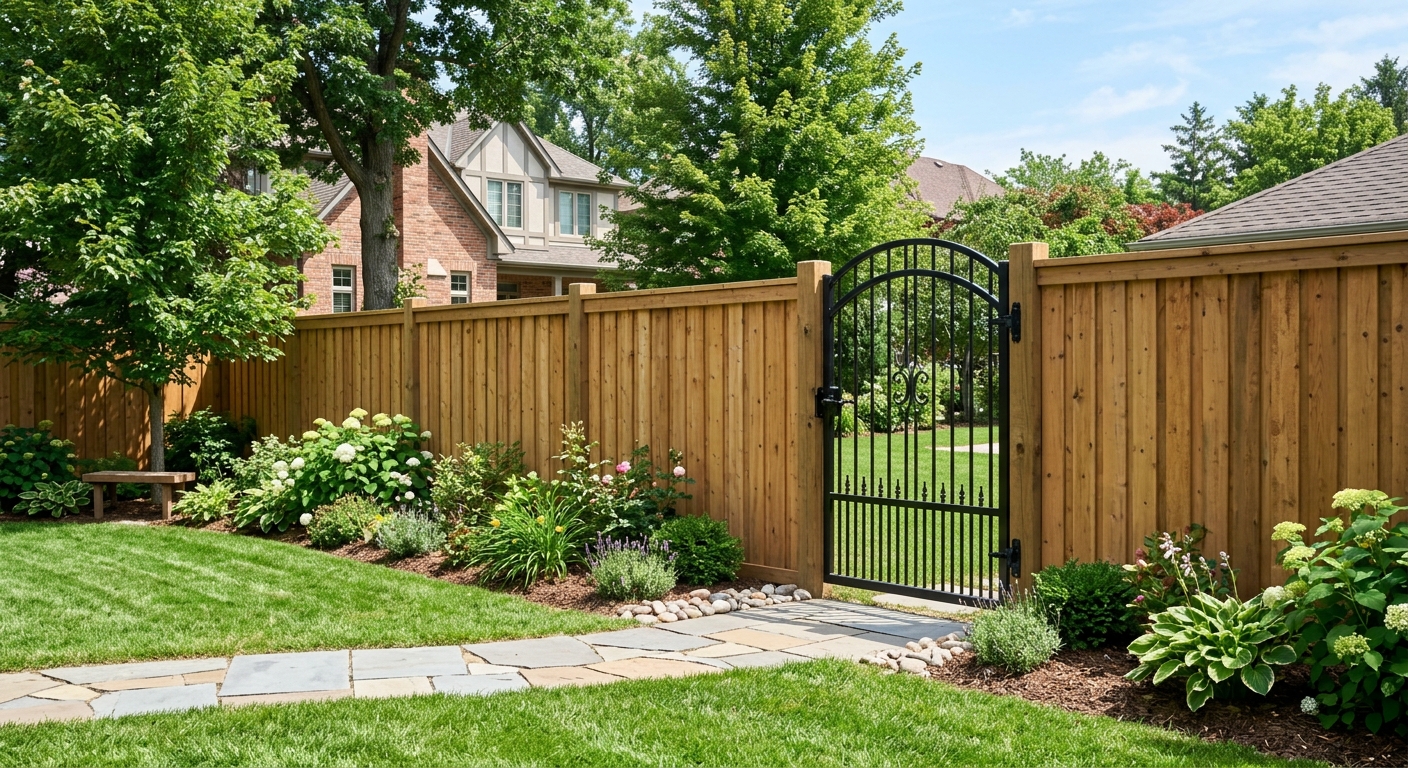
Fencing options and costs in Fraser
Fraser, Alberta is a small community (population 3,276 as of the 2021 Census) where residential lots often need practical boundaries as neighbourhoods mature. With many homes clustered near local services and schools, a fence can be more than privacy—it’s also a safety and property-marking tool for single-family properties. In Calgary’s economic region, you’ll often see repeat demand from homeowners around Prairie-wide wind exposure, especially where lots open onto treelines or wide boulevards. That matters because contractors price fences not just by material, but by the structural work needed to keep panels from racking during freeze–thaw cycles.
In Fraser, fencing costs tend to follow the same pattern as the broader Calgary region: long freeze–thaw swings increase frost-related movement risk, and wind loading pushes for tighter spacing and sturdier post framing—particularly for 6 ft privacy fences. The typical expectation is that posts are set deep enough to sit below frost influence; locally, that usually means digging down roughly 4 ft (about 120 cm) for many fence lines. This adds excavation time, concrete volume, and labour versus milder parts of Canada. Availability can also shift seasonally as crews focus on wind-stable privacy installations and gate work.
Because of that, quotes for the “same” fence can land in different places within each material band. Use the comparison below to sanity-check your expectations before you ask for an itemised estimate.
| Material |
Lifespan |
Maintenance |
Privacy Rating |
Price per Linear Foot |
| Pressure-treated pine (standard wood) |
10–15 years |
Stain/seal every 2–3 years; inspect posts after thaw cycles |
High (good solid coverage) |
$40–$80 |
| Cedar (natural rot resistance) |
15–25 years |
Typically stain or protect every 2–4 years; check fasteners |
High (solid coverage) |
$55–$95 |
| Vinyl / PVC (no-maintenance) |
20–30 years |
Wash annually; watch for panel stresses in extreme cold |
High (solid privacy; airflow depends on style) |
$45–$90 |
| Chain-link (galvanized steel) |
25–35 years |
Minimal; tighten hardware as needed |
Low to medium (visibility open unless you add screening) |
$25–$55 |
| Aluminum ornamental |
25–40 years |
Occasional wash; rare repairs |
Low to medium (more decorative than private) |
$70–$120 |
| Composite / recycled material |
20–30 years |
Minimal; clean and replace rare damaged boards |
High (solid boards) |
$70–$110 |
Prices are estimates only and vary by project scope, site access and material selection.
What affects the price of fencing in Fraser
In Fraser and across the Calgary economic region, it’s common to see fencing quotes for the same “approximate” length land 30–50% apart. The range usually comes from site conditions (slope, access, and how straight the line can be), plus the amount of frost protection and structural bracing your contractor includes. If one quote assumes a lighter layout (fewer concrete posts, wider spacing, or less bracing), and another designs for Prairie wind and freeze–thaw movement, you can easily feel that difference on your invoice.
The biggest technical driver is frost line depth. In Alberta’s cold prairie conditions, posts typically need to be set about 4–6 inches below the design frost depth to help prevent heaving. In practical terms, that often means setting posts roughly 1.5–2.0 m into the ground, using longer posts and deeper holes—commonly with concrete footings for privacy fences and gate posts. That excavation and concrete volume changes labour costs immediately.
Wind exposure also matters. Open Prairie exposure pushes installers toward closer post spacing and fully concreted footings for solid panels so the fence resists racking. By contrast, chain-link generally costs less because airflow reduces wind pressure on the fence plane.
Concrete examples from local jobs: (1) a straight back fence line with easy access usually costs less than (2) a fence that crosses a utility corridor or requires hand-digging near services; (3) a 6 ft privacy gate often costs noticeably more than a walk gate due to heavier framing and hinge posts; and (4) steep grades can require stepped panels, which add layout time and custom cuts.
As a reality check, mid-range privacy systems typically sit around the wood or vinyl bands (for example, roughly $40–$80 for wood installation and $45–$90 for vinyl/PVC), while chain-link often anchors the lower end at about $25–$55. If your site forces deeper concrete-set work or extra bracing, you tend to move toward the upper end of your chosen material band.
| Price Factor |
Why It Matters |
Cost Impact |
| Fence length in linear feet |
Labour, rails, posts, and materials scale directly with length |
Largest driver; often the main reason estimates differ |
| Post depth required |
Frost protection controls hole size, post length, and concrete volume |
Can add meaningful cost if deeper set and more concrete are required |
| Post setting method |
Concrete footings increase stability; gravel pack can be cheaper but needs correct grading |
Concrete-set often increases cost versus lighter set methods |
| Material choice |
Wood, vinyl, cedar, chain-link, aluminum have different weights and hardware |
Shifts you between the local bands (wood/vinyl mid, chain-link lower, aluminum higher) |
| Gate count and type |
Gates require engineered-style framing, heavier posts, and hardware |
Multiple gates and double driveway gates raise total cost quickly |
| Grade and terrain |
Sloped yards need stepped or raked panels; labour and waste increase |
Often increases cost due to layout complexity and extra labour |
| Old fence removal and disposal |
Demolition time, hauling, and disposal fees |
Can add a noticeable one-time line item |
| Permit fees and survey / property line locate |
Some fences exceed height thresholds; property line accuracy avoids disputes |
May add small-to-moderate fixed costs depending on scope |
Permits & regulations in Alberta
In Alberta, permits can apply when you build higher fencing. As a general rule used during many residential projects, fences above roughly 2.0 m (6.5 ft) at the rear and around 1.0–1.2 m (3–4 ft) at the front or corners may require a building permit. Even when a permit isn’t triggered, your fence still must respect property lines and any applicable municipal setback requirements in the Fraser area. Because rules can vary by exact location and fence placement, treat “typical height” as guidance—not a guarantee—and confirm before digging.
Before any post holes, call for utility locates. In Alberta, the standard approach is through the province’s one-call process to mark buried lines so you don’t hit power, gas, or low-voltage services. Also, obtain a survey or a property line locate so your posts land on your side of the property (this prevents the most common neighbour disputes).
Shared fence ownership and responsibilities are handled under Alberta’s line-fences framework—so if your fence straddles the discussion area (even informally), you want clarity in writing.
What DOES require a permit: fences that exceed the height threshold (commonly the 2.0 m rear / 1.0–1.2 m front/corner guidance) and any associated structural elements when required by local rules. What typically does NOT: small repairs to existing fencing within the same location and height, and routine replacements that don’t increase height beyond thresholds—though it’s still worth verifying with your contractor.
To verify your contractor in Fraser: check their Alberta licence status through the relevant online registry they’re required to hold for their category of work, request a current certificate of liability insurance naming you as an additional insured if applicable, and confirm their workers’ compensation coverage (WSIB/WCB equivalent coverage for their trade). Ask for clearance letters or proof of account coverage and keep copies with your contract.
Choosing the right fence material for Fraser
Choosing fence material in Fraser comes down to matching your priorities—privacy, low maintenance, budget, and lifespan—to the realities of Calgary’s Prairie continental climate: long freeze–thaw cycles, periodic strong winds, and snow loads that put stress on horizontal rails. For many homeowners, the practical difference between materials is less about “can it last,” and more about how stable the fence remains when the ground shifts slightly each year.
Pressure-treated pine is usually the most budget-friendly wood option, but it does need upkeep: plan on staining or sealing every 2–3 years to reduce grey weathering and help the surface stay sound. Cedar looks better and resists rot naturally, which can help in wet seasons, but it still benefits from periodic protection and consistent fastener checks. Vinyl/PVC is popular for low maintenance, yet in extreme cold it can become brittle if panels are poorly supported—so deep post setting and correct rail support matter. Chain-link is often the longest-lasting budget option, but it won’t give you privacy unless you add screening or slats. Aluminum ornamental offers a rust-resistant decorative look with mid-range costs, but it’s typically not a privacy solution.
For Calgary’s frost-influenced ground, concrete-set posts are often the smart move for solid privacy fences and gate posts because stability in racking is what protects your rails and panels over time. Whether you “need” concrete for every line varies by contractor approach and soil conditions, but for 6 ft privacy fences and heavier gates, many installers price in fully concreted footings.
As a dollar example, it’s common to justify cedar or vinyl if you’re paying for durability and reduced maintenance. If pressure-treated pine lands closer to the lower end of wood installation (around $40–$80 per linear foot) but you want fewer painting cycles, vinyl in the mid-range of the local band (about $45–$90 per linear foot) can be the trade-off—especially when your site requires deep post work where the labour is already doing most of the “heavy lifting.”
| Material |
Cold Tolerance |
Lifespan |
Annual Maintenance |
Best For |
Price Band |
| Pressure-treated pine |
Good (with proper sealing and post set) |
10–15 years |
Inspect; light cleaning; stain/seal every 2–3 years |
Budget privacy with DIY-friendly upkeep |
$40–$80 |
| Cedar |
Good (rot resistance helps in freeze–thaw moisture) |
15–25 years |
Clean and protect every 2–4 years |
Natural look + strong longevity for privacy |
$55–$95 |
| Vinyl / PVC |
Good when supported correctly |
20–30 years |
Wash annually; check fittings after heavy wind events |
Low maintenance and solid privacy |
$45–$90 |
| Chain-link |
Excellent (galvanized steel tolerates cold well) |
25–35 years |
Minimal; occasional tightening |
Security with airflow (not privacy) |
$25–$55 |
| Aluminum ornamental |
Very good (powder-coated metal) |
25–40 years |
Wash as needed |
Decorative curb appeal and durable fencing |
$70–$120 |
| Composite / recycled |
Good (requires correct installation to avoid stress) |
20–30 years |
Minimal; occasional cleaning and board replacement |
Solid privacy with low maintenance |
$70–$110 |
How to choose a fencing contractor in Fraser
Choosing the right contractor in Fraser is mostly about verifying coverage and making sure the scope is written clearly. In Alberta, ask for proof that they’re properly set up for the work they do, including liability insurance and workers’ compensation coverage (WCB/WSIB equivalent). The fastest way: request a certificate of insurance (with coverage dates and policy limits) and confirm their workers’ compensation clearance letter. Many homeowners also ask for their business registration details and whether they carry coverage for subcontractors used on your site. If anything is missing or outdated, pause—fence builds involve excavation, concrete, and site safety risks.
Next, get 2–3 itemised written quotes—not lump sums. A good quote breaks out labour and materials: posts, rails, panels, gate hardware, concrete, and any disposal/recycling charges. Make sure it states what’s included (permit pull if required, utility locates, property line locate if you need one, post-depth assumptions, and whether the crew handles fence removal).
Warranty should be separate between workmanship and product. Ask how long labour/workmanship is warranted, what the manufacturer warranty covers for boards, and whether the warranty transfers to you if you sell the home.
For payment, avoid large upfront deposits: never pay more than about 10–15% upfront, and hold back a portion until the gate operates properly and the final clean-up is done. Finally, timeline matters in Prairie winters—get a start date and completion estimate in writing, including what happens if weather delays the concrete work.
- Ask for the contractor’s insurance certificate and confirm coverage dates.
- Request workers’ compensation clearance or proof of active coverage.
- Verify their Alberta business/licence status via the appropriate online registry.
- Require itemised labour/materials (not a single line price).
- Confirm post depth assumptions (frost-protected set) and post spacing for privacy panels.
- Get details on gate framing and which posts are reinforced/concreted.
- Clarify what “disposal included” means for old fencing and debris hauling.
- Check whether utility locates are arranged and who pays if re-locates are needed.
- Confirm whether permit pull is included if the fence exceeds height thresholds.
- Ask for a written start date and weather-delay policy for concrete curing.
- Review warranty terms separately for workmanship and materials.
- Use a payment schedule with a holdback until final walkthrough and gate alignment.
Concrete red flags I see around Fraser: (1) quotes that don’t specify post depth or concrete setting method; (2) a “verbal only” scope with no line items for disposal/haul-off; (3) no proof of liability insurance or unclear workers’ compensation coverage; (4) unusually low pricing that trims framing for wind-stable privacy; and (5) pushing for a large upfront payment before any measurements or layout are confirmed.
Frequently asked questions — fencing in Fraser
Can I install a fence on a slope in Fraser?
Yes, but plan for stepped panels or raked adjustments so the fence stays level in function and strong under wind loads. In the Calgary region, slopes can also affect how deep each post is set—contractors typically keep the bottom of post holes consistent with frost protection requirements, then step the fence height. That means more layout time and sometimes extra material waste. If your fence line runs across a steep grade and you’re building a privacy fence (solid boards or panels), the bracing and post spacing become even more important to reduce racking during freeze–thaw cycles. If you’re comparing quotes, ask whether they’re using stepped rails and what post depth method they’re assuming for the high and low points.
What is the most weather-resistant fence for Fraser's climate?
For long-term durability in Alberta’s cold Prairie climate, chain-link (galvanized steel) and well-installed aluminum are often the most forgiving because they tolerate freeze–thaw movement and wind without rot. That said, if privacy is your goal, vinyl/PVC and cedar can perform very well when posts are set correctly below frost influence and hardware is tightened and aligned. In Fraser-area builds, I most often see “weather-resistant” mean two things: (1) frost-stable posts (often with concrete-set footings for privacy and gates) and (2) wind-stable framing. On cost, chain-link commonly lands around $25–$55 per linear foot, while vinyl/PVC is typically mid-range at about $45–$90. Your best choice depends on whether you value airflow/low maintenance or solid privacy.
How do I prevent wood fence rot in Fraser?
Preventing rot comes down to keeping wood protected where it’s most vulnerable: the fence bottom and the fastener zones. In Fraser and the Calgary region, freeze–thaw cycles can trap moisture at joints, so the contractor should use proper pressure-treated materials, keep consistent post depth below frost influence, and avoid leaving wood components in direct ground contact. For pressure-treated pine, plan on staining or sealing every 2–3 years; that maintenance is what slows grey weathering and surface checking. For cedar, rot resistance is better than standard pine, but it’s not maintenance-free—protecting the surface and maintaining tight hardware still matters. Also ask about the “details”: post caps, drainage considerations, and whether they’re using corrosion-resistant fasteners. A rot-prone fence is usually a symptom of weak installation, not only the board choice.
What is the cost per linear foot for fencing in Fraser?
In Fraser, your installed cost per linear foot usually tracks the Calgary-area material bands and the structural complexity of your site. As a quick benchmark for homeowners: wood fence installation often sits around $40–$80 per linear foot, vinyl/PVC typically about $45–$90, and chain-link commonly ranges from $25–$55. Aluminum ornamental fences are commonly higher at about $70–$120. Your final number can move upward if you need deeper frost-protected post holes, heavier gate hardware, sloped-yard stepping, or old fence removal and disposal. When you compare quotes, make sure the “apples-to-apples” items match: same height, same post spacing, and same concrete setting method.
Should I repair or replace my old fence in Fraser?
Often, repair is worth it if only a few panels are damaged and the posts are still stable and plumb. In the Calgary region, rot and movement usually show up first at bottoms of posts and near gate hinges—so check post wobble, leaning rails, and any soft wood at fasteners. If multiple posts have shifted after freeze–thaw seasons, replacing can be cheaper long-term because new posts plus proper concrete setting reduces recurring labour. Also consider whether repairs will increase maintenance: if you’re already paying for staining/sealing and the fence is past its expected lifespan, replacement may give you a more predictable outcome. A practical approach: request a contractor assessment with photos and a line-by-line quote that separates “repair labour” from “new section replacement.” That way, you’ll avoid paying for replacement-level work with repair-level expectations.
How do I handle a fence dispute with a neighbour in Alberta?
Start by grounding the dispute in facts: confirm the property line with a survey or a proper locate (don’t rely on old stakes or verbal agreements). In Alberta, fence responsibilities can involve shared fence concepts under line-fences rules, but the exact approach depends on location and how the fence is positioned. Then communicate in writing: share the contractor measurements, proposed changes, and timelines. If the dispute involves an oversized height, setbacks, or a fence that may exceed common thresholds (such as the approximate 2.0 m rear / 1.0–1.2 m front/corner guidance), address compliance before construction. For safety and practicality in Fraser-area conditions, keep a copy of permits (if pulled), utility locate confirmations, and any written scope that specifies post depth and concrete setting. If you can’t resolve it directly, consult appropriate local dispute-resolution options or legal advice.