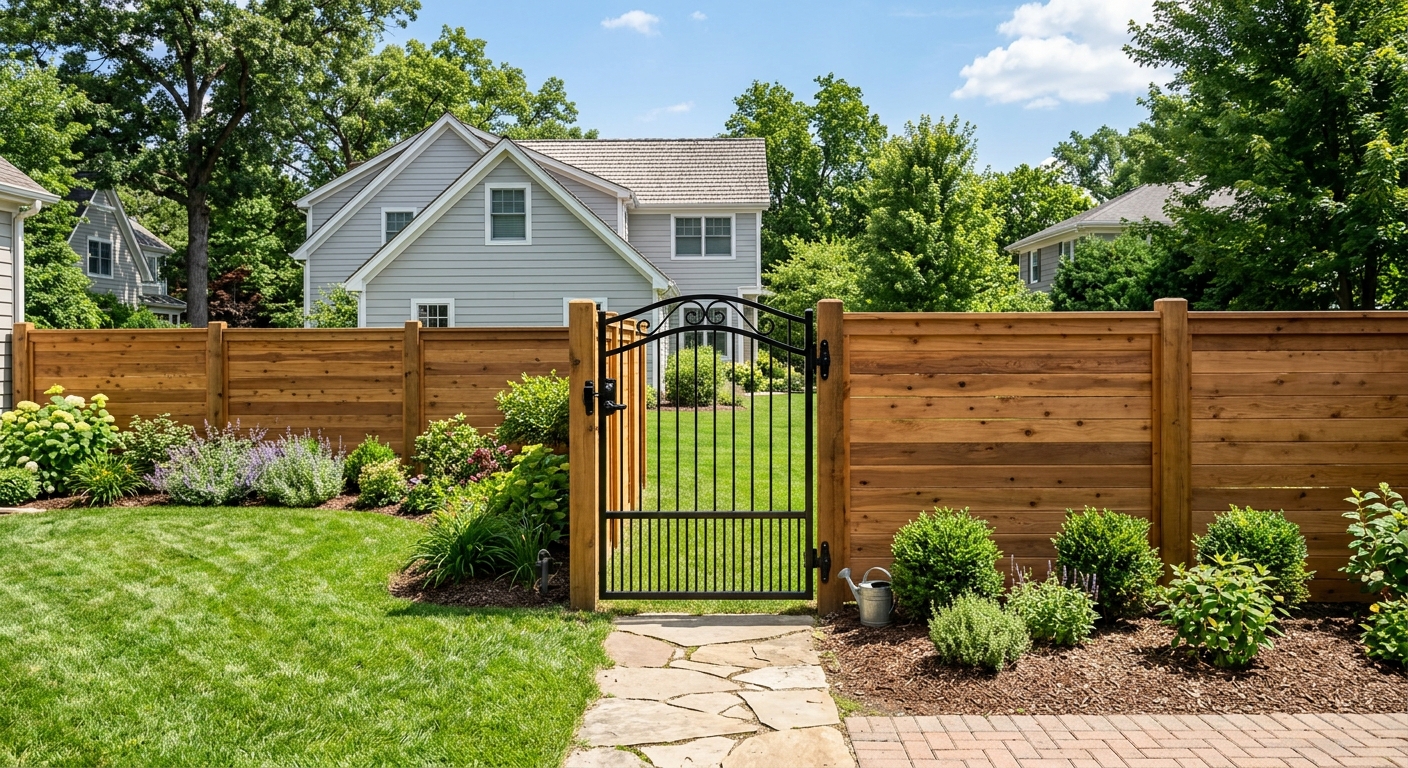
Fencing options and costs in Jasper Park
Fencing in Jasper Park is typically driven by practical needs—privacy, wind resistance, and durability through Alberta’s long freeze–thaw season. With a population of 1,832 (Statistics Canada, 2021 Census), demand is concentrated among homeowners who want upgrades as properties turn over and yards get landscaped. For many lots, the strongest predictor of local fencing demand is the prevalence of single-detached, owner-occupied homes in the broader Calgary region—each property represents a potential boundary, privacy, or gate project. (Statistics Canada, 2021 Census)
In the Calgary economic region, frost management and wind loading are primary cost drivers. Expect contractors to set many posts about 4 ft (≈120 cm) deep (and in practice, often based on measured frost protection requirements and soil conditions) using concrete footings for privacy fences and gate posts. That increases excavation time, concrete volume, and material for longer posts. At the same time, solid privacy panels must resist racking from prairie wind, so post spacing and hardware quality matter. Chain-link systems cost less because airflow reduces wind pressure.
Neighbourhood-style demand is especially noticeable around residential pockets where backyards face open prairie exposure—areas with fewer mature trees tend to see more privacy and windbreak installations. That combination of open exposure and winter impacts is why most bids in Jasper Park cluster around the mid-range for wood/vinyl and the lower-mid range for chain-link.
Below is a comparison of common fencing materials and realistic installed ranges for Jasper Park, including typical maintenance expectations and privacy performance.
| Material |
Lifespan |
Maintenance |
Privacy Rating |
Price per Linear Foot |
| Pressure-treated pine (standard wood) |
10–15 years |
Stain/seal every 2–3 years |
High (privacy panels) |
$40–$80 |
| Cedar (natural rot resistance) |
15–25 years |
Light staining/cleaning as needed |
High (best solid look) |
$55–$95 |
| Vinyl / PVC (no-maintenance) |
20–30 years |
Minimal (wash panels) |
High (solid styles) |
$45–$90 |
| Chain-link (galvanized steel) |
20–30+ years |
Occasional tension/spot rust check |
Low (with privacy slats only) |
$25–$55 |
| Aluminum ornamental |
25–40 years |
Wash only; no rust |
Medium (ornamental gaps) |
$70–$120 |
| Composite / recycled material |
20–30 years |
Low (occasional cleaning) |
High (solid boards) |
$65–$110 |
Prices are estimates only and vary by project scope, site access and material selection.
What affects the price of fencing in Jasper Park
In Jasper Park, it’s common to see quotes for what looks like the “same fence” vary by 30–50% across the wider Calgary-area market and other Alberta regions. The biggest reason isn’t just the material—it’s how contractors engineer the fence for frost protection, wind loading, and site conditions. In a prairie continental climate, long freeze–thaw cycles and gusty exposure push crews to use heavier posts, closer spacing, and properly concreted footings, especially for 6 ft privacy fences and gates. That structural work tends to raise labour and materials versus more airy systems like chain-link.
Frost line depth sets how deep posts must be set—often about 4–6 inches (≈10–15 cm) below the design frost depth—to prevent heaving. In cold Alberta conditions, that frequently translates to approximately 1.5–2.0 m into the ground for many installs, requiring longer posts, deeper holes, and concrete setting. Wind exposure on the Prairies also drives tighter post spacing and sturdier rails so panels don’t rack.
Two examples that commonly raise cost in Jasper Park: (1) sandy or frost-susceptible soils that require concrete consolidation for stable footings, and (2) lots with open-yard exposure where privacy panels must be upgraded to stronger posts and hardware. Costs can go lower when the run length is short, access is easy for excavation, and you choose chain-link (often closer to the $25–$55 per linear foot band) where airflow reduces wind pressure compared with solid wood or vinyl (often in the $40–$80 and $45–$90 bands, respectively).
Older housing stock can also affect fencing scope: if an existing fence is deteriorated and needs removal, disposal and post extraction add labour. Even a fence line that “only needs a refresh” can become a full rebuild once rotten sections are uncovered.
| Price Factor |
Why It Matters |
Cost Impact |
| Fence length in linear feet |
Every component scales with total run length. |
Highest overall driver of total cost. |
| Post depth required |
Frost protection dictates hole depth and post length. |
Deeper required = more excavation and concrete. |
| Post setting method |
Concrete vs gravel pack vs driven posts changes stability. |
Concrete-set posts usually cost more but reduce heaving and callbacks. |
| Material choice |
Vinyl/cedar/treated wood and chain-link behave differently in wind. |
Solid privacy systems typically price higher than chain-link; ornamental aluminum can be top-end. |
| Gate count and type |
Gates require stronger posts, hinges, and alignment work. |
Drive-through (double) gates add significant labour and hardware. |
| Grade and terrain |
Slope means stepped panels or raked rails. |
Stepped/raked installs often cost more than level runs. |
| Old fence removal and disposal |
Demolition time and hauling vary by material. |
Can add meaningful labour and dump fees. |
| Permit fees and survey / property line locate |
Some height/location combinations trigger permits; locating affects accuracy. |
Can add administrative and on-site time to the quote. |
Permits & regulations in Alberta
In Alberta, fence permit rules can vary by municipality, but a common threshold is that higher fences often need a building permit. Practically, that usually means fences above about 2.0 m (6.5 ft) at the rear and above about 1.0–1.2 m (3–4 ft) at the front or corner may require additional approval. Even when a permit isn’t required, fences must respect property lines and any municipal setback bylaws.
Before digging any post holes in Jasper Park, call for utility locates through Alberta One-Call. This is the step that reduces the chance of hitting underground services. Next, confirm property boundaries: either obtain a survey or have your property pins/locate stakes verified so the fence isn’t built on a neighbour’s land. Shared fence relationships also matter—shared fence ownership and maintenance responsibilities are governed by Alberta’s line-fences legislation, so it’s wise to clarify who covers repairs and how costs are handled before you start.
What typically requires a permit: higher fence heights, certain corner visibility situations, and any work that changes the fence height/material footprint significantly. What typically does NOT: like-for-like replacements that stay within height limits and remain within established property lines (but you should still confirm with your municipality). Also, you should verify your contractor’s documentation—an insured, licensed fencing contractor should provide proof of liability insurance and WCB/WSIB coverage and can coordinate permit steps if required.
To verify an Alberta licence, check the contractor’s listing on the appropriate online registry for trades/licensing, request a certificate of insurance (make sure it’s current and lists your address as applicable/covered), and confirm WCB coverage. Ask for the clearance letter (or written proof of good standing) and cross-check that it matches the company name on the quote.
Choosing the right fence material for Jasper Park
Choosing the right fence material in Jasper Park comes down to matching your priorities—privacy, low maintenance, budget, and lifespan—to a climate that punishes weak posts and poorly set footings. With Calgary’s prairie exposure, solid panels must handle wind and snow loads, and freeze–thaw cycles mean the post foundation details matter as much as the surface material.
Pressure-treated pine is often the best budget entry point, but it needs staining or sealing every 2–3 years to slow greying and weathering. Cedar offers better natural rot resistance and a premium look, and while it still benefits from maintenance, it typically holds appearance better in Alberta’s wet/dry swings. Vinyl/PVC is attractive for no-maintenance owners; however, extreme cold can make fasteners and panels more sensitive, so proper installation is essential. Chain-link is the lowest cost and tends to last well because wind passes through it—privacy is limited unless you add slats (which then changes wind/airflow characteristics). Aluminum ornamental offers a clean, rust-resistant look and longer-term stability, but it’s typically medium privacy due to open design.
Concrete-set posts are commonly used in Calgary-area installs for privacy fences and gate posts because they resist heaving and racking. In a cold region, plan around frost-protected post depths (often roughly 4 ft/≈120 cm as a baseline approach, and sometimes deeper depending on frost depth, soil, and local practice). Where wind exposure is strong, heavier rails and tighter post spacing add cost but prevent early looseness.
A quick example: if your goal is high privacy, moving from chain-link at roughly $25–$55 per linear foot to a pressure-treated pine privacy fence at about $40–$80 per linear foot can be justified when you also upgrade post strength and concreting—those engineering upgrades are what keep the fence straight through prairie winds and winter movement.
| Material |
Cold Tolerance |
Lifespan |
Annual Maintenance |
Best For |
Price Band |
| Pressure-treated pine |
Good (with proper staining) |
10–15 years |
Check fasteners; stain/seal every 2–3 years |
Budget privacy with full customization |
$40–$80 |
| Cedar |
Very good |
15–25 years |
Light cleaning; stain as needed |
Premium appearance and rot resistance |
$55–$95 |
| Vinyl / PVC |
Good (needs correct installation) |
20–30 years |
Wash panels; inspect post spacing/hardware |
Low maintenance privacy |
$45–$90 |
| Chain-link |
Excellent |
20–30+ years |
Occasional tension/spot checks |
Security on budget |
$25–$55 |
| Aluminum ornamental |
Excellent |
25–40 years |
Wash only |
Front curb appeal and durability |
$70–$120 |
| Composite / recycled |
Good |
20–30 years |
Low cleaning; inspect for rare cracking |
Solid privacy with reduced rot risk |
$65–$110 |
How to choose a fencing contractor in Jasper Park
When you hire a fencing contractor in Jasper Park, don’t guess—verify. In Alberta, confirm the contractor’s licence status (and whether any fencing trade requirements apply under Alberta’s current framework). Ask for proof of liability insurance and check that the certificate is current and matches the legal company name on the contract/quote. Then confirm WCB (often referenced by homeowners as WSIB/WCB coverage) by requesting the clearance letter or written proof of good standing. If they can’t provide documentation promptly, treat that as a serious risk.
Get 2–3 itemised written quotes. You want a breakdown that separates labour, posts/footings, rails, pickets/panels, gates and hardware, and any access/excavation or disposal charges. Prefer quotes that specify post depth and setting method in plain language—especially the frost-protection approach—because that’s a major cost driver in the Calgary climate. Also read exclusions: does the quote include permit pulling (when required), utility locate coordination, and haul-away/disposal of the old fence? If a quote is vague on these points, ask for clarification in writing.
Warranty matters. Require a workmanship warranty length (for example, how long the installer covers post alignment/settlement issues) and a separate product/manufacturer warranty. Ask whether the warranty is transferable to you if you sell the home. Payment scheduling should be conservative: never pay more than 10–15% upfront, and hold back a final portion until the gate swings correctly, the line is straight, and cleanup is complete. Finally, confirm a start date and completion estimate in writing so weather-related impacts are documented.
- Request licence/registration details and confirm they match the quote and invoicing name.
- Verify liability insurance is active and includes adequate coverage for fencing work.
- Get WCB/clearance proof in writing before work starts.
- Ask for post depth and setting method (concrete vs gravel pack vs alternative) in the scope.
- Confirm how they handle frost-prone soil and whether they adjust for ground conditions.
- Ensure the quote includes utility locate coordination or confirms responsibility.
- Ask whether they provide or price a property line locate/survey and how stakes are used.
- Confirm gate hardware specs (hinge type, latch type, and how gate posts are reinforced).
- Check whether fencing removal and disposal is included, including dump fees.
- Make sure panels are secured with hardware rated for cold conditions and wind loading.
- Verify warranty terms: workmanship duration, what’s covered, and claim process.
- Confirm payment terms: max 10–15% upfront and a holdback until completion.
Common red flags I see around fencing projects in the Jasper Park area: vague post-depth language (“as required”), no written scope for concrete footings when you’re building a privacy fence, missing or expired insurance/WCB documents, quotes that lump labour and materials without line items, and contractors requesting large upfront payments beyond 10–15%.
Frequently asked questions — fencing in Jasper Park
How deep should fence posts be for Jasper Park's frost?
For Jasper Park (Calgary-area frost conditions), most fencing installs need frost-protected post setting. As a baseline approach used by contractors in the region, posts are commonly set about 4 ft (≈120 cm) deep, and for additional safety they’re often placed to sit several inches below the design frost depth for your soil and conditions. In many Alberta projects, that can translate into deeper effective hole depth depending on frost calculations and ground type, especially for privacy fences and gate posts that must resist racking. This is also why concrete footings are so common for 6 ft privacy fences: they help prevent heaving and reduce callbacks.
If you want a solid estimate, ask your contractor to state the post depth and setting method explicitly in the quote and explain how they confirm it for your yard.
Wood vs vinyl vs aluminum fence — which is best?
“Best” depends on your priorities. For privacy in Alberta, solid wood or vinyl usually gives the highest privacy rating, but they behave differently over time. Wood (pressure-treated pine) typically lands in the $40–$80 per linear foot range and often requires staining/sealing every 2–3 years to prevent heavy greying and weathering. Cedar looks great and holds up well, but it’s commonly priced higher. Vinyl/PVC is often $45–$90 per linear foot and is popular for low maintenance, though it must be installed correctly to handle Alberta’s cold snaps and wind-driven movement.
Aluminum ornamental fences are usually the premium curb-appeal option (often $70–$120 per linear foot), with excellent rust resistance and long service life, but they’re usually medium privacy because of open spacing. If your yard faces open Prairie exposure, I generally steer homeowners toward solid privacy panels rather than ornamental styles.
Do I need a permit to build a fence in Alberta?
In Alberta, permits can be required when fence height exceeds common thresholds and in certain corner/visibility situations. A practical guideline many homeowners use is that rear fences above about 2.0 m (6.5 ft) and front/corner fences above roughly 1.0–1.2 m (3–4 ft) may trigger a building permit. Requirements can also depend on municipal setback bylaws, so it’s important not to rely on assumptions.
What typically does not require a permit: like-for-like fence replacements that stay within the standard height limits and remain within property lines. Still, verify locally. Before digging in Jasper Park, also arrange Alberta One-Call utility locates and confirm your property line location (survey or verified pins) so the install doesn’t create an encroachment dispute. Your contractor should state in writing whether permit pulling is included when required.
How long does a wood fence last in Jasper Park?
A properly built pressure-treated pine fence in the Calgary-area climate typically lasts around 10–15 years, while cedar can stretch to about 15–25 years depending on maintenance and how well the posts are set. In Jasper Park’s winter conditions, longevity is strongly affected by frost-protected post depth and whether posts are concreted where needed—heaving and looseness can happen if foundations are underbuilt. Maintenance also matters: if you want wood to stay attractive, plan for staining/sealing every 2–3 years to reduce heavy weathering and surface breakdown.
If you’re comparing costs, remember that wood’s initial price band (often $40–$80 per linear foot installed) can be lower than vinyl, but the maintenance schedule is a long-term trade-off.
Who owns and maintains a shared fence?
Shared fence ownership and maintenance are handled under Alberta’s line-fences legislation. In plain terms, if the fence is truly shared (built on or treated as the boundary between two properties), both owners may have responsibilities for repair and upkeep, but the exact cost split and decision process can depend on the circumstances and who originally paid for construction or later improvements. That’s why it’s important to clarify in writing with your neighbour before you start—especially if you’re replacing an older fence that may no longer meet today’s post-depth and wind-resistance expectations.
For Jasper Park projects, I recommend confirming the property line (survey pins or locate) and then documenting what you’re building, including estimated costs and who will cover what portion of the work.
How do I find my property line before fencing?
Before you install any posts, you should verify your property line accurately. The most reliable method is a survey to confirm the location of property pins. If pins already exist, have them located/verified so you can measure from the correct points. This helps you avoid building into a neighbour’s yard and prevents costly disputes later. In Jasper Park (and across Alberta), this is especially important because fence posts are set deep and in concrete footings, meaning a mistake can’t be easily corrected without rework.
Also call Alberta One-Call prior to digging so you know where utilities are. For the fencing scope, ask your contractor how they will reference the stakes/pins during layout and whether they include property-line locate/survey work. If a quote doesn’t mention how boundaries will be confirmed, ask—this is where hidden time and cost can appear.