Fencing options and costs in Athlone
Athlone homeowners typically start with the question, “What’s the most cost-effective fence that will actually hold up here?” With Athlone’s population at 3,116 (Statistics Canada, 2021 Census), the local contractor pool is smaller than in big-city centres, so timing and access can influence labour pricing. Also, because detached homes dominate much of the local housing profile (each detached property tends to need its own perimeter fencing decisions), fencing demand is usually steady for backyard privacy, dog runs, and boundary upgrades.
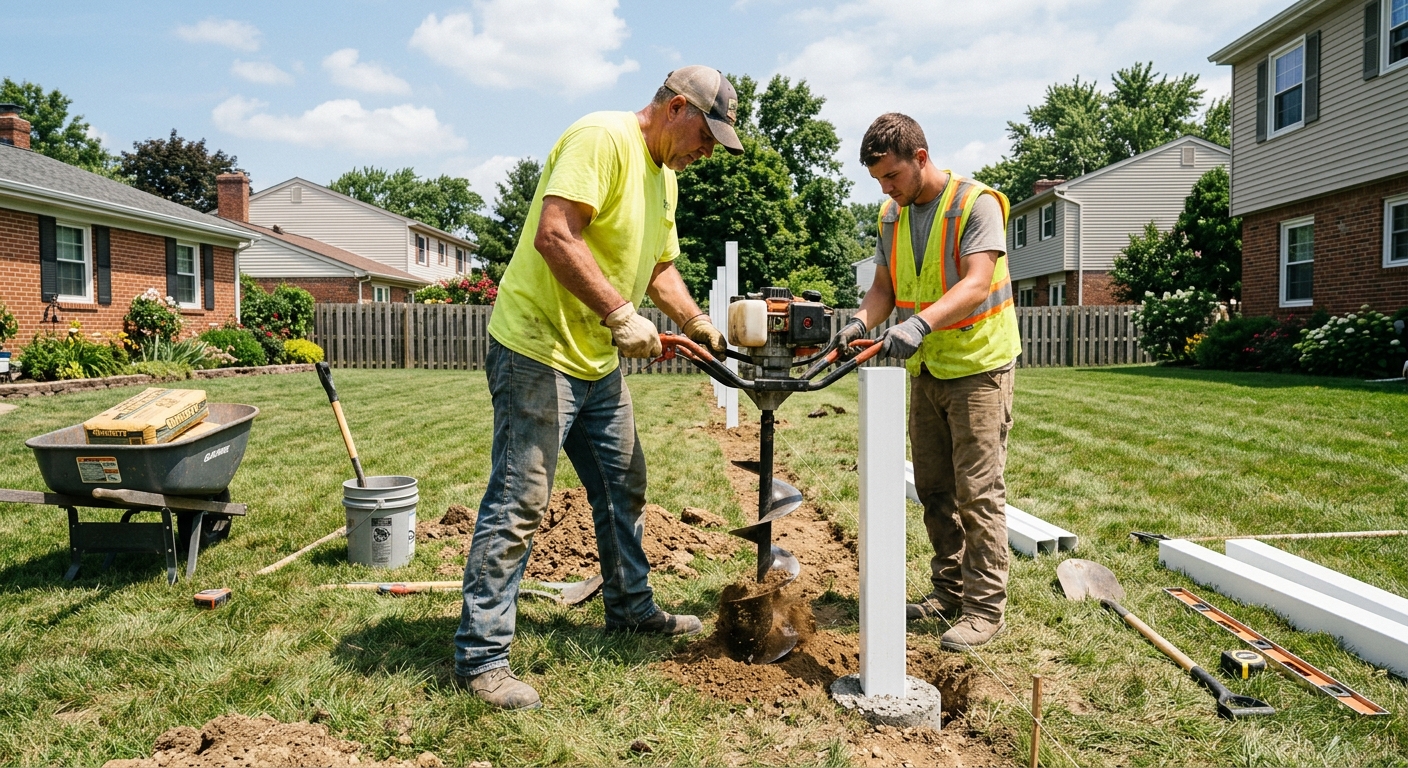
In the Calgary economic region, the Prairie continental climate is the real driver of cost. Long freeze–thaw cycles mean posts must be set deep enough to resist heaving—often around 4 ft (about 120 cm) in the ground with concrete footings for privacy fences and gate posts. That increases excavation time, concrete volume, and material selection versus milder parts of Canada. Open prairie exposure also brings stronger wind loads, so solid panels generally need tighter post spacing and sturdier construction to prevent racking.
In Athlone, trade activity is especially common around established residential pockets near local commercial strips—where homeowners frequently refresh aging fence lines for curb appeal and privacy. Once you know your goals (privacy, maintenance level, or budget), you can compare options side-by-side using the table below.
| Material |
Lifespan |
Maintenance |
Privacy Rating |
Price per Linear Foot |
| Pressure-treated pine (standard wood) |
10–20 years |
Stain/paint every 2–3 years to reduce grey weathering |
High (solid pickets) |
$40–$70 |
| Cedar (natural rot resistance) |
15–25 years |
Reseal/stain every 3–4 years (varies by sun exposure) |
High (solid pickets) |
$60–$85 |
| Vinyl / PVC (no-maintenance) |
20–30 years |
Rinse as needed; inspect fasteners post-winter |
High (solid panels) |
$45–$90 |
| Chain-link (galvanized steel) |
25–40 years |
Minimal; tighten hardware and address coatings as needed |
Low to medium (airflow, visibility) |
$25–$55 |
| Aluminum ornamental |
25–40 years |
Low; wash and check latch alignment |
Low (open design) |
$70–$120 |
| Composite / recycled material |
20–30 years |
Occasional wash; avoid sandblasting and abrasive care |
High (solid boards) |
$80–$120 |
Prices are estimates only and vary by project scope, site access and material selection.
What affects the price of fencing in Athlone
In Athlone and across the Calgary region, two quotes for the “same” fence can vary by 30–50% because pricing is tied to hidden site work and structural requirements, not just material type. Labour rates, crew availability, and how much extra excavation is needed to hit frost-safe post depths all change the installed cost. In prairie wind exposure, the fence often has to be built tighter and more rigid—especially for 6 ft privacy styles—so materials that seem similar on paper may be engineered differently on-site.
First, frost protection sets how deep posts must go. In Alberta, contractors commonly set posts about 4–6 inches below the design frost depth to prevent heaving. That typically means holes around 1.5–2.0 m deep (depending on exact site conditions), longer posts, and usually concrete setting for privacy fences and gate posts. Second, wind exposure drives tighter post spacing and heavier panels on solid styles. By contrast, chain-link allows airflow, so it typically costs less even when the run is long.
Concrete examples from local Athlone/Calgary-style builds: (1) A straight backyard run with good access and level grade might land near the mid-range of the wood fence pricing band (about $40–$80 per linear foot). (2) A sloped yard that requires stepped rails and raked panels increases labour time and increases waste—pushing the same wood style toward the higher end. (3) If you need to remove and dispose of an old fence and set replacement posts to frost depth, labour + haul-off can move the total closer to vinyl pricing territory (often about $45–$90 per linear foot) even before you choose a higher-end finish.
For Athlone homeowners, the most expensive line items are usually the ones you can’t see: deep excavation, concrete quantity, and additional framing for wind resistance.
| Price Factor |
Why It Matters |
Cost Impact |
| Fence length in linear feet |
Most costs scale directly with linear footage (posts, rails, labour) |
Highest overall driver |
| Post depth required |
Frost line determines post length and hole depth to prevent heaving |
Can add major labour and concrete cost |
| Post setting method |
Concrete vs. gravel pack vs. driven posts affects stability and time |
Concrete setting usually costs more but performs better for privacy |
| Material choice |
Vinyl, cedar, and chain-link have different framing, hardware and durability requirements |
Shifts you across local price bands (wood, vinyl mid-range; chain-link lower-mid; aluminum high) |
| Gate count and type |
Drive-through (double) gates require heavier posts, bracing, and stronger latches |
One gate can cost nearly a “mini fence run” |
| Grade and terrain |
Sloped yards require stepped or raked panels and more layout time |
Increases labour and material waste |
| Old fence removal and disposal |
Demolition, haul-off, and recycling/disposal requirements add time |
Often adds a noticeable per-project surcharge |
| Permit fees and survey / property line locate |
Documentation and verification reduce boundary risk |
Small to moderate cost, but can be mandatory depending on height and situation |
Permits & regulations in Alberta
In Alberta, fencing is usually straightforward, but permits can apply when the fence is tall. As a practical rule of thumb for Athlone homeowners: fences above a height threshold—often around 2.0 m (about 6.5 ft) for rear yards and 1.0–1.2 m (about 3–4 ft) for front or corner areas—may require a building permit depending on the municipality and exact location of the fence relative to the property line. Even when a permit isn’t required, all fences must respect property lines and any municipal setback bylaws.
Before anyone digs post holes, you must arrange utility locates through Alberta One-Call. Fences commonly require concrete footings in the Calgary climate (deep frost protection), so digging occurs at a depth where hitting buried services is a real risk. Also, get a survey or at least a property pin/locate done so you’re not guessing where your boundary lies.
Shared fence ownership is generally handled under Alberta’s line fences framework, which covers responsibility for maintenance and replacement on shared boundaries.
How to verify a contractor in Athlone step-by-step: (1) Confirm their Alberta licence/registration (where applicable to their trade category) via the appropriate online registry for the contractor. (2) Request a current Certificate of Insurance showing general liability and ensure it’s active for your project dates. (3) Ask for WSIB/WCB coverage proof (or clearance/coverage confirmation where applicable) and verify the coverage is not expired. A reputable fencing contractor will provide these documents before work begins, not after.
Choosing the right fence material for Athlone
Choosing fencing material in Athlone is mostly about matching your priorities—privacy, low maintenance, budget, and how long you want to wait before the next major refresh—to the local climate reality of freeze–thaw cycling and strong wind. In the Calgary region, solid fences generally need sturdier framing and properly set posts. That means post depth and how panels are braced matter as much as the picket/board material you pick.
Pressure-treated pine is usually the best budget entry, but it needs staining or painting about every 2–3 years to prevent greying and surface breakdown from Alberta sun and moisture swings. Cedar looks better and resists rot naturally, yet it still benefits from periodic sealing/staining for longevity. Vinyl/PVC is attractive for low maintenance—most owners simply rinse it—but in extreme cold it can be more sensitive to impact and can crack if installed incorrectly (for example, when boards aren’t allowed to expand/contract properly). Chain-link is the lowest-cost option in many Athlone yards and can last a long time, but it doesn’t provide privacy unless you add slats or screening. Aluminum is rust-resistant and visually clean, but it’s more ornamental than private.
Because the Calgary frost line drives deep post setting, many privacy fences use concrete-set posts for gate posts and corner/bracing points. If you opt for chain-link, your structural requirements are typically less demanding since airflow reduces wind pressure—often keeping costs closer to the lower-mid band (about $25–$55 per linear foot). A specific example: upgrading from pressure-treated wood toward vinyl might raise your per-foot pricing from roughly the wood band into the vinyl band (commonly $45–$90 per linear foot), and that difference is justified when you want long-term “set it and forget it” maintenance—especially if you don’t want ongoing staining cycles.
| Material |
Cold Tolerance |
Lifespan |
Annual Maintenance |
Best For |
Price Band |
| Pressure-treated pine |
Good (with proper post depth and finishing) |
10–20 years |
Inspect and re-stain/paint every 2–3 years (seasonal touch-ups possible) |
Budget privacy with standard appearance |
$40–$80 |
| Cedar |
Good (naturally rot resistant) |
15–25 years |
Reseal/stain every 3–4 years depending on exposure |
Premium look while still staying “natural” |
$60–$90 |
| Vinyl / PVC |
Good (avoid impacts; correct expansion allowances) |
20–30 years |
Low: rinse and check fasteners after winter |
Low maintenance privacy in windy yards |
$45–$90 |
| Chain-link |
Excellent (galvanized with proper top rail/hardware) |
25–40 years |
Very low: tighten hardware and check for coating wear |
Secure perimeter with airflow |
$25–$55 |
| Aluminum ornamental |
Excellent (no rust; handles temperature swings well) |
25–40 years |
Low: wash and lubricate gates/latches as needed |
Front yard curb appeal and durability |
$70–$120 |
| Composite / recycled material |
Good (stable boards; still needs correct framing) |
20–30 years |
Low: periodic wash; inspect for fastener tightness |
Long-life privacy without constant staining |
$80–$120 |
How to choose a fencing contractor in Athlone
When you’re hiring a fencing contractor in Athlone, verify credentials and demand itemization. For Alberta work, ask for confirmation of their Alberta licence/registration (where applicable to their trade), general liability insurance, and proof of WCB/WSIB coverage. To check: request the documentation directly and confirm the policy is current (not just a generic certificate). For clearance letters or coverage confirmations, insist on the document for your project period. If they hesitate or can’t provide paperwork, that’s usually a staffing or compliance red flag.
Next, get 2–3 itemised written quotes—not lump sums. The quote should break out labour (excavation/post setting, framing, installation), materials (posts, rails, pickets/panels, hardware), and removals/disposal if included. Confirm whether permits are included or excluded, and whether a property line locate or survey cost is separate. Workmanship warranty terms should be in writing (how many years, what they cover), and product/manufacturer warranty should specify what parts are covered—plus whether it’s transferable to you as the homeowner.
Payment schedule matters. Avoid paying more than 10–15% upfront. Hold back the remainder until completion and a walk-through confirms alignment, gates, and finish quality. Finally, timeline should be concrete: request the planned start date and estimated completion date in writing so you’re not left waiting through Alberta weather windows.
- Ask for proof of insurance and WCB/WSIB coverage before signing
- Get a licence/registration reference number and verify it online
- Confirm post-depth plan for frost protection (no “shallow holes” shortcuts)
- Request an itemised quote: labour, materials, hardware, and concrete setting
- Clarify what’s excluded (permit, survey, excavation for rocky soil, landscaping repairs)
- Confirm disposal/haul-off inclusion for old fencing
- Check warranty length and whether it covers gates, sagging rails, and alignment issues
- Ensure gate hardware is specified (latches, hinges, braces) and included in the scope
- Ask how they handle sloped yards (stepped vs. raked panels) and confirm it on the quote
- Confirm who locates property pins and who is responsible if lines are misidentified
- Pay via traceable method and follow the 10–15% max upfront guideline
- Get start date and completion estimate in writing
Red flags I see in Athlone include: contractors who won’t show insurance or WCB/WSIB proof, quotes that omit post depth and concrete setting details, “lowest price” bids that leave out gate bracing and hardware specs, payment requests for large upfront amounts, and vague scopes that don’t state whether removal/disposal and permits are included.
Frequently asked questions — fencing in Athlone
How much does a fence cost in Athlone?
In Athlone (Calgary economic region), most installed fence projects typically fall within local per-foot ranges based on material and site conditions. For example, chain-link often starts around $25–$55 per linear foot because it’s lighter and has less wind-loading than privacy panels. Wood and vinyl privacy styles usually land mid-range to upper range, commonly about $40–$80 for standard wood and $45–$90 for vinyl, especially where posts must be set deep for freeze–thaw protection. Your final number depends on linear footage, gate count, whether old fence removal is included, and whether your yard has slopes or limited access. (Statistics Canada, 2021 Census) provides Athlone’s overall population context, but your yard-specific conditions are what set your actual price.
How deep should fence posts be for Athlone's frost?
For Athlone homeowners building in the Calgary climate, frost protection is critical. Contractors commonly plan to set posts about 4–6 inches below the design frost depth so posts resist heaving during winter freeze–thaw cycles. In practical terms, that often means digging holes roughly 1.5–2.0 m deep (depending on your specific site conditions and fence type). Privacy fences and gate posts usually require concrete footings because the added stiffness and wind loading make them more prone to movement if the setting method is weak. Always confirm your contractor’s post depth and setting method in writing before work starts, and ensure utility locates are completed through Alberta One-Call before any excavation.
Wood vs vinyl vs aluminum fence — which is best?
“Best” depends on your priorities. Wood (pressure-treated pine) is usually the most budget-friendly way to get strong privacy, typically around $40–$80 per linear foot, but you should plan on staining or painting about every 2–3 years in Alberta’s sun and moisture swings. Vinyl/PVC is higher upfront (often $45–$90) and is attractive if you want low maintenance; it generally needs only rinsing and basic inspections after winter. Aluminum is the most ornamental and durable of the three, often in the $70–$120 range, but it provides less privacy because it’s more open. For windy Athlone yards, all three can work—just ensure deep post setting and proper bracing for solid sections.
Do I need a permit to build a fence in Alberta?
In Alberta, permits can be required depending on fence height and location on your lot. As a common guideline used in practice, rear-yard fences that exceed roughly 2.0 m (about 6.5 ft) may trigger permit requirements, while front or corner fences over about 1.0–1.2 m (about 3–4 ft) may also require one depending on the municipality and layout. Even if a permit isn’t required, you still must follow property line rules and municipal setbacks. For safety and compliance, call Alberta One-Call before digging and consider a survey/property pin locate so you don’t build on the wrong line. Ask your contractor whether permits are included in the quote and who handles the application.
How long does a wood fence last in Athlone?
A wood fence in the Calgary region typically lasts about 10–20 years, depending on material quality, finishing, and installation details like post depth and drainage around concrete footings. In Athlone’s freeze–thaw conditions, the biggest performance gap often comes from shortcuts in post setting—if posts are set too shallow, frost heaving and movement can shorten a fence’s service life. Pressure-treated pine can perform well when stained or painted regularly (often every 2–3 years) and when hardware is corrosion-resistant. Cedar generally lasts longer (often 15–25 years) due to natural rot resistance, but it still benefits from periodic sealing. A well-installed fence with a documented maintenance plan is what drives the longer end of the lifespan range.
Who owns and maintains a shared fence?
For shared fence boundaries in Alberta, ownership and maintenance are governed by Alberta’s line-fences framework rather than each municipality acting independently in a completely different way. In plain terms, if the fence is on or along a common boundary, responsibility for maintenance or replacement can be shared depending on how the boundary is established and how the fence was originally treated/constructed. The key is identifying the exact boundary line (survey/property pins help). If you’re upgrading a shared fence, discuss scope and costs upfront in writing—especially whether you’re replacing posts, rails, or the full fence, and who supplies materials. A contractor can’t resolve boundary ownership disputes for you, so it’s smart to confirm lot lines before ordering materials.