Fencing options and costs in Banff Trail
In Banff Trail, fencing is one of those home upgrades that feels simple—until you factor in Alberta’s prairie freeze–thaw cycles and the wind pressure that racks panels. With a population of 3,805 in the Banff Trail area (Statistics Canada, 2021 Census), there’s steady local demand as homeowners maintain detached yards and backyard privacy. The strongest predictor of fence demand is the number of homes ready for upgrades—each detached property is effectively a potential fencing customer, especially where exterior finishing and backyard usability matter.
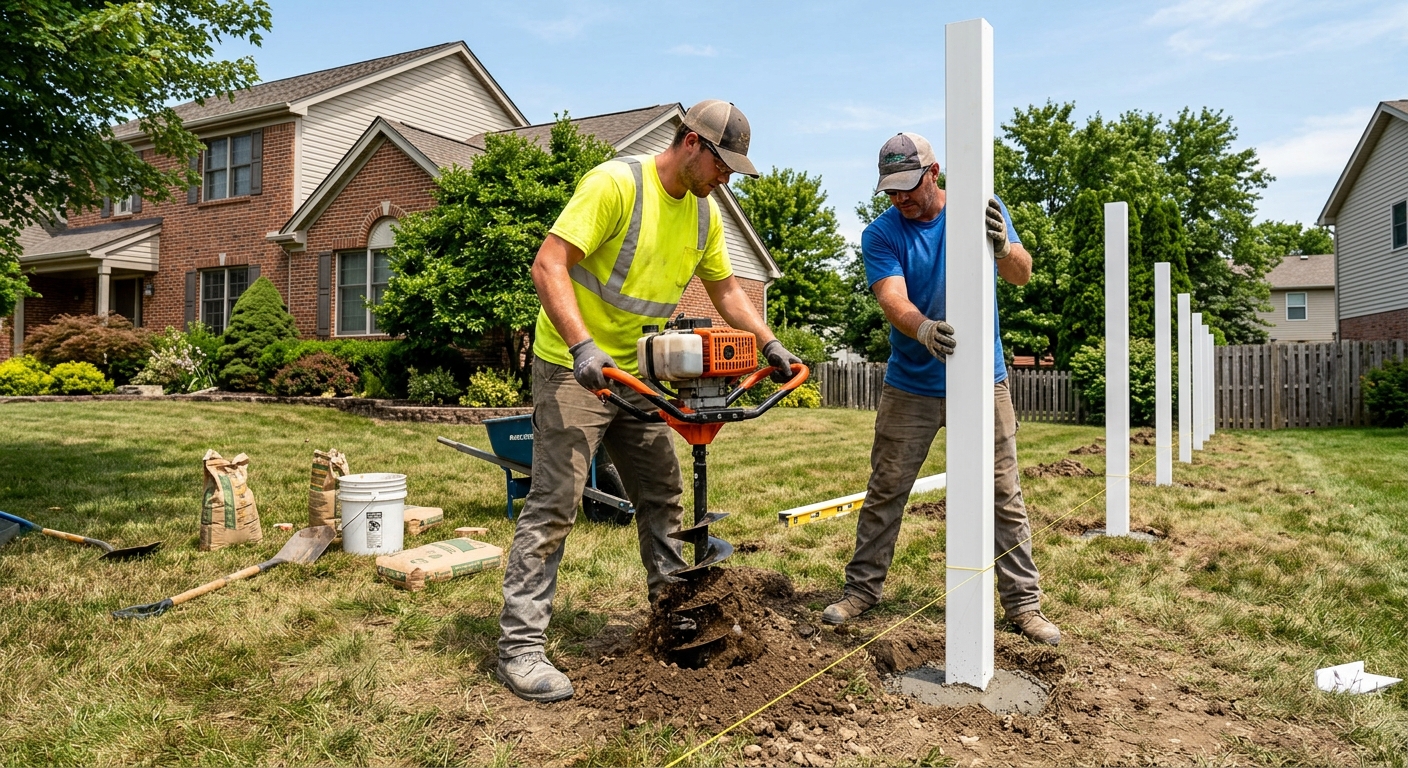
In Calgary’s climate, fence costs commonly hinge on foundation depth and post bracing. Contractors typically set posts about 4 ft (≈120 cm) deep to get below the regional frost line and reduce heaving, which increases excavation time, concrete volume, and labour. Wind exposure across open Prairie lots also pushes many customers toward solid privacy panels that need closer post spacing and fully concreted footings. Meanwhile, availability of experienced installers can affect scheduling and pricing; in busy spring and early summer, high demand for long, privacy-style runs often tightens contractor timelines.
You’ll usually notice higher activity around neighbourhood pockets with more back-lot privacy needs and wider fence runs—areas near the Bow River corridor and the busier residential sections of Banff Trail where homeowners want secure, wind-resistant boundary fencing. With those local factors in mind, the table below compares typical material choices you’ll see quoted for Banff Trail projects.
| Material |
Lifespan |
Maintenance |
Privacy Rating |
Price per Linear Foot |
| Pressure-treated pine (standard wood) |
10–20 years |
Stain/seal every 2–3 years; inspect posts after winters |
High (privacy boards) |
$40–$80 |
| Cedar (natural rot resistance) |
15–25 years |
Light staining/maintenance every 2–4 years (varies by finish) |
High (solid cedar boards) |
$55–$95 |
| Vinyl / PVC (no-maintenance) |
20–30 years |
Occasional wash; check for warping after extreme cold |
High (solid privacy styles) |
$45–$90 |
| Chain-link (galvanized steel) |
20–40 years |
Minimal; rinse salt/dust and check tension yearly |
Low–Medium (airflow; privacy inserts optional) |
$25–$55 |
| Aluminum ornamental |
25–40 years |
Occasional wash; inspect hardware |
Low–Medium (decorative; limited privacy) |
$70–$120 |
| Composite / recycled material |
25–35 years |
Minimal; wash and inspect for colour stability |
High (solid privacy panels) |
$65–$115 |
Prices are estimates only and vary by project scope, site access and material selection.
What affects the price of fencing in Banff Trail
In Banff Trail and across Calgary, it’s common to see the same fencing project priced 30–50% apart between quotes. The reason is usually not the “type” of fence—it’s the details: how far the posts must be set below the frost depth, how wind-load is engineered through post spacing, what’s included for demolition, and whether the contractor’s crew is available during peak season. Even though Banff Trail has a compact population of 3,805 (Statistics Canada, 2021 Census), the broader Calgary demand means labour and scheduling can swing quickly from spring to summer.
Frost protection is the biggest structural cost driver. Local practice typically requires post holes deep enough to prevent heaving—often in the range of 4–6 inches below the design frost depth. In many Alberta builds, that translates to posts set about 1.5–2.0 m into the ground, with longer posts and more excavation. That depth increases concrete setting and material length, raising total costs compared with regions where frost penetrates less.
Wind exposure on the Prairies also forces stronger framing. For solid wood or vinyl privacy fences, you’ll often see tighter post spacing and fully concreted footings to prevent racking. Chain-link typically costs less because it lets wind pass through; wood privacy panels, by contrast, are more labour-intensive to brace properly. In coastal BC, wood issues skew the cost toward rot prevention—here in Banff Trail, the emphasis shifts to frost and wind loading.
Two practical examples in Banff Trail: (1) a 6 ft privacy run with concrete-set corner and gate posts usually lands closer to the mid–upper band for wood or vinyl, while (2) a chain-link boundary on the same lot may come in at the lower-mid range because it can tolerate lighter framing. If you’re budgeting, a typical wood fence installation often quotes around $40–$80 per linear foot, while vinyl commonly sits in the $45–$90 band depending on height and how many gate posts get concreted.
| Price Factor |
Why It Matters |
Cost Impact |
| Fence length in linear feet |
Labour, materials, posts, and concrete scale directly with total run |
Major driver (often 50%+ of total quote) |
| Post depth required |
Frost line dictates hole depth and required post length to prevent heaving |
Higher depth increases excavation and material costs |
| Post setting method |
Concrete vs. gravel pack vs. driven posts changes stability and longevity |
Concrete-set posts typically increase cost |
| Material choice |
Vinyl/cedar/pressure-treated differ in unit cost, cutting complexity, and fasteners |
Shifts you between budget wood, mid vinyl/cedar, and top-end materials |
| Gate count and type |
Gates require stronger posts, hinges, latches, and sometimes bracing |
Each gate adds labour + hardware; drive-through doubles impact |
| Grade and terrain |
Sloped yards require stepped or raked panels for clean height transitions |
Often adds labour/time and extra materials |
| Old fence removal and disposal |
Demo time, hauling, and disposal fees affect the quote significantly |
Can add substantial cost if the run is long or deteriorated |
| Permit fees and survey / property line locate |
Setbacks and property verification reduce rework risk |
Moderate cost, but prevents expensive corrections |
Permits & regulations in Alberta
In Alberta (including Banff Trail), fence permits are commonly required when you’re building taller fencing—typically above a height threshold around 2.0 m (6.5 ft) for the rear and about 1.0–1.2 m (3–4 ft) for the front or corner areas, where visibility rules are tighter. Even when a permit is not required, your fence still must respect property lines and municipal setback bylaws, and it must not interfere with easements or utility corridors.
Before you dig any post holes, call for utility locates through Alberta One-Call. That’s not optional—hitting buried services can lead to expensive repairs and delays. Next, confirm your property line using a survey or a property pin locate (for many homeowners, the most reliable option is having a surveyor confirm the pins before installation). This is especially important for shared or adjacent boundaries, where line-fence agreements and maintenance expectations can differ based on how the boundary was originally established. Shared fence ownership and maintenance are governed by provincial line-fences legislation, so treat that as part of your planning—not an afterthought.
What usually does require a permit: constructing or modifying a fence above the typical height thresholds, and situations that affect visibility in corner/front areas or add substantial structural elements (like certain gate systems tied to height/placement). What typically does not: replacing an existing fence in like-for-like style and height within the allowed limits (final determination still depends on your location and the exact height/placement).
To verify an Alberta contractor, ask for: (1) an Alberta licence/registration details if applicable for their trade category; (2) a current certificate of liability insurance; and (3) clearance coverage for worker protection (WSIB/WCB). Then check the paperwork directly—either through the insurer’s certificate details, or the relevant online registry/clearance status your contractor provides with their quotes.
Choosing the right fence material for Banff Trail
Choosing the right fencing material in Banff Trail is about matching your priorities—privacy, low maintenance, budget and lifespan—to Calgary’s prairie conditions. With long freeze–thaw cycles and significant wind loading, post stability and proper setting matter as much as the material name on the invoice. That’s why you’ll see solid privacy systems (wood or vinyl) typically engineered with closer post spacing and concrete-set footings, while open styles (chain-link and many aluminum designs) can handle airflow better and often need less structural reinforcement.
Pressure-treated pine is usually the budget-friendly route, but it’s also the most likely to grey weather without staining. Plan on staining or sealing every 2–3 years and do post checks after harsh winters. Cedar offers better natural rot resistance and a warmer look; it still needs periodic maintenance, but it tends to hold up well in Alberta’s exterior exposure. Vinyl/PVC is the low-maintenance option—clean it occasionally and you’re mostly done—but in extreme cold it can become brittle if the installation details are weak, so solid fastening and proper spacing are important. Chain-link is the lowest cost and longest-life in many cases, though it offers limited privacy unless you add inserts or screening. Aluminum ornamental gives durability and a clean appearance without rust, but it won’t deliver the privacy rating people expect from a solid board fence.
On post depth: Calgary practices commonly set posts about 4 ft (≈120 cm) deep to reduce heaving risk. That depth increases the need for longer posts and more excavation across all materials, especially for 6 ft privacy and gate posts—so the cost difference between wood and vinyl often comes down to material pricing and labour time rather than “fence height alone.” As a concrete example, if you’re comparing a privacy run priced around $40–$80 per linear foot for pressure-treated pine versus vinyl often quoted in the $45–$90 range, vinyl’s upfront premium can be justified if you want to avoid the recurring staining cycle.
| Material |
Cold Tolerance |
Lifespan |
Annual Maintenance |
Best For |
Price Band |
| Pressure-treated pine |
Good if posts are properly concreted and kept sealed/stained |
10–20 years |
Light inspection; plan staining/sealing every 2–3 years |
Budget privacy where you’re willing to maintain finish |
$40–$80 |
| Cedar |
Good; resists rot but still benefits from proper installation |
15–25 years |
Inspection plus staining/refresh 2–4 years (finish-dependent) |
Premium look with better natural durability |
$55–$95 |
| Vinyl / PVC |
Very good; avoid flexing and use correct installation hardware |
20–30 years |
Wash/rinse; quick hardware and panel check |
Low-maintenance privacy in windy yards |
$45–$90 |
| Chain-link |
Excellent; galvanized steel handles cold well |
20–40 years |
Minimal—check tension and inspect for damage |
Security with airflow; pet containment or boundary fencing |
$25–$55 |
| Aluminum ornamental |
Excellent; powder coating resists winter exposure |
25–40 years |
Occasional wash; inspect fittings |
Front-yard curb appeal with durability |
$70–$120 |
| Composite / recycled |
Good; performs well if posts and panels are installed rigidly |
25–35 years |
Low—wash and check for colour stability |
Solid privacy with minimal upkeep |
$65–$115 |
How to choose a fencing contractor in Banff Trail
Choosing the right contractor in Banff Trail starts with verification and itemization. In Alberta, you want a crew that can prove they’re insured and compliant: request (1) liability insurance (certificate of insurance showing active coverage and project address/details), and (2) worker coverage clearance for their workforce (WSIB/WCB). For verification, don’t just accept a screenshot—ask for the current certificate, then confirm the policy status through the insurer details provided, and check clearance letters using the information on the letter. Also ask whether they handle fencing permits or collaborate with surveyors for property line locate work.
Get 2–3 itemised written quotes rather than one lump sum. A good fence quote separates labour and materials (posts, rails, fasteners, panels/pickets, gate hardware, concrete/footings, and any demo/disposal). Read the scope carefully: what’s excluded (removal of old fence, hauling, stump grinding, rock excavation, winter installation constraints), and whether permit pulling and property line locate are included. If the quote is unclear, budget for change orders—fencing is sensitive to underground utilities and grading.
Warranty matters too. Ask for the workmanship warranty length and whether the product/manufacturer warranty transfers to you if you sell the home. Payment schedule should protect you: never pay more than 10–15% upfront; request a holdback until completion and final walkthrough. Finally, get the start date and completion estimate in writing, including weather contingencies—especially important in Alberta’s freeze–thaw season.
- Request certificate of liability insurance and verify policy is active for your project dates.
- Ask for WSIB/WCB clearance or clearance letter for the specific contractor/company.
- Confirm whether they pull permits (and specify which permits, if any) in the written scope.
- Demand itemized labour + materials breakdown (posts, rails, panels, concrete/anchors, gates).
- Clarify if excavation includes rock, roots and minor regrading.
- Confirm post-setting method (concrete-set depth and whether it matches frost protection practices).
- Ensure utility locates are included or required before digging.
- Confirm property line verification approach (survey locate/pins vs contractor assumption).
- Ask for disposal haul-away inclusion and whether dumps/fees are covered.
- Get gate hardware specified (hinges, latch type, gate post reinforcement, swing direction).
- Confirm warranty terms: workmanship duration and any product warranty details.
- Set payment milestones: small deposit (10–15%), then progress payments, then final holdback.
Red flags I see in Banff Trail include: refusing to put scope and post-depth details in writing; giving a single “per foot” number with no exclusions listed; asking for a large deposit before measuring and locates; vague insurance/warranty answers (“we’re covered” without certificates); and promising unrealistic start dates without weather/frost-schedule contingencies.
Frequently asked questions — fencing in Banff Trail
Wood vs vinyl vs aluminum fence — which is best?
In Banff Trail, “best” depends on whether you want privacy, maintenance simplicity, or curb appeal. For true privacy, pressure-treated wood and vinyl privacy styles usually score highest because they block wind-driven visual line-of-sight; however, wood typically needs staining every 2–3 years, while vinyl is usually the easier “wash-and-go” choice. If you don’t need privacy, aluminum ornamental is tough in Alberta winters and won’t rust, but it’s more decorative than blocking. On price, many homeowners see wood privacy installation around $40–$80 per linear foot, while vinyl often lands in the $45–$90 band depending on height and gate complexity. For windy lots near open areas, I usually steer homeowners toward solid panels with properly concreted posts about 4 ft (≈120 cm) deep to control racking.
Do I need a permit to build a fence in Alberta?
Often, yes—especially for taller fences in Alberta. The common guidance used by municipalities is that rear fences above about 2.0 m (6.5 ft) and front/corner fences above roughly 1.0–1.2 m (3–4 ft) may require a building permit. Even when a permit isn’t required, you still must comply with property line rules and setback/visibility bylaws. In Banff Trail, I recommend you verify the height/placement with your contractor’s paperwork process before digging. Also, call Alberta One-Call for utility locates before post-hole excavation. A fence can be built without a permit if it’s within allowable height limits and effectively like-for-like replacement, but the safest approach is to confirm the exact plan against the local requirements for your address.
How long does a wood fence last in Banff Trail?
A pressure-treated wood fence in Banff Trail commonly lasts about 10–20 years when it’s installed correctly for frost and wind. The service life swings heavily based on post setting and finish maintenance. Calgary-area freeze–thaw cycles can stress weak post foundations—if holes aren’t deep enough or concrete-setting isn’t used where required, heaving and leaning can start sooner. Wood surface finish matters too: staining or sealing every 2–3 years helps reduce grey weathering and moisture absorption. If you want a longer window with less rot risk, cedar often performs better (often 15–25 years), but it still needs periodic maintenance. If your quote is aimed at $40–$80 per linear foot, ask whether it includes the recommended post-depth and brace details, not just the boards.
Who owns and maintains a shared fence?
For shared fences in Alberta, ownership and maintenance typically depend on the boundary relationship and how the line fence agreement is handled, which is governed by provincial line-fences legislation. Practically, that means the fence may be treated as shared between adjacent properties, but the exact responsibilities can vary depending on what exists on the boundary and how it was originally established. In Banff Trail, I suggest homeowners document the fence condition (photos and a simple written note), confirm the location of property pins/survey, and agree in writing with the neighbour on cost-sharing and maintenance scope before ordering materials. Your contractor should also reflect the agreed boundary in the plan so you don’t end up with a dispute about who benefits from which panels and gates.
How do I find my property line before fencing?
Before fencing in Banff Trail, confirm your property line so you don’t build into an easement or cross onto a neighbour’s lot. The best option is a survey or a property-pin locate that identifies the corners and line for your address. Many fencing contractors can help coordinate the locate process, but it’s your responsibility to ensure the line is correct. Start by checking any survey paperwork you already have; if it’s old, get an updated locate. When digging, also ensure utilities are identified through Alberta One-Call. A common problem I see is homeowners relying on “approximate” offsets—then the fence needs to be moved later, which adds labour and concrete removal. Ask your contractor to explain how they verify pins and measure run lengths before building.
What's the most low-maintenance fence?
For low maintenance in Alberta, vinyl/PVC privacy fencing is usually the top choice: it typically requires little beyond periodic washing and quick hardware checks. Aluminum ornamental can also be very low maintenance because it won’t rust, but it won’t provide the same privacy level as solid panels. Chain-link is low effort too, but it won’t meet privacy goals unless you add screening. In Banff Trail, the “hidden” maintenance driver is sometimes the foundation: if posts aren’t properly set for Alberta’s freeze–thaw conditions, any fence—including low-maintenance materials—can start to lean. As pricing guidance, vinyl often lands around $45–$90 per linear foot installed, while wood may be closer to $40–$80—so paying a bit more upfront can be worthwhile if you want to avoid regular staining cycles.