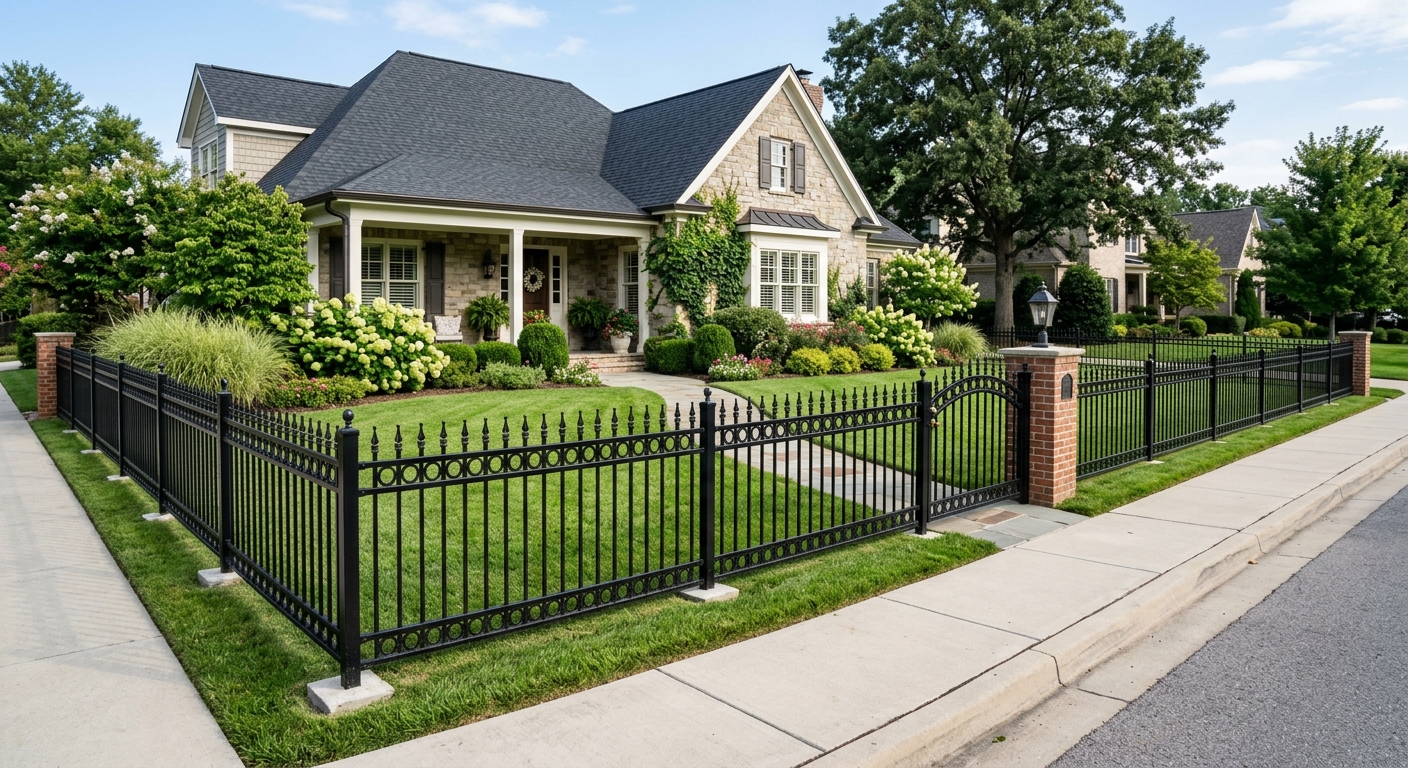
Fencing options and costs in Westbrook Estates
Westbrook Estates, Alberta is a tight-knit community of 1,225 residents (Statistics Canada, 2021 Census), and most fencing work is tied to the growing number of homeowners maintaining private yards, garden spaces and pet areas. In a neighbourhood like Westbrook Estates—where many households are in single-family settings—each detached home is essentially its own project profile, which makes demand for reliable installers steady year-round. The strongest predictor of local uptake is simple: when homeowners invest in yard upgrades, fencing is usually part of the same decision cycle.
In the Calgary economic region, Prairie continental weather creates the cost pressure. Long freeze–thaw cycles mean posts can heave if they aren’t set below the frost zone. City guidance commonly expects posts to be set about 4 ft (approximately 120 cm) deep, often with concrete, especially for 6 ft privacy fences and gate posts. That increased excavation time, concrete volume, and labour pushes wood and vinyl privacy installations toward the mid–upper part of local ranges, while chain-link stays lower because it’s lighter and more wind-permeable.
Contractor availability is also better for chain-link and ornamental metal crews because they can stage faster on open Prairie lots, where wind exposure is a factor. That said, privacy builds are especially in demand around newer housing pockets and active infill areas—typically along the main access corridors where backyard lines meet exposed wind channels. With those realities in mind, use the table below to compare common materials and what you can realistically expect to budget before we dig into pricing drivers.
| Material |
Lifespan |
Maintenance |
Privacy Rating |
Price per Linear Foot |
| Pressure-treated pine (standard wood) |
10–20 years |
Stain/paint every 2–3 years |
8/10 (solid/near-solid) |
$40–$80 |
| Cedar (natural rot resistance) |
15–25 years |
Seal/stain every 2–3 years |
9/10 (solid/near-solid) |
$55–$95 |
| Vinyl / PVC (no-maintenance) |
20–30 years |
Rinse as needed |
9/10 (solid panels available) |
$45–$90 |
| Chain-link (galvanized steel) |
20–35 years |
Occasional wash; tension checks |
3/10 (open) |
$25–$55 |
| Aluminum ornamental |
25–40 years |
Wash 1–2 times per year |
4/10 (decorative, airflow) |
$70–$120 |
| Composite / recycled material |
25–35 years |
Minimal cleaning; inspect fasteners |
7/10 (solid options) |
$65–$110 |
Prices are estimates only and vary by project scope, site access and material selection.
What affects the price of fencing in Westbrook Estates
In Westbrook Estates, Alberta, it’s common to see quotes for the “same” fence differ by 30–50% across Calgary and the wider Alberta region. The root cause isn’t just material price—it’s the structural reality of Prairie frost depth, wind loading, and how much effort contractors must spend getting posts stable. Even when homeowners choose a mid-range option, the contractor may have to excavate deeper, set more concrete, and use heavier hardware to keep the fence from racking.
The frost line is a major driver. Calgary typically expects posts set about 4 ft (approximately 120 cm) deep to get below the regional frost line and reduce heaving. In practical estimating, that translates into longer posts and more excavation. When concrete-setting is used, contractors also price in concrete volume and mixing time, which is why wood and vinyl privacy projects often land nearer the $40–$80 per linear foot (wood) or $45–$90 (vinyl/PVC) bands, especially for 6 ft heights.
Wind exposure is another Prairie cost factor. Open exposure means solid panels need closer spacing, sturdier posts and fully concreted footings to resist racking—while chain-link can be less expensive because it allows airflow. Climate differences show up too: mild but wet regions in Canada accelerate wood rot if material is not chosen and treated properly, but in Alberta the bigger enemy is freeze–thaw movement and fastener stress.
Concrete examples for Westbrook Estates: (1) a gate with dual latches and a heavier frame usually costs more because the posts must be concreted and aligned perfectly; (2) removing an older fence often adds hauling/disposal time—especially where posts are concreted already. (3) If your yard requires stepped rails for a slope, labour increases even if material quantity looks similar.
| Price Factor |
Why It Matters |
Cost Impact |
| Fence length in linear feet — the primary cost driver |
More lineal footage means more posts, rails and hardware |
High (typically the biggest swing) |
| Post depth required — frost line determines post length and hole depth |
Deeper holes reduce heaving risk and require longer materials |
High in Calgary-area winters |
| Post setting method — concrete vs. gravel pack vs. driven posts |
Concrete-set posts resist wind racking better and stabilize footing |
Medium to high |
| Material choice — vinyl vs. cedar vs. chain-link |
Different rail weights and panel designs change labour and structure |
Medium (material-driven) |
| Gate count and type — walk-through vs. drive-through (double) |
Gates need heavier frames and extra hinges/latches |
Medium to high |
| Grade and terrain — sloped yards require stepped or raked panels |
More fitting and layout time to keep a straight visual line |
Medium |
| Old fence removal and disposal |
Demolition, post pull-outs and landfill/hauling costs |
Medium |
| Permit fees and survey / property line locate |
Requirement varies by height/location; inaccurate lines cause rework |
Low to medium |
Permits & regulations in Alberta
In Alberta (including Westbrook Estates), a fence may require a building permit when it’s over common height thresholds—often around 2.0 m (6.5 ft) for rear yard locations and 1.0–1.2 m (3–4 ft) for the front or corner areas, depending on the situation and local bylaw interpretation. Even when a permit isn’t required, you still must follow property-line rules and any municipal setback requirements. Also, fences should be built in line with shared boundary expectations; shared fence ownership typically follows the province’s line-fence framework.
Before digging any post hole, call for utility locates through Alberta One-Call so contractors don’t hit underground services. Homeowners should also plan for a property survey or at least a documented locate of property pins before installation—this reduces disputes about encroachment and saves you from costly rework.
What usually DOES require a permit: new fence builds above the applicable height limits (especially around 2.0 m in many yard contexts), structural changes near pathways, and situations involving variances or special circumstances. What typically does NOT require a permit: replacing like-for-like fencing within standard height rules, provided it stays within setbacks and doesn’t alter the boundary line.
To verify contractor readiness in Alberta, ask for: (1) their Alberta licence number and proof they’re in good standing (check relevant online registries when applicable to the trade); (2) a current certificate of liability insurance naming you as a certificate holder if your contract requires it; and (3) confirmation they carry WSIB/WCB coverage where required. Request the clearance or coverage letter in writing, not just a verbal “we’re insured.”
Choosing the right fence material for Westbrook Estates
Choosing the right fence for Westbrook Estates, Alberta comes down to matching your priorities—privacy, low maintenance, budget, and lifespan—to the realities of Calgary’s freeze–thaw cycles and wind exposure. In this part of the Prairies, the post foundation matters as much as the board or panel: posts set at about 4 ft (approximately 120 cm) deep help reduce heaving, and for 6 ft privacy fences, concrete-set footings are common to control racking.
Pressure-treated pine is the best budget entry point, but it typically needs staining or sealing every 2–3 years to prevent greying and surface breakdown. Cedar looks better and resists rot more naturally, yet it still needs maintenance to keep colour and reduce weathering. Vinyl/PVC is often chosen for “set-and-forget” living—less upkeep and strong privacy panel options—but it can be vulnerable in extreme cold if substructure is weak, which is why proper spacing, fastening and support posts are critical. Chain-link is the lowest-cost, longest-life option, but it won’t deliver much privacy without slats or privacy mesh. Aluminum ornamental gives an attractive, rust-resistant look and good airflow, but it’s not a privacy fence.
Where the price difference is justified: if you’re building a 6 ft privacy fence, the jump from chain-link (often $25–$55 per linear foot) to wood or vinyl privacy (wood commonly $40–$80; vinyl/PVC $45–$90) makes sense because you’re paying for sturdier rails, more wind resistance work, and typically more concrete footings for stability.
| Material |
Cold Tolerance |
Lifespan |
Annual Maintenance |
Best For |
Price Band |
| Pressure-treated pine |
Good (with proper post depth and sealing) |
10–20 years |
Seal/stain check and spot prep |
Budget privacy with traditional look |
$40–$80 |
| Cedar |
Good (requires consistent sealing) |
15–25 years |
Stain/seal every 2–3 years |
Premium appearance, natural rot resistance |
$55–$95 |
| Vinyl / PVC |
Very good (needs solid substructure) |
20–30 years |
Rinse/clean as needed |
Low maintenance and clean lines |
$45–$90 |
| Chain-link |
Excellent (galvanized steel) |
20–35 years |
Wash and tension/repair checks |
Security, airflow, pets |
$25–$55 |
| Aluminum ornamental |
Excellent (powder-coated) |
25–40 years |
Wash 1–2 times per year |
Curb appeal without rusting |
$70–$120 |
| Composite / recycled |
Good (freeze–thaw stable boards) |
25–35 years |
Minimal cleaning; inspect fasteners |
Solid look with low upkeep |
$65–$110 |
How to choose a fencing contractor in Westbrook Estates
Start with verification. In Alberta, ask the contractor for (1) their Alberta licence/registration details where applicable to the trade, (2) current liability insurance—request the certificate of insurance and confirm your address can be listed if your contract requires it, and (3) WSIB/WCB coverage confirmation where required. Don’t accept “we’re covered” without documents: look for a certificate date that’s current and a coverage statement/clearance letter that matches the worker(s) who will be on your property.
Next, get 2–3 itemised written quotes. Each should separate labour and materials, and clearly list post type, post spacing, panel/board thickness, gate hardware, concrete amount (or setting method), and any allowances. Avoid lump-sum quotes that don’t show what’s excluded: removal, disposal, site restoration, and utility-locate costs are common omissions.
Read scope and warranty carefully. A workmanship warranty should be specific about length and what problems it covers (post movement, sagging rails, improper gate alignment). Product/manufacturer warranty covers materials, not installation—confirm if it’s transferable and whether it requires registration. For payment, never pay more than 10–15% upfront; use a holdback until the final walkthrough confirms height, alignment, gates, and clean jobsite. Finally, insist on timeline details: start date and completion estimate in writing, including weather contingencies common to Calgary’s winter spring transitions.
- Verify licence/registration status and expiry dates (ask for evidence).
- Review liability insurance certificate and confirm it matches the current policy term.
- Request WSIB/WCB clearance/coverage letter in writing before work starts.
- Ask for a site plan showing line layout, gate locations, and post spacing.
- Confirm post depth and setting method (concrete-set at typical Calgary depth).
- Ensure quotes specify materials by type (pressure-treated grade, cedar grade, vinyl profile).
- Check whether rail and brace hardware is included for privacy fences.
- Get the removal/disposal scope in writing (dump fees, hauling, salvage).
- Confirm whether utility locates are included or your responsibility.
- Clarify permit/paperwork responsibility (who applies and what’s included).
- Require written warranty terms for workmanship and manufacturer coverage details.
- Use a payment schedule with small deposit (10–15%) and holdback to completion.
Common Westbrook Estates red flags: vague quotes that don’t specify post depth or concrete setting; refusing to provide insurance/WSIB/WCB documentation; starting without utility locates; pushing large upfront payments (beyond 10–15%); and skipping a written scope of work that includes gates, disposal, and any permit responsibilities.
Frequently asked questions — fencing in Westbrook Estates
What's the best fence for privacy?
For privacy in Westbrook Estates and across the Calgary region, a 6 ft solid privacy fence is the most effective path—typically wood (pressure-treated pine or cedar) or vinyl/PVC with solid panels. The higher labour and stability needs in Prairie wind mean privacy panels usually cost more than open systems; for budgeting, wood often falls within about $40–$80 per linear foot and vinyl/PVC within $45–$90, depending on height, post spacing, gate count, and access. Whichever you pick, ensure posts are set to the regional frost depth zone (commonly around 4 ft / 120 cm) and consider concrete footings for privacy stiffness. If you’re trying to match privacy without the top cost, some homeowners choose chain-link with slats, but expect less complete coverage than true solid panel systems.
How do I compare fencing quotes?
In Alberta, quotes can look similar but still differ by 30–50% once the scope is unpacked. Compare quotes using the same checklist: total linear feet, post spacing, required post depth, and the post-setting method (concrete vs. gravel pack). Verify that materials are equivalent—pressure-treated grade, cedar thickness, vinyl profile type, and whether rails/bracing are included for a solid privacy design. Make sure gates are itemised (frame type, latch hardware, and the number of gates). Also confirm what’s excluded: permit pull responsibility, utility locates, fence removal and disposal, and site clean-up. A properly itemised quote is often the fastest way to see whether the contractor is working within the expected Calgary band (for example, chain-link may be nearer $25–$55 while privacy wood or vinyl is typically mid-range higher).
How long does fence installation take in Westbrook Estates?
Timeline depends mainly on fence length, terrain, and how many gate units you’re adding. For shorter runs, crews can often complete installation in a few days; longer privacy fences with post excavation at typical Calgary frost depth can take longer because concrete setting and accurate alignment require more time. Slope and yard access also matter—stepped panels and raked sections add layout work. Another common factor in Westbrook Estates is whether there’s old fence removal: demolition and hauling add 1–3 additional days depending on how the posts are set. Weather can affect start dates during freeze–thaw periods, so most reputable contractors schedule a realistic completion estimate with a contingency. Ask the contractor for a written start date and a completion window, not just a general “this week” plan.
Can I install a fence on a slope in Westbrook Estates?
Yes, but it needs the right approach to avoid gaps, uneven heights, and structural stress. On sloped yards in Westbrook Estates, contractors typically use stepped panels (each section changes height in steps) or raked panels (a continuous angle). Stepped panels are often easier to keep visually consistent, while raked panels can be used where the layout allows smoother grade transitions. Either way, the key is stable post footing: posts still need to be set to the depth that manages frost heaving, even if the above-ground fence height changes. You may also see adjustments in rail lengths, extra bracing, or additional labour for layout and fitting. When you request quotes, make sure they specify whether your design will be stepped or raked and how the top rail line will match existing structures.
What is the most weather-resistant fence for Westbrook Estates's climate?
For Calgary-area freeze–thaw and wind, the most weather-resistant option is usually chain-link with galvanized steel, because it resists rot and tolerates movement better than many solid wood systems. It’s also long-lived and often cheaper to maintain. In many projects, chain-link lands around $25–$55 per linear foot, which helps homeowners get durability without overspending. That said, weather resistance isn’t just the material—it’s the installation: correct post depth below the frost line zone (often around 4 ft / 120 cm) and solid anchoring choices matter for any fence. If you want privacy while staying durable, vinyl/PVC or cedar can perform very well when panels are properly braced and posts are correctly set. The worst outcomes usually come from shortcuts on footing depth, not from the fence material alone.
How do I prevent wood fence rot in Westbrook Estates?
In Westbrook Estates, wood rot prevention is mostly about controlling moisture contact and maintaining the protective finish. First, ensure posts are set correctly with appropriate footing depth and that wood components aren’t trapped in standing water. If your fence sits near sprinklers, redirect runoff and adjust irrigation so the fence doesn’t stay wet after watering. Second, choose treated lumber and install with good airflow: solid bottoms or no spacing can hold moisture; a properly designed gate and consistent panel spacing help. Third, maintain the finish on a schedule—pressure-treated pine commonly needs staining or sealing every 2–3 years to prevent surface breakdown and greying. Even cedar, though more rot resistant, still benefits from periodic sealing. If your contractor offers a clear maintenance plan, that’s a good sign you’ll avoid premature failure and expensive rework.