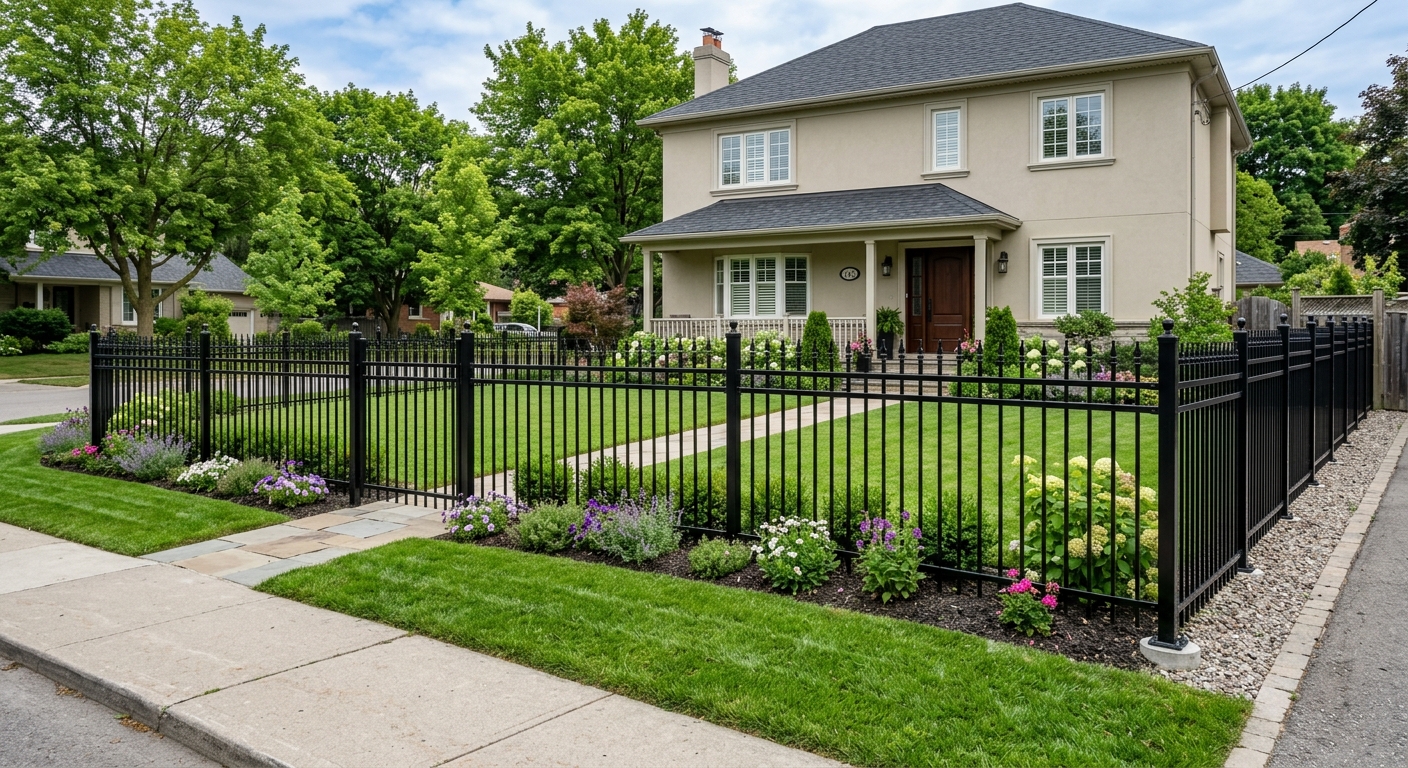
Fencing options and costs in Ogden
In Ogden, Alberta, choosing the right fence usually starts with how much privacy you want, how long you need it to last, and how wind- and freeze-thaw conditions will treat it. Ogden’s population was 8,315 in the 2021 Census (Statistics Canada, 2021 Census), and the area’s steady mix of family households creates consistent demand for perimeter updates—especially around properties that see frequent rear-yard use. In practical terms, one detached home’s fence often becomes the next project on the block, so supply and scheduling tend to tighten during peak fence seasons. That matters when you’re comparing quotes, because excavation for frost-protected posts and accurate layout drive labour time.
Because Ogden sits in the Calgary economic region, you’re dealing with a Prairie continental climate—long freeze–thaw cycles and open exposure to wind. For many privacy fences, posts must be set about 4 ft (≈120 cm) deep to get below the regional frost line and help prevent heaving. That requirement pushes costs up for solid-panel systems (wood/vinyl privacy) compared with airflow-friendly chain-link, which typically needs less reinforcement to resist racking. If you’re in a more exposed area of Ogden or near major wind corridors, we also see heavier gate hardware and closer post spacing.
Based on what homeowners are paying across Calgary’s surrounding communities, you’ll usually see a broad spread in total pricing—then the type of fence material determines where you land within it. Next, use the comparison table below to benchmark your options against realistic lifespan, upkeep, privacy, and installed pricing per linear foot.
| Material |
Lifespan |
Maintenance |
Privacy Rating |
Price per Linear Foot |
| Pressure-treated pine (standard wood) |
12–18 years |
Stain/seal every 2–3 years; fastener checks |
7/10 (solid boards; spacing affects) |
$40–$80 |
| Cedar (natural rot resistance) |
20–30 years |
Light stain/clear coat every 2–4 years |
8/10 (solid boards; good knock-down resistance) |
$55–$95 |
| Vinyl / PVC (no-maintenance) |
25–35 years |
Wash only; check for panel movement in extreme cold |
9/10 (privacy styles) |
$45–$90 |
| Chain-link (galvanized steel) |
20–40 years |
Occasional tension check; wash off salt/dust |
3/10 (low privacy) |
$25–$55 |
| Aluminum ornamental |
30–45 years |
Wash; inspect hinges/fasteners annually |
4/10 (decorative; not true privacy) |
$70–$120 |
| Composite / recycled material |
25–35 years |
Rinse and inspect annually; minimal staining |
8/10 (depending on panel system) |
$60–$110 |
Prices are estimates only and vary by project scope, site access and material selection.
What affects the price of fencing in Ogden
If you’re seeing a 30–50% gap between quotes for what sounds like the same fence, it’s usually not the material—it’s the job conditions and how the contractor plans for Ogden’s (Calgary region’s) climate. In a Prairie continental climate with long freeze–thaw cycles, frost protection drives both labour and materials. In cold Alberta, fence posts typically must be set about 1.5–2.0 m into the ground (roughly 4–6 inches below the design frost depth) to prevent heaving. That means deeper excavation, longer posts, and often concrete setting—so even a “mid-range” fence like pressure-treated pine can price closer to the higher end once post depth and concreting are accounted for.
Wind exposure on the Prairies also pushes structural requirements. Solid wood and vinyl privacy panels generally need tighter post spacing and sturdier bracing to prevent racking, while chain-link can be more forgiving because it allows airflow. That’s why chain-link often stays in the lower–mid band (for example, $25–$55 per linear foot), whereas solid-panel privacy systems frequently fall into the mid–upper range (for example, $40–$80 for wood or $45–$90 for vinyl), depending on height and site access.
Here are concrete examples we see around Ogden: (1) a yard with compacted clay and frost-heave concerns often requires extra concrete footing time, increasing costs even if the fence length stays the same; (2) a windy open rear property can mean upsizing end posts and gate hardware, adding labour and hardware; (3) if you have buried services or a tight backyard access point for equipment, excavation time rises quickly. Even if your home looks similar to a neighbour’s, older lots with mature landscaping can require careful removal and more precise layout—adding dollars before you ever reach the materials stage.
| Price Factor |
Why It Matters |
Cost Impact |
| Fence length in linear feet |
Most fencing costs scale directly with run length |
Largest driver; changes total spend dramatically |
| Post depth required |
Frost line determines post length and hole depth |
Deep holes add labour + concrete + longer lumber |
| Post setting method |
Concrete vs. gravel pack vs. driven posts affects stability |
Concrete setting usually increases cost but improves longevity |
| Material choice |
Different materials have different stiffness, hardware, and lifespan |
Vinyl/wood typically cost more than chain-link; aluminum highest |
| Gate count and type |
Gates need stronger posts, hinges, and often diagonal bracing |
Each gate adds labour + specialized hardware |
| Grade and terrain |
Slopes require stepped rails or raked panel systems |
More layout time and extra rails/components |
| Old fence removal and disposal |
Demo affects waste handling and site prep |
Can add significant labour and hauling fees |
| Permit fees and survey / property line locate |
Documentation reduces risk of encroachment disputes |
May add upfront admin cost but prevents costly rework |
Permits & regulations in Alberta
In Alberta, fences over certain heights often require a building permit—commonly around 2.0 m (6.5 ft) at the rear and about 1.0–1.2 m (3–4 ft) at the front or corner, depending on your location and how the fence relates to your property’s frontage. Regardless of permit requirements, all fences must respect property lines and municipal setback rules. Before anyone digs, you should confirm utility locations through Alberta One-Call to reduce the risk of hitting buried services. Also, if your property line is unclear or your fence may be near a boundary, obtain a survey or at least a locate of your pins before the first post hole to avoid encroachment disputes.
On contractor checks: step 1 is licensing—verify the contractor’s Alberta credentials through the appropriate online registry (and confirm the exact business name matches the quote). Step 2 is insurance: request a certificate of insurance and confirm it includes liability coverage suitable for fencing work (especially when concrete is used and heavy equipment may enter the yard). Step 3 is workers’ compensation coverage—ask for proof of WSIB/WCB coverage and ensure it is current. If the contractor can’t provide documentation promptly, that’s a warning sign.
What typically does NOT require a permit: low fences below the height threshold, and most ordinary replacement-in-kind within approved limits—provided they match height and location requirements. What typically DOES require a permit: fence builds above the applicable height thresholds, boundary changes, or conditions that trigger additional review under local rules. When in doubt, ask the contractor to confirm whether a permit is required for your proposed height and placement before scheduling excavation.
Choosing the right fence material for Ogden
Your best fence in Ogden depends on what you’re trying to solve: privacy from neighbours, low maintenance, budget control, or a long lifespan through Alberta’s freeze–thaw cycles and wind. Pressure-treated pine is usually the lowest-budget option, but it typically needs staining or sealing every 2–3 years to reduce grey weathering and to keep boards from drying unevenly. Cedar looks great and resists rot better than standard pine, but it still benefits from periodic finishing to maintain colour and reduce surface checking. Vinyl/PVC is popular for low maintenance—no staining—but in extreme cold it can become brittle if installed improperly, so it must be mounted with the correct fasteners and allowance for movement.
For privacy, vinyl and wood privacy styles generally score highest because solid panels block wind-driven sightlines. Chain-link is the budget-friendly, long-life choice (often in the $25–$55 band), but it won’t give privacy unless you add privacy slats or plant screens. Aluminum ornamental looks tidy and won’t rust, but it’s typically a mid-range cost and not designed for true privacy. Composite/recycled panels can be a good “set-and-forget” approach, though you’ll still want to match the system to Ogden’s wind exposure and post depth requirements.
Because Calgary’s frost protection expectations are consistent—posts commonly set to about 4 ft (≈120 cm) deep—concrete-set footings are often necessary for taller privacy fences and for gate posts to reduce heaving and wobble. That means the material premium matters, but it’s the structural post design that makes the real difference. For example, if you’re deciding between pressure-treated pine and vinyl for a privacy run, you may be spending more upfront for vinyl (often trending toward the $45–$90 band), but the reduced annual maintenance can justify the difference—especially if you’d otherwise budget $500–$1,000 over time for staining labour and materials.
| Material |
Cold Tolerance |
Lifespan |
Annual Maintenance |
Best For |
Price Band |
| Pressure-treated pine |
Good (with proper sealing) |
12–18 years |
Inspect fasteners; minor touch-ups; stain every 2–3 years |
Budget privacy and traditional look |
$40–$80 |
| Cedar |
Good (natural rot resistance) |
20–30 years |
Inspect and finish every 2–4 years |
Higher-end appearance with moderate maintenance |
$55–$95 |
| Vinyl / PVC |
Fair to good (install correctly in cold) |
25–35 years |
Wash; check panel movement after freeze-thaw season |
Low maintenance privacy |
$45–$90 |
| Chain-link |
Excellent (galvanized steel) |
20–40 years |
Tension checks; wash as needed |
Security with airflow (no privacy) |
$25–$55 |
| Aluminum ornamental |
Excellent (no rust) |
30–45 years |
Wash; inspect hinges annually |
Curbsides, pet containment, decorative borders |
$70–$120 |
| Composite / recycled |
Good (system-dependent) |
25–35 years |
Rinse; inspect posts and rails annually |
Privacy with reduced staining |
$60–$110 |
How to choose a fencing contractor in Ogden
Start by confirming the contractor’s Alberta coverage and qualifications. Ask for: (1) licensing details for the business (verify the exact legal name on the quote matches what you find online), (2) liability insurance—request a certificate of insurance and check it’s active and appropriate for exterior construction, and (3) WSIB/WCB coverage proof—most legitimate contractors can provide a clearance letter or documentation on request. You’re looking for “current” status, not documents that are months out of date.
Next, get 2–3 itemised written quotes rather than one lump-sum number. A good fencing quote breaks down labour (excavation, post-setting, rails, gates), materials, hardware, removal/disposal, and any permit or survey-related items. Carefully review what’s excluded: for example, who handles utility locate calls, what happens if line-fence location differs from expectations, and whether disposal is included when a previous fence is removed. Warranty matters too—ask for the workmanship warranty length and whether the product/manufacturer warranty transfers to you. Also confirm what “warranty” covers: posts heaving due to incorrect depth, panel warping from improper spacing, or missing hardware are different claims.
For payment scheduling, never pay more than 10–15% upfront. Hold back a portion until the job is complete and corrected. Finally, ask for a start date and completion estimate in writing; with Ogden’s freeze–thaw cycle, fencing work planning matters, especially if concrete curing windows or weather delays affect your timeline.
- Verify the contractor’s Alberta business information matches the quote.
- Request a certificate of liability insurance (active dates) before work begins.
- Confirm WSIB/WCB clearance or proof of coverage in writing.
- Ask for an itemised quote: labour, materials, posts/footings, gates, and hardware.
- Confirm whether utility locate (Alberta One-Call) is included or the homeowner must arrange it.
- Check how they determine property lines (survey pins locate vs. assuming).
- Ensure post depth and setting method are stated (concrete setting for privacy/gates).
- Look for details on wind bracing, end posts, and gate hardware quality.
- Confirm removal and disposal are included if you have an old fence.
- Get warranty terms in writing: workmanship duration + product warranty terms.
- Agree on schedule and weather contingencies (freeze/cure timing).
- Keep payment aligned to progress; avoid large deposits.
Red flags we see in Ogden include: vague quotes that don’t specify post depth or post-setting method, promises of “no concrete needed” for taller privacy fences despite frost-protection expectations, refusal to provide insurance/WSIB/WCB documentation, missing timelines in writing, and requests for large upfront deposits without a signed agreement.
Frequently asked questions — fencing in Ogden
How tall can my fence be in Ogden?
In Ogden, Alberta, the allowable fence height is typically governed by municipal rules that reference where the fence sits (front/corner versus rear) and how tall it is relative to a threshold. A common guideline used in Alberta is that fences above about 2.0 m (6.5 ft) at the rear and roughly 1.0–1.2 m (3–4 ft) at the front or corner may trigger a permit requirement. Even if you’re replacing an existing fence, don’t assume it’s compliant—some older fences were built under earlier rules. If your fence is near a property line, we also recommend confirming setbacks and property pins before you buy materials, because fence relocation after installation is expensive. If you tell your fence height and location (front corner, side, or rear), we can help you plan the quote around the likely permit pathway.
Should fence posts be set in concrete here?
For most privacy fences in the Calgary region (including Ogden), concrete-set posts are strongly recommended because of freeze–thaw cycling and the need to set posts deep enough to reduce heaving. Local practice often sets posts about 4 ft (≈120 cm) deep to get below the regional frost line; for taller fences and gate posts, that footing depth plus concrete setting helps prevent wobble and wind-driven racking over time. In many cases, a gravel pack or alternative method may be used for lighter, airflow-friendly systems, but solid-panel privacy fences generally benefit from concrete footings—especially in exposed yards. If your contractor is quoting a “no concrete” approach for a 6 ft privacy fence, ask them how they’re meeting frost protection expectations and what they’re using for post spacing and bracing. The right installation often saves money later by preventing repairs and rework.
What's the best fence for privacy?
For privacy in Ogden, the best value is usually a solid-panel wood or vinyl privacy fence, because solid boards or PVC panels block sightlines and reduce wind intrusion compared with open designs. In cost terms, wood privacy fencing commonly lands around the $40–$80 per linear foot range, while vinyl privacy frequently trends higher—often around $45–$90 per linear foot—because of material cost and the installation requirements for stable post systems. The “best” choice depends on maintenance tolerance: pressure-treated pine needs staining/sealing about every 2–3 years, while vinyl is typically wash-and-go. Cedar can also be an excellent privacy option if you value natural aesthetics and don’t mind periodic finishing. In exposed yards, the panel stiffness and post depth matter as much as material—so choose a contractor who clearly states post depth, spacing, and gate bracing.
How do I compare fencing quotes?
To compare quotes fairly in Ogden and the wider Calgary economic region, insist on like-for-like scope. Start by matching: fence length (linear feet), height, material type, and whether it’s a privacy solid-panel versus open system. Then compare structural details—post depth, post spacing, and post-setting method (concrete vs. gravel pack)—because frost protection affects both labour and durability. Make sure each quote includes gates and specifies hardware grade, and confirm whether old fence removal and disposal are included. Ask if a permit is anticipated, and whether survey/locates are accounted for if pins need verification. Quotes should also be itemised: labour and materials should be broken out, not lumped together, so you can see if you’re paying a fair price within the local bands (for example, chain-link often comes in around $25–$55 per linear foot, while aluminum ornamental can be $70–$120). If the proposal is unclear, that’s usually where hidden costs appear later.
How long does fence installation take in Ogden?
Typical fence installation in Ogden depends on fence length, number of gates, site access, and—most importantly—post excavation and concrete cure planning in Alberta’s weather. A straightforward chain-link or shorter segment can be faster, while 6 ft privacy fences with concrete-set posts and multiple gates usually take longer because each post hole requires excavation to the frost-protection depth and careful alignment. In practice, many projects are completed within a few working days, but larger yards or those requiring old fence removal and disposal can extend the schedule. Winter conditions also matter: if temperatures are too low for proper concrete work or curing, scheduling shifts to protect post stability. When you request a quote, ask for a start date and a written completion estimate so you can coordinate landscaping and gate operation expectations.
Can I install a fence on a slope in Ogden?
Yes, you can install a fence on a slope in Ogden, but you need the right layout method. Contractors typically choose either stepped panels (each section changes height at certain intervals) or raked panels (the rails slope to match the ground). The correct approach depends on the fence style: privacy panels often look best when stepped or when raked with proper rail alignment so gaps don’t widen at the top or bottom. Sloped yards also require additional layout time and sometimes extra rails/components, which can affect labour cost. Frost-protection still applies—each post needs to be set to the appropriate depth, regardless of how the grade changes. If you’re near a drainage swale, we also recommend planning for water runoff so the fence doesn’t become a barrier that causes pooling behind it. A good contractor will walk your slope in person and propose a system that keeps the fence level/straight visually while meeting structural requirements.