Fencing options and costs in Callaghan
Callaghan, Alberta is a fast-growing pocket within the Calgary economic region, and that growth shows up in steady demand for new backyard fencing, privacy panels, and gate upgrades. With a small local population base of 1,177 residents (Statistics Canada, 2021 Census), most fencing work is tied to household formation and property improvement cycles rather than pure population churn. In practice, fencing contractors in this area tend to book year-round, but the biggest spurts usually follow spring thaw and the early-summer home-reno schedule—especially in family-oriented communities like the Sage Hill–style growth corridors where more homeowners are adding privacy and dog-proofing along shared edges.
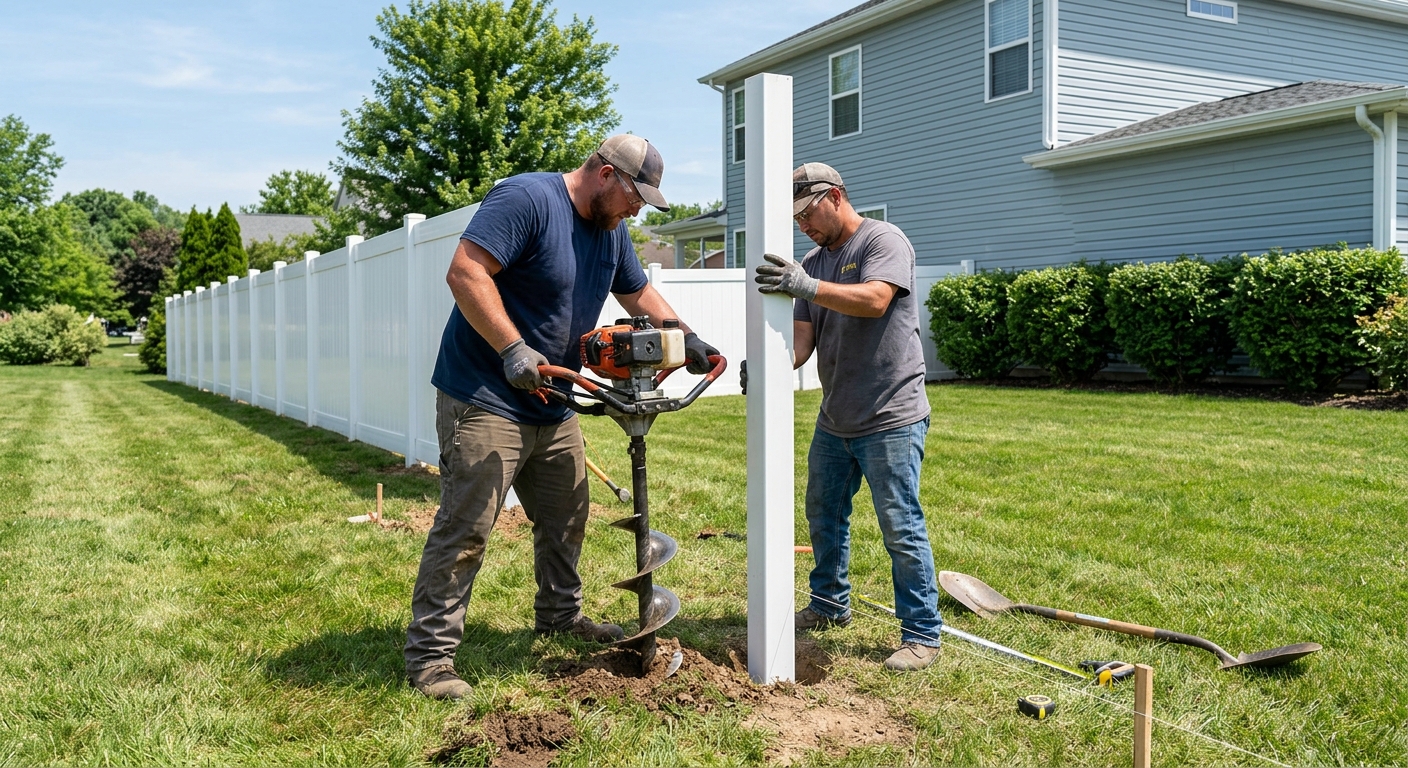
Pricing here is shaped by Calgary’s Prairie continental climate: long freeze–thaw cycles create frost-heave risk, and the wind-exposed setting increases the chance of racking and loosening unless posts are braced and set properly. That means wood and vinyl privacy fences typically cost more than open-air systems, because solid panels catch wind and require closer post spacing and fully concreted footings for stability. On top of that, digging for frost protection in Alberta commonly means setting posts about 4 ft (≈120 cm) deep, which increases excavation time, concrete volume, and labour compared with milder regions.
To compare common materials for Callaghan homes, here are realistic lifespan expectations and typical installed price bands per linear foot, which align with the local market ranges contractors see across Calgary and nearby communities.
| Material |
Lifespan |
Maintenance |
Privacy Rating |
Price per Linear Foot |
Price Range |
| Pressure-treated pine (standard wood) |
10–15 years |
Stain/seal every 2–3 years |
High (privacy panels) |
$40–$80 |
$40–$80 |
| Cedar (natural rot resistance) |
15–25 years |
Light sealing every 3–5 years (often) |
High (privacy panels) |
$55–$95 |
$55–$95 |
| Vinyl / PVC (no-maintenance) |
20–30 years |
Rinse only; occasional cleaning |
High (solid pickets/rails) |
$45–$90 |
$45–$90 |
| Chain-link (galvanized steel) |
25–35 years |
Minimal; rinse/remove rust spots if needed |
Low–Medium (with privacy inserts) |
$25–$55 |
$25–$55 |
| Aluminum ornamental |
30–40 years |
Rinse only; occasional touch-ups |
Low (decorative visibility) |
$70–$120 |
$70–$120 |
| Composite / recycled material |
20–30 years |
Low; wash as needed |
High (solid designs) |
$60–$110 |
$60–$110 |
Prices are estimates only and vary by project scope, site access and material selection.
What affects the price of fencing in Callaghan
In Callaghan, two quotes for what looks like the “same fence” can swing by 30–50% because Alberta jobs are won or lost on the unseen factors: frost-depth setting, wind resistance requirements, and how difficult your site is to excavate. Even when you choose a similar material, contractors may be pricing different post spacing, different concrete volumes, or different grade-behaviour solutions (stepped vs. raked panels). In the Calgary economic region, solid privacy fences often need heavier post construction and secure anchoring due to Prairie wind exposure, while chain-link typically lets more air pass and can be installed with a lighter structural approach.
Frost line depth is the big driver. In cold regions, posts typically need to be set about 4–6 inches below the design frost depth to prevent heaving, which translates into deeper holes and longer posts (often roughly 1.5–2.0 m into the ground). That increases concrete setting, labour time, and—sometimes—delivery surcharges for extra-length lumber. Wind exposure also drives tighter post spacing and sturdier rails for wood and vinyl privacy, which pushes you toward the mid-to-upper end of wood and vinyl bands (for example, wood often lands around $40–$80, while vinyl commonly lands about $45–$90).
In Callaghan, you’ll also see cost differences from the yard conditions. A flat backyard with easy truck access typically comes in closer to the low end of the band; a sloped lot or a fenced perimeter that requires more stepped panels can add time and labour. If you’re removing an old fence, hauling debris off-site adds disposal costs and increases crew time. As a concrete example: replacing a 30 ft run of chain-link may stay closer to $25–$55 per linear foot, while switching to a 6 ft privacy system usually lands higher because the structural and footing requirements are more demanding in freeze–thaw cycles.
| Price Factor |
Why It Matters |
Cost Impact |
| Fence length in linear feet |
Labour and materials scale directly with footage |
Largest overall variable |
| Post depth required |
Frost protection determines hole depth and post length |
Can noticeably increase total cost |
| Post setting method |
Concrete vs. gravel pack vs. driven posts affects stability |
Concrete-set jobs are typically higher |
| Material choice |
Different component costs and structural needs |
Vinyl/cedar often mid–upper; chain-link lower |
| Gate count and type |
Gates require heavier hardware and framing |
Double drive-through gates cost more than walk-through |
| Grade and terrain |
Slope needs stepping or raked panel design |
Adds labour and sometimes extra materials |
| Old fence removal and disposal |
Demo time, hauling, and tip fees |
Often adds cost beyond the new build |
| Permit fees and survey / property line locate |
Administrative and locate work for compliance |
May add a few hundred dollars to more |
Permits & regulations in Alberta
In Alberta, fences over a height threshold—commonly around 2.0 m (6.5 ft) at the rear and about 1.0–1.2 m (3–4 ft) at the front or corner—often require a building permit, but the exact trigger can vary by local bylaws. Regardless of permit needs, your fence must respect property lines and any municipal setback rules for your lot. Before digging post holes, you must also arrange utility locates; if you’re in Callaghan, call the appropriate provincial one-call service so underground lines are marked before excavation.
A practical starting point: obtain a survey or confirm your property pins/locate points before installing, especially if your old fence has shifted over time. This helps you avoid encroachment disputes. Shared fence ownership matters too; line fences are handled under Alberta’s provincial line-fences legislation, so if your fence is on or near a boundary, plan for the shared-responsibility conversation early.
Here’s what typically DOES require a permit: taller solid privacy fences (around the rear 2.0 m threshold), and any project that clearly exceeds the local height limits or alters a fence near a corner/visibility area. What typically does NOT require a permit: shorter, garden-style or open fencing that stays below the height threshold, though you still need to follow setbacks and property line rules.
To verify your contractor in Alberta, ask for: (1) their Alberta business/contracting registration or licence information (check the relevant online registries), (2) proof of liability insurance (request a current certificate), and (3) WSIB/WCB coverage evidence where applicable. If you can’t get the clearance letter or certificate details, treat that as a red flag and request written documentation before work starts.
Choosing the right fence material for Callaghan
For Callaghan homeowners, the best fencing material is the one that matches your priorities—privacy, low maintenance, budget, and lifespan—while still coping with Alberta’s freeze–thaw cycles and Prairie wind. Pressure-treated pine is often the most budget-friendly way to get a privacy fence, but it needs staining or sealing every 2–3 years to slow grey weathering and protect the wood from moisture cycling. Cedar costs more up front, yet it naturally resists rot and tends to look better for longer with less intensive maintenance (still, it benefits from periodic sealing). Vinyl/PVC offers true low maintenance in everyday life, but it can become brittle or stress-crack if panels are installed without proper post spacing and tension for cold-weather performance—so proper installation matters as much as the material. Chain-link is the lowest cost and longest-life option, but it offers little privacy unless you add an insert or screen.
Post depth is the common denominator. Because Calgary’s frost protection requirements are strict, contractors typically set posts deep enough to sit below the regional frost line; that can mean concrete-set footings for many privacy and gate locations, not just for wood. In wind, solid panels create higher lateral loading, so 6 ft privacy systems often need sturdier posts and fully concreted bases to prevent racking.
A real cost justification example: if you’re comparing pressure-treated pine to vinyl for a 40 ft run, you might see wood around the $40–$80 per linear foot range versus vinyl around $45–$90. If you plan to keep the fence 15–20 years and don’t want to deal with frequent staining, the incremental cost of vinyl can be justified—especially where long winters make scheduled maintenance harder. If your budget is tighter and you’re comfortable with periodic staining, wood can be the better value.
| Material |
Cold Tolerance |
Lifespan |
Annual Maintenance |
Best For |
Price Band |
| Pressure-treated pine |
Good (with proper sealing and stable posts) |
10–15 years |
Seasonal inspection; seal/stain every 2–3 years |
Budget privacy with manageable upkeep |
$40–$80 |
| Cedar |
Good (rot-resistant in moisture cycles) |
15–25 years |
Light sealing every 3–5 years (often) |
Better look and natural rot resistance |
$55–$95 |
| Vinyl / PVC |
Fair–Good (installation quality matters in extreme cold) |
20–30 years |
Rinse/clean as needed; no staining |
Low maintenance privacy in Alberta winters |
$45–$90 |
| Chain-link |
Excellent (metal components handle freeze–thaw well) |
25–35 years |
Minimal; wash off debris occasionally |
Security with airflow; pets/dog runs |
$25–$55 |
| Aluminum ornamental |
Excellent (powder-coated metals resist weather) |
30–40 years |
Rinse and check hardware annually |
Curbs/front yards with long-term durability |
$70–$120 |
| Composite / recycled |
Good (designed for cold use) |
20–30 years |
Low; wash as needed |
Privacy with reduced maintenance |
$60–$110 |
How to choose a fencing contractor in Callaghan
When you hire a fencing contractor in Callaghan, verify the basics before you ever sign. In Alberta, you want proof of the contractor’s Alberta registration/licensing (as applicable for fencing trade work), current liability insurance, and evidence of WSIB/WCB coverage where required. How to check: request a recent certificate of insurance (it should show your contractor’s name and policy dates) and confirm the insurer details match the company on the quote. For clearance/coverage, ask for the most current WSIB/WCB documentation and clearance letter—don’t accept “we’re covered” without paperwork.
Next, get 2–3 itemised written quotes that break down labour and materials instead of one lump-sum number. Ask whether concrete footings are included for all posts or only specific locations (like corners and gates), how post depth will be handled for Alberta frost protection, and whether disposal/dump fees are included. A good scope should clearly state what’s excluded: removing the old fence, grinding fasteners, landscaping restoration, extra concrete supply, or restoring turf/rock after excavation.
Warranty matters in fencing because wind and frost are hard on installations. Look for a workmanship warranty (often 1–2 years minimum in many markets) plus the product/manufacturer warranty for rails, pickets, and hardware. Ask if it’s transferable to future owners. For payment, never pay more than 10–15% upfront; use a holdback until key milestones are complete—like post setting, base alignment, and a final walk-through.
Finally, request a start date and a completion estimate in writing. In Prairie climates, crews plan around ground conditions; a realistic timeline helps you avoid winter stoppages and re-mobilization costs.
- Request their current Alberta documentation and confirm the legal entity on the quote.
- Verify liability insurance with an up-to-date certificate (policy dates match current work).
- Confirm WSIB/WCB coverage with clearance documentation before work starts.
- Get an itemised quote: post footings, concrete, rails, pickets, gates, and fasteners.
- Ask how deep posts will be set for frost protection and whether concrete is included.
- Confirm gate reinforcement details (double gates need heavier framing and hardware).
- Check whether old fence removal and disposal are included or billed separately.
- Ask about utility locate responsibility (and whether they won’t dig before marking).
- Confirm how they handle slopes: stepped sections vs. raked panels.
- Ask what grade/soil conditions qualify for a gravel pack alternative (if offered).
- Review warranty: workmanship duration, exclusions, and product warranty transferability.
- Use a payment schedule with a holdback until alignment and final clean-up are done.
Red flags I see too often in Callaghan: contractors who won’t show insurance documents, quotes that don’t mention post depth or concrete setting, vague scopes that omit gate framing or disposal, “cash-only” terms with high upfront payments, and plans that ignore utility locates and property line verification—especially where an old fence may have drifted over the years.
Frequently asked questions — fencing in Callaghan
How long does fence installation take in Callaghan?
In Callaghan and the wider Calgary region, most standard backyard installs take anywhere from 1–3 days, assuming straight runs, accessible yard access, and typical ground conditions. A smaller run of chain-link or a short panel privacy fence can be quicker, while a 6 ft privacy fence with deeper concreted posts, multiple gates, and slope adjustments often takes longer because excavation and cure planning are built into the schedule. Weather matters too: during freeze–thaw periods, crews may pause excavation when the ground is too hard or overly wet. If you’re doing old fence removal and disposal, add time for demo and hauling. For planning, book your start date early in the season and confirm the crew’s completion estimate in writing.
Can I install a fence on a slope in Callaghan?
Yes—sloped yards are common in Callaghan, but the installation method affects both cost and appearance. Contractors usually handle slopes using stepped panels (keeping each section level) or raked panels (following the slope with a consistent top line where feasible). Stepped designs are more common for privacy fencing when you want accurate height compliance and strong wind performance. The trade-off is extra labour to measure and cut sections consistently, and sometimes additional rails or framing. If you have a steep grade, deeper post setting and extra bracing may also be required to prevent twisting during freeze–thaw cycles. Expect pricing to land toward the higher end of the band—often closer to the mid-range of wood or vinyl ($40–$80 for many wood jobs and $45–$90 for many vinyl jobs)—when slope complexity is included.
What is the most weather-resistant fence for Callaghan's climate?
For Alberta weather resilience, a well-installed chain-link fence typically offers excellent longevity because it tolerates freeze–thaw without rot, and galvanized steel holds up well in Prairie conditions. For homeowners who need privacy, vinyl or cedar can also be very durable when posts are set properly below the frost influence and when wind loading is accounted for with correct spacing and sturdy rails. The “most resistant” choice often comes down to what you’re willing to maintain: wood needs periodic sealing/staining to resist moisture cycling, while vinyl is low-maintenance but still relies on proper installation in cold snaps. If you want a practical comparison, chain-link commonly sits at the lower end of typical installed pricing ($25–$55 per linear foot), while privacy materials like vinyl or wood usually land higher due to wind structure and deeper post requirements.
How do I prevent wood fence rot in Callaghan?
Wood rot prevention in Callaghan is mostly about keeping water out of the fence system and reducing moisture cycling. First, ensure proper post setting for Alberta’s frost protection—posts should be set deep enough and supported so they aren’t wicking water at the ground line. Use pressure-treated lumber where specified, and make sure the contractor installs rails and pickets so water can drain instead of pooling. Second, commit to staining or sealing: many pressure-treated pine fences need re-staining every 2–3 years to slow grey weathering and surface damage. Cedar also benefits from periodic maintenance, even though it’s naturally rot-resistant. Finally, avoid direct contact between wood components and soil. If your existing fence is already showing sagging, wind looseness can create gaps that accelerate rot, so addressing structural issues early is key.
What is the cost per linear foot for fencing in Callaghan?
Typical installed fencing pricing in Callaghan (within the Calgary economic region market) usually falls into clear bands: chain-link often comes in around $25–$55 per linear foot, while wood and vinyl privacy fences commonly fall around $40–$80 and $45–$90 per linear foot respectively, depending on height, post spacing, and how difficult the excavation is. Aluminum ornamental is usually higher at about $70–$120 per linear foot. Those per-foot figures reflect Alberta’s reality—post holes must be set deep enough for frost protection, which increases concrete and labour, and solid panels need stronger structure for Prairie wind. Your final number can still vary based on gate count, slope, old fence removal, and property line verification.
Should I repair or replace my old fence in Callaghan?
In Callaghan, repairing is often worth it when the fence posts are solid, the rails aren’t badly racked, and the damage is limited to pickets or a section near a gate. If you’re seeing leaning posts, widespread rot at the bottom of boards, or repeated looseness after wind events, replacement is usually the better long-term value because deeper frost-safe post setting may be required. A strong indicator: if the fence line has heaving or gaps that keep widening after freeze–thaw cycles, patch repairs can fail quickly since the structure isn’t stable. When estimating, ask contractors to assess alignment and footing condition before quoting—sometimes a partial replacement (posts and sections only) can bring the project closer to the lower cost band than a full rebuild. For many homeowners, the decision comes down to whether you can restore structural stability versus paying for ongoing maintenance.