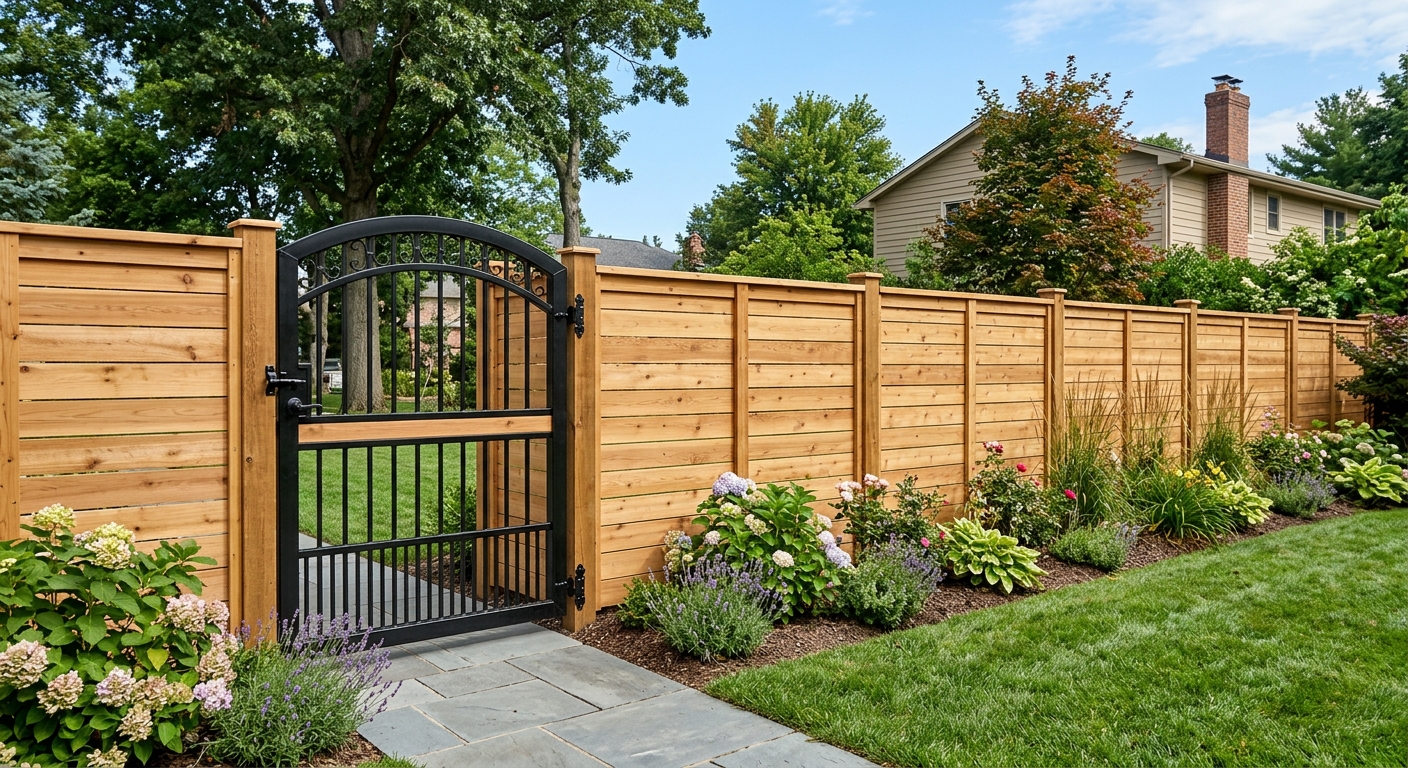
Fencing options and costs in Edson
Edson homeowners usually start with one simple question: what kind of fence fits the yard—and what will it cost. With 8,374 people in town (Statistics Canada, 2021 Census) and about 2,350 homeowner households with ownership at 69.4%, you’re in an active market where detached homes—60.6% of dwellings—generate steady demand for backyards, side-yard setbacks, and perimeter upgrades.
In the Banff–Jasper–Rocky Mountain House economic region, fence pricing is shaped by cold-climate, mountain-foothills conditions. Posts typically need to be set at least 4 ft deep (often deeper in exposed pockets) to resist frost heave, and crews generally set posts in concrete rather than tamped gravel to handle freeze–thaw cycles and lateral load. Wind also matters around Edson: exposed corners and snow-laden runs tend to push contractors toward shorter bays and heavier rails for solid fences, while open designs like chain-link can be a bit more forgiving.
Where you feel the work most is along the edges of town and toward access routes used by rural properties—especially around the outskirts where lots are larger and yards are more exposed to winter wind. If your current fence line also runs close to a driveway or creates a wind break for the home, that typically increases labour time.
Below is a practical cost comparison that you can use as a baseline before you request itemised quotes.
| Material |
Lifespan |
Maintenance |
Privacy Rating |
Price per Linear Foot |
| Pressure-treated pine (standard wood) |
12–20 years |
Stain/seal every 2–3 years |
High (solid boards) |
$45,–$85 |
| Cedar (natural rot resistance) |
18–25 years |
Light stain or oil 1–3 years |
High (solid boards) |
$60,–$105 |
| Vinyl / PVC (no-maintenance) |
25–35 years |
Wash as needed; check fasteners |
High (privacy styles) |
$60,–$110 |
| Chain-link (galvanized steel) |
20–30 years |
Minimal; rinse and inspect |
Low–medium (open mesh) |
$30,–$55 |
| Aluminum ornamental |
25–40 years |
Occasional wash |
Low–medium (semi-open) |
$70,–$130 |
| Composite / recycled material |
20–30 years |
Minimal; clean and inspect |
High (privacy panels) |
$75,–$125 |
Prices are estimates only and vary by project scope, site access and material selection.
What affects the price of fencing in Edson
Two fence quotes for the “same” job can vary by 30–50% across Alberta because the underlying site conditions in the Banff–Jasper–Rocky Mountain House region often force different post lengths, different concrete quantities, and different labour methods. In Edson, the big swing factors are freeze–thaw ground movement and wind exposure, not just the fence material. A wood privacy fence on a windy corner with rocky soil can be priced closer to vinyl once you account for deeper concrete-set posts, heavier rails, and tighter spacing.
Frost depth is the first driver. In cold Alberta, posts are commonly set about 4–6 inches below design frost depth to prevent heaving. Practically, that usually means posts need to go roughly 1.5–2.0 m into the ground, which increases both hole depth and the amount of concrete used per location. Longer posts also increase material cost. Wind exposure can then push engineering choices: tighter bays and heavier rails for solid wood or vinyl, while chain-link often uses wider mesh spacing without the same panel “sail” effect. In milder climates, contractors can get away with shallower footings; here, they generally can’t.
Local examples that raise cost in Edson: (1) compacted glacial/rocky pockets where augering takes more time and spoils must be removed and hauled; (2) sloped yards that require stepped or raked panels, increasing labour and sometimes end-frame hardware. Cost can go down when the fence line is short, level, and accessible—like a straight run between two existing structures—because crews work faster and use fewer special fittings.
If you’re comparing budget bands, chain-link often lands around $30,–$55 per linear foot for materials and install basics, while privacy styles like vinyl or cedar commonly move into the $60,–$110 band as footing and bracing requirements increase.
| Price Factor |
Why It Matters |
Cost Impact |
| Fence length in linear feet |
The more linear feet, the more posts, rails, and labour time |
Highest impact; drives most of the total |
| Post depth required |
Frost heave resistance determines hole depth and post length |
Deeper posts can add material + labour significantly |
| Post setting method |
Concrete vs. gravel pack vs. driven posts affects stability |
Concrete-setting usually increases cost but reduces long-term lean |
| Material choice |
Vinyl/cedar need framing and bracing tuned for wind; chain-link is lighter |
Material band differences plus hardware complexity |
| Gate count and type |
Drive-through double gates require heavier posts and diagonal bracing |
Gates often cost more than expected per linear foot |
| Grade and terrain |
Slopes require raked/stepped sections and extra layout time |
Higher labour; more fittings and waste |
| Old fence removal and disposal |
Hauling and load-out time adds to the scope |
Can add a noticeable line item |
| Permit fees and survey / property line locate |
Clearances and accurate layout prevent costly rework |
Variable; can add time and administrative cost |
Permits & regulations in Alberta
In Alberta, fences above typical height thresholds often require a building permit: commonly, rear fences are at 2.0 m (6.5 ft) and front/corner fences are around 1.0–1.2 m (3–4 ft). Exact rules can vary by municipality in Alberta, so Edson homeowners should confirm the local bylaw and setback requirements before you order materials. In all cases, you must keep fencing within your property lines and respect municipal setbacks.
Before any digging, call for utility locates through Alberta One-Call (the same “call before you dig” principle used statewide). You should also obtain a survey or locate your property pins first. This helps avoid disputes when neighbours’ lines don’t match a previous fence placement.
Shared fence ownership and maintenance are handled under Alberta’s line-fences legislation principles. When a fence is considered “shared,” each party may have rights and responsibilities regarding upkeep and cost sharing—so it’s smart to document who maintains what and how repairs are handled.
What usually DOES require a permit: fences over common height thresholds, and any structure combined with the fence that changes site conditions (for example, certain gated/attached structures). What typically does NOT: replacing like-for-like fencing that stays within permitted heights and the approved footprint, provided you still respect property lines and setbacks.
For contractors, Edson homeowners can verify credentials by (1) checking an online Alberta contractor licence registry entry, (2) requesting a current certificate of insurance with liability limits appropriate for your project, and (3) confirming WSIB/WCB coverage information on their certificate (and asking for the clearance letter number where applicable).
Choosing the right fence material for Edson
Choosing fence material in Edson comes down to your priorities—privacy, low maintenance, budget, and how long you want the fence to look good through Alberta winters. Pressure-treated pine is often the budget entry, but it typically needs staining or sealing every 2–3 years to slow down greying and surface breakdown. Cedar looks better longer and has natural rot resistance, but it still benefits from periodic staining/oiling to maintain colour and reduce weathering. Vinyl/PVC is the classic “set it and forget it” option, yet in extreme cold it can crack if the fence is under-designed for wind load or if posts aren’t deep and properly set. Chain-link is the lowest cost and lasts well, but it offers little privacy by itself. Aluminum ornamental sits mid-to-higher in cost, doesn’t rust like iron, and suits windy areas because it’s lighter and more open to airflow.
Because the Banff–Jasper–Rocky Mountain House region expects frost movement, the post-depth requirement is the foundation of every material choice. Regardless of wood or vinyl, contractors should set posts in concrete and typically run holes deep enough to avoid heave—often at least 4 ft and frequently deeper in exposed pockets. For wind, privacy styles (solid wood/vinyl/composite) generally need tighter post spacing and sturdier rails than open designs like chain-link.
To see where the price difference is justified: if chain-link is around $30,–$55 per linear foot, upgrading to vinyl privacy (often $60,–$110) can be worth it when you want year-round privacy and wind-screening. You’re paying for more robust framing and deeper, concrete-set posts—not only the vinyl itself.
Snow load and wildlife are additional considerations—especially if you have a narrow yard with drift-prone corners. A properly installed fence line, with good bracing and correct post setting, prevents the gradual lean you see when snow and wind attack a weak top rail.
| Material |
Cold Tolerance |
Lifespan |
Annual Maintenance |
Best For |
Price Band |
| Pressure-treated pine |
Good with proper post depth and staining |
12–20 years |
1–2 visits per year for inspection; stain every 2–3 years |
Budget-conscious privacy |
$45,–$85 |
| Cedar |
Excellent natural resistance to rot |
18–25 years |
Inspection; stain/oil 1–3 years |
Appearance-focused privacy |
$60,–$105 |
| Vinyl / PVC |
Good if engineered for cold + wind |
25–35 years |
Wash as needed; check rails/fasteners |
Low-maintenance privacy |
$60,–$110 |
| Chain-link |
Very good; less panel stress in cold |
20–30 years |
Minimal rinse/inspection |
Security with visibility |
$30,–$55 |
| Aluminum ornamental |
Excellent (no rust) |
25–40 years |
Occasional wash |
Curb appeal + durability |
$70,–$130 |
| Composite / recycled |
Good; performs well with solid framing |
20–30 years |
Low—clean and inspect |
Long-life privacy without wood rot concerns |
$75,–$125 |
How to choose a fencing contractor in Edson
Choosing a contractor in Edson is about verifying credentials and locking down scope before anyone starts digging. First, confirm Alberta licensing (where required for the contractor’s classification), then request liability insurance and proof of WSIB/WCB coverage. Ask to see the certificate of insurance and verify it matches the company name on the contract. If you’re unsure, call the insurer listed on the certificate to confirm it’s active for the policy period. For WCB/WSIB coverage, look for the certificate details and clearance information included in their paperwork—your quote should reflect that they’re covered for work on your property.
Next, get 2–3 itemised written quotes. You want a breakdown that separates labour, posts (length/depth assumptions), concrete quantity allowance, rails/bracing, gates, and disposal/removal. Avoid lump-sum quotes that don’t specify what’s included—especially in Edson’s cold climate where deeper holes and concrete setting can change the install cost materially.
Read the scope carefully: ask whether permit pulls are included (when required), whether site grading is included, and whether old fence removal and dump fees are included. Clarify warranty: you should receive a workmanship warranty length (how long they stand behind installation) and understand the manufacturer warranty for the materials. Also ask if the product warranty is transferable to you if you sell the home.
For payment, never pay more than 10–15% upfront. Hold back a portion until the job is complete and the line is tensioned, level/stepped correctly, and gates latch as intended. Timeline matters here too—get a start date and a completion estimate in writing, since weather can affect footing work around freeze–thaw periods.
- Provide an Alberta contractor licence number and confirm it matches the quote
- Show active liability insurance (certificate and policy validity dates)
- Confirm WCB/WSIB coverage details on documentation
- Use itemised quotes: posts, concrete, rails, mesh/boards, gates, disposal
- State assumptions about post depth (frost-related) and setting method (concrete vs. alternative)
- Confirm how they handle slopes (stepped vs. raked panels)
- List included fasteners and bracing for wind exposure
- Specify whether old fence removal and dump/disposal fees are included
- Clarify permit responsibility and who submits, when permits are needed
- Document warranty: workmanship term and manufacturer coverage
- Payment schedule: 10–15% max upfront; holdback until final walkthrough
- Schedule: written start/completion dates and contact plan for changes
In Edson, red flags include: a contractor who refuses to provide insurance/WCB documents; quotes that don’t specify post depth or concrete setting; “lump sum only” pricing with no line items for gates or removal; starting excavation before utility locates and property-pin verification; and a warranty that’s limited to “materials only” with no workmanship coverage.
Frequently asked questions — fencing in Edson
How long does a wood fence last in Edson?
In Edson and the wider Banff–Jasper–Rocky Mountain House region, a wood fence usually lasts about 12–20 years for pressure-treated pine and closer to 18–25 years for cedar when it’s built for cold conditions. Longevity depends heavily on post depth and setting: posts typically need to be installed deep enough to resist frost heave and are usually set in concrete for stability through freeze–thaw cycles. Maintenance matters too—pressure-treated pine generally needs staining every 2–3 years to slow weathering and surface breakdown. If your yard is exposed to winter wind or snow drifting, heavier rails and tighter spacing can also extend service life.
Who owns and maintains a shared fence?
In Alberta, shared fence responsibilities are guided by the province’s line-fences legislation principles. Practically, the rule of thumb is that if a fence is considered shared between neighbouring properties, the neighbours typically share maintenance expectations, and repairs may be cost-shared depending on circumstances. The key for Edson homeowners is to clarify the fence’s status before you replace anything: identify which sections are actually on the property line and confirm what you and your neighbour agree on. Keep a written record of who maintains the fence and how repairs will be handled, especially if the replacement is driven by warping, lean, or wind damage in winter.
How do I find my property line before fencing?
The safest approach in Edson is to locate the property pins from your survey or arrange a survey if you don’t have one. Even if you inherited a lot with an older fence, it may not be exactly on the line. Before any digging, ensure Alberta One-Call utility locates are completed so you don’t hit service lines during post holes. Once pins are located, you can mark the line with your contractor’s layout tools and confirm setbacks. Doing this early prevents expensive rework—especially because deeper post holes tied to frost protection can’t be easily “fixed” after the fact.
What's the most low-maintenance fence?
For most Edson homeowners, vinyl/PVC is the most low-maintenance option because it doesn’t need staining like wood. In the region’s cold winters, vinyl can still perform very well as long as the fence is engineered for wind and the posts are set correctly. Chain-link is also low maintenance—typically with minimal upkeep—though it won’t provide privacy by itself. If you’re choosing between bands, vinyl privacy commonly sits around $60,–$110 per linear foot, while chain-link often comes in around $30,–$55 per linear foot. The “low-maintenance” choice depends on whether you need privacy or just security.
How tall can my fence be in Edson?
In Alberta, fence height thresholds commonly trigger permitting and additional restrictions, so you should confirm the local requirements for Edson and the fence’s location (front, rear, or corner). A typical guideline homeowners hear is that rear fences around 2.0 m (6.5 ft) may require a permit, while front/corner heights around 1.0–1.2 m (3–4 ft) are often capped without additional approval. Beyond height, setbacks from property lines and proximity to corners/driveways matter. A reputable contractor will ask for the planned height and location before bidding and can advise what documentation is likely needed.
Should fence posts be set in concrete here?
In Edson’s cold-climate, mountain-foothills conditions, concrete-set posts are strongly recommended for long-term stability. The reason is frost: deeper holes and solid footing resist freeze–thaw movement that can cause heaving and lean over time. While some milder areas may use tamped gravel or other methods, the Banff–Jasper–Rocky Mountain House region’s ground movement is a different challenge. Concrete also improves resistance to lateral load from wind and snow impacts. When you’re comparing quotes, make sure they specify both post depth and the setting method—those details are often where costs and outcomes diverge the most.