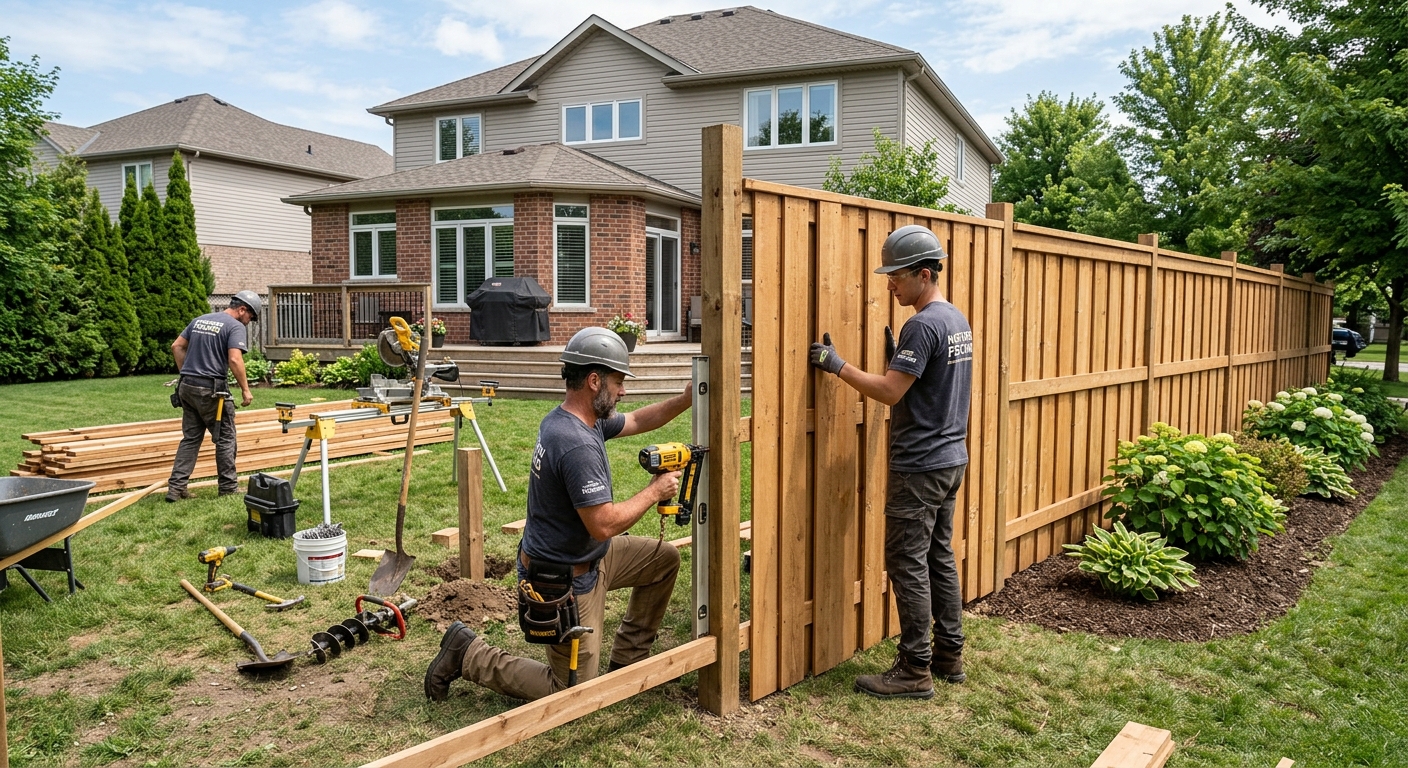
Fencing options and costs in Country Hills Village
In Country Hills Village, Alberta, choosing the right fence usually comes down to how much privacy you want, how long you need it to last, and what you’re willing to spend up front. With a population of about 2,480 people (Statistics Canada, 2021 Census), the neighbourhood’s housing demand is driven by steady residential turnover and ongoing yard upgrades. In a Calgary-area market like this, fencing is also closely tied to single-family property patterns—each detached home represents a potential project, which is why reliable contractors tend to stay busy around the seasonal building season. You’ll often see the strongest trade demand in areas with more exposed yards and corner lots, where wind and snow drift make fence stability and gate hardware especially important.
Pricing in Country Hills Village reflects the wider Calgary economic region’s Prairie continental climate: long freeze–thaw cycles and strong wind loading are the two cost drivers that separate “cheap” installs from fences that remain straight. Local guidance typically expects posts to be set roughly 4 ft (about 120 cm) deep to sit below the frost line, and on many projects that means concreted footings, not just gravel backfill—particularly for 6 ft privacy fences and gate posts. That adds excavation time, concrete volume, and labour, which is one reason fence quotes can vary even when the fence length looks similar. For homeowners, that’s also why light, open systems like chain-link usually land lower than solid wood or vinyl privacy panels.
Use the comparison table below to benchmark material choices, then we can narrow the range based on your fence height, ground conditions, and gate count.
| Material |
Lifespan |
Maintenance |
Privacy Rating |
Price per Linear Foot |
| Pressure-treated pine (standard wood) |
15–20 years |
Stain/seal every 2–3 years; fasten checks after winters |
High (solid panels) |
$40–$70 |
| Cedar (natural rot resistance) |
20–25 years |
Light staining every 3–4 years; periodic hardware tightening |
High (solid panels) |
$55–$85 |
| Vinyl / PVC (no-maintenance) |
25–30 years |
Wash as needed; inspect posts/fasteners after freeze–thaw cycles |
High (solid infill) |
$55–$90 |
| Chain-link (galvanized steel) |
25–35 years |
Minimal; rinse salt/dust (if applicable) and check tension |
Low–Medium (open mesh) |
$25–$55 |
| Aluminum ornamental |
30–40 years |
Rinse/clean 1–2 times per season; check gate alignment |
Low–Medium (ornamental pickets) |
$70–$120 |
| Composite / recycled material |
25–30 years |
Low; occasional wash; inspect for warping at ground contact |
High (solid styles available) |
$65–$100 |
Prices are estimates only and vary by project scope, site access and material selection.
What affects the price of fencing in Country Hills Village
Fence quotes for what looks like the same project can differ by 30–50% across Calgary and the broader Alberta market because the “hidden” drivers—post depth, wind-rated spacing, gate hardware, and site conditions—change the amount of labour and materials. In the Calgary region, contractors generally must plan for freeze–thaw movement and Prairie wind: that means posts often need to be set about 4–6 inches below the design frost depth and, in practice, posts commonly end up roughly 1.5–2.0 m into the ground. Once you add concrete setting and longer posts, material costs rise and excavation takes longer, even before you consider the fence style.
Wind exposure on the Prairies also influences structural design. Solid wood or vinyl privacy fences typically require tighter post spacing and sturdier rails to resist racking, whereas chain-link lets wind pass through. That structural difference is why chain-link frequently prices toward the lower-mid range (for example, $25–$55 per linear foot), while wood and vinyl privacy systems often land in the middle-to-upper band (for example, $40–$80 for wood installation and $45–$90 for vinyl/PVC).
In Country Hills Village specifically, these examples often push costs up or down: (1) if your yard has compacted clay, excavation for deep holes may take longer and require additional labour than softer topsoil; (2) if your fence line includes multiple gates, the concrete and hardware build-up for drive-through doubles the structural work; (3) if the run is on uneven ground with a noticeable slope, stepped panels or raked rails increase material waste and installation time. As a rough dollar illustration, it’s not unusual for a gate-heavy layout to add several thousand dollars even when the total linear footage looks modest, because the concrete-set post pairs, hinges, and latches become the “real” cost drivers.
| Price Factor |
Why It Matters |
Cost Impact |
| Fence length in linear feet |
Most costs scale directly with total linear feet (materials + labour + post count) |
High (typically the biggest single driver) |
| Post depth required |
Frost line determines hole depth and post length to reduce heaving |
High; deeper holes often add concrete and time |
| Post setting method |
Concrete vs. gravel pack vs. driven posts changes stability and durability |
Medium–High; concrete generally increases cost |
| Material choice |
Vinyl/cedar/wood have different rail sizes, fastening, and panel systems |
Medium–High; drives your unit price band |
| Gate count and type |
Drive-through double gates require stronger framing, hinges, and often more posts |
Medium–High; gates are labour- and hardware-intensive |
| Grade and terrain |
Slope requires stepped or raked panels to maintain a consistent top line |
Medium; increases layout time and material waste |
| Old fence removal and disposal |
Hauling, salvaging, and dealing with sunk posts add time |
Low–Medium; varies by how difficult the old posts are to remove |
| Permit fees and survey / property line locate |
Some fence heights/configurations may need permitting and/or accurate boundary verification |
Low–Medium; essential to avoid encroachment disputes |
Permits & regulations in Alberta
In Alberta, fence requirements can change based on height, location (front vs. rear), and municipal rules. As a practical homeowner guide for Country Hills Village, fences above a height threshold—often around 2.0 m (6.5 ft) at the rear and about 1.0–1.2 m (3–4 ft) toward the front or corners—may require a building permit. Even when a permit isn’t required, you still must respect property lines and any local setback bylaws that apply to fences.
Before any post-hole digging, call for utility locates through Alberta One-Call so you don’t hit buried services. Also consider a survey or property line locate (pin verification) before installation—fence disputes are common when the original boundary marking was never confirmed. Shared fence ownership is governed by provincial line-fences legislation, so if your run touches a neighbour’s boundary, clarify ownership and maintenance responsibilities in writing before work begins.
What typically requires a permit: fences at/over the height thresholds noted above, plus any unusual structures (for example, freestanding walls with fence-like panels) that the municipality classifies under its permitting rules.
What typically does not: smaller, standard-height fences that fall below the common thresholds, provided they’re within setbacks and property boundaries and no special structures are involved.
To verify an Alberta fencing contractor, ask for their current licence and proof of liability insurance and coverage for work-related injuries (commonly WCB coverage). Look for these documents in writing: (1) an online registry listing (licence/registration details where applicable), (2) a certificate of insurance showing your project named/covered as applicable, and (3) a clearance letter or confirmation for workers’ compensation coverage. Keep copies in your project file before signing.
Choosing the right fence material for Country Hills Village
Choosing fence material in Country Hills Village is really about matching your priorities to the Prairie climate realities: long freeze–thaw cycles, frequent wind, and snow drift that loads fences sideways. Pressure-treated pine is the budget-friendly option, but it isn’t “set and forget.” To prevent grey weathering and early splitting, most homeowners plan on staining or sealing every 2–3 years. Cedar is often the best-looking natural choice and resists rot better than standard pine, yet it still needs maintenance—usually lighter staining every 3–4 years and regular hardware checks.
Vinyl/PVC is popular for low maintenance and privacy, but it can become brittle if it’s an inferior product or if it’s installed with poor temperature planning and inadequate reinforcement. In Calgary-area freeze–thaw, the bigger risk is not just the material—it’s the post system. If posts aren’t set deeply enough or aren’t concreted for stability, even a high-quality vinyl privacy fence can rack. Chain-link is usually the longest-lasting value with minimal upkeep, especially for dog runs, but it provides low privacy; homeowners often pair it with privacy slats only where permitted. Aluminum ornamental fencing resists rust and looks sharp, though it’s a mid-range cost and won’t give true privacy unless you add screening.
On post depth: following local frost expectations typically means concreted footings for privacy styles (particularly 6 ft fences and gate posts). That structural step is usually more important than the material itself. For wind and snow load, solid panels benefit from stronger rails and closer spacing, while chain-link stays lighter and more forgiving.
For a concrete price justification: if your project estimate for pressure-treated pine lands around $40–$70 per linear foot and vinyl comes in around $55–$90, the extra cost is often worth it when you want fewer maintenance days in spring and prefer washing over staining. If your budget is tight, cedar can be a middle ground—often costing more than pine but less than premium vinyl systems on many installs.
| Material |
Cold Tolerance |
Lifespan |
Annual Maintenance |
Best For |
Price Band |
| Pressure-treated pine |
Good (with proper sealing and fastener checks) |
15–20 years |
Low–Moderate (stain plan every 2–3 years) |
Budget privacy where you’ll maintain the finish |
$40–$80 |
| Cedar |
Good (natural rot resistance improves winter endurance) |
20–25 years |
Low–Moderate (stain/condition every 3–4 years) |
Natural look with better rot resistance than pine |
$55–$85 |
| Vinyl / PVC |
Very good (best when installed on stable, deep posts) |
25–30 years |
Very Low (wash and inspect fasteners) |
Low maintenance privacy in windy, freeze–thaw conditions |
$45–$90 |
| Chain-link |
Excellent (galvanized steel handles cold well) |
25–35 years |
Very Low (tension checks, occasional rinse) |
Security and long life with low privacy needs |
$25–$55 |
| Aluminum ornamental |
Excellent (no rust, stable framing) |
30–40 years |
Very Low (cleaning and gate alignment checks) |
Curb appeal and durable perimeter fencing |
$70–$120 |
| Composite / recycled |
Good (depends on brand and how it’s anchored) |
25–30 years |
Low (wash; inspect ground-contact points) |
Privacy panels with low maintenance requirements |
$65–$100 |
How to choose a fencing contractor in Country Hills Village
When you’re hiring a fencing contractor in Country Hills Village, start by verifying Alberta compliance and real job readiness. Ask for proof of liability insurance (certificate of insurance) and confirmation of workers’ compensation coverage (WCB/WCB clearance documentation). A licence/registration should be verifiable via the appropriate online registry process, and you should receive the contractor’s details—company name, address, and policy documents—in writing before work starts. If the contractor can’t provide these quickly, treat it as a major risk.
Next, get 2–3 itemised written quotes. The best quotes break out labour (excavation, install, gate build/adjustment) and materials (posts, rails, panels, concrete, hardware). Avoid lump-sum numbers that don’t show what’s included. Read the scope carefully: is permit pulling included (if needed), is old fence removal included, and does disposal of debris land in the price or as a separate charge? Also confirm who handles utility locating logistics; your contractor should coordinate it or use your provided locate marks responsibly.
Warranty matters in Alberta’s climate. Ask for a workmanship warranty (commonly a defined period for fence alignment, posts, and installation defects), plus the manufacturer product warranty on boards/panels. Clarify whether the warranty is transferable to future homeowners.
Payment schedule: never pay more than 10–15% upfront, and hold back a portion until the job is complete and gates are properly operating. Timeline matters too—get the start date and a realistic completion estimate in writing, including expected curing time where concrete is used.
- Provide liability insurance certificate showing coverage limits appropriate for fence work.
- Provide WCB/WCB clearance documentation for workers performing installation.
- Give itemised labour/materials breakdown (not just a total fence cost).
- List post depth and setting method (concrete vs gravel pack vs other).
- Confirm gate hardware brand/type and who adjusts alignment after install.
- Specify whether old fence removal and debris disposal is included.
- Confirm permit pulling responsibility and any site survey/locate allowances.
- Include start date, completion estimate, and weather-related schedule approach.
- State what’s excluded: damaged underground lines, retained landscaping, or tree removal.
- Ask for warranty terms in writing: workmanship duration + product warranty details.
- Use a reasonable payment schedule (max 10–15% deposit; retainage on completion).
- Inspect proposed layout: verify measurement points, slope handling (stepped/raked panels), and gate swing direction.
Concrete red flags I see in the Country Hills Village area: contractors who won’t state post depth and concrete setting method, quotes that omit gate hardware specifics, “cash only” payment demands, missing insurance/WCB paperwork, and fencing lines marked without confirming property pins or utility locates. If any of those show up, move on or demand corrections in writing before signing.
Frequently asked questions — fencing in Country Hills Village
How do I compare fencing quotes?
Start by comparing like-for-like scope, not just the total number. Ask each contractor for an itemised quote listing post depth (typical Calgary practice is about 4 ft deep and deep-set footings for privacy runs), post setting method (concrete vs gravel pack), panel type, and gate hardware details. Confirm total linear feet and the number of posts included—wind-rated solid fences often need tighter spacing. Price-wise, ensure the quote sits in the right band for the material: chain-link commonly comes in around $25–$55 per linear foot, while wood installation is often $40–$80 and vinyl/PVC is commonly $45–$90. Finally, check inclusions: permit pull, disposal, and whether the contractor accounts for slope (stepped/raked panels) in their layout. (Statistics Canada, 2021 Census)
How long does fence installation take in Country Hills Village?
Most residential fence installs in Country Hills Village are completed over several days, but the exact duration depends on excavation demands and gate complexity. Deep frost-safe post holes (often around 4 ft down, with concrete setting for privacy fences) add time compared with shallow settings. A straight, single-run chain-link fence might be faster, while a solid privacy fence with multiple gates usually takes longer because of bracing, rail alignment, and hardware adjustments. Weather matters in Alberta: wind can affect panel alignment, and concrete curing time influences when the crew can hang gates and finalize. Ask for a written start date and completion estimate, and confirm whether a late-season freeze plan is included. If your quote includes removal of an old fence, add time for removal and disposal.
Can I install a fence on a slope in Country Hills Village?
Yes, slopes can be fenced in Country Hills Village, but the method needs to be specified. You generally use stepped panels (each section adjusts in “steps”) or raked rails (following the slope while keeping the top line consistent). Stepped fencing is common for solid privacy styles; raked approaches can look cleaner but require careful rail geometry. The cost impact is often moderate because layout time increases and material may be wasted to fit the slope correctly. Your quote should note whether the fence height changes across steps or remains constant. Also confirm how post locations will be set in deep holes on sloped ground—contractors should still follow frost-protection depth rather than reducing hole depth to “level” the ground.
What is the most weather-resistant fence for Country Hills Village's climate?
In Alberta’s freeze–thaw winters and windy Prairie conditions, the most weather-resistant choices are usually those with robust post anchoring and corrosion-resistant materials. Chain-link with properly galvanized steel is typically very durable and low-maintenance, and it often lands in the $25–$55 per linear foot range installed. For privacy, vinyl/PVC can be highly resilient when set on stable, deep posts; it’s commonly $45–$90 per linear foot installed. Wood can be weather-resistant too, but it requires disciplined maintenance—staining/sealing to reduce premature wear after repeated winter cycles. In all cases, the contractor’s post depth, concrete setting, and wind-rated framing are what protect your investment, not just the fence material name.
How do I prevent wood fence rot in Country Hills Village?
Preventing wood fence rot in Country Hills Village starts with eliminating the common rot triggers: moisture at ground contact and poor sealing/finish. Use proper post depth and secure anchoring—privacy fences typically benefit from concrete-set posts so water doesn’t sit around the base. Choose pressure-treated components rated for outdoor use, ensure rails and pickets are fastened correctly (no loose boards that trap snow/water), and apply a quality stain/seal rather than relying on “natural weathering.” Plan for maintenance: many homeowners in Calgary-area climates re-stain or seal every 2–3 years on pressure-treated pine to prevent grey weathering and early fibre breakdown. Also check after heavy winters—tighten fasteners so small gaps don’t become moisture channels.
What is the cost per linear foot for fencing in Country Hills Village?
In Country Hills Village, you’ll generally see installed pricing align with typical Calgary-area bands, driven by frost-safe post depth, wind loading, and gate work. Chain-link commonly ranges about $25–$55 per linear foot. Wood fence installation is often $40–$80 per linear foot, and vinyl/PVC is frequently $45–$90 per linear foot. Aluminum ornamental usually sits at the higher end, commonly about $70–$120 per linear foot, mainly due to material and labour. Your final number can swing based on terrain (slope), how many gates you have, and whether the quote includes old fence removal, disposal, and any permit/survey steps. Get itemised quotes so you can compare the same included scope across contractors.