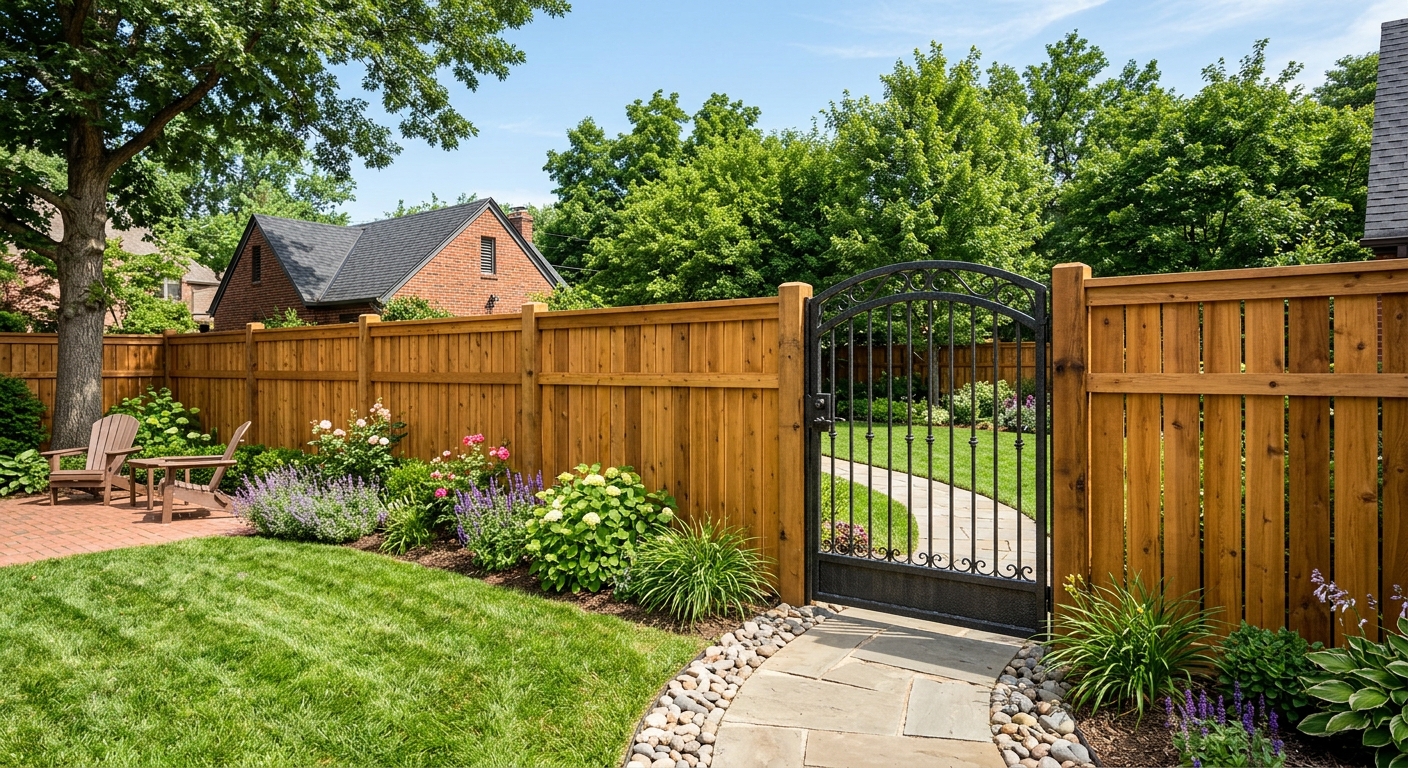
Fencing options and costs in St. Paul
Fencing in St. Paul, Alberta typically starts with a practical question: what level of privacy and how much maintenance are you willing to trade for your budget? With 71.6% of local dwellings being single-detached homes and owner households making up 68.3% of households (Statistics Canada, 2021 Census), many property owners are actively maintaining or upgrading their backyards—so demand is steady across the area, especially around the residential corridors near downtown St. Paul and along Highway 36.
In the Wood Buffalo–Cold Lake economic region, costs can run higher than you might expect from southern Alberta because frost depth and soil conditions require deeper, more stable post installation. In cold climates, posts often must be set below the design frost depth—commonly 4–6 inches (100–150 mm) below that line—to reduce frost heave. That usually means more excavation time, longer posts, and more frequent concrete-set options for rigidity. Prairie wind exposure also matters: taller privacy fences and wider vinyl panels can act like a sail, so contractors often tighten post spacing or recommend sturdier panel systems.
Contractor availability can also affect pricing. When multiple installs line up in the shoulder seasons (before deep freeze or after thaw), labour scheduling and equipment access can add variability, and that’s when homeowners commonly see quote differences.
Use the table below as a quick comparison guide for common materials and what they typically cost per linear foot in St. Paul, then we’ll break down what drives those numbers in your final quote.
| Material |
Lifespan |
Maintenance |
Privacy Rating |
Price per Linear Foot |
| Pressure-treated pine (standard wood) |
10–15 years |
Stain or seal every 2–3 years |
Good (solid picket/boards) |
$18 – $28 |
| Cedar (natural rot resistance) |
15–20 years |
Light staining/finishing every 2–4 years |
Good to very good |
$22 – $36 |
| Vinyl / PVC (no-maintenance) |
20–30 years |
Rinse annually; inspect for cold brittleness |
Very good (solid) |
$24 – $45 |
| Chain-link (galvanized steel) |
25–35 years |
Occasional rinse; tighten hardware as needed |
Low (screening only) |
$13 – $20 |
| Aluminum ornamental |
25–40 years |
Minimal; wash and check brackets |
Low to medium |
$24 – $48 |
| Composite / recycled material |
20–30 years |
Wash as needed; inspect boards for flex |
Good (solid systems) |
$25 – $50 |
Prices are estimates only and vary by project scope, site access and material selection.
What affects the price of fencing in St. Paul
In St. Paul and across the Wood Buffalo–Cold Lake region, it’s common to see the same fencing project quoted 30–50% apart. The big reason isn’t only the material—it’s how deeply the posts must be installed, how windy the layout is, and what your site requires for excavation and panel support.
First, frost depth sets how deep posts must be set. A typical rule we follow is setting posts 4–6 inches (100–150 mm) below the design frost depth to prevent heaving. In northern Alberta conditions, that often translates to post depth requirements around 1.5–2.0 m. Deeper holes mean more labour, more longer posts, and more concrete where stability is needed—so wood installations can land at the higher end of the local band (about $40–$80 installed per linear foot). Vinyl systems can also cost more because more rigid bracing and tighter spacing may be recommended in exposed yards, pushing projects toward the $55–$110 range per linear foot.
Second, Prairie wind exposure drives tighter post spacing and heavier panels for privacy fences. If your fence line runs across an open area (rather than behind trees or buildings), contractors may specify stronger rails, more posts, and hardware rated for wind load. Third, local ground conditions matter: frozen soils and uneven frost heave can increase excavation time, while areas with better soil and easier access can reduce labour.
Here are practical St. Paul examples: a straight 60–80 ft run on level ground with access for a mini-excavator usually prices more predictably. In contrast, a fence along a sloped rear lot with frozen ground and multiple corners can increase excavation time and require stepped/raked rails. If you’re replacing an old fence, removal and haul-away can add a noticeable cost even when the new material choice is mid-range.
With many homes built before 1981 (56.7% of dwellings, Statistics Canada, 2021 Census), we also frequently see older sites where posts were set shallow and existing alignments don’t match modern layouts—meaning more layout time and sometimes additional locates before digging.
| Price Factor |
Why It Matters |
Cost Impact |
| Fence length in linear feet |
Every additional foot adds posts, rails, and labour time. |
Largest driver; scales directly |
| Post depth required |
Frost line determines length and hole depth to reduce heaving. |
Can significantly increase excavation + materials |
| Post setting method |
Concrete vs. gravel pack vs. driven posts affects stability and labour. |
Concrete set usually costs more but performs better in freeze risk |
| Material choice |
Vinyl and cedar cost more than chain-link; strength varies by system. |
Shifts you between common bands (e.g., wood vs. vinyl) |
| Gate count and type |
Gates require heavier hardware, rails, and often additional bracing. |
Extra cost for both walk gates and drive gates |
| Grade and terrain |
Slopes require stepped or raked panels/rails and extra labour. |
Higher labour time; more cutting and alignment |
| Old fence removal and disposal |
Demolition, hauling, and dump fees add time and expense. |
Can add a meaningful line item |
| Permit fees and survey / property line locate |
Compliance steps prevent encroachment and rework. |
Often small but project-critical; can add cost |
Permits & regulations in Alberta
In Alberta, permits can come into play when you’re planning a fence above typical height thresholds—often around 2.0 m at the rear and about 1.0–1.2 m at the front or at a corner. Even when a permit isn’t required, every fence must respect property lines and municipal setback requirements. In St. Paul, the practical approach is to plan your layout first, then confirm whether the height and location trigger a permit requirement before any holes are dug.
Before digging, always call for utility locates. Alberta One-Call is the standard contact for marking buried services, and you should do this well ahead of excavation so you’re not trying to coordinate on frozen or short-notice schedules. Next, confirm your boundary. If you don’t already know where your pins are, obtain a survey or have a property line locate done so you don’t build encroachment-level “close enough” fences that become costly to fix.
Shared fence ownership and responsibilities are governed by provincial line-fences legislation, so if your fence is on or near a boundary, clarify who maintains what before signing.
Licence and coverage checks are homeowner-level risk control. Verify your contractor’s Alberta business/professional registration (as applicable for the work), request a certificate of insurance showing liability coverage, and confirm workers’ compensation coverage (WCB) if workers are on site. When you receive documentation, ensure it matches the legal name on the quote and is current for your install dates.
Choosing the right fence material for St. Paul
Choosing a fence in St. Paul is mostly about matching your priorities—privacy, low maintenance, and budget—to a climate that’s tough on materials. With Wood Buffalo–Cold Lake conditions, frost management and wind exposure affect performance, so the “best” material is the one that stays straight through freeze-thaw cycles and resists wind loading over time.
Pressure-treated pine is usually the most budget-friendly way to get a solid privacy look, but it’s not set-and-forget. You should expect staining or sealing every 2–3 years to prevent grey weathering and splitting, especially if your fence sits in a more exposed yard. Cedar offers natural rot resistance and a warmer appearance, and it typically lasts longer than standard pine, but it still benefits from periodic finishing. Vinyl/PVC is popular for low maintenance—just rinse and inspect—yet in extreme cold the system can be more brittle if it’s not installed with proper movement and spacing. Chain-link is the lowest cost and longest life option, but it provides little privacy, so homeowners often pair it with shrubs or add screening.
For post installation, the frost line is the deciding factor: in St. Paul area conditions, concrete-set posts are often the safer choice where frost heave risk is highest, because deeper, stable footings reduce movement. Wind and snow load also matter for privacy fences—more rigid rails and tighter post spacing often prevent panel bounce.
To make the trade-offs concrete: upgrading from pressure-treated wood to cedar often costs more up front, but the extra appearance and rot resistance can justify the difference if you want a fence that looks good longer without frequent board replacement. If you need full privacy on a tighter budget, treated wood or cedar boards with proper post depth usually delivers the best value. If you want the lowest upkeep, vinyl or composite systems can be worth it even at higher installed rates than standard wood.
| Material |
Cold Tolerance |
Lifespan |
Annual Maintenance |
Best For |
Price Band |
| Pressure-treated pine |
Good with proper sealing |
10–15 years |
Stain/inspect every 2–3 years |
Budget privacy where you can maintain |
$40 – $80 |
| Cedar |
Good to very good |
15–20 years |
Finish/inspect every 2–4 years |
Attractive privacy with natural rot resistance |
$55 – $95 |
| Vinyl / PVC |
Very good when installed correctly |
20–30 years |
Rinse and visual checks |
Low maintenance and strong privacy |
$55 – $110 |
| Chain-link |
Excellent |
25–35 years |
Rinse; tighten hardware as needed |
Security with minimal upkeep |
$30 – $60 |
| Aluminum ornamental |
Excellent |
25–40 years |
Wash and check brackets |
Decorative frontage with long life |
$70 – $140 |
| Composite / recycled |
Good (choose proven cold-rated products) |
20–30 years |
Wash/inspect periodically |
Privacy with reduced maintenance |
$75 – $130 |
How to choose a fencing contractor in St. Paul
Choosing the right contractor in St. Paul starts with proof, not promises. In Alberta, ask for documentation before work begins: general liability insurance (certificate of insurance), workers’ compensation coverage (WCB) if they employ workers, and confirmation of the contractor’s business details. To check, verify the certificate of insurance lists the correct legal entity and has coverage dates that overlap your installation timeline. If any subcontractors are involved, require their insurance paperwork as well. For Alberta registration/credentials, use official online registries or direct contact with the provider listed on the quote to confirm the name and status match.
Next, collect 2–3 itemised written quotes. You want a breakdown that separates labour, material, equipment/excavation, line items for gates, and disposal or hauling—rather than a single “lump sum” number. Read the exclusions: is permit pulling included? Is old fence removal included? Are utility locate costs included or billed separately? In freeze conditions, rework for missing locates or boundary errors is expensive, so scope clarity matters.
Warranty should be written and specific: ask for the workmanship warranty length and whether it covers panels, rails, and post movement. Also confirm the product/manufacturer warranty and whether it’s transferable to a new owner if you sell your home.
Payment schedule matters too: never pay more than 10–15% upfront. Use a holdback until the job is complete and the fence line is cleaned up and functional. Finally, insist on a written start date and an estimated completion timeline—frozen ground and access logistics can affect schedules in northern Alberta, so clarity reduces delays.
- Provide a current certificate of liability insurance with matching legal business name
- Confirm WCB coverage for any workers who will be on site
- Use written, itemised quotes (labour, materials, gates, excavation, disposal separated)
- State whether permits are required and whether the contractor pulls them
- Confirm utility locate responsibility and timing before postholes
- Describe post setting method (concrete vs. gravel pack) and frost-depth approach
- Include a site plan showing fence line, gates, and corner transitions
- Specify grade handling (stepped vs. raked) for sloped yards
- Clarify what happens if they find bedrock, buried debris, or unstable soil
- Provide workmanship warranty details in writing (what’s covered and for how long)
- Agree on a payment schedule with ≤10–15% upfront and a completion holdback
- Set expectations for cleanup and disposal of removed materials
Red flags in St. Paul include: refusing to provide insurance/WCB documentation, quotes that skip post depth details (especially in freeze-prone areas), “handshake” pricing without an itemised scope, overly large deposits, and no written warranty terms or start/completion dates.
Frequently asked questions — fencing in St. Paul
How tall can my fence be in St. Paul?
Fence height rules in Alberta are typically enforced based on fence location (rear vs. front/corner) and local municipal requirements. A common threshold is around 2.0 m for rear fencing and roughly 1.0–1.2 m for front or corner locations, where a building permit may be required. Because St. Paul homeowners often have older properties (many built before 1981, Statistics Canada, 2021 Census), it’s also common to find historical boundary confusion—so height limits should be planned alongside a proper property line locate. If your proposed fence is near the higher threshold, confirm whether a permit is needed before you schedule postholes. A compliant layout prevents costly adjustments and rework, especially in frost-sensitive installs where changing the line mid-project is expensive.
Should fence posts be set in concrete here?
In St. Paul and the wider Wood Buffalo–Cold Lake region, concrete-set posts are often the better choice because frost heave risk requires stable, deep foundations. A typical approach is setting posts 4–6 inches (100–150 mm) below the design frost depth, which can mean digging roughly 1.5–2.0 m into the ground depending on conditions. Concrete improves stability in frozen/variable soils and helps the fence hold its alignment through freeze-thaw cycles. That said, some systems use alternative methods only when site conditions support them—so the right answer depends on your soil, fence type, and local engineering assumptions. If you choose chain-link, the tolerances can be slightly more forgiving; for solid privacy panels or taller fences, concrete-set posts are more often recommended. If you’re comparing quotes, ask what the contractor includes for post setting—this can shift totals within the local wood band (about $40–$80 installed per linear foot) versus more wind-ready systems.
What's the best fence for privacy?
For privacy in St. Paul, the best options are solid board systems (pressure-treated pine or cedar), vinyl/PVC privacy fences, or composite privacy panels—provided the posts and rails are sized for wind. Prairie exposure can make tall fences sway, so a strong framing layout and appropriate post spacing matter as much as the surface material. If you want a good balance of privacy and budget, pressure-treated wood is usually the starting point (often falling in the $40–$80 installed per linear foot band), with maintenance coming from staining/sealing every 2–3 years. Cedar can deliver a nicer long-term look and naturally resists rot, typically costing more but lasting longer. If low maintenance is your priority and you’re okay with higher upfront cost, vinyl privacy fences usually land in the $55–$110 installed range and tend to be easier to keep clean—just remember cold-rated installation details. If you’re choosing vinyl, don’t cut corners on post depth and bracing; wind loads in open yards can stress wide panel runs.
How do I compare fencing quotes?
To compare fencing quotes in St. Paul, ask for like-for-like scope. First, ensure each quote is itemised: labour, materials, excavation, post setting method (concrete vs. alternative), gate hardware, and disposal/removal of the old fence. Next, confirm how deep the contractor will set posts relative to frost depth; in Alberta this is a core performance requirement, and it heavily affects labour and material costs. Third, compare fence type and wind resistance—an identical-looking “privacy fence” can be built differently (rail size, post spacing, and panel framing), and those differences affect stability. Finally, check warranty terms and payment schedule, not just price. It’s normal for St. Paul homeowners to see quote spread because access and frost-related excavation can add cost, sometimes moving a project across common bands—for example, wood installations around $40–$80 per linear foot versus vinyl/PVC around $55–$110. The best value quote is the one that clearly explains what’s included and meets the local performance details.
How long does fence installation take in St. Paul?
Install time in St. Paul usually depends on frost conditions, site access, and how complicated the layout is (gates, corners, and slopes). In workable weather, a straightforward run can go up relatively quickly, but deeper post holes—often required to manage heaving in Alberta—add excavation time. If ground is frozen solid at the install date, contractors may need different equipment or staging, which can slow the schedule. Sloped yards can extend time because the fence line may require stepped or raked panels and more careful alignment. If you’re removing an existing fence, allow extra time for demolition and hauling. For typical residential projects, you should expect a timeline provided in writing with start date and completion estimate. A reputable contractor will also coordinate utility locates early so the job doesn’t stall. When quotes are itemised and scope is clear, schedule estimates tend to be more accurate—especially in the seasonal windows when crews are booking multiple properties.
Can I install a fence on a slope in St. Paul?
Yes, you can install a fence on a slope in St. Paul, but it should be designed to match the grade rather than forcing an even top rail across an uneven yard. Contractors usually handle this with stepped sections or raked rails, depending on the material and the fence style. Solid privacy fences often look best with a stepped design where the grade changes are more pronounced, while some panel systems are better suited to raking for smoother transitions. Slopes also affect posthole depth: even if the “average” grade looks minor, some posts may require deeper excavation to reach stable ground, which can influence cost. Because Alberta’s freeze-thaw cycle is a factor, stable post installation is essential; don’t assume a slope reduces the frost issue—it often increases variability in how the ground behaves. When you request quotes, confirm that the contractor’s scope explicitly covers grade transitions and that the fence height remains consistent with any applicable permit or municipal height expectations.