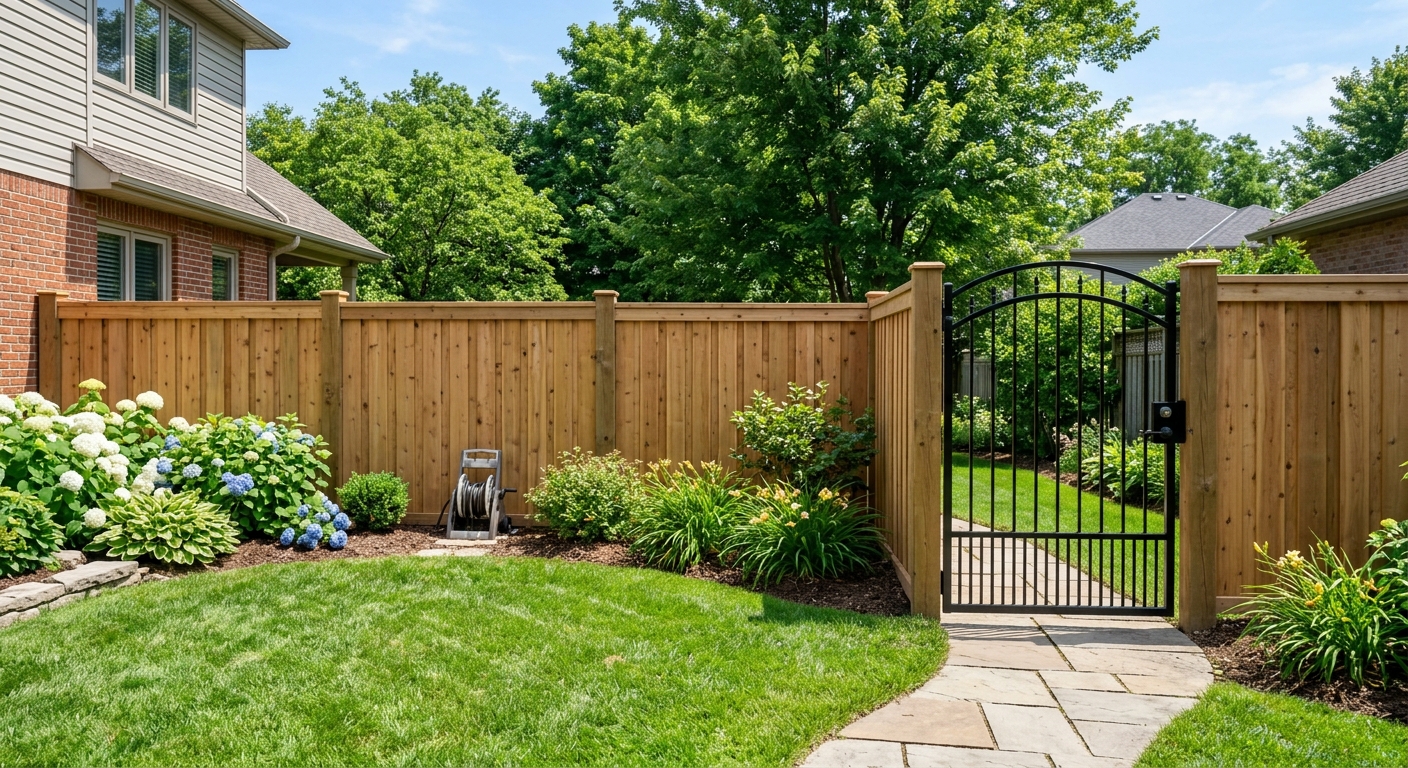
Fencing options and costs in Sylvan Lake
Sylvan Lake homeowners have a strong mix of housing types, and that matters for fencing demand: single-detached homes make up 65.8% of dwellings, and homeowner households account for 67.8% of all households (Statistics Canada, 2021 Census). In practical terms, each detached property is a potential fence project—new installs, panel upgrades, and privacy additions around backyards and dog runs. With 14.7% of homes built before 1981 (Statistics Canada, 2021 Census), you’ll also see more “replacement cycles” where older fence posts and rails have settled or rotted, especially near the ground.
In Red Deer’s economic region, pricing is shaped by Alberta prairie conditions. Frost depth and freeze-thaw cycles mean contractors usually set posts deeper than a minimum “rule of thumb” and often concrete-set for stability. Wind exposure also plays a role: more open lots need tighter spacing and designs with less sail area so the fence resists racking and blowouts. Access affects labour as well—properties in and around popular west-end areas such as Summer Village and portions of Lakeview often have gate work, snow storage, and sometimes narrower approaches that slow installation.
Below is a practical comparison of common materials, with the local price bands you’ll typically see in Sylvan Lake once height, post depth, and gate count are accounted for. Use it to discuss options with your contractor before you lock in a final scope.
| Material |
Lifespan |
Maintenance |
Privacy Rating |
Price per Linear Foot |
| Pressure-treated pine (standard wood) |
10–15 years |
Stain/seal every 2–3 years; inspect bottom rails and posts |
6/10 (depends on picket spacing) |
$45 – $85 |
| Cedar (natural rot resistance) |
15–25 years |
Light staining as needed; keep vegetation off the fence line |
7/10 (solid panels rate higher than spaced boards) |
$60 – $95 |
| Vinyl / PVC (no-maintenance) |
20–30 years |
Rinse when needed; no staining; occasional fastener checks |
8/10 (solid style or close-board options) |
$55 – $100 |
| Chain-link (galvanized steel) |
20–35 years |
Rinse; check tension and posts; add privacy slats if desired |
2–4/10 (unless you add slats/mesh) |
$35 – $70 |
| Aluminum ornamental |
25–40 years |
Minimal; wash off winter salt residue; inspect gates |
3–5/10 (ornamental pickets) |
$70 – $140 |
| Composite / recycled material |
20–30 years |
Low; occasional cleaning; check for warping on extreme-cold extremes |
7–9/10 (solid boards/panels) |
$85 – $130 |
Prices are estimates only and vary by project scope, site access and material selection.
What affects the price of fencing in Sylvan Lake
In Sylvan Lake, two quotes for what looks like the same fence can differ by 30–50% across the Red Deer region and Alberta because the “hard costs” aren’t just the material—they’re the ground conditions and wind requirements. A longer fence line adds labour and hardware; post depth and post-setting method can add significant time and concrete; and gates or removal can swing the total quickly. Even when your backyard footage is similar, exposed lots need stronger construction to handle racking and gusts off open prairie.
Frost is a major driver. In Alberta, post holes typically go about 4–6 inches below the local design frost depth to prevent heaving. In many cases that pushes excavation deeper—often around 1.5–2.0 m—so contractors use longer posts, additional digging time, and concrete-set foundations for stability. Wind exposure then influences spacing and panel design. For more exposed Sylvan Lake properties, contractors often tighten post spacing and choose heavier rails or panel profiles to reduce “sail area,” which raises labour and sometimes material costs.
Concrete examples you’ll feel in pricing around Sylvan Lake: (1) if you’re fencing on a sloped lot, stepped rails and careful alignment add installation time; (2) if your soil holds water in spring, the contractor may recommend drainage and deeper, better-set posts; (3) if you need fence removal, the disposal and time to detach boards and cut old anchors can add hundreds to thousands depending on the length. When homeowners compare pressure-treated pine at the lower end of wood pricing ($45 – $85) versus vinyl or PVC ($55 – $100), the difference often comes down to heavier post setting, panel choices, and number of gates—not just the material label.
| Price Factor |
Why It Matters |
Cost Impact |
| Fence length in linear feet |
Most costs scale directly with footage (posts, rails, fasteners, labour) |
Large (primary driver) |
| Post depth required |
Frost line determines hole depth and how much digging/concrete is needed |
Medium to large |
| Post setting method |
Concrete-set posts cost more in materials and time than gravel pack or driven posts |
Medium |
| Material choice |
Vinyl, cedar, chain-link and aluminum differ in material price and installation method |
Large |
| Gate count and type |
Drive-through and double gates require stronger frames, more hardware and alignment time |
Medium to large |
| Grade and terrain |
Sloped yards need raked/stepped panels; uneven ground increases layout time |
Medium |
| Old fence removal and disposal |
Demolition, hauling and disposal can be labour-heavy |
Medium |
| Permit fees and survey / property line locate |
Locates reduce the risk of encroachment disputes; permits add admin time |
Small to medium |
Permits & regulations in Alberta
In Alberta, fence permitting usually comes down to height and location relative to front/corner versus rear areas. As a practical guideline used by many municipalities, fences above a typical threshold—often around 2.0 m (6.5 ft) at the rear and roughly 1.0–1.2 m (3–4 ft) at the front or corner—may require a building permit. Regardless of height, all fences must respect property lines and municipal setback bylaws, and any structure must be installed within your property boundaries.
Before digging post holes in Sylvan Lake, call for utility locates through the appropriate Alberta one-call process (Alberta One-Call) so contractors and homeowners don’t accidentally hit buried services. It’s also smart to obtain a survey or at least verify property pins/locates before installation; that reduces neighbour disputes and protects you if the “assumed line” isn’t where the legal line actually is.
Shared fence ownership is handled under Alberta line-fences legislation principles: in general terms, neighbouring owners may share the responsibility and cost of a “common” fence, but disputes typically turn on who benefits, where the fence sits, and what was agreed. For safety and proof, keep all emails, plans, and measurements.
What does require a permit: taller fences that exceed typical thresholds (especially in front/corner or where the municipal bylaw triggers review), and any work tied to approved drawings/structural changes. What typically does not: like-for-like replacements or fence swaps that remain under the height trigger and don’t change location, provided you’re still within setback/property line rules.
To verify a contractor in Alberta, ask for: (1) their licence/registration details (look for the contractor’s name in online provincial registry sources where applicable), (2) a current certificate of insurance showing liability coverage, and (3) their WSIB/WCB coverage clearance letter or proof of coverage. Don’t accept expired certificates—request the documents before work starts and confirm the dates match your project schedule.
Choosing the right fence material for Sylvan Lake
Choosing a fence material in Sylvan Lake is about balancing privacy, cold-weather performance, and how often you want to maintain it. Pressure-treated pine is usually the most budget-friendly option, but it typically needs staining every 2–3 years to reduce grey weathering and keep the wood surface stable. Cedar offers better natural rot resistance and usually looks better longer, but it still benefits from periodic maintenance. Vinyl/PVC is the low-maintenance favourite—no annual staining—but in extreme cold it can become more brittle, so good installation practices (proper expansion gaps, quality posts and hardware) are important. Chain-link is the longest-life budget path and works well where you want security more than privacy; add slats or privacy mesh if you want screening. Aluminum ornamental provides a crisp look and won’t rust, but it’s best for decorative perimeter control rather than full privacy.
Because Red Deer’s prairie conditions include deep freeze and wind exposure, post depth matters with every option. Posts often need to be set below the frost line, commonly around 1.5–2.0 m into the ground depending on design frost depth and local soil—so concrete-set posts are frequently used to reduce heaving and improve stability. If you’re comparing options, that post system cost is usually similar across materials once the fence height and wind zone are matched.
Where the price difference is justified: a homeowner fencing a windy yard might pay more upfront for a solid vinyl or cedar design because tighter construction reduces panel racking. For example, if vinyl is priced in the local range of $55 – $100 per linear foot versus pressure-treated pine at $45 – $85, the extra cost can be worthwhile when you’re adding gates, choosing a more wind-resistant panel style, or prioritizing fewer maintenance weekends.
| Material |
Cold Tolerance |
Lifespan |
Annual Maintenance |
Best For |
Price Band |
| Pressure-treated pine |
Good (surface protection affects longevity) |
10–15 years |
1–2 minor checks; stain/seal every 2–3 years |
Lower upfront cost with acceptable upkeep |
$45 – $85 |
| Cedar |
Good (natural rot resistance) |
15–25 years |
Light inspection; stain as needed |
Appearance + better rot resistance |
$60 – $95 |
| Vinyl / PVC |
Very good when installed correctly; can be brittle in improper installs |
20–30 years |
Minimal (rinsing + hardware checks) |
Low maintenance and clean look |
$55 – $100 |
| Chain-link |
Excellent (galvanized steel) |
20–35 years |
Occasional tension/post checks |
Security + budget control |
$35 – $70 |
| Aluminum ornamental |
Excellent (won’t rust) |
25–40 years |
Minimal (wash off winter residue) |
Decorative perimeter and curb appeal |
$70 – $140 |
| Composite / recycled |
Good (quality matters; correct hardware) |
20–30 years |
Low (cleaning; check alignment) |
Solid privacy with reduced maintenance |
$85 – $130 |
How to choose a fencing contractor in Sylvan Lake
Start by verifying Alberta licensing/registration where applicable, and don’t skip proof of coverage. Ask the contractor to provide a current certificate of liability insurance (make sure the policy is active for your project dates) and confirm their WSIB/WCB coverage clearance or documentation for the workers assigned. You can typically verify licence/registration details through online provincial registries (where applicable for fencing contractors), and for insurance you should always request the certificate directly and check dates, coverage limits, and that your address/jobsite is covered under the policy. If they can’t provide documentation up front, treat that as a serious warning.
Then get 2–3 itemised, written quotes rather than a single lump sum. A good quote breaks out labour (excavation, post setting, rails, installation, gate build) and materials (posts, concrete/aggregate, rails, pickets/panels, hardware). Confirm what’s included: permit pull (if needed), property line locate/survey assumptions, old fence removal and disposal, and whether matching the existing fence height and layout is part of the scope.
Warranty matters. Ask for the workmanship warranty length (how long the contractor covers installation issues like leaning posts) and the manufacturer’s product warranty (what fails in material and how it’s handled). Check whether warranties are transferable if you sell the home.
Payment schedule should be conservative. Avoid paying more than 10–15% upfront. Hold back a portion until the full fence line, gates, and clean-up are complete, and insist on a completion date and timeline in writing.
- Provide certificate of insurance with active dates and liability limits.
- Provide WSIB/WCB clearance or proof of coverage for assigned workers.
- Show licence/registration details (where applicable) before booking excavation.
- Get an itemised quote: excavation, post set depth/concrete amount, labour hours, materials, gates.
- Confirm who pulls permits (if required) and what triggers the permit.
- Ask whether they include property line locate or whether you must provide the survey pins.
- Write down post depth assumptions tied to frost requirements and soil conditions.
- Confirm gate hardware type, swing direction, and clearances for snow storage.
- Clarify old fence removal: detach method, disposal location, and any salvage credits.
- Ask how they handle slopes: stepped vs. raked panels and who supplies materials for adjustment.
- Request warranty terms in writing for workmanship and manufacturer coverage separately.
- Verify payment milestones: small deposit, then scheduled draws after key stages.
Red flags I commonly see in Sylvan Lake: they refuse to provide insurance/WSIB proof, they quote “average post depth” without frost-ground discussion, they won’t itemise gates/removal/permitting assumptions, they ask for large upfront payments, or they provide an estimate without a written start date, completion target, and scope exclusions.
Frequently asked questions — fencing in Sylvan Lake
How do I prevent wood fence rot in Sylvan Lake?
To reduce wood rot in Sylvan Lake and across Alberta’s freeze-thaw cycle, focus on the details that keep water and soil contact away from the wood. First, require proper post setting below frost depth so posts don’t heave and separate from the rail connections—movement opens gaps where moisture gets trapped. Second, concrete-set posts or a properly built gravel/vented base (per the contractor’s method) help prevent the bottom of the fence from sitting in standing water. Third, keep mulch and soil away from fence rails, because wet contact speeds decay. Finally, plan for maintenance: pressure-treated pine often needs staining every 2–3 years to reduce grey weathering, which helps the surface hold up in winter and spring melt. If you’re replacing an older run, cedar can buy you more time due to natural rot resistance (Statistics Canada, 2021 Census), but it still benefits from routine inspection and touch-up.
What is the cost per linear foot for fencing in Sylvan Lake?
In Sylvan Lake, you’ll typically see material and install pricing fall into the following local bands for fencing contractors once you account for height, gates, and post depth. Chain-link is often the lowest at about $35 – $70 per linear foot, while wood installation commonly lands around $45 – $85. Vinyl/PVC tends to be higher at $55 – $100, and aluminum ornamental is usually the premium mid-to-high tier at $70 – $140. Your final per-foot number changes with frost-depth excavation, soil conditions (standing water or heavier clay), and wind exposure, which can require tighter post spacing or sturdier panels. If two quotes differ a lot, ask what’s included for gates, removal, and post setting method—those are the most common sources of variation.
Should I repair or replace my old fence in Sylvan Lake?
Repairing can be the right move when posts are still solid and the fence line is mostly straight. However, in Sylvan Lake’s climate—deep freezes, spring melt, and wind—repairs are often a short-term fix if you already have widespread leaning, loose post bases, rotted bottom rails, or fence sections that settled. A common signal is repeated post movement: if boards keep “popping” loose after storms, the underlying post depth or setting may be failing. Replacement is usually worth it when multiple runs show rot near the ground, when you want full-height privacy upgrades, or when adding gates where alignment and hardware need a new foundation. If you’re in a neighbourhood with older housing stock (Statistics Canada, 2021 Census), you may find more “replacement-cycle” issues around the bottoms of posts from past installation methods.
How do I handle a fence dispute with a neighbour in Alberta?
Fence disputes in Alberta typically come down to where the fence is located relative to the legal property line, and who shares the responsibility for a common fence. Start by gathering your documents: any survey, property pin locate results, and the measurements from your contractor. Don’t rely on “what the fence has always been,” because older fences may not match the legal boundary. Next, review who owns which side—shared fence ownership rules are influenced by Alberta line-fences legislation principles, but facts matter (such as whether it’s a common boundary). When you speak to your neighbour, keep it practical: propose a joint locate, agree on the fence line, and confirm costs in writing. If permit requirements apply (for example, certain heights in front/corners), include that in the plan. As a homeowner in Sylvan Lake, it’s also wise to document wind/damage issues and request an independent assessment rather than debating in person only.
What fence style offers the best wind resistance in Sylvan Lake?
In Sylvan Lake’s prairie wind exposure, the best wind resistance usually comes from solid, well-braced panel systems with strong post spacing and proper post setting below frost depth. Tall, highly “sail-like” designs can catch gusts, so contractors often reduce racking risk by using tighter post intervals and heavier rails, and by using designs that don’t present as much uninterrupted surface to the wind. Chain-link can move more in strong winds unless tensioning and corner/terminal posts are engineered well; privacy slats or mesh can make it behave like a stronger panel. Solid privacy fences (wood, vinyl/PVC, or composite) generally perform better than decorative open pickets when installed with correct spacing and secure gate hardware. Whatever you choose, the biggest improvement comes from the foundation: concrete-set posts and correct hole depth help the fence stay aligned through freeze-thaw and gust cycles.
How much does a fence cost in Sylvan Lake?
Total fence cost in Sylvan Lake depends mainly on length, height, materials, number/type of gates, and whether you’re removing an existing fence. As a quick reference, many homeowners will price their material choice within the common local bands: chain-link often starts around $35 – $70 per linear foot, wood around $45 – $85, vinyl/PVC around $55 – $100, and aluminum ornamental around $70 – $140. Your total will rise if the job needs deeper post holes for frost protection (typical Alberta practice often sets posts below design frost), if the yard is sloped or has poor drainage, or if you need a double drive-through gate. If you share your fence length and desired height, I can help you translate those per-foot bands into a realistic budget and tell you which scope items usually account for the biggest swings.