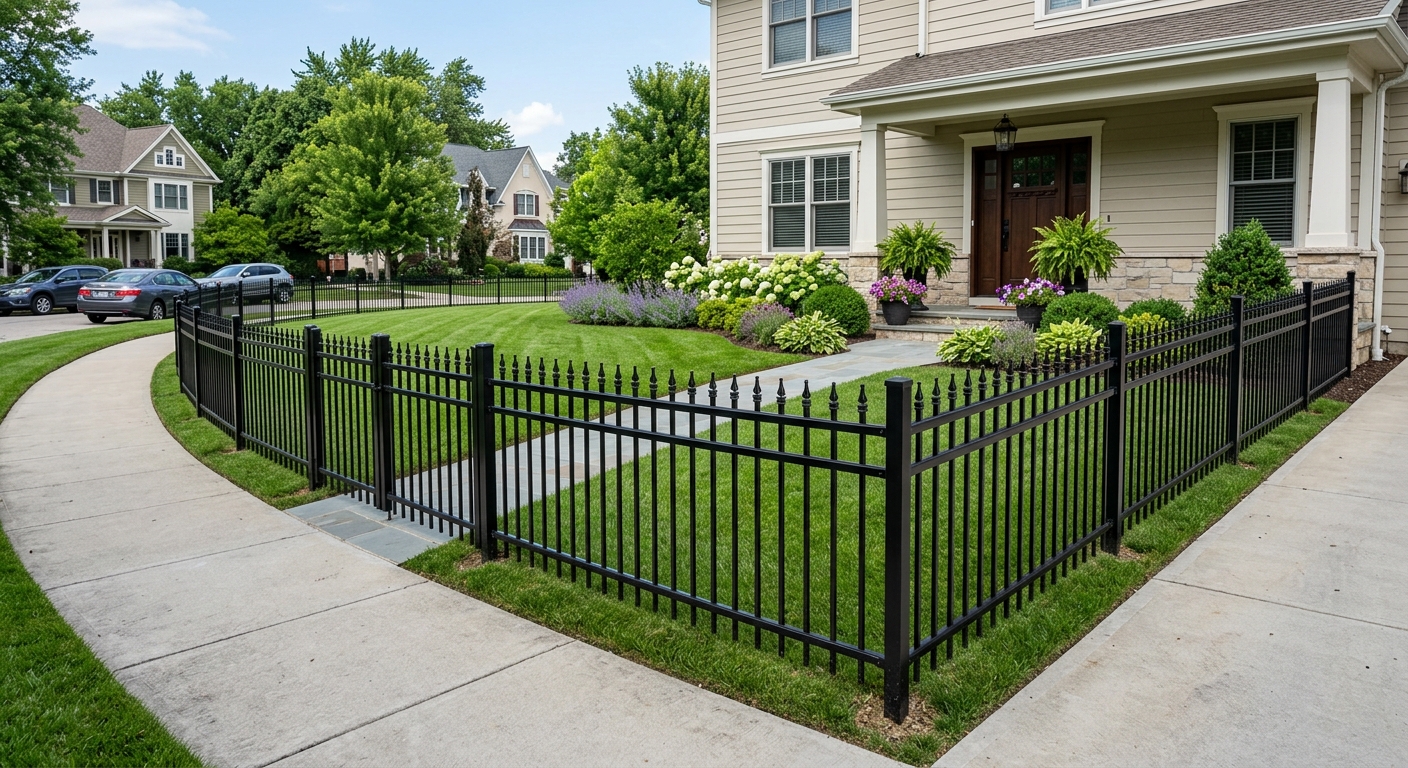
Fencing options and costs in Cliff Bungalow
In Cliff Bungalow, Alberta, fences are a practical upgrade for privacy, pets, and curb appeal—especially on the older, established lots where property boundaries are well defined and backyards tend to be heavily used. The area also has a strong base of single-detached housing (Statistics Canada, 2021 Census), so there’s consistent demand for perimeter fencing from homeowners and nearby tenants in single-detached neighbourhood pockets. With a population of 1,805 (Statistics Canada, 2021 Census), local contractors can usually respond quickly, but scheduling still depends on how many projects are booked after spring snowmelt.
Calgary’s Prairie continental climate drives cost up compared with milder regions. Long freeze–thaw cycles mean fence posts must be set deep enough to resist frost heaving, and the open exposure increases wind loading—so privacy fences need tighter spacing and sturdier supports. In particular, solid wood and vinyl panels in wind-exposed back lanes are more likely to rack if posts aren’t concreted and aligned properly. In Cliff Bungalow, contractors are especially busy around the busier residential streets near 17 Avenue S and the surrounding grid, where yard access, lane width, and snow storage affect excavation and install time.
Material choice is the next biggest driver: chain-link is usually the lowest installed price, while ornamental aluminum and higher-end wood options land at the upper end. Below is a realistic comparison of typical installed outcomes, including expected longevity and cost per linear foot, so you can sanity-check any quote before the site visit.
| Material |
Lifespan |
Maintenance |
Privacy Rating |
Price per Linear Foot |
| Pressure-treated pine (standard wood) |
12–18 years |
Stain or seal every 2–3 years; check posts after freeze–thaw seasons |
High (solid panels) |
$45,–$80 |
| Cedar (natural rot resistance) |
18–25 years |
Annual inspection; stain/oil as needed for best appearance |
High (solid panels) |
$55,–$95 |
| Vinyl / PVC (no-maintenance) |
20–30 years |
Wash occasionally; replace damaged rails if impact occurs |
High (solid or picket with boards) |
$50,–$90 |
| Chain-link (galvanized steel) |
25–35 years |
Minimal; tighten/repair selectively |
Low to Medium (open mesh) |
$25,–$55 |
| Aluminum ornamental |
30–40 years |
Wash; occasional hardware checks |
Low (ornamental pickets) |
$70,–$120 |
| Composite / recycled material |
20–30 years |
Low; clean and inspect for cracks at fasteners |
High (solid styles available) |
$70,–$110 |
Prices are estimates only and vary by project scope, site access and material selection.
What affects the price of fencing in Cliff Bungalow
In Cliff Bungalow and across the Calgary economic region, quotes for the “same” fence can swing by 30–50% because the invisible site details are what contractors price—not just the material. A 60-foot run of privacy fencing on a flat lot with easy gate access is a very different job than the same length with a gate count, removal of an old fence, buried services, or uneven grade that requires racking. Material costs also vary seasonally, but labour and excavation usually dominate the difference in Alberta.
The biggest structural driver is frost. In Prairie conditions, posts must be set well below the local effective frost zone—often about 4–6 inches (≈10–15 cm) beneath design frost depth—to prevent heaving. For typical Alberta residential installs, that commonly means 1.5–2.0 m into the ground, which increases excavation time, concrete volume, and the need for longer posts. Next is wind exposure: open Prairie exposure creates higher wind loading, so wood and vinyl privacy systems often require closer post spacing and heavier rails. By contrast, chain-link’s airflow lets it withstand wind with lighter framing, which is why it tends to sit lower in the price bands (often $25–$55 per linear foot).
Concrete examples in Cliff Bungalow that raise cost: a rear-yard fence tying into a gate post with a 6 ft privacy panel often needs full concrete-set footings for racking resistance; a sloped backyard can add stepped rails and extra labour to keep the top line straight; and removing an old fence with anchored posts can add disposal and labour. On the other hand, lower cost happens when you have a straight run, minimal removal, and good access for a small skid-steer—making pressure-treated wood installs more competitive (often $40–$80 per linear foot) compared with higher-end cedar or composite privacy systems.
| Price Factor |
Why It Matters |
Cost Impact |
| Fence length in linear feet — the primary cost driver |
More linear feet increases posts, rails, fasteners, and material handling time |
High (direct multiplier) |
| Post depth required — frost line determines post length and hole depth |
Deeper holes require more labour, longer posts, and more concrete/aggregate |
High (especially for 6 ft privacy) |
| Post setting method — concrete vs. gravel pack vs. driven posts |
Concrete-set posts improve stability in freeze–thaw and wind racking |
Medium to High (concrete adds cost) |
| Material choice — vinyl vs. cedar vs. chain-link |
Different material pricing and framing requirements for wind stiffness |
Medium to High |
| Gate count and type — walk-through vs. drive-through (double) |
Gates require heavier framing, hinges/latches, and often more precise alignment |
Medium (can be higher with drive-through) |
| Grade and terrain — sloped yards require stepped or raked panels |
Slopes increase labour for layout and require extra hardware/adjustments |
Medium |
| Old fence removal and disposal |
Anchored posts and rail demolition add time, hauling, and landfill/disposal fees |
Medium to High |
| Permit fees and survey / property line locate |
Some projects need permits and/or paid locate services to avoid encroachment |
Low to Medium (project-dependent) |
Permits & regulations in Alberta
In Alberta, permits can apply when you build a fence over the local height thresholds—often around 2.0 m (6.5 ft) for a rear area and about 1.0–1.2 m (3–4 ft) at the front or corner. Even when a permit is not required, your fence must still respect property lines and municipal setback bylaws in the Calgary area. Before any post hole is dug, you should arrange utility locates through Alberta One-Call so you don’t hit power, gas, or low-voltage lines. In Cliff Bungalow, where mature neighbourhood servicing is common, locates are not optional good practice—they’re risk prevention.
Step-by-step for a homeowner: (1) obtain a survey or locate your property pins before installing; (2) mark the fence line using the survey information and contractor layout; (3) confirm whether your height and location trigger a building permit based on the fence’s placement (front/corner versus rear); (4) keep documentation of permits/locates on file in case of a neighbour dispute. Shared fence ownership and maintenance are typically handled through provincial line-fence legislation concepts, so it’s smart to confirm who is responsible for repairs if your fence sits on or near a boundary.
For contractor licensing verification: ask for their Alberta business credentials and proof of liability insurance (including the certificate holder information) plus confirmation of WSIB/WCB coverage where applicable for their work. Where to look: request the contractor’s WCB/WSIB clearance letter and review the certificate of insurance (coverage dates and policy limits). For fences, many permit-related steps are homeowner-driven, but the contractor should provide compliant, properly documented installation practices. If someone won’t share insurance and WCB clearance, treat that as a major warning sign.
Choosing the right fence material for Cliff Bungalow
Choosing a fence material in Cliff Bungalow is really about matching your priorities—privacy, upkeep, and long-term value—to Alberta’s freeze–thaw cycles and strong Prairie winds. Pressure-treated pine is the most budget-friendly option, but it typically needs staining or sealing every 2–3 years to prevent grey weathering and to maintain the surface. Cedar has better natural rot resistance and generally looks warmer and more attractive, but it still benefits from periodic oil or stain to keep it in top form. Vinyl/PVC is popular for low maintenance because it doesn’t need staining, yet it can be more sensitive to impact damage in winter and can crack if rails or fasteners are installed incorrectly or if the system flexes under wind. Chain-link is usually the lowest cost and longest-lived for durability, but it won’t give you privacy unless you add slats or plant screening. Aluminum ornamental provides a clean, rust-resistant look and strong longevity, though it’s typically best for boundary definition rather than full privacy.
Post depth matters regardless of material. In Calgary-area installs, frost protection usually means concrete-set posts with holes dug deep enough to sit below the regional frost line, commonly around 1.5–2.0 m for typical residential runs, especially for 6 ft privacy fences and heavier gate posts. With Prairie wind and snow loads, solid privacy panels benefit from sturdier posts and tighter spacing to reduce racking.
A clear dollar example: if you compare chain-link at roughly $25–$55 per linear foot versus vinyl privacy often around $45–$90 per linear foot, vinyl costs more upfront. That difference is justified when you need actual privacy and wind-blocking comfort in your backyard—otherwise chain-link plus slats can be the more practical budget path.
| Material |
Cold Tolerance |
Lifespan |
Annual Maintenance |
Best For |
Price Band |
| Pressure-treated pine |
Good (with proper treatment and post setting) |
12–18 years |
Light: 2–3 year staining plan; spring/fall post checks |
Budget-friendly privacy with classic appearance |
$40–$80 |
| Cedar |
Good (naturally rot-resistant) |
18–25 years |
Moderate: periodic oil/stain for look |
Attractive privacy in established neighbourhoods |
$55–$95 |
| Vinyl / PVC |
Good (but needs solid installation to resist winter flex) |
20–30 years |
Minimal: wash/inspect; replace impact-damaged sections |
Low-maintenance privacy |
$45–$90 |
| Chain-link |
Excellent (galvanized steel durability) |
25–35 years |
Low: occasional tightening/repairs |
Security/containment on a budget |
$25–$55 |
| Aluminum ornamental |
Excellent (no rust concerns) |
30–40 years |
Low: wash and hardware check |
Boundary definition and curb appeal |
$70–$120 |
| Composite / recycled |
Good (depends on fastening and panel design) |
20–30 years |
Low: inspection and gentle cleaning |
Solid privacy with lower upkeep |
$70–$110 |
How to choose a fencing contractor in Cliff Bungalow
When choosing a fencing contractor in Cliff Bungalow, start by verifying they’re properly covered and accountable. In Alberta, you should ask for: (1) their Alberta business licence/registration details (and any trade-specific standing they claim); (2) proof of general liability insurance with coverage dates and limits—make sure the certificate lists the correct insured and can name you as certificate holder if offered; and (3) WCB/WSIB clearance where applicable. How to check each: look for an up-to-date clearance letter, review the insurance certificate for active coverage, and confirm the certificate details match the legal company name on their quote. If they can’t provide these quickly, pause the process.
Next, request 2–3 itemised written quotes. You want a line-by-line breakdown that separates labour, materials, fence type, post depth/spec, gate hardware, removal/disposal, and any layout/survey allowances. Avoid “lump sum” quotes that don’t show exclusions—especially around site excavation, utility locate fees, and whether permit pulls are included. Confirm the warranty: ask for the workmanship warranty length, the manufacturer product warranty terms, and whether warranties transfer to a new homeowner if you sell. Payment schedules matter too: never pay more than 10–15% upfront. Hold back a portion until the job is complete and cleanup is done. Finally, put the timeline in writing: a start date window, realistic completion estimate, and what weather conditions could delay installation in Calgary’s freeze–thaw season.
- Ask for proof of insurance (liability) and confirm it’s current.
- Request WCB/WSIB clearance and a clearance letter, not just an invoice.
- Confirm the contractor’s legal business name matches their quote and insurance.
- Get itemised pricing: posts, concrete/aggregate, rails, panels, gates, fasteners.
- Require post-depth/spec details that align with frost protection needs (deep-set posts).
- Clarify what’s included for utility locates and any locate re-visits.
- Confirm whether permit fees are included or homeowner-paid.
- Ask how they handle old fence removal (cut-off versus full post extraction) and disposal fees.
- Ensure gate framing is specified (hinges, latches, hardware grade and number of gates).
- Check how they handle sloped yards (racking/stepping plan) and who verifies the layout.
- Confirm warranty terms for workmanship and product—plus whether it’s transferable.
- Use a written schedule and include what happens if materials are delayed.
Concrete red flags I see in Cliff Bungalow: contractors who won’t provide WCB/WSIB clearance, vague quotes that don’t state post depth or setting method, promises of “no concrete needed” for privacy panels without engineering-like reasoning for frost and wind, refusal to list disposal/removal scope, and requests for large upfront payments beyond 10–15%.
Frequently asked questions — fencing in Cliff Bungalow
How long does a wood fence last in Cliff Bungalow?
In Cliff Bungalow, a well-built wood fence is commonly expected to last about 12–18 years for pressure-treated pine, assuming posts are set deep enough for Alberta freeze–thaw conditions and the fence is maintained. Cedar typically stretches closer to 18–25 years because of its better rot resistance. Longevity is strongly influenced by post setting: if concrete footings aren’t used for a privacy fence where wind and frost are major, you can see early leaning or rack. Also, Calgary’s seasonal cycling means finishes matter—pressure-treated wood usually needs staining or sealing every 2–3 years to slow weathering. If you’re budgeting, pressure-treated is often in the $40–$80 per linear foot range installed, while cedar can land higher but may reduce the frequency of major refreshes.
Who owns and maintains a shared fence?
For shared fences in Alberta, ownership and maintenance typically follow provincial line-fence principles, meaning the obligation to maintain can depend on where the fence sits relative to the property line and what agreement exists between neighbours. Practically, homeowners should identify whether the fence is truly boundary-aligned (not set entirely on one side) and then confirm responsibilities for repairs, staining, and replacement. If you’re unsure, start with your survey or a property line locate and then talk with your neighbour before any demolition. In Cliff Bungalow, where yards are mature and fencing may have been installed decades ago, it’s common to discover the fence line doesn’t exactly match the current pins—so confirming location early prevents disputes. A transparent contractor estimate that includes the scope of repairs or replacement helps keep the conversation fair.
How do I find my property line before fencing?
Your best first step in Cliff Bungalow is to locate your property pins. If you have a recent survey, use it to mark the fence line before posts go in. If you don’t, order a locate through a qualified surveyor or property boundary service and keep the paperwork. Then, call Alberta One-Call for utility locates so you don’t disrupt buried services while staking the fence line. Avoid relying on old fence positions, because past installs can drift due to frost heaving, grade shifts, or previous workmanship. Once the line is confirmed, your contractor should lay out the fence with measurements tied to the pins. This is also the point where you confirm gate swing clearances and whether your planned height triggers permit requirements (especially closer to front/corner areas).
What's the most low-maintenance fence?
For low maintenance in Alberta, vinyl/PVC is usually the top pick: it typically requires only occasional washing and inspections after impacts. Aluminum ornamental is also very low maintenance because it won’t rot or rust, though it generally offers less privacy. Chain-link is the easiest from a durability standpoint—minimal repairs and long service life—but it won’t provide privacy unless you add slats or screening. In Cliff Bungalow’s freeze–thaw climate, low maintenance depends on installation quality: even vinyl needs properly aligned posts and secure rails so it doesn’t flex and crack. Price-wise, vinyl privacy is often in the $45–$90 per linear foot range installed, while chain-link is frequently lower in the $25–$55 band. If privacy is your priority, vinyl or a composite privacy system usually beats chain-link for everyday use.
How tall can my fence be in Cliff Bungalow?
Height rules depend on where the fence sits (rear yard versus front or corner) and whether it meets Alberta municipal thresholds. As a practical guideline used in many Calgary-area situations, rear fences around 2.0 m (6.5 ft) can trigger permit requirements, and front/corner fences are often in the 1.0–1.2 m (3–4 ft) range. Even if you stay under a height limit, you must still respect property lines and setbacks. For a homeowner in Cliff Bungalow, the key is placement: measure from the property line where applicable and confirm your intended fence style (solid privacy panels vs. ornamental pickets) with your contractor and the City’s rules. A good contractor will mention permit triggers during quoting, not after the holes are already dug.
Should fence posts be set in concrete here?
In Cliff Bungalow and the Calgary economic region, concrete-setting is commonly recommended for privacy fences and gate posts because it improves stability through freeze–thaw cycles and helps resist wind-induced racking. Local guidance typically expects post holes set to about 4 ft deep (≈120 cm) and, in many residential builds, deeper to get below the regional frost line—often around 1.5–2.0 m depending on local design assumptions. That depth increases concrete/aggregate needs, which is part of why wood and vinyl privacy fencing sits above chain-link in the installed price bands. Chain-link can sometimes be installed with alternate methods depending on system design, but for solid panel privacy, concrete footings are the safer approach. If a quote omits concrete entirely for a 6 ft privacy run, ask how they’re achieving frost protection and stability.