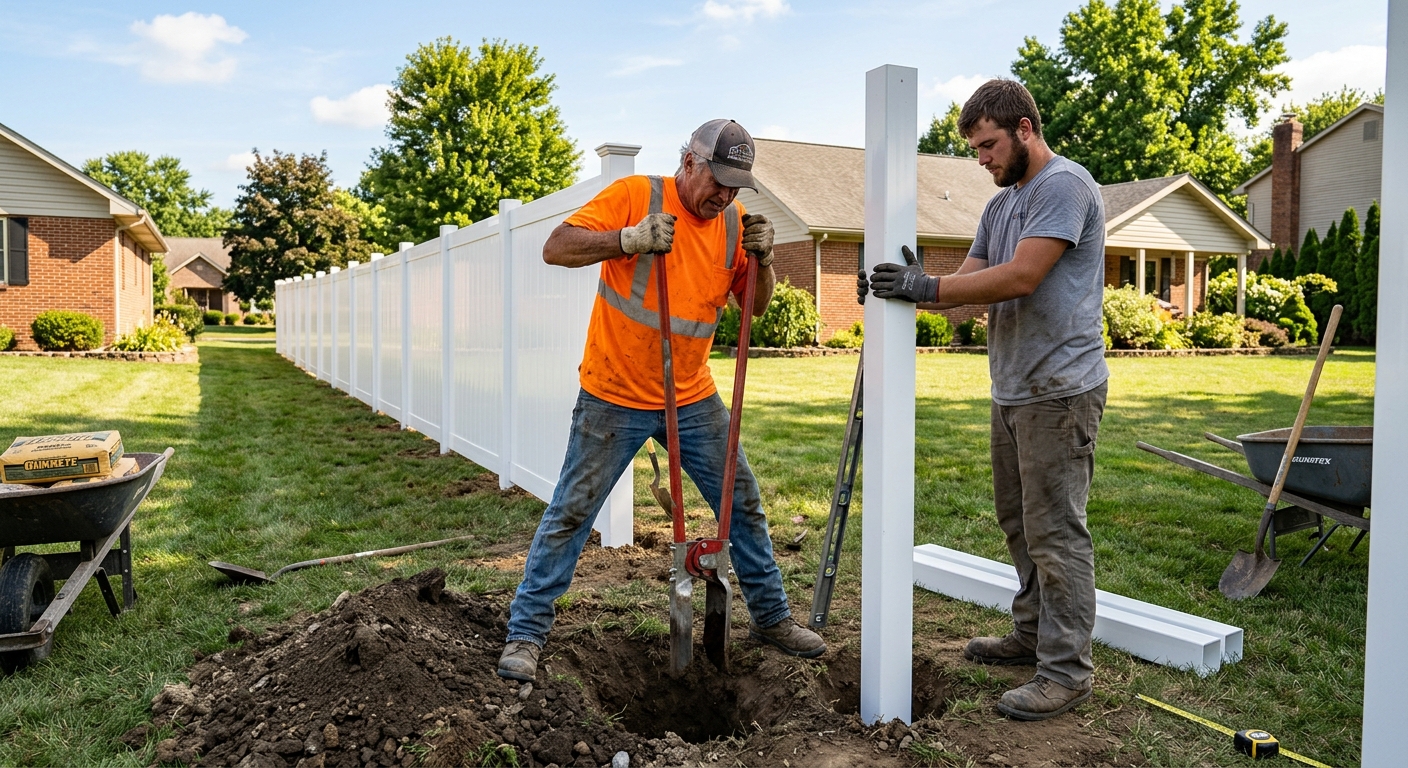
Fencing options and costs in Bowness
Bowness, Alberta is a neighbourhood where fences get noticed fast: they sit out in the open Prairie winds and are constantly challenged by freeze–thaw weather. With a 2021 population of 10,770 in the Bowness area (Statistics Canada, 2021 Census), demand is steady year-round, especially as detached homes and backyard lots need practical boundaries. In Calgary’s wider housing market, detached properties are a strong predictor of fence installations because you’re typically fencing more perimeter and maintaining privacy for everyday outdoor use.
Costs in Bowness tend to track the same drivers as the Calgary economic region, but with a local “wind + frost” twist. Prairie continental conditions mean long freeze–thaw cycles, so post depth and footing method become the biggest cost levers. City expectations commonly align with setting posts about 4 ft (≈120 cm) down to reduce heaving risk below the frost line, and privacy-style solid panels usually need closer spacing and sturdier posts to resist racking. That’s why wood and vinyl (mid-to-upper band materials) often cost more than chain-link, while aluminum/metal can land at the top end due to hardware and install complexity.
Trade demand is especially high around Bowness Road and the nearby retail/residential stretch, where lots are exposed to prevailing winds and where homeowners frequently refresh older boundaries. Below is a straightforward comparison to help you translate your priorities into a realistic budget before you review contractor quotes.
| Material |
Lifespan |
Maintenance |
Privacy Rating |
Price per Linear Foot |
| Pressure-treated pine (standard wood) |
10–15 years |
Stain/condition every 2–3 years; check posts after winters |
High (solid pickets/boards) |
$40–$70 |
| Cedar (natural rot resistance) |
15–25 years |
Light staining or oiling every 2–4 years; inspect for warped boards |
High (board-on-board or solid) |
$55–$80 |
| Vinyl / PVC (no-maintenance) |
20–30 years |
Minimal; rinse and inspect for cracking in extreme cold |
High (privacy panels) |
$45–$90 |
| Chain-link (galvanized steel) |
20–40 years |
Occasional washing; tension checks |
Low to Medium (wire visibility; add slats if needed) |
$25–$55 |
| Aluminum ornamental |
25–35 years |
Wash annually; inspect gate hardware |
Low (best for lines and curb appeal) |
$70–$120 |
| Composite / recycled material |
20–30 years |
Minimal; clean per manufacturer and replace warped panels as needed |
High (solid privacy styles) |
$70–$110 |
Prices are estimates only and vary by project scope, site access and material selection.
What affects the price of fencing in Bowness
You can easily see quote differences of 30–50% for what looks like the same fence in Calgary and across Alberta, even when homeowners pick a similar height. The gap usually comes from what’s happening below ground (post length and excavation), how wind-exposed the yard is, and how much concrete and labour it takes to keep the fence straight through winters. In Bowness, exposed Prairie lots push installers toward tighter post spacing and fully concreted footings for privacy fences—especially for 6 ft panels and for gate posts—so the “foundation work” costs rise quickly.
Frost depth is the clearest example. Local guidance commonly expects posts set about 4–6 inches below the design frost depth to prevent heaving, which often means hole depths around 1.5–2.0 m in cold months. Deeper holes require longer posts, more excavation time, and more concrete volume. A typical 6 ft privacy fence in the mid–upper wood/vinyl range (often aligning with the $40–$80 and $45–$90 bands per linear foot) costs more when posts are concreted rather than set with a lighter gravel approach.
Wind exposure also changes material and labour. Solid wood or vinyl catches gusts, so heavier posts and more bracing are used; chain-link is cheaper partly because it “breathes” and reduces racking forces. On the other hand, a sheltered backyard with mature windbreaks can lower costs by allowing simpler spacing and less reinforcement—sometimes bringing pricing closer to the lower half of the range.
Concrete examples from Bowness: (1) a backyard with a sloped grade often adds stepped rails and extra labour, and (2) removing an older fence with embedded posts and buried concrete increases disposal and demolition time. Housing stock matters too: older lots may have uneven ground or prior post remnants that can add hundreds of dollars before a new rail line is even set.
| Price Factor |
Why It Matters |
Cost Impact |
| Fence length in linear feet |
The bigger the perimeter, the more posts, rails, fasteners and labour hours. |
Highest overall driver; scales directly (often the majority of the total). |
| Post depth required |
Calgary-area freeze–thaw requires posts set well below frost influence to avoid heaving. |
More depth = more excavation and concrete; can raise costs meaningfully on privacy fences. |
| Post setting method |
Concrete-set posts resist movement better in wind-exposed Prairie conditions. |
Concrete setting typically adds labour and material versus gravel pack or lighter methods. |
| Material choice |
Vinyl/wood/cedar/privacy styles respond differently to wind load; chain-link is lower resistance. |
Shifts you across the $25–$55, $40–$80, and $45–$90 bands depending on style and height. |
| Gate count and type |
Gates need heavier hardware and stronger posts to prevent sag and racking. |
A drive-through (double) gate can add substantial cost over walk-through. |
| Grade and terrain |
Slopes often require stepped or raked panels and extra layout time. |
Can add labour and waste, pushing the job toward the higher end of pricing. |
| Old fence removal and disposal |
Demolition, hauling, and handling embedded posts increase time and tipping/disposal costs. |
Often adds a noticeable line item and can be weather-dependent. |
| Permit fees and survey / property line locate |
Some fence heights trigger permits; locating pins avoids encroachment problems. |
Variable cost, but it can be a deal-breaker if not planned for up front. |
Permits & regulations in Alberta
In Alberta, fencing rules are tied to both property line setbacks and the height of the fence. As a practical homeowner guide in Bowness and the Calgary area, fences above a height threshold—often around 2.0 m (6.5 ft) at the rear and roughly 1.0–1.2 m (3–4 ft) at the front or corner—may trigger a building permit. Even when a permit isn’t required for height, you still must respect property lines and any municipal setback requirements that apply to your lot.
Before digging post holes, call for utility locates. In Alberta that’s typically done through Alberta One-Call so crews can mark buried lines. Next, get a survey or at least a property pin locate before installation; it’s the most reliable way to prevent neighbour disputes and costly rework if a fence is being placed even a few inches over the line. Shared fence ownership rules are handled under Alberta’s line-fences legislation, which can affect responsibilities for maintenance or replacement.
What usually does require a permit: taller fences that exceed common height thresholds, plus projects that change an existing approved fence arrangement significantly. What typically does not: like-for-like replacement under the allowable height limits, assuming it stays within property line and setbacks.
To verify a contractor in Alberta, ask for: (1) their licence/registration details (available via online registries), (2) a current certificate of insurance naming you as applicable, and (3) confirmation of coverage for workers—commonly WSIB/WCB coverage—plus clearance/standing letters if requested. Don’t rely on “we’re insured” without paperwork.
Choosing the right fence material for Bowness
The right fence material in Bowness comes down to your top priority—privacy, low maintenance, budget, or lifespan—because Calgary’s long freeze–thaw cycles and strong Prairie winds punish weak post systems and poorly treated boards. Pressure-treated pine is usually the budget starting point, but you’ll need to stain or seal every 2–3 years to reduce greying and moisture-driven warping. Cedar naturally resists rot better and looks premium, though it still benefits from regular oiling or staining in Alberta’s climate.
Vinyl/PVC is popular for “set it and forget it” maintenance. It won’t rot, but in extreme cold it can become brittle if the system isn’t installed correctly—especially if posts aren’t set deep enough for frost movement. Chain-link gives the lowest initial cost and excellent longevity, but it provides little privacy unless you add slats or a topper. Aluminum ornamental looks great, resists rust, and is mid-to-high cost, but it won’t provide the solid privacy you’d feel with wood or vinyl board-on-board.
For post depth and structure: in the Calgary region, posts commonly go about 4 ft (≈120 cm) deep to reduce heaving risk under the frost line, often using concrete footings for 6 ft privacy fences and gate posts. That’s especially important where yards are open to wind. Where snow accumulates unevenly against a fence line, solid materials can take additional lateral stress, so sturdier bracing is key.
A real cost justification example: if you choose vinyl privacy instead of chain-link, you may move from roughly $25–$55 per linear foot for chain-link into the $45–$90 band for vinyl/ PVC. If privacy is your goal, that extra investment is often worth it—because you’re paying for higher wind resistance detailing and a more closed fence system, not just a different look.
| Material |
Cold Tolerance |
Lifespan |
Annual Maintenance |
Best For |
Price Band |
| Pressure-treated pine |
Good, when properly set and maintained |
10–15 years |
Inspect after winter; typically stain/oil as needed every 2–3 years |
Budget privacy with a traditional look |
$40–$80 |
| Cedar |
Good, natural rot resistance helps in Alberta cycles |
15–25 years |
Light oil/stain every 2–4 years depending on exposure |
Premium appearance and long-lasting privacy |
$55–$90 |
| Vinyl / PVC |
Good, but proper install and deep posts matter in extreme cold |
20–30 years |
Minimal; rinse/inspect for cracks and loose posts |
Low maintenance privacy |
$45–$90 |
| Chain-link |
Excellent (steel withstands cold; coatings protect) |
20–40 years |
Wash and tension checks as needed |
Security with minimal cost and maximum airflow |
$25–$55 |
| Aluminum ornamental |
Excellent; no rust in freeze–thaw cycles |
25–35 years |
Wash annually and check gate hardware |
Curbs, front yard lines, and tidy boundaries |
$70–$120 |
| Composite / recycled |
Good; performs well with stable footing and correct spacing |
20–30 years |
Minimal; clean per manufacturer, replace damaged boards if needed |
Solid privacy with reduced upkeep |
$70–$110 |
How to choose a fencing contractor in Bowness
Choosing the right fencing contractor in Bowness is mostly about proving they can build for Alberta’s conditions—deep post requirements, wind loading, and winter durability—while protecting you with proper documentation. Start by verifying their Alberta credentials through online registries (where applicable for the business/contracting category). Ask for a current certificate of liability insurance and confirm it covers the work area; if subcontractors are used, ensure they’re covered too. For worker protection, request evidence of WSIB/WCB coverage or an equivalent clearance/standing letter if the contractor can provide it. If they can’t show documentation on day one, that’s a signal to move on.
Next, get 2–3 itemised written quotes. You want a breakdown that separates labour (excavation, setting, rail alignment, gate installation) and materials (posts, rails, panels, hardware), not just a lump sum. Ask whether permit pulls (if required) are included, whether old fence removal and disposal is part of the scope, and what’s excluded (for example: rock removal, concrete demolition, or site grading). A transparent contractor will list assumptions and extras.
Warranty matters too. Confirm workmanship warranty length (for installation issues like leaning posts), the manufacturer’s product warranty, and whether coverage is transferable to a future owner. For payment, never pay more than 10–15% upfront; hold back a portion until the full job is complete and measured for straightness and gate operation. Finally, get a start date and completion estimate in writing—winter conditions and site access can affect timelines.
- Provide a detailed scope: lineal footage, height, panel style, and exact gate types.
- Include post depth approach consistent with frost concerns (concrete set details for privacy/gates).
- List all exclusions (rock breaking, tree removal, grading, buried debris).
- Specify removal/disposal of the old fence and concrete footings if applicable.
- Confirm utility locate responsibility and documentation.
- Show how they handle property line verification (survey/pins and layout method).
- Provide material grade and rail/post sizes, not just “wood/vinyl.”
- Include gate hardware brand/specs and sag-prevention method.
- Write out the warranty: workmanship duration and what it covers.
- State payment schedule and final holdback terms.
- Use a written schedule with milestones (layout, footing cure time, install, final adjustments).
- Verify insurance and worker coverage before work begins.
Red flags I see often in Bowness: quoting only “per linear foot” without measuring your run length; refusing to put utility locate responsibility and site assumptions in writing; offering a large upfront payment beyond 10–15%; vague warranties (“lifetime” without defining workmanship terms); and no proof of insurance/coverage—especially problematic when crews are digging deep post holes in frost-prone ground.
Frequently asked questions — fencing in Bowness
How do I handle a fence dispute with a neighbour in Alberta?
In Bowness, fence disputes usually come down to property line accuracy, fence height expectations, and responsibility for maintenance. Start by documenting the current fence condition with photos and measurements. Next, verify the exact boundary: get a survey or request a pin locate so you aren’t relying on old marks or neighbour memory. If your fence is near the “taller fence” height threshold, check whether a permit may be needed and whether the existing fence placement complies with setback rules. Alberta’s line-fences legislation governs shared boundary responsibilities, but the practical first step is getting the boundary confirmed. If you have concrete-set posts on the wrong line, fixing it later can cost significantly more than resolving it early. When in doubt, choose a contractor who can provide layout based on pins and a written scope; it reduces ambiguity that often fuels disagreements. (Statistics Canada, 2021 Census)
What fence style offers the best wind resistance in Bowness?
For Bowness and the Calgary region, solid privacy styles can perform extremely well when the structure is engineered for wind loading: deeper posts and proper bracing. That usually means a well-built wood or vinyl privacy fence with sturdy posts and correct spacing—especially for corner runs and gates. In contrast, chain-link tends to “give” and experiences less racking force because wind passes through, which is why it’s often less expensive (for many jobs around the $25–$55 band). If your yard is very exposed, I typically recommend privacy fences with concrete-set gate posts and a system designed to prevent leaning after the first winter. Aluminum ornamental is strong and stable, but its open pickets don’t offer the same privacy under wind gusts; it also depends heavily on post spacing. The key isn’t just material—it’s post depth, fastening, and alignment for freeze–thaw movement in Alberta.
How much does a fence cost in Bowness?
In Bowness, you’ll commonly see installed pricing fall within the Calgary market bands, largely driven by material, height, terrain and access. For example, chain-link often lands around the $25–$55 per linear foot range, while pressure-treated wood typically sits roughly in the $40–$80 band depending on height and layout. Vinyl/PVC is frequently in the $45–$90 range, because privacy panels and frost-ready post systems push cost upward. Aluminum ornamental can go higher, often around $70–$120 depending on design density and gate hardware. Actual totals depend on run length, gate count, whether you’re removing an old fence, and how much excavation/concrete setting is required for frost protection. If your yard has slope or buried remnants, expect the higher end of the band because layout and foundation work increase labour time.
How deep should fence posts be for Bowness's frost?
For Bowness (Calgary-area conditions), a common practical approach is to set posts about 4 ft (≈120 cm) deep to reduce heaving risk below the regional frost line. In many builds, post holes are effectively deeper than the visible height considerations—because the goal is to get below the active freeze–thaw zone. In colder areas of Alberta, that often translates into hole depths around 1.5–2.0 m for typical privacy runs, especially where you’re installing 6 ft fences or heavier gate structures. Concrete setting is often used for posts that carry more load (gate posts and privacy panels exposed to wind). If you’re comparing quotes, ask each contractor how they determine hole depth (and whether they’re following Calgary-area expectations for frost protection). A “shallow post” can look fine in summer but fail after freeze–thaw cycles in the next winter.
Wood vs vinyl vs aluminum fence — which is best?
“Best” depends on whether you want privacy, low maintenance, or curb appeal in Alberta’s climate. Wood (pressure-treated pine or cedar) is a strong value for privacy; it usually sits around the $40–$80 band for many installs, but wood requires periodic sealing/staining (often every 2–3 years) to limit weathering. Vinyl/PVC is typically more upfront—often $45–$90 per linear foot—but it’s low maintenance and can last 20+ years when installed on deep, frost-conscious post systems. Aluminum ornamental is often the premium look without rust concerns, and it usually costs more (commonly $70–$120 per linear foot), but it won’t provide the same privacy as solid wood/vinyl. For most Bowness homeowners seeking privacy in wind-exposed yards, wood or vinyl privacy panels built with proper post depth and bracing are the best fit.
Do I need a permit to build a fence in Alberta?
Often, you may need a permit in Alberta when the fence is above certain height thresholds, and Bowness homeowners should plan for this—especially for tall rear privacy fences. A practical benchmark is that fences above roughly 2.0 m (6.5 ft) at the rear and around 1.0–1.2 m (3–4 ft) at the front or corners may trigger permitting. Even when a permit isn’t required, you still must follow property line rules and any municipal setback bylaws. Before you dig, call for utility locates through Alberta One-Call. Also, get a survey or pin locate to avoid encroachment disputes with neighbours. The simplest way to confirm your specific situation is to ask your contractor to include permit handling in the quote (if applicable) and to show you what they’re relying on for height and setbacks. Contractors who won’t discuss permits clearly are a risk, particularly for 6 ft privacy fences.