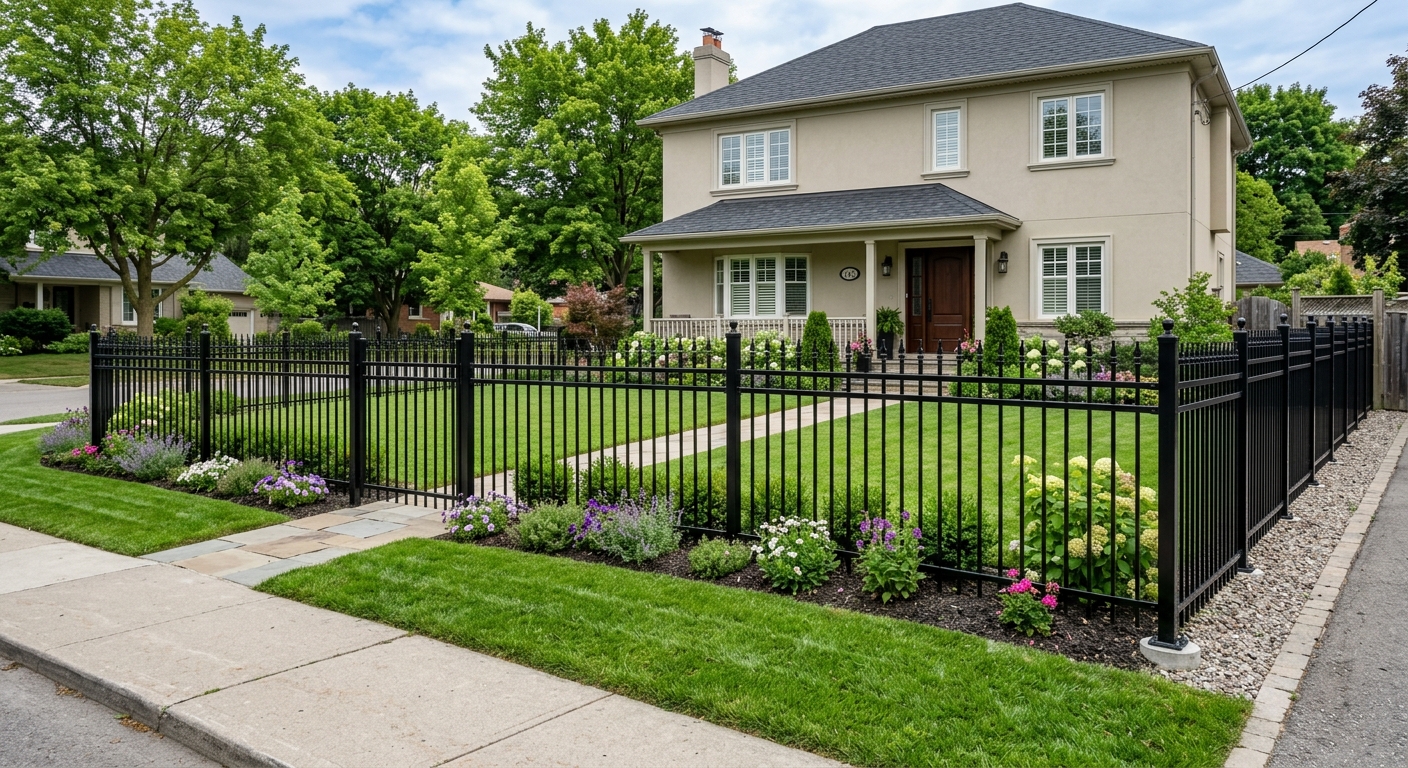
Fencing options and costs in Mission
In Mission, British Columbia, homeowners typically choose fences based on a mix of privacy, maintenance comfort, and how well the fence holds up to our mild but wet Lower Mainland–Southwest weather. Mission’s housing profile is a strong indicator of fencing demand: about 76.9% of households are homeowner households, and 64.7% of local dwellings are single-detached houses—each detached property is a potential fencing project. That demand is especially noticeable in family-oriented neighbourhoods like west Mission and around the newer developments near the Mission Main corridor, where backyard boundary lines are often updated as homes change hands.
Pricing in the Lower Mainland–Southwest usually lands higher than “paper minimum” installs because crews must account for frost heaving risk, wetter Fraser Valley soils, and wind that can load panels during storms. Even though BC’s coastal freeze is milder than inland regions, contractors still commonly set posts deeper than a basic minimum to limit shifting, and deeper holes plus more concrete labour can move a job up into the mid-range. Site access, slope, and finish grade are also major cost drivers—wood and vinyl often need more careful alignment to keep gaps consistent.
For reference, typical installed pricing in this region generally follows these broad bands: chain-link is the lowest-cost route, wood sits mid-range, vinyl/PVC costs more due to structural components, and aluminum/metal is usually highest due to fabrication and install time. Use the table below to compare typical options before you start collecting itemized quotes.
| Material |
Lifespan |
Maintenance |
Privacy Rating |
Price per Linear Foot |
| Pressure-treated pine (standard wood) |
10–15 years |
Stain/seal every 2–3 years |
High (solid/board) |
$55 – $95 |
| Cedar (natural rot resistance) |
15–25 years |
Light staining/cleaning every 2–4 years |
High (solid/board) |
$65 – $110 |
| Vinyl / PVC (no-maintenance) |
20–30 years |
Rinse annually; no staining |
Medium-High (solid panel) |
$75 – $130 |
| Chain-link (galvanized steel) |
25–40 years |
Occasional rinse; straighten wire if needed |
Low (open mesh) |
$30 – $55 |
| Aluminum ornamental |
20–35 years |
Wash annually; inspect gates |
Low-Medium |
$90 – $170 |
| Composite / recycled material |
25–35 years |
Wash as needed; no staining |
High (solid-style boards) |
$85 – $150 |
Prices are estimates only and vary by project scope, site access and material selection.
What affects the price of fencing in Mission
In Mission and across the Lower Mainland–Southwest, two quotes for what looks like the “same” fence can easily differ by 30–50%. The biggest reason isn’t just materials—it’s how site conditions and install methods change labour time and how much material is needed. In British Columbia’s wetter conditions, crews often spend more time preparing the ground, setting posts consistently, and managing drainage so panels sit true. That labour can be higher than inland comparisons, even when the sticker price for one fence type seems similar.
Frost and wind shape the groundwork. Frost line depth matters because posts need to be set below the frost depth to limit heaving; in many Canadian regions, this works out to typically about 4–6 inches below the design frost line. While coastal BC freeze is shallower than Ontario/Alberta, contractors still commonly set posts deeper than “minimum,” especially for privacy fences where a shifted panel is more noticeable. In colder inland regions, posts may need roughly 1.5–2.0 m of embedment, which is why those jobs often require concrete setting and longer posts that raise both material and labour. Mission sits closer to the coastal end of that spectrum, but wet Fraser Valley soils frequently mean deeper holes, more concrete, and higher build costs than dry-site installs.
Concrete examples from typical Mission sites: (1) clayey or saturated soil often forces deeper post holes and more concrete to stabilize corners and gates, (2) sloped backyards near central Mission can require raked or stepped rail lines, increasing cut-and-fit time, and (3) removing an older fence that’s half-failed from rot may require hauling and extra disposal charges. If you’re choosing between wood at about $55–$95 per linear foot and vinyl/PVC at roughly $75–$130, the price jump is often justified on long boundaries where fewer future touch-ups matter—especially when you’re already paying for deeper post setting and solid privacy panels.
| Price Factor |
Why It Matters |
Cost Impact |
| Fence length in linear feet |
The longer the run, the more posts, rails, hardware and labour are required. |
Usually the largest driver; scales linearly. |
| Post depth required |
Frost heave prevention can require deeper embedment and longer posts. |
Can add hours per line and increase concrete/post cost. |
| Post setting method |
Concrete provides stability in wetter soils and at high-load points. |
Concrete setting typically costs more than gravel pack or driven posts. |
| Material choice |
Different materials have different weights, assembly methods and component costs. |
Vinyl/PVC and aluminum generally cost more than chain-link and basic wood. |
| Gate count and type |
Gates need stronger frames, hinges, latches and often additional posts. |
Each gate can add a noticeable premium to the linear-foot rate. |
| Grade and terrain |
Slopes require stepping or racking for a straight visual line. |
More labour and material waste. |
| Old fence removal and disposal |
Hauling and demolition time can be significant, especially with posts left in ground. |
Can materially increase the total project cost. |
| Permit fees and survey / property line locate |
Compliance work and locating pins reduce the risk of boundary disputes. |
Often a smaller portion, but essential and not always included. |
Permits & regulations in British Columbia
In British Columbia, fence rules are commonly tied to height, location, and property line alignment. As a practical guideline, fences above a threshold—often around 2.0 m (6.5 ft) for rear areas and about 1.0–1.2 m (3–4 ft) near the front or corner—may require a building permit, depending on the municipal bylaws and the fence’s location. Regardless of height, all fences must respect your property lines and any municipal setback requirements.
Before digging any post holes, homeowners should call for utility locates. In BC this is done through BC 1 Call, and in other provinces via their local equivalent. If you want to avoid boundary disputes (a common headache in growing areas), obtain a survey or at least verify property pin locations before installation—especially on lots where previous fences may not have been exact.
Shared fence ownership and line-fence responsibilities are governed by provincial line-fences legislation, so if a fence is truly on or near a boundary, it’s worth confirming the shared-use situation before work starts.
How to verify a contractor in Mission, step by step: (1) check licensing/registration details via the relevant provincial/contractor registry sources the contractor provides, (2) request a current certificate of liability insurance naming you as applicable, and (3) confirm WSIB/WCB coverage status and ask for a clearance letter or proof of coverage before work begins.
Choosing the right fence material for Mission
Choosing a fence in Mission is mostly about matching your priorities—privacy, low maintenance, budget, and expected lifespan—to a material that can tolerate our Lower Mainland–Southwest mix of moisture, seasonal cold snaps, and occasional wind-driven storms. Pressure-treated pine is the budget-friendly starting point, but it typically needs staining or sealing every 2–3 years to prevent heavy grey weathering. Cedar looks better out of the gate and resists rot more naturally, yet it still benefits from periodic maintenance to keep it from aging unevenly.
Vinyl/PVC is a strong “set it and forget it” option for homeowners who want minimal upkeep; the trade-off is higher upfront cost and occasional concerns in extreme cold snaps (for example, panel expansion and snapping risk if installed incorrectly). Chain-link is the lowest-cost and tends to last a long time, but it offers little privacy unless you add slats or screening. Aluminum ornamental fencing offers a neat, rust-resistant look with mid-range pricing, but it’s usually not a privacy solution.
Post setting matters here too. With the region’s frost considerations, crews often set posts below frost risk and deeper holes may be required in wetter soils—so concrete-set posts are commonly used for corner posts, gate posts, and where yard conditions are saturated. In windy runs, stronger bracing and slightly tighter alignment may be used, particularly on solid privacy fence panels.
Where the price difference is justified: if you’re comparing wood around $55–$95 versus vinyl around $75–$130 per linear foot, vinyl often wins on long backyard lines where maintenance scheduling would be a burden and where you want fewer future touch-ups. For short runs or areas you can maintain easily, cedar or pressure-treated wood can deliver great value.
| Material |
Cold Tolerance |
Lifespan |
Annual Maintenance |
Best For |
Price Band |
| Pressure-treated pine |
Good (when properly installed and sealed) |
10–15 years |
Check + light cleaning; stain as needed |
Budget privacy with acceptable upkeep |
$55 – $95 |
| Cedar |
Good (natural rot resistance) |
15–25 years |
Wash/inspect; stain or treat every few years |
Natural look with better decay resistance |
$65 – $110 |
| Vinyl / PVC |
Very good (avoid improper fastening/spacing) |
20–30 years |
Rinse annually |
Low maintenance privacy |
$75 – $130 |
| Chain-link |
Excellent (metal resists cold) |
25–40 years |
Occasional rinse; tighten hardware if needed |
Security with minimal cost |
$30 – $55 |
| Aluminum ornamental |
Very good (no rust) |
20–35 years |
Wash annually; inspect for alignment |
Attractive front-yard boundaries |
$90 – $170 |
| Composite / recycled |
Good (manufactured boards vary by system) |
25–35 years |
Wash as needed; inspect hardware |
Privacy with low maintenance |
$85 – $150 |
How to choose a fencing contractor in Mission
Choosing a fencing contractor in Mission, British Columbia starts with proof and paperwork. First, verify the contractor’s coverage: ask for a current certificate of liability insurance (and confirm the coverage limits are adequate for your project). Next, request confirmation of WSIB/WCB coverage—legitimate fencing crews should be able to provide proof (often including a clearance letter or coverage documentation) before they begin. Finally, confirm the contractor is properly registered/licensed for the work they’re proposing (ask what licence or registration applies, and request the reference details in writing).
Get 2–3 itemised written quotes. You want a breakdown that separates materials from labour, and ideally lists post count/spacing, post embedment depth, rail/hardware components, and whether gates are included as separate line items. Be wary of “lump sum only” quotes with no scope detail; fence costs in this region can swing when concrete setting, disposal, or slope adjustments are treated differently.
Read the scope like a checklist: what’s excluded (site grading, stump removal, landscaping reinstatement)? Is permit pulling included if your fence triggers a permit threshold? Is disposal of the old fence included, or is hauling extra? Also confirm warranty terms: there should be a workmanship warranty length, a manufacturer/product warranty description, and clarity on whether warranties are transferable if you sell your home.
Payment schedule matters. For most residential fence builds, never pay more than 10–15% upfront, and use a holdback until the job is complete and inspected. Get the start date and completion estimate in writing so you have a timeline you can reference if weather or access issues arise.
- Provide proof of liability insurance (certificate) before signing.
- Provide WSIB/WCB coverage proof/clearance documentation.
- Show itemised post count, post spacing, and embedment depth assumptions.
- Confirm whether corner posts and gate posts are concrete-set.
- List all gate hardware (hinges, latch style, supports) in writing.
- State what’s included for sloped yards (raked vs. stepped panels).
- Specify material grade (e.g., cedar type, PT pine rating) and rail sizes.
- Confirm disposal and haul-away of old fence sections and posts.
- Confirm whether utility locating and any permit work are included.
- Detail warranty: workmanship length and product/manufacturer warranty.
- Set payment milestones with a holdback until completion.
- Get a written start date and completion estimate, with weather handling notes.
Red flags to watch for: (1) a quote that won’t specify post depth/embedment method, (2) refusal to provide insurance/coverage proof, (3) asking for large upfront payments (beyond 10–15%), (4) vague scope language like “fence as required” without dimensions, and (5) no written timeline or warranty details.
Frequently asked questions — fencing in Mission
How tall can my fence be in Mission?
In Mission, British Columbia, fence height limits usually depend on where the fence sits (front/corner versus rear) and how the height is measured by the municipality. A common guideline is that fences above about 2.0 m (6.5 ft) in rear areas and roughly 1.0–1.2 m (3–4 ft) near the front or corners can trigger permitting requirements, but the final answer depends on the specific location and bylaw rules. If you’re planning a tall privacy fence for backyards, it’s smart to confirm the height measurement location and setbacks before materials are ordered. Also consider that older homes in Mission were often built before newer boundary practices—around 42.4% of homes are older than 1981—so verifying your property line with pins/survey helps avoid costly rework.
Should fence posts be set in concrete here?
Often, yes—especially at critical points like corner posts, end posts, and gate posts—because Mission’s wetter Fraser Valley soils can hold water and increase the risk of movement without solid stabilization. Even though coastal freeze is milder than inland Canada, contractors still commonly set posts below local frost risk to reduce heaving. In practical terms, many installers use deeper holes and concrete setting where loading and drainage conditions demand it. If your soil is very wet, concrete can be the difference between a fence that stays plumb versus one that develops leaning or uneven gaps. If you’re trying to control cost, ask your contractor to explain which sections will be concrete-set versus gravel-pack or other methods, and why—good quotes will connect the method to your soil and fence style.
What's the best fence for privacy?
For privacy in Mission, the best-performing options are typically solid privacy-style boards or solid-panel systems made from wood, vinyl/PVC, cedar, or composite. Chain-link has very limited privacy by itself, and aluminum ornamental is usually low to medium privacy because it’s designed to look open and decorative. Vinyl/PVC and cedar both handle Lower Mainland moisture well when installed correctly with proper post depth and drainage considerations; vinyl is popular for homeowners who don’t want to stain. If you’re budgeting, pressure-treated wood is usually the mid-range value at roughly $55–$95 per linear foot, while vinyl commonly runs higher, often around $75–$130 per linear foot. If your top priority is long-term “low hassle,” vinyl or composite can justify the premium on longer backyard lines.
How do I compare fencing quotes?
To compare fencing quotes fairly in Mission, ask for itemised documents—not just a single total. You want the quote to list fence length, post count/spacing, post embedment depth, and the setting method (concrete vs. gravel pack). Make sure gates are clearly broken out (walk-through versus double-drive), and confirm whether disposal of the old fence is included. Also confirm whether permits and property line locating are included if required. Two quotes can have similar totals but differ in workmanship details: for example, one crew might plan deeper post holes and concrete-set gates (stability) while another uses shallower installs (lower immediate cost). A strong contractor will explain the differences and tie them to local soil, frost considerations, and wind loads.
How long does fence installation take in Mission?
Typical fence install timelines in Mission vary mainly with length, gate count, site access, and whether you’re removing an older fence. As a rough homeowner expectation, a small project (short run with one gate, minimal removal) can be completed in a day, while medium yards often take 2–3 days. Longer runs, sloped yards requiring raked/stepped sections, and jobs with extensive concrete setting (especially corners and gates) can extend the schedule. Weather can also matter in the Lower Mainland: heavy rain can slow digging and concrete setting, and saturated soil may require more preparation. If you’re comparing quotes, ask for a written start date and completion estimate, and confirm how the contractor handles weather delays and material delivery timing.
Can I install a fence on a slope in Mission?
Yes, you can install a fence on a slope in Mission, and many yards here do. The key is how the fence is graded: contractors typically use racked panels (following the slope at an angle) or stepped sections (creating “stairs” in the fence line). The correct method depends on your material system and how you want the top rail to align visually. Sloped yards can increase labour because panels may need more cutting, tighter measurements, and extra hardware adjustments to keep consistent spacing. It also affects post depth because the ground elevation changes along the run, so good installers will measure and plan post lengths accordingly to prevent uneven gaps or leaning. When you get quotes, ensure the scope states whether the fence will be raked or stepped and how that impacts labour and material waste.