Fencing options and costs in Belleville
Belleville is a busy place to live, with detached homes making up about 59.4% of dwellings—each one is a potential fencing project for backyards, side yards, and pet/security runs. With 14,720 homeowner households in the area (Statistics Canada, 2021 Census), demand stays steady year-round, especially when families add privacy for backyard living or upgrade older fence lines.
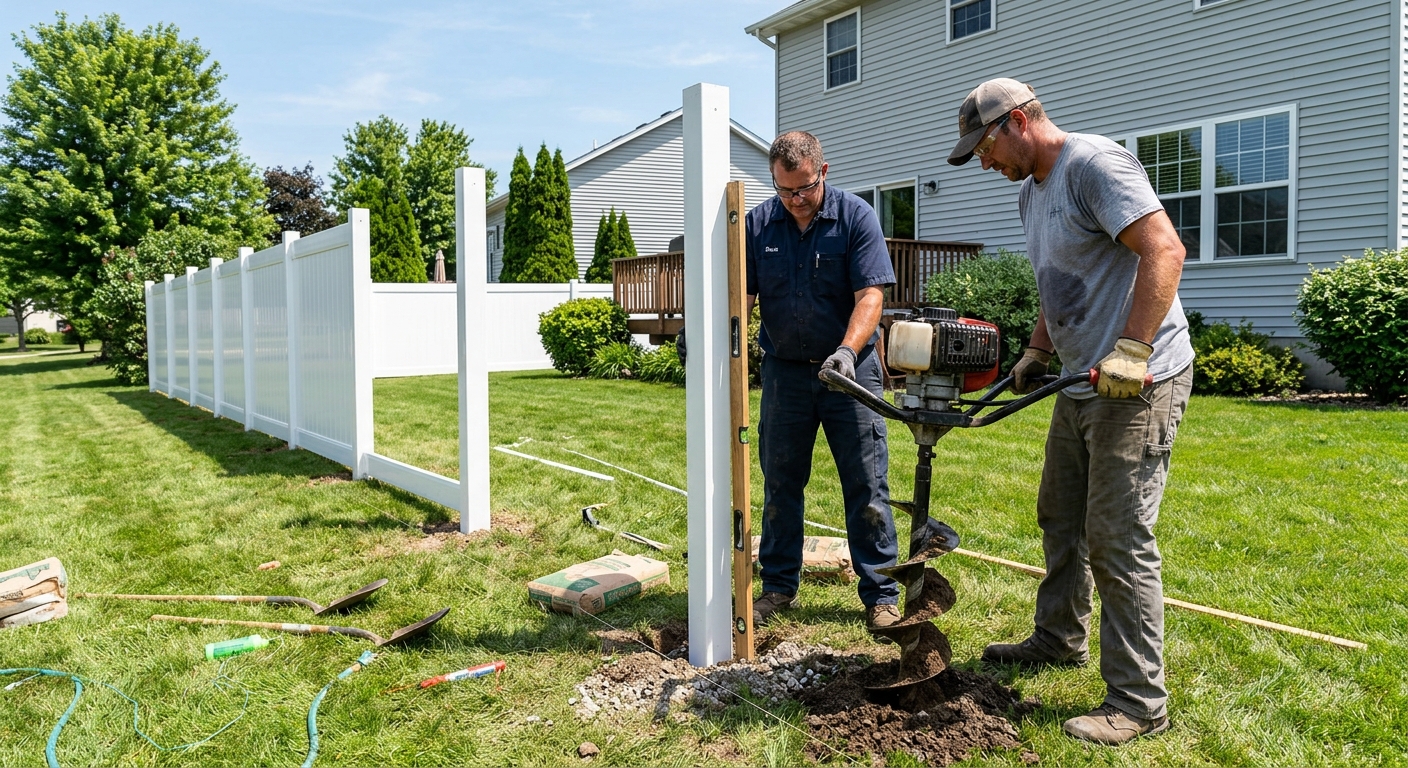
In the Kingston–Pembroke economic region, fencing pricing is shaped by a few local realities. Frost penetration in southern and eastern Ontario is commonly planned around 1.2 m (4 ft), so most contractors set posts deeper—often 36–48 inches—to reduce heaving and call-backs in freeze–thaw cycles. Clay and silty pockets around the Bay of Quinte and parts of the St. Lawrence corridor can hold water, so contractors frequently recommend concrete-set posts for gates and structural sections, which adds labour and materials. At the same time, Belleville’s wind exposure near Lake Ontario and the Bay of Quinte can push design choices (post spacing and sturdier framing), particularly for 6–8 ft privacy fences.
Trade demand is especially strong in established neighbourhoods like West End Belleville and the Quinte area where many homes were built before 1981 (63.6%—Statistics Canada, 2021 Census), so there’s a lot of fence replacement rather than new builds. The result is that pricing can vary based on site access (hand-digging versus augering), soil conditions, and fence style.
Below is a practical comparison of common fence materials and what you can typically expect to pay per linear foot in Belleville.
| Material |
Lifespan |
Maintenance |
Privacy Rating |
Price per Linear Foot |
| Pressure-treated pine (standard wood) |
10–15 years |
Stain/seal every 2–3 years |
7/10 (solid panels); 4–6/10 (lattice/spacing) |
$55–$95 |
| Cedar (natural rot resistance) |
15–25 years |
Light staining every 2–4 years (helps longevity) |
8–9/10 (solid pickets/panels) |
$75–$130 |
| Vinyl / PVC (no-maintenance) |
20–30 years |
Rinse as needed (no sealing) |
8–10/10 (solid privacy styles) |
$75–$140 |
| Chain-link (galvanized steel) |
20–30 years |
Occasional rust-touch checks (if damaged) |
2–4/10 (low privacy unless you add screening) |
$40–$80 |
| Aluminum ornamental |
25–40 years |
Rinse; touch up paint if ever scratched |
2–5/10 (decorative spacing) |
$90–$160 |
| Composite / recycled material |
25–35 years |
Minimal cleaning; avoid heavy scraping |
7–10/10 (depends on slat/panel design) |
$95–$160 |
Prices are estimates only and vary by project scope, site access and material selection.
What affects the price of fencing in Belleville
In Belleville and across Kingston–Pembroke, two quotes for what looks like the “same fence” can land 30–50% apart because the drivers aren’t always visible from the property line. The big ones are soil and post depth, gate complexity, and whether the contractor is building for wind loading and long-term movement in freeze–thaw conditions. Even within Ontario, crews that price closer to the low end of the local market often have simpler access and easier ground (more augering, less re-work), while higher bids usually include deeper concrete-set work, more bracing, and extra labour for tight lots.
Frost line depth sets how deep posts must be set to prevent heaving. In cold Ontario, posts are commonly placed 4–6 inches below the design frost depth, which often means setting posts roughly 1.5–2.0 m into the ground for many typical installations. That pushes up cost because it requires longer posts, deeper auger work (or hand-digging where rock blocks boring), and more concrete for structural sections. For gates—especially drive-through double gates—concrete-set posts are the norm.
Wind exposure can also change the design. While not as extreme as the Prairies, Belleville areas nearer Lake Ontario and the Bay of Quinte can see gusts that loosen lighter fences. Contractors may tighten post spacing or upsize framing for 6–8 ft privacy fences, which can shift a project from wood at the $55–$95 band toward cedar or vinyl at higher bands (for example, vinyl/PVC often lands in the $75–$140 range). In BC you sometimes see faster rot due to wet conditions (different climate driver), but in Belleville it’s the freeze–thaw movement and water-holding soils that most often add cost.
Concrete examples from Belleville jobs: (1) a backyard fence on heavy clay with poor drainage typically needs deeper holes and more concrete to resist seasonal movement; (2) replacing an old fence on a slope may require stepped rails or raked panels, which increases materials and labour per run; and (3) when a crew can’t reach the corner for equipment, hand-digging and shorter working sections raises the installed cost. For homes built before 1981 (63.6%—Statistics Canada, 2021 Census), you’ll also see more removal and disposal, which adds another layer to the total.
| Price Factor |
Why It Matters |
Cost Impact |
| Fence length in linear feet |
The primary driver; every added foot repeats excavation, posts, rails and panels |
Major—often determines the bulk of the quote |
| Post depth required |
Frost-related movement requires posts set below the frost zone; deeper holes need longer posts and more concrete |
Major—can noticeably raise totals in winter-prone ground |
| Post setting method |
Concrete vs. gravel pack vs. driven posts affects stability around clay/silt and under freeze–thaw |
Medium to major—structural sections and gates cost more |
| Material choice |
Vinyl/PVC and composite cost more upfront than wood or chain-link; cedar sits between wood and premium plastics |
Medium to major—moves you between common local price bands |
| Gate count and type |
Walk-through gates are simpler; drive-through double gates need stronger frames and alignment |
Major for multiple/vehicle gates |
| Grade and terrain |
Slopes require stepped or raked systems; rocky yards may force hand work |
Medium—labour and waste increase |
| Old fence removal and disposal |
Hauling, demolition, and disposal fees add time and cost; hidden fasteners can slow removal |
Medium—can be significant on full tear-outs |
| Permit fees and survey / property line locate |
Locates and documentation prevent encroachment disputes; some higher fences may trigger permit needs |
Low to medium—often worth it to avoid rework |
Permits & regulations in Ontario
In Ontario, the permit requirement usually depends on fence height and location relative to your property lines. As a practical rule of thumb for Belleville homeowners, fences above about 2.0 m (6.5 ft) along the rear area and about 1.0–1.2 m (3–4 ft) at the front or corner are often the types of projects that trigger a building permit review. Even when a permit is not needed, every fence must respect your property line and comply with municipal setback bylaws.
Before digging any post hole, call for utility locates through Ontario One Call. This is non-negotiable—cut lines can stop your project and create serious safety risk. Also, if your boundary is unclear (common when older fences were installed decades ago), obtain a survey or a property pin locate so you’re fencing on your land.
Shared fence ownership and responsibilities are governed by provincial line-fences rules, so if your fence is on a shared boundary you should confirm who maintains it, what constitutes reasonable upkeep, and whether replacement costs are shared.
To verify your contractor before work starts: (1) confirm Ontario licensing/registration where applicable for fence contracting business activity using the appropriate online registry; (2) request a current certificate of insurance naming you as an additional insured for liability; and (3) verify WSIB/WCB coverage (clearance letter or active account confirmation) before excavation. These checks should happen before you pay any deposit.
Choosing the right fence material for Belleville
Picking the right fencing material in Belleville is mostly about balancing privacy, low maintenance, budget and lifespan—then matching it to local conditions. Pressure-treated pine is usually the lowest upfront choice, but in Belleville’s weather you’ll want to plan on staining or sealing about every 2–3 years to slow grey weathering and protect the wood from moisture swings. Cedar offers better natural rot resistance and typically looks better over time, but it still benefits from periodic staining to maintain its finish and reduce surface breakdown.
Vinyl/PVC is the most straightforward “set-and-forget” option for homeowners who don’t want ongoing maintenance. It doesn’t rot, but like all plastics it can be more sensitive to extreme cold impacts—so it’s important to use proper post depth and stable framing. Chain-link is the budget-friendly, long-life solution (often great for pet containment and securing side yards), but it provides minimal privacy unless you add lattice, slats, or vegetation screening. Aluminum ornamental looks sharp, won’t rust, and needs little upkeep, but it’s also a privacy-light option due to open pickets.
In Kingston–Pembroke, frost-related movement matters for every material. Posts typically need to be set below the frost depth (commonly around 36–48 inches in many Ontario installations), and concrete-set posts are strongly recommended for gates and structural runs—especially on clay/silty soils that hold water and amplify freeze–thaw. Wind and snow load also influence rail sizing and post spacing on taller runs.
Here’s a practical decision point: if your priority is privacy and you’re comparing wood versus vinyl for a similar solid-panel design, wood often starts in the $55–$95 per linear foot band, while vinyl/PVC commonly lands in the $75–$140 band. The extra upfront cost is justified when you want to avoid repeat painting/staining and prefer a longer “ownership hassle-free” window.
| Material |
Cold Tolerance |
Lifespan |
Annual Maintenance |
Best For |
Price Band |
| Pressure-treated pine |
Good with correct post depth and sealing |
10–15 years |
1–2 day check; stain/seal every 2–3 years |
Budget-focused privacy fences |
$55–$95 |
| Cedar |
Good; resists rot better than many woods |
15–25 years |
Inspect annually; stain every 2–4 years |
Natural look with better weathering |
$75–$130 |
| Vinyl / PVC |
Very good when installed on stable footing |
20–30 years |
Rinse as needed (usually seasonal) |
Low-maintenance privacy |
$75–$140 |
| Chain-link |
Excellent with galvanized steel |
20–30 years |
Occasional checks and repairs |
Security, pet containment, side yard boundaries |
$40–$80 |
| Aluminum ornamental |
Excellent; powder-coated systems resist weather |
25–40 years |
Rinse; touch up minor scratches if needed |
Front-yard curb appeal and light security |
$90–$160 |
| Composite / recycled material |
Good; stable when properly installed |
25–35 years |
Minimal cleaning; avoid hard impacts |
Long-life privacy with minimal upkeep |
$95–$160 |
How to choose a fencing contractor in Belleville
Start with compliance and protection. For Ontario fencing projects, ask for proof of insurance (liability certificate) and WSIB/WCB coverage—then verify it’s current. Your certificate of insurance should clearly list the insured party, the coverage limits, and the policy effective dates; it’s also ideal if the homeowner can be added as an additional insured. For WSIB/WCB, request a clearance letter or equivalent confirmation showing the contractor is in good standing before excavation begins.
Next, get 2–3 itemised written quotes. You want a breakdown that separates labour and materials, with line items for posts (including depth and setting method), rails, panels/slats, hardware, and gate work. Make sure each quote includes whether permits are required and who pulls the permit if applicable, plus what happens to your existing fence (removal and disposal). A common pricing mismatch is that one contractor includes concrete and deeper hole preparation while another assumes a lighter setting method.
Read the warranty terms closely: you should see a workmanship warranty length, the product/manufacturer warranty (if any), and whether coverage transfers if you sell your home. Keep the payment schedule sensible: never pay more than about 10–15% upfront, and use a holdback until the work is complete and you’ve approved final grading, straightness, and gate operation. Finally, insist on a written timeline with a start date and an estimated completion window.
- Request a detailed line-item quote (not just a single total).
- Confirm post depth and whether holes are augered or hand-dug when required.
- Ask if gates are built with structural framing and concrete-set posts.
- Verify concrete quantities or the setting method in writing.
- Check liability insurance is active and current (certificate supplied).
- Confirm WSIB/WCB clearance or standing before work begins.
- Clarify permit responsibility and whether setbacks/property lines are verified.
- Ask about utility locate responsibility (Ontario One Call process).
- Confirm removal and disposal is included if you’re replacing an old fence.
- Get the warranty terms in writing, including workmanship duration.
- Use a payment schedule with a holdback until final inspection.
- Require a written start/completion estimate and communication plan.
Red flags I often see in Belleville: quotes that don’t specify post depth or setting method, “cash only” offers without proper insurance documentation, missing itemised labour/material breakdowns, unclear gate hardware specs (especially for vehicle gates), and contracts that require full payment upfront or skip a written warranty.
Frequently asked questions — fencing in Belleville
Do I need a permit to build a fence in Ontario?
In Ontario (including Belleville), permits often depend on fence height and where the fence sits on your lot. A common guideline homeowners use is that fences above about 2.0 m (6.5 ft) at the rear and around 1.0–1.2 m (3–4 ft) at the front or corner are the types of projects that may require a building permit. Even if a permit isn’t needed, you must still follow municipal setback bylaws and respect property lines. Before you dig, call Ontario One Call to have utilities located. Because Belleville has a lot of older boundary markers and many neighbourhood fences were installed decades ago, I also recommend verifying property pins or getting a survey so you don’t end up on your neighbour’s land. A reputable local contractor should tell you clearly whether they handle the permit portion and what documentation is required.
How long does a wood fence last in Belleville?
A wood fence in Belleville commonly lasts about 10–15 years for standard pressure-treated pine, assuming correct post depth and periodic maintenance. The region’s freeze–thaw cycles and frost movement (planned around roughly 1.2 m design frost) mean posts need to be set below the frost zone to reduce heaving—especially on clay or silty soils that hold moisture. If you stain or seal on schedule (often every 2–3 years for pressure-treated), you’ll slow surface wear and keep the wood from breaking down faster. Cedar typically lasts longer—about 15–25 years—because it resists rot better, though it still benefits from staining. If your neighbour’s replacement cycle is frequent, the issue is often not the wood type alone but the post setting method and whether concrete is used where it matters (gates and structural runs).
Who owns and maintains a shared fence?
In Ontario, shared fence ownership and maintenance responsibilities are governed by provincial line-fences rules. Practically, that means the fence on or along a boundary can be treated as a shared asset, but what’s “shared” depends on where the boundary line is and how the fence is established. If your fence is truly on a shared boundary, both parties may be expected to contribute to reasonable maintenance and replacement, but disputes often happen when the fence was built slightly over the property line in the past. That’s why verifying property pins or having a survey locate can be critical before you replace a section. For Belleville homeowners, a helpful next step is to agree in writing on the fence type, scope, and who pays for what—particularly for privacy upgrades and gate changes, where costs can increase significantly compared with basic run replacement.
How do I find my property line before fencing?
To find your property line before installing a fence in Belleville, start with your survey documents (if you have them) or check what your property pins indicate. Many homeowners rely on older markers that can shift over time, so I recommend confirming boundary locations with a licensed surveyor or a pin locate service. This matters because fence disputes often come from assuming the existing fence is on the line when it was installed incorrectly years earlier. Before any post holes are dug, also complete Ontario One Call utility locates. When you’re speaking to a contractor, ask whether they include a property line locate or whether you’ll need it as an added step. A good quote will also describe where the fence will be measured from and how they handle corners, slopes, and any encroachments.
What's the most low-maintenance fence?
For low maintenance in Ontario, vinyl/PVC is usually the easiest day-to-day option, because it doesn’t need staining and typically just requires occasional rinsing. In Belleville, where many fences are replaced in older neighbourhoods, homeowners often choose vinyl/PVC when they want to avoid repeat wood maintenance that’s required in freeze–thaw conditions. Chain-link is also low maintenance and can last a long time, but it won’t provide privacy unless you add screening or a different panel style. As a quick cost reference, vinyl/PVC installations often sit in the $75–$140 per linear foot band, while pressure-treated pine is commonly lower at about $55–$95. If you’re comparing options, the “most low-maintenance” choice usually depends on whether you want privacy (vinyl privacy styles) or security only (chain-link), plus how much you’re willing to spend to reduce upkeep.
How tall can my fence be in Belleville?
Fence height limits in Belleville are tied to where the fence sits (rear yard vs. front/corner areas) and the bylaw rules that apply to your property. As a general Ontario planning guideline, the rear often allows up to about 2.0 m (6.5 ft) without triggering additional steps, while front or corner areas are commonly around 1.0–1.2 m (3–4 ft). Higher fences may require a permit. Also remember that taller privacy fences catch more wind, so a contractor may need tighter post spacing, sturdier framing, and deeper or concrete-set posts—especially in Kingston–Pembroke’s frost-impacted soils. If your yard is near the Bay of Quinte/Lake Ontario exposure, wind loading can be a factor for 6–8 ft styles. The best move is to share your intended height and fence location with your contractor so they can confirm whether a permit and specific structural details are required.