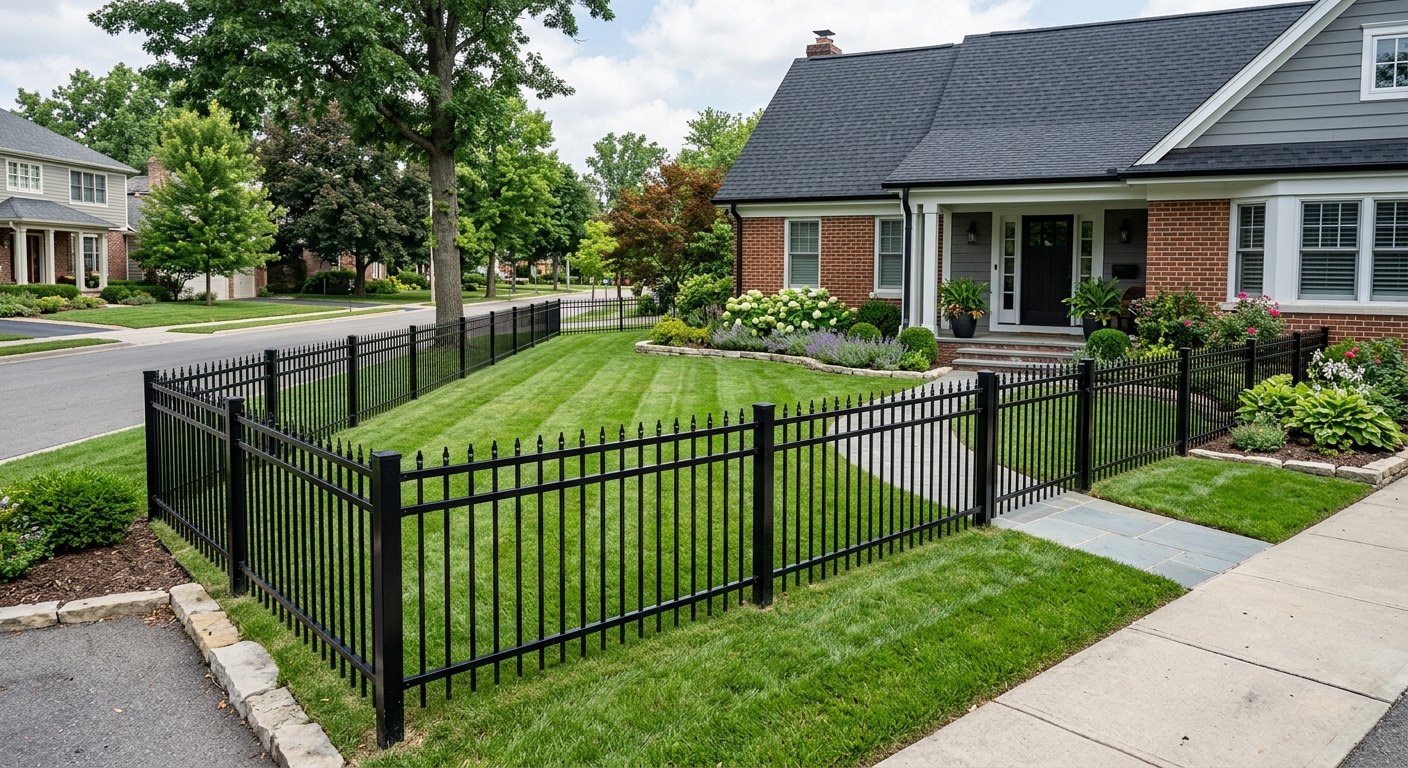
Fencing options and costs in Campbellford
Fencing in Campbellford is shaped by both homeowner expectations and the broader Toronto economic region, where contractors are used to building for freeze–thaw and spring thaw softness. With a 2021 population of 3,372, the town has a steady pace of residential upgrades, and fencing demand tends to track the number of detached homes and growing backyard renovations (Statistics Canada, 2021 Census). In practice, that means you’ll see a lot of privacy-panel work, especially along property edges where kids, pets, and garden privacy matter.
Toronto-area pricing is also directly influenced by post depth. Southern Ontario commonly assumes a frost line around 42”–48”, so installers typically set posts 3.5–4 ft deep for stability on a 6–8 ft privacy run. For most yards in Campbellford, that pushes contractors toward concrete-set posts instead of simple driven posts, which increases labour and ready-mix costs but improves long-term performance in clay and mixed soils.
We’re seeing the most year-round trade demand in established neighbourhoods near downtown Campbellford and along the riverfront outskirts, where lots are older and property lines can be tight—so access, layout, and post spacing often require extra care. Next, use the comparison table below to estimate material lifespan, maintenance needs, and typical pricing per linear foot for your project.
| Material |
Lifespan |
Maintenance |
Privacy Rating |
Price per Linear Foot |
| Pressure-treated pine (standard wood) |
10–15 years |
Stain/seal every 2–3 years |
High (solid panels) |
$65 – $120 |
| Cedar (natural rot resistance) |
15–20 years |
Seal/stain every 3 years (helps appearance) |
High (solid panels) |
$75 – $130 |
| Vinyl / PVC (no-maintenance) |
25+ years |
Rinse only; check fasteners after severe cold |
High (solid styles) |
$75 – $130 |
| Chain-link (galvanized steel) |
20–30 years |
Minimal; wash and re-tension if needed |
Low–Medium (privacy slats needed) |
$45 – $85 |
| Aluminum ornamental |
25+ years |
Occasional wash; inspect gates annually |
Low (open pickets) |
$90 – $160 |
| Composite / recycled material |
20+ years |
Low; clean and inspect for warping after freeze–thaw |
Medium–High (solid or board styles) |
$90 – $160 |
Prices are estimates only and vary by project scope, site access and material selection.
What affects the price of fencing in Campbellford
Fence quotes in Campbellford can vary by 30–50% for what looks like the same fence, especially across the Toronto economic region. The biggest reason is that pricing isn’t only the material—it’s the ground conditions, footing method, hardware quality, and how many hours it takes to lay it out correctly. Two contractors may both quote a 6 ft privacy fence, but one might price driven posts, while another prices concrete-set posts at the proper depth with heavier rails and tighter spacing for Ontario freeze–thaw.
In cold Southern Ontario winters, the commonly used design assumption is that posts need to be set about 4–6 inches below the design frost depth to reduce frost heave risk. With typical frost-line planning around 42”–48”, that often means 1.5–2.0 m into the ground in practice. Once you’re there, crews need longer posts, concrete, and more careful excavation, which increases material and labour. That’s why many homeowners see wood and vinyl privacy projects land closer to the higher end of the $65 – $120 (wood) or $75 – $130 (vinyl) ranges when the footing work is extensive.
Concrete examples from Campbellford: (1) a backyard with wet clay near the surface typically requires deeper, cleaner holes and more concrete volume, pushing the total toward the upper end of the price bands; (2) a fence line with a gate on a slope can add stepped panels and extra bracing, increasing labour even if the linear feet stay the same. Wind here isn’t prairie-level, but taller solid fences still need solid post sizing and spacing to avoid racking during winter thaw and spring gusts.
| Price Factor |
Why It Matters |
Cost Impact |
| Fence length in linear feet |
Directly determines materials, rails, posts, and labour hours |
Typically the largest driver; small length changes add up quickly |
| Post depth required |
Frost line determines hole depth and post length to prevent heaving |
More depth increases excavation time, concrete quantity, and post cost |
| Post setting method |
Concrete vs. gravel pack vs. driven posts affects stability in clay/mixed soils |
Concrete-set posts usually cost more up front but reduce long-term movement |
| Material choice |
Vinyl/cedar cost and durability vary; chain-link is cheaper but less private |
Shifts the job into different price bands (e.g., chain-link vs privacy wood) |
| Gate count and type |
Gates require heavier frames, hinges, and alignment work |
Multiple walk gates or a drive-through (double) gate adds labour and hardware |
| Grade and terrain |
Slopes require stepping, racking options, or custom panel cuts |
More labour time and sometimes more materials (extra rails/bracing) |
| Old fence removal and disposal |
Disassembly, haul-away, and post extraction are labour-intensive |
Can add a meaningful per-run cost, especially if posts are concreted |
| Permit fees and survey / property line locate |
Some heights trigger permits; locating pins prevents encroachment disputes |
Adds line-item costs; helps avoid rework and legal/relocation headaches |
Permits & regulations in Ontario
In Ontario, fences above a height threshold often require a building permit. While by-laws can vary by municipality, a common planning rule homeowners use is: rear yards at about 2.0 m (6.5 ft) and front or corner areas around 1.0–1.2 m (3–4 ft). The practical takeaway for Campbellford is to confirm height limits and placement (especially if the fence is near a street corner) before you order materials.
All fences must respect property lines and any municipal setback requirements. Before any post holes are dug, call for utility locates through Ontario One Call to mark buried services. Also, consider obtaining a survey or at minimum confirming your property pins/locate marks. This prevents encroachment disputes that can force partial rework.
Shared fence ownership is handled through Ontario’s line-fences framework, which governs who is responsible for maintaining a shared boundary fence. If you share a boundary and you’re planning a replacement or major repair, it’s wise to communicate in writing with the neighbour.
Step-by-step for verifying a contractor in Campbellford: (1) check the contractor’s Ontario licence/registration status through the appropriate provincial licensing pathway for the trade; (2) request a certificate of insurance showing general liability—ensure it’s current; (3) ask for evidence of WSIB coverage (or the applicable WCB coverage where required for your specific contractor) and confirm the clearance letter is not expired; (4) keep a copy of these documents with your contract so there’s no ambiguity if issues arise.
Choosing the right fence material for Campbellford
Choosing fence material in Campbellford is mostly about matching your priorities—privacy, low maintenance, budget, and lifespan—to the reality of freeze–thaw cycles. Pressure-treated pine is the budget-friendly route, but it typically needs staining or sealing every 2–3 years to keep it looking even and to reduce grey weathering. Cedar looks better for longer and naturally resists rot, but it still benefits from maintenance to keep boards from drying unevenly.
Vinyl/PVC is popular for busy households because it’s low maintenance and tends to keep its colour. In extreme cold, boards can contract and fasteners may need a careful inspection, so installation details matter. Chain-link is the longest-lasting lowest-cost option in most cases, but it won’t give you privacy unless you add slats or go with a privacy screen or upgraded system. Aluminum ornamental fences are attractive and won’t rust, but they’re primarily an aesthetic or boundary marker and provide low privacy.
For post stability, Toronto-region best practice (relevant to Campbellford) still favours concrete-set posts and sufficient depth based on the frost line. That means your material choice influences cost, but the footing plan drives the structural durability for tall privacy fences, especially in wet clay spots. If you’re planning a tall, solid run (6–8 ft), pick heavier rails, proper post spacing, and corrosion-resistant hardware.
A dollar example: if pressure-treated wood privacy is quoted near the low end of $65 – $120, switching to vinyl may land closer to $75 – $130. The difference is often justified when you value not re-staining and want a 20+ year performance expectation—especially if you’d otherwise spend weekends maintaining and repairing boards every couple of seasons.
| Material |
Cold Tolerance |
Lifespan |
Annual Maintenance |
Best For |
Price Band |
| Pressure-treated pine |
Good (with proper sealing and correct post depth) |
10–15 years |
Low effort but ongoing: inspect and touch up stain every 2–3 years |
Budget privacy with periodic homeowner upkeep |
$65 – $120 |
| Cedar |
Good (stable boards; better resistance to rot) |
15–20 years |
Moderate: reseal/stain roughly every 3 years |
Attractive privacy where you want better rot resistance |
$75 – $130 |
| Vinyl / PVC |
Very good (contraction handled by correct installation) |
25+ years |
Very low: seasonal rinse and check fasteners after severe cold |
Low maintenance privacy |
$75 – $130 |
| Chain-link |
Very good (corrosion-resistant galvanizing) |
20–30 years |
Minimal: occasional wash and tighten tension if needed |
Security around yards, pools, or utility areas |
$45 – $85 |
| Aluminum ornamental |
Excellent (won’t rust) |
25+ years |
Low: wash and inspect gates/hinges annually |
Front boundaries where appearance matters more than privacy |
$90 – $160 |
| Composite / recycled material |
Good (freeze–thaw tolerant if installed to spec) |
20+ years |
Low: clean and inspect for board alignment after winter |
Durable privacy with reduced maintenance |
$90 – $160 |
How to choose a fencing contractor in Campbellford
When you’re choosing a fencing contractor in Campbellford, start with proof of coverage. In Ontario, request: (1) licence/registration status for the contractor/trade and confirm it’s valid for the scope they’re quoting; (2) liability insurance—ask for a certificate of insurance and make sure the policy is current; and (3) WSIB/WCB coverage documentation where required for their workforce. You can check clearance dates on the paperwork and confirm the company name matches the quote. If anything is missing or outdated, treat it as a major warning sign.
Next, insist on 2–3 itemised written quotes. The best quotes separate labour from materials and list the footing plan (e.g., post depth and concrete-set vs gravel pack). Ask whether permit pull and inspections are included if needed. Clarify disposal: will the contractor remove old fencing and haul-away debris, or is that your responsibility? A quote that only shows a lump sum often hides scope gaps that become change orders.
Warranty matters too. Ask for the workmanship warranty length and whether it’s in writing. Also request the manufacturer/product warranty for posts, panels, rails, and gates, and confirm whether the warranty is transferable to future owners.
For payment, avoid paying more than 10–15% upfront. Hold back a portion until the job is complete and gates operate correctly. Finally, get a firm start date and completion estimate in writing, including scheduling conditions (weather days, concrete curing, and any dependency on material availability).
- Verify insurance certificate dates and that coverage matches fencing work (not just general office coverage).
- Ask for WSIB/WCB clearance information and confirm it’s current.
- Confirm post-depth plan based on frost-line best practice and soil conditions.
- Get spacing specs (panel spacing and rail thickness) in writing, not just a generic description.
- Require itemised quote lines for posts, rails, panels, fasteners, gates, and concrete.
- Check whether old fence removal and concrete post extraction are included.
- Confirm whether permits are required for your height and whether the permit pull is included.
- Review warranty terms for both workmanship and product components.
- Ask about gate alignment: how they prevent sagging and racking over winter.
- Request a written timeline including concrete curing time before latch/gate adjustment.
- Ensure the contract includes cleanup and disposal responsibility.
- Confirm payment schedule: 10–15% max deposit and a holdback until final walkthrough.
Red flags I see in Campbellford include contractors who won’t provide insurance/WSIB paperwork, quotes that mention “driven posts” without discussing frost stability, vague scopes that omit permit/disposal details, refusal to itemise labour versus materials, and payment schedules demanding large upfront deposits without a signed contract and start date.
Frequently asked questions — fencing in Campbellford
How do I compare fencing quotes?
Start by comparing the scope line-by-line, not just the total price. Ask each contractor to itemise materials and labour, including post type, post depth/footing method (concrete-set vs gravel pack vs driven), rail thickness, and gate hardware. Confirm whether disposal of the old fence is included and whether a permit is required for your height/location in Ontario. In Campbellford, where frost-depth planning affects post length and concrete volume, two “6 ft privacy” quotes can differ a lot if one includes proper deep concrete-set holes and the other does not. As a reference, wood privacy often lands around $65 – $120 per linear foot depending on footing complexity, while vinyl privacy frequently falls in a similar range near $75 – $130.
How long does fence installation take in Campbellford?
For many residential runs in Campbellford, a straightforward installation can take 1–3 days of active labour, but the real timeline depends on footing and curing. Concrete-set posts typically require time for proper setting before gates are fully adjusted and latched. If you’re removing an old fence, add time for dismantling, hauling, and extracting stubborn concreted posts. Sloped yards can also extend the schedule because panels often need stepping or raking to sit neatly. Weather matters too: thawed ground can slow excavation, and heavy rain can affect excavation quality. A well-prepared contractor will provide a start date, daily work plan, and an estimated completion date in writing.
Can I install a fence on a slope in Campbellford?
Yes, you can install a fence on a slope in Campbellford, but it needs the right construction approach. For privacy fences, the most common solutions are stepped panels (each section changes height) or racked panels where the system supports it. The key is to keep the fence level-to-ground visually while also maintaining structural integrity—especially for tall solid privacy styles that can rack in wind gusts. On sloped sites, taller posts and correct footing depth are even more important to prevent uneven movement over freeze–thaw. Make sure your quote specifies whether you’ll get stepped vs racked panels, and how the contractor will handle height transitions. This often affects labour more than material price, even when the total linear feet is unchanged.
What is the most weather-resistant fence for Campbellford's climate?
For Campbellford’s Southern Ontario freeze–thaw conditions, the most weather-resistant choice usually depends on how you balance maintenance and stability. Vinyl/PVC and high-quality cedar both perform well if posts are set at the right depth and installed with corrosion-resistant hardware. Chain-link is also very durable and resists rot because it’s metal—though it won’t provide privacy unless you add slats or a mesh privacy screen. The biggest climate risk isn’t just rain or snow; it’s frost heave. That’s why concrete-set posts at proper depth usually outperform driven-post installs for long-term stability. Pricing-wise, wood privacy often runs around $65 – $120 per linear foot, while vinyl privacy typically sits near $75 – $130, reflecting the long-term performance you’re paying for.
How do I prevent wood fence rot in Campbellford?
To prevent rot in Campbellford, focus on both materials and installation details. Use proper pressure treatment or choose cedar boards, but don’t rely on the wood alone—how the fence is installed matters just as much. Ensure posts are set deep enough for frost stability (commonly planned based on the frost line for Southern Ontario), and avoid leaving wood in constant contact with wet soil. Good practice includes concrete-set posts with correct drainage, corrosion-resistant fasteners, and proper spacing so air can circulate behind solid panels. Keep the finish system up: pressure-treated pine typically benefits from staining/sealing every 2–3 years, while cedar generally needs maintenance less often (often every ~3 years) but still performs better when sealed. Also, confirm your contractor uses end caps or top boards properly to reduce water pooling.
What is the cost per linear foot for fencing in Campbellford?
In Campbellford, cost per linear foot typically follows the broader Toronto-region price bands because footing depth and local building practice drive labour and materials. As a baseline: chain-link often ranges around $45 – $85, aluminum ornamental about $90 – $160, and wood privacy generally sits around $65 – $120. Vinyl/PVC privacy commonly falls near $75 – $130 per linear foot. Your actual number can shift based on access, gate count, slope complexity, and whether the project includes old fence removal and disposal. The biggest swing factor is usually footing—if the quote specifies deep concrete-set posts, you’re paying for long-term stability rather than trying to cut corners.