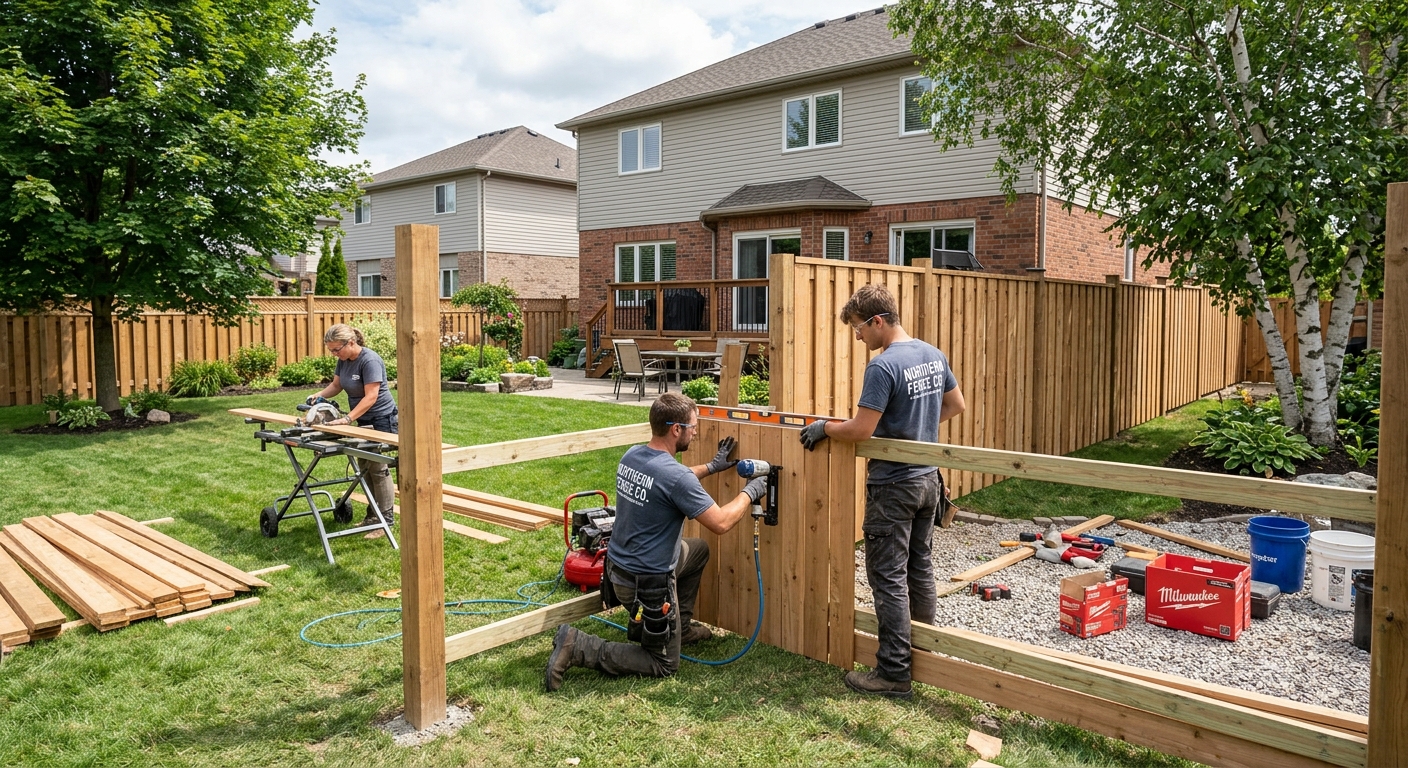
Fencing options and costs in The Beaches
In The Beaches, getting a fence that looks right on a mature neighbourhood street and holds up through Ontario winters is the difference between a “good deal” and a long-term win. With 21,567 residents in the area (Statistics Canada, 2021 Census), and a steady stream of single-family property upgrades, fencing demand stays consistent year-round. Each additional detached home on a block is effectively another potential privacy or boundary upgrade, which is why reputable crews in the Toronto economic region tend to book earlier during spring and early summer.
Toronto-area climate is a key driver of cost. The commonly used frost line guideline in Southern Ontario means fence posts need to be set deep enough to resist frost heave—especially for 6–8 ft privacy fences. Add mixed soils around the city (often including clay) and the practical result is that most installers push for concrete-set posts rather than simple driven posts. Labour time rises because excavation, post setting, and alignment take longer, and that’s reflected in the typical price bands you’ll see for wood and vinyl.
In The Beaches proper, I often see the highest demand around areas like Queen Street East and the surrounding residential blocks where homeowners prioritize privacy from traffic and winter wind exposure along busier corridors. From there, the decision usually comes down to balancing privacy needs, maintenance tolerance, and budget. Use the comparison below to anchor your expectations before you request itemised quotes from contractors.
| Material |
Lifespan |
Maintenance |
Privacy Rating |
Price per Linear Foot |
| Pressure-treated pine (standard wood) |
10–15 years (typical) |
Stain/seal every 2–3 years; inspect posts |
Medium–High (solid panels; depends on picket spacing) |
$12 – $18 |
| Cedar (natural rot resistance) |
15–25 years (typical) |
Light staining/cleaning every 2–4 years |
High (solid or tight picket) |
$14 – $22 |
| Vinyl / PVC (no-maintenance) |
20–30 years (typical) |
Rinse occasionally; no painting |
High (solid/vinyl privacy styles) |
$16 – $24 |
| Chain-link (galvanized steel) |
20–35 years (typical) |
Occasional tightening; rust control (minimal) |
Low (privacy only with slats/hedges) |
$8 – $13 |
| Aluminum ornamental |
25–40 years (typical) |
Wash annually or as needed |
Low–Medium (open picket design) |
$15 – $28 |
| Composite / recycled material |
20–35 years (typical) |
Minimal; clean and check hardware |
Medium–High (solid styles available) |
$18 – $28 |
Prices are estimates only and vary by project scope, site access and material selection.
What affects the price of fencing in The Beaches
In the Toronto economic region, two homeowners can receive fence quotes that differ by 30–50% for the “same-looking” fence because pricing is driven by site conditions and how posts are installed—not just by the material on the brochure. The biggest swing factor is how deep and how securely posts must be set for frost protection. In cold Ontario winters, posts typically need to be set about 4–6 inches below the design frost depth, which often translates to roughly 1.5–2.0 m into the ground. That depth increases excavation time and ready-mix/concrete costs, and it usually means longer posts and more hardware per section.
Wind exposure also changes build specs. Even though The Beaches isn’t an open-wind prairie setting, taller solid privacy fences in neighbourhoods with more corner wind paths can still rack. Contractors respond by increasing post size and tightening spacing (commonly 6–8 ft centres for privacy panels), which raises labour and materials. That’s why vinyl privacy often lands in the higher end of the Toronto pricing bands for fencing rather than at the bare-minimum rate.
Concrete examples from The Beaches: (1) A 50 ft run on firm, accessible ground often comes closer to the lower end of typical wood installation pricing (about $65–$120 total per linear foot as a band reference), while (2) the same length with concrete-set posts, backfill, and careful alignment can push into the higher end because excavation and setting take longer. (3) If your yard is sloped or you need stepped/raked panels, the waste and labour increase—sometimes enough to shift a project from “mid-range” into a top-of-band estimate. Finally, demolition of an older fence, haul-away, and location of buried services can add hidden time, even before materials are considered.
| Price Factor |
Why It Matters |
Cost Impact |
| Fence length in linear feet |
Primary driver: every extra foot adds posts, rails, and labour |
High |
| Post depth required |
Frost line determines post length and hole depth; deeper holes cost more |
High |
| Post setting method |
Concrete vs. gravel pack vs. driven posts changes material + labour time |
Medium–High |
| Material choice |
Vinyl/cedar/cable systems have different panel weights and hardware needs |
Medium–High |
| Gate count and type |
Double gates and drive-through clearance require sturdier framing |
Medium–High |
| Grade and terrain |
Sloped yards require stepped or raked panels and more layout time |
Medium |
| Old fence removal and disposal |
Haul-away, demolition complexity, and damage to surrounding areas affect labour |
Medium |
| Permit fees and survey / property line locate |
Some fence heights and locations need approvals or verification of boundaries |
Low–Medium |
Permits & regulations in Ontario
In Ontario, fence rules are typically managed through municipal by-laws, with height thresholds that often trigger permitting. As a practical guideline in many Ontario municipalities, fences above about 2.0 m (6.5 ft) at the rear and about 1.0–1.2 m (3–4 ft) at the front or corner may require a building permit. Your exact requirement depends on where the fence sits relative to the property line and the street-facing yard. Regardless of permitting, you must respect property lines, municipal setbacks, and any shared boundary arrangements.
Before any post hole is dug, call for utility locates (Ontario One Call) so locate flags and markings can prevent damage to underground services. If you have any doubt about the boundary—especially on older lots—get a survey or a property-pin locate before installation. This protects you from encroachment disputes, which are costly to resolve after the fact.
Shared fence ownership and maintenance responsibilities can be influenced by Ontario line-fences legislation, so if your fence sits directly on a boundary, treat “who pays” as something to confirm in writing before construction.
To verify your contractor properly, ask for: (1) their Ontario licence/registration information (from the applicable provincial registry for their trade), (2) current liability insurance certificate of insurance showing your address listed as an additional interest where possible, and (3) proof of WSIB (Workplace Safety and Insurance Board) coverage for workers. Look at the COI for policy period and coverage limits; ask for WSIB clearance/coverage documentation rather than a verbal claim. If they won’t provide these documents before work begins, that’s a major warning sign.
Choosing the right fence material for The Beaches
Choosing the right fence material in The Beaches is mostly about matching your priorities to how Ontario weather behaves on your specific property. Pressure-treated pine is the budget-friendly starting point, but it needs staining or sealing about every 2–3 years to prevent grey weathering and to slow fibre breakdown around fasteners. Cedar is a step up: it resists rot better and typically holds its look longer, though it still benefits from periodic maintenance for best appearance. Vinyl/PVC is popular because it’s low maintenance, but in extreme cold it can become more brittle than wood or steel—so it’s important that panels are correctly installed with proper hardware and spacing. Chain-link is usually the longest-life option at the lowest upfront cost, but it won’t give you real privacy unless you add slats or rely on landscaping.
Post depth matters in Toronto. With the Southern Ontario frost line guideline commonly used in this region, most privacy fences need concrete-set posts for stability—particularly for 6–8 ft heights where higher wind loads increase racking risk. Aluminium ornamental fencing is often chosen where you want curb appeal with a bit of boundary definition; it’s corrosion-resistant and performs well through wet winters.
For cost context: if you’re comparing wood vs. vinyl, it’s not unusual to see total installed pricing land around the mid-to-high end for vinyl privacy (commonly within the Toronto vinyl/PVC bands of about $75–$130) when compared to wood privacy (often $65–$120). The “justify it” moment is usually when you’re factoring maintenance time—if you don’t want annual or semi-regular attention, the higher upfront vinyl cost can be cheaper over the fence’s life.
| Material |
Cold Tolerance |
Lifespan |
Annual Maintenance |
Best For |
Price Band |
| Pressure-treated pine |
Good with proper installation and sealing |
10–15 years (typical) |
Low to moderate (stain/seal every 2–3 years) |
Budget privacy with willingness to maintain |
$65 – $120 |
| Cedar |
Very good; holds up well to moisture cycles |
15–25 years (typical) |
Low to moderate (clean/stain every 2–4 years) |
Better appearance and longer natural resistance |
$75 – $130 |
| Vinyl / PVC |
Good; avoid improper hardware spacing |
20–30 years (typical) |
Very low (rinse as needed) |
Low-maintenance privacy in Ontario winters |
$75 – $130 |
| Chain-link |
Excellent in cold; minimal rot risk |
20–35 years (typical) |
Very low (tighten/inspect) |
Security with minimal cost |
$45 – $85 |
| Aluminum ornamental |
Excellent; corrosion-resistant |
25–40 years (typical) |
Low (wash annually or as needed) |
Curb appeal with defined boundary lines |
$90 – $160 |
| Composite / recycled |
Good; depends on product quality |
20–35 years (typical) |
Low (periodic cleaning and hardware checks) |
Privacy with reduced maintenance |
$85 – $150 |
How to choose a fencing contractor in The Beaches
When you hire a fencing contractor in The Beaches, don’t rely on “we do fences” as the only qualification. Start with documentation. Ask for Ontario business/licence information that matches their work category, then request a current certificate of liability insurance (COI) and proof of WSIB coverage for workers. To check: (1) verify the COI dates are current and the coverage limit is reasonable for property work, (2) confirm WSIB clearance/coverage—don’t accept a photo of a policy without readable details, and (3) ensure the person pulling permits (if needed) is the same party named on the paperwork or clearly identified in the contract.
Next, get 2–3 itemised written quotes. A good quote breaks out materials and labour separately and should clearly list: post size/type, post depth approach, panel type, gate framing, concrete volume allowance (when used), hardware grade, and whether you’re including old fence removal. Watch for scope gaps: is permit pull included (when required), is disposal included, and who repairs landscaping damage? Fencing on mature lots often uncovers roots or uneven subgrade, and reputable firms explain how they’ll handle it.
Warranty should be specific: workmanship warranty length (often stated in years), manufacturer warranty for materials, and whether the warranty is transferable to future owners. For payment, use a sensible schedule—never more than 10–15% upfront and hold back until the job is complete and cleaned up. Finally, insist on a written start date and a completion estimate tied to conditions like weather and curing time for concrete-set posts.
- Ask for COI (liability) and confirm policy dates and address details
- Verify WSIB coverage/clearance and that they’ll be the insured party on site
- Request Ontario registration/licence information before signing
- Get 2–3 itemised quotes (labour + materials; no “lump sum” only)
- Confirm post depth method for frost protection (concrete-set vs alternatives)
- Ensure the quote lists post size, rails, and fastening/hardware type
- Clarify gate type and framing (especially for drive-through/double gates)
- Check whether demolition and disposal of old fencing are included
- Confirm permit pull responsibility and cost if height/location triggers it
- Ask how they’ll handle slope/grade (stepped vs raked panels)
- Confirm layout process for property lines (survey vs locate)
- Use a payment schedule with a holdback until final walkthrough
In The Beaches, the most common red flags I see are: (1) quotes that don’t specify post depth or setting method, (2) “we drive posts” promises when the design frost protection calls for concrete-set stability, (3) missing or outdated insurance/WSIB documents, (4) refusal to provide an itemised scope (materials and labour), and (5) asking for large upfront payments without a defined completion date and warranty terms.
Frequently asked questions — fencing in The Beaches
How do I compare fencing quotes?
To compare quotes in The Beaches, focus on apples-to-apples scope rather than the total price alone. Ask each contractor to itemise labour and materials, list the exact fence height and style, and specify post size and post depth approach (for Southern Ontario, proper frost protection usually means deeper holes and often concrete-set posts). Confirm whether concrete, rails, and hardware are included, and whether gate framing is rated for the correct opening size. Also compare exclusions: permit pull (if needed), old fence demolition and disposal, and landscape restoration after layout. A quote that looks cheaper can be low if it assumes gravel pack or driven posts where the job really needs more stability. Use the Toronto pricing bands as a sanity check—wood projects often fall around $65–$120 and vinyl/PVC around $75–$130 depending on scope.
How long does fence installation take in The Beaches?
Most residential fence installs in Ontario take anywhere from 2 to 5 working days, depending on length, access, and whether you need concrete-set posts. The schedule often slows when crews have to excavate deeper holes to accommodate frost protection, because it’s more ground removal and more time spent aligning each post. If there are multiple gates, slope/stepped panels, or old fence removal and haul-away, add time for demolition and clean-up. Weather matters too: concrete setting needs appropriate conditions and curing time before panels are fully tensioned. For busy spring weeks in The Beaches, it’s common to see timelines stretch slightly due to overlapping projects. When you get your start date in writing, also ask for an “if weather delays” completion estimate so you know what to expect.
Can I install a fence on a slope in The Beaches?
Yes, you can install a fence on a slope in The Beaches, but the key is the method. A correct layout typically uses stepped panels (each section maintains level rails and “steps” up or down) or raked panels (rails follow the slope). Stepped is often cleaner for privacy fences where you need consistent panel integrity, while raked can work well depending on the fence design and how your contractor frames it. The cost can be higher than flat-ground pricing because layout is more detailed and there may be extra material waste to match panel heights. Slope may also affect excavation depth and how far posts must be set for frost protection. A reputable contractor will show you the grading plan and confirm how the fence line will be measured before any digging starts.
What is the most weather-resistant fence for The Beaches's climate?
“Most weather-resistant” often means best long-term performance with Ontario freeze–thaw cycles and wet winter/spring conditions. In The Beaches, vinyl/PVC and properly installed cedar are strong performers for exterior exposure, and aluminium ornamental is excellent when you don’t need maximum privacy. If you want privacy and low maintenance, vinyl/PVC usually checks the boxes because it won’t rot, and it resists moisture damage better than wood without frequent re-staining. That said, chain-link can also last a very long time—its weather resistance is excellent but it won’t provide privacy unless you add slats or vegetation. No matter the material, frost protection post depth and correct post setting method are what prevent early leaning and uplift. Budget-wise, vinyl privacy frequently lands in the $75–$130 band depending on height, gates, and site conditions.
How do I prevent wood fence rot in The Beaches?
Preventing wood fence rot in Ontario starts before the first board goes up. Use proper framing and hardware—rot often begins where water gets trapped around fasteners and at the bottom edges of boards. Ensure posts are installed with frost protection in mind; if posts sit too shallow or rely on driven methods where concrete-set is expected, freeze–thaw movement can create gaps that hold moisture. For pressure-treated pine, staining or sealing on a schedule (often every 2–3 years) helps slow weathering and grey degradation. Cedar naturally resists rot better than many standard woods, but it’s not maintenance-free; periodic cleaning and staining can extend its look and performance. Also keep vegetation trimmed away from fence surfaces so airflow reduces constant dampness. A good contractor should explain the post setting and coating approach before quoting.
What is the cost per linear foot for fencing in The Beaches?
For The Beaches, pricing typically follows the Toronto economic region bands rather than a single universal number, because post depth, concrete-set requirements, gate count, and disposal can change the build scope quickly. As a reference, wood fence installation commonly sits around $65–$120 per linear foot, vinyl/PVC often around $75–$130, chain-link about $45–$85, and aluminum/metal about $90–$160. Your exact rate will depend on fence height (privacy fences require stronger posts and often closer spacing), how deep posts must be set for frost protection, and whether the contractor includes old fence demolition and haul-away. If you’re comparing quotes, confirm the price per linear foot is based on the same total linear footage and the same post/setting method. An “ultra-low” per-foot quote is usually missing items from the scope.