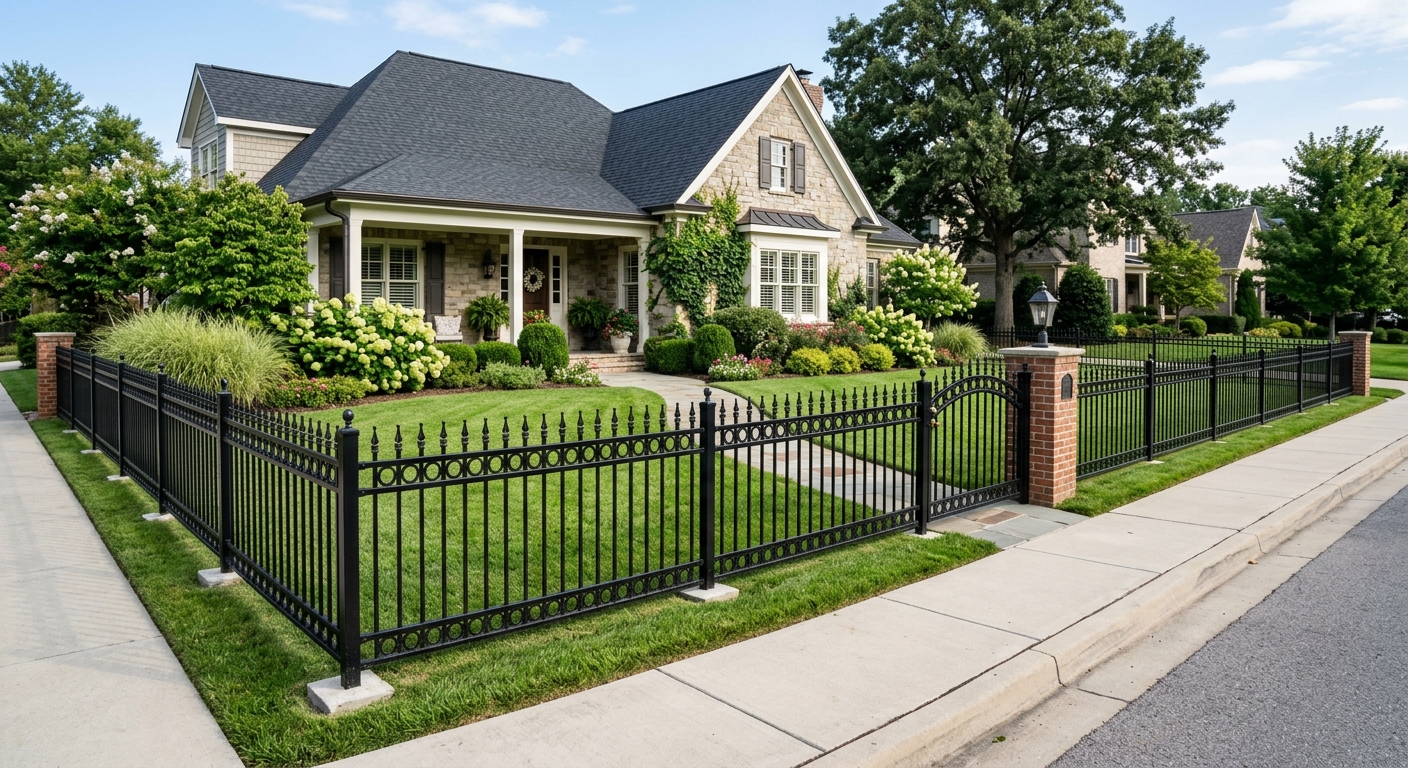
Fencing options and costs in North Bay
North Bay homeowners have plenty of fence options, but the “right” choice usually comes down to how much privacy you want versus how hands-off you’d like maintenance to be. With a population of 52,662 and about 13,900 homeowner households (59.2% of households own, Statistics Canada, 2021 Census), there’s steady demand for boundary fencing—especially where older single-detached neighbourhoods meet busy streets. North Bay’s housing stock also leans older (69.7% of homes built before 1981), which often means fence lines are being rebuilt or extended after years of sagging rails, worn pickets, and rotted bottom boards.
Pricing in the Northeast economic region is shaped by seasonal freeze-and-thaw. In colder parts of Ontario, fence posts need to resist movement during winter and spring thaw, which commonly means deeper post placement and concrete setting for many privacy and rail styles. At the same time, local contractor availability can affect turnaround: during peak spring installs, crews prioritize longer runs with clear access to reduce mobilization time.
In North Bay, trade activity is especially noticeable around neighbourhoods like West Ferris and on the edges of downtown where many lots have established hedge lines and need straightening or “wind-stiffening” upgrades. The result is that two fences with the same length can still land in different price bands depending on material, post depth, and how many gates you’re adding—so it pays to compare like-for-like before you sign.
Use the table below as a realistic starting point for your scope.
| Material |
Lifespan |
Maintenance |
Privacy Rating |
Price per Linear Foot |
| Pressure-treated pine (standard wood) |
10–15 years |
Stain/seal every 2–3 years; inspect rails annually |
Medium–High |
$80–$130 |
| Cedar (natural rot resistance) |
15–25 years |
Light staining or staining as desired every 3–5 years |
High |
$90–$140 |
| Vinyl / PVC (no-maintenance) |
20–30 years |
Rinse occasionally; no staining |
High |
$85–$140 |
| Chain-link (galvanized steel) |
20–35 years |
Minimal; wash for salt/road grime if needed |
Low–Medium |
$55–$90 |
| Aluminum ornamental |
25–40 years |
Occasional wash; check hardware |
Low–Medium |
$95–$150 |
| Composite / recycled material |
20–30 years |
Minimal; clean and inspect annually |
High |
$90–$145 |
Prices are estimates only and vary by project scope, site access and material selection.
What affects the price of fencing in North Bay
In North Bay and across northeastern Ontario, you can easily see a 30–50% spread for the “same” fence when bidders price the realities differently: post depth, concrete use, gate hardware, demolition/disposal, and whether they’re allowing for property line verification. Even if your linear footage is identical, a contractor who plans for deeper frost-proof post setting and proper rail bracing will price higher than one who assumes typical shallow placement. That’s why two quotes can land in different bands—like wood at roughly $80–$130 per linear foot versus vinyl around $85–$140 per linear foot—without either contractor being “wrong”.
Frost-line depth is a big driver because it sets how deep posts must be set to prevent heaving. A common approach in Ontario is to set posts about 4–6 inches below the design frost depth equivalent, which often translates to roughly 1.5–2.0 m into the ground for many projects. That requirement increases material cost (longer posts) and labour time (augers/excavation and concrete work). Wind exposure can also change the design: even when you don’t have prairie-style gusts, panel stiffness and post spacing still affect brace requirements and how much hardware is needed.
Concrete examples for North Bay: (1) a tall privacy fence with 6 ft panels usually means more post concrete per run, so the quote rises versus chain-link where posts are typically lighter; (2) replacing an old fence often adds excavation and disposal costs, which can reduce the discount you’d otherwise expect from longer straight runs; (3) sloped backyards can require stepped or raked rails, adding labour and sometimes extra framing because the top line stays level while the ground changes.
| Price Factor |
Why It Matters |
Cost Impact |
| Fence length in linear feet |
Most fencing costs scale directly with total linear feet |
Largest driver; small increases in length can shift total by hundreds to thousands |
| Post depth required |
Frost protection determines post length and hole depth |
Deeper holes + longer posts increase both labour and material |
| Post setting method |
Concrete vs gravel pack vs driven posts affects stability and speed |
Concrete-set posts cost more but reduce movement issues in freeze-thaw |
| Material choice |
Hardware and raw material cost vary by system |
Vinyl/PVC and cedar typically price above chain-link; aluminum often mid-to-high |
| Gate count and type |
Gates need heavier posts, hinges, and latching hardware |
Drive-through or double gates can add a substantial flat-cost premium |
| Grade and terrain |
Slope requires stepped sections or raked panels |
Adds labour for layout and extra framing/bracing |
| Old fence removal and disposal |
Hauling and extra labour increases project scope |
Can add significant cost, especially for mixed or heavily weathered wood |
| Permit fees and survey / property line locate |
Ensures the fence is built legally and reduces disputes |
May add direct line items; reduces risk-related rework |
Permits & regulations in Ontario
In Ontario, fence rules come from two main directions: municipal by-laws (height, location, and setbacks) and provincial line-fences legislation for shared boundaries. In practice, fences above a height threshold—commonly around 2.0 m (6.5 ft) at the rear and about 1.0–1.2 m (3–4 ft) at the front or corner—often require a building permit. Because North Bay’s applicable by-laws can vary by location and frontage, it’s smart to confirm the threshold with the city before you order materials.
Before digging any post holes, arrange utility locates. In Ontario you can use Ontario One Call to mark buried services; skipping this is a fast way to create delays and safety problems. Also, get a survey or at least a property locate to verify where your property pins sit—this helps avoid encroachment disputes when you and a neighbour interpret the line differently.
Here’s what typically requires a permit versus what usually does not: many standard-height fences (often below the front/corner and rear thresholds) may be exempt or fall under simpler rules, while taller privacy walls, extensive boundary barriers, and fences in sensitive setbacks commonly require permitting. For any fence that may approach or exceed the threshold, or if you’re changing the fence footprint significantly, plan on a permit.
To verify your contractor in North Bay, ask for proof of their Ontario business registration/licensing status, their certificate of insurance (general liability naming you as additional insured where applicable), and coverage documentation showing workplace safety coverage (WSIB/WCB). Request to see the clearance letter or account confirmation, and confirm the certificate dates match your project window.
Choosing the right fence material for North Bay
Choosing a fencing material in North Bay is really choosing how you want to manage winter and spring wear, plus how much upkeep you’ll tolerate. Pressure-treated pine is usually the lowest upfront path, but it’s the most labour you’ll likely put in over time—plan on staining or sealing every 2–3 years to prevent grey weathering and top-rail breakdown. Cedar looks better and naturally resists rot, but it still benefits from maintenance; without it, it can weather unevenly and lose surface integrity around the bottom rails.
Vinyl/PVC is the go-to for low-maintenance households in Ontario because it doesn’t need staining, and it’s typically priced in the $85–$140 per linear foot range for installed work. The trade-off is that in colder conditions vinyl can become brittle if the system isn’t designed well; quality hardware spacing and proper installation matter. Chain-link is the most cost-stable option (often $55–$90 per linear foot) and tends to last a long time, but it provides little privacy unless you add slats or screening. Aluminum ornamental gives great longevity and a clean look without rusting, though it’s usually low privacy.
Given freeze-thaw, post depth matters regardless of material. For North Bay, you should expect concrete-set posts for most substantial privacy fences—especially with longer spans—because it reduces seasonal movement. Wind and snow load can also stress panels: tightly braced designs and correct post spacing keep gates from sagging and reduce service calls after big freeze events.
To see where the price difference can be justified: if a wood privacy fence comes in near the lower end of $80–$130 per linear foot but you’d prefer a no-stain system, vinyl may cost more per foot, yet can save you ongoing labour and product purchase over years—particularly if you’re replacing an ageing fence in a yard you use heavily.
| Material |
Cold Tolerance |
Lifespan |
Annual Maintenance |
Best For |
Price Band |
| Pressure-treated pine |
Good with proper sealing and rail protection |
10–15 years |
Inspect annually; stain/colour every 2–3 years |
Budget privacy with a willingness to maintain |
$80–$130 |
| Cedar |
Good; performs well when bottom rails are kept protected |
15–25 years |
Inspect annually; stain as desired every 3–5 years |
Better appearance and natural rot resistance |
$90–$140 |
| Vinyl / PVC |
Good when installed correctly with proper bracing |
20–30 years |
Rinse occasionally; check hardware |
Low-maintenance privacy |
$85–$140 |
| Chain-link |
Very good; hardware-based system handles cold well |
20–35 years |
Minimal wash/inspection; tighten hardware |
Security and long service life on a budget |
$55–$90 |
| Aluminum ornamental |
Excellent; non-rusting metal system |
25–40 years |
Occasional wash; inspect for loose fasteners |
Front-yard curb appeal and durable boundary definition |
$95–$150 |
| Composite / recycled |
Good for freeze-thaw when engineered properly |
20–30 years |
Minimal cleaning; periodic inspection |
Consistent look with low maintenance |
$90–$145 |
How to choose a fencing contractor in North Bay
Start by confirming your contractor is properly positioned to work in Ontario. Ask for proof of licensing/registration status (where applicable), general liability insurance, and their workplace safety coverage (WSIB/WCB). You can check for insurer details on the certificate of insurance—verify the policy is active for your project dates and that the named insured matches the contractor on the quote. For WSIB/WCB, request a clearance letter or account confirmation so you can see the coverage is current before work begins.
Next, get 2–3 itemised written quotes, not a single lump sum. A strong quote breaks labour and materials separately (posts, rails, pickets/panels, hardware, concrete, gate kit, and any fence removal). Make sure scope language is clear: what’s excluded (old fence disposal, grading/levelling, permit pulling, or survey locate)? If permit work or property line locating is required, clarify who pays and who submits.
Warranty matters in fencing because workmanship failures show up after winter. Look for a workmanship warranty length and confirm whether it covers post movement, rail failures, and hardware adjustments. Also confirm the product/manufacturer warranty and whether it transfers if you sell your home. For payment, never pay more than 10–15% upfront; hold back the remainder until the job is complete and cleaned up. Finally, get the start date and completion estimate in writing so you have a timeline you can hold them to.
- Confirm insurance certificates are current and match the legal contractor name.
- Request WSIB/WCB clearance or proof of coverage before work starts.
- Get quotes itemised by labour and materials (not “all-in”).
- Ask how post depth will be determined for freeze-thaw performance.
- Confirm concrete vs gravel pack method and where it will be used.
- Clarify gate hardware type (hinges, latch) and whether posts are upsized.
- Verify disposal is included if you’re removing an old fence.
- Ask whether the quote includes site grading for sloped yards.
- Check if permit pulling is included (when the fence height threshold is exceeded).
- Confirm warranty terms for workmanship and product, and whether transferable.
- Review the payment schedule—limit upfront and hold final payment until walkthrough.
- Ensure a written start and completion timeframe is included.
Red flags in North Bay: (1) they refuse to provide an itemised quote; (2) they can’t show current general liability and WSIB/WCB coverage; (3) they quote shallow post holes with no discussion of frost-proof depth; (4) they want a large upfront deposit (well beyond 10–15%); and (5) the contract is vague about disposal, permits, or what happens if property lines differ from your assumption.
Frequently asked questions — fencing in North Bay
Who owns and maintains a shared fence?
In Ontario, shared fences are governed by line-fences rules under provincial legislation. In most “shared boundary” situations, the fence is considered a boundary structure that both parties have rights to, and both neighbours typically have responsibilities for maintenance depending on what was agreed historically and what the fence serves. In practice around North Bay, disputes often arise when one side replaces damaged sections but the other side believes costs should be shared. If you’re planning a new fence or a major rebuild near a property line, ask your neighbour in writing about shared ownership, who is paying for what, and whether the new materials match the existing system. It’s also smart to verify your property pins or do a locate before any work, since encroachment claims are common when assumptions are made.
How do I find my property line before fencing?
Before you dig any post holes in North Bay, confirm where the property line actually falls. The most reliable method is to obtain a survey (or at least a locate) that shows your property pins and boundary lines. If you don’t have recent survey documentation, ask a professional to locate the pins on site, then compare that to your proposed fence layout. While you can sometimes find hints in old paperwork, you don’t want to guess—fences built even a small distance over a line can create expensive removal or rework. Also schedule utility locates through Ontario One Call before digging. Once the layout is marked, walk the line with your contractor and document the agreed alignment in writing so everyone builds to the same reference.
What's the most low-maintenance fence?
For most North Bay homeowners who want “set it and forget it,” vinyl/PVC is usually the lowest-maintenance choice because it doesn’t need regular staining. You’ll still do light upkeep—like a rinse and occasional hardware checks—but you’re not running back every 2–3 years with stain like you often do for pressure-treated wood. In cost terms, vinyl is commonly priced in the $85–$140 per linear foot band for installed fencing, depending on height, post spacing, and gate requirements. Chain-link is also low-maintenance, typically $55–$90 per linear foot, but it won’t provide privacy unless you add slats or screening. If privacy is your priority, vinyl or cedar usually wins, with vinyl being the most hands-off.
How tall can my fence be in North Bay?
Fence height limits in Ontario are usually set by municipal by-laws, and North Bay can apply different rules for the front/corner versus rear boundary. As a practical guideline many homeowners encounter, rear fences can commonly be around 2.0 m (6.5 ft) while front or corner areas are often closer to 1.0–1.2 m (3–4 ft). When you’re near those thresholds, a building permit is more likely, especially for taller privacy fences. The exact requirement depends on the fence location, setbacks, and your lot’s configuration. The safest path is to confirm with the city before you order materials—especially if your contractor is proposing a taller-than-average privacy line or adding gates that could affect the overall layout.
Should fence posts be set in concrete here?
In North Bay’s freeze-thaw conditions, many fences benefit from concrete-set posts because it helps limit seasonal movement and heaving. While the “right” method depends on the fence type, soil, and design, it’s common for contractors to use concrete for privacy fences with heavier panels and for any fence where alignment and longevity matter. Concrete setting increases both material and labour, but it can reduce future sagging and the cost of repeat repairs. If your quote is priced near the wood band ($80–$130 per linear foot) and you’re building a solid privacy fence, ask specifically what post depth they plan and whether they’re using concrete. A contractor who discusses frost-proof depth and posts method clearly is usually a better long-term partner.
What's the best fence for privacy?
For privacy in North Bay, solid panel systems are typically the best—vinyl/PVC privacy fences, cedar pickets, and pressure-treated privacy styles all block sightlines better than chain-link. Vinyl privacy is popular because it tends to hold its look with minimal maintenance, and it’s commonly priced in the $85–$140 per linear foot band depending on height and hardware. Cedar can provide a very attractive, natural finish with high privacy, often landing near the higher end of wood pricing, but it still benefits from maintenance to keep it looking sharp. If you want maximum privacy with the fewest future headaches, vinyl privacy with properly set posts is usually the top pick. Just make sure the design accounts for winter performance—especially post depth and bracing—so the fence stays tight through Ontario seasons.