Fencing options and costs in Rexdale-Kipling
In Rexdale-Kipling, choosing a fencing style is often tied to what you’re protecting—kids and pets, privacy from nearby streets, or keeping the yard tidy through long Toronto winters. With a 2021 population of 10,529 in the area (Statistics Canada, 2021 Census), local demand is steady, and the neighbourhood’s mix of established homes and ongoing infill creates a consistent market for both repairs and full replacements. For many homeowners, detached homes (a common housing form in the broader Toronto area) drive fence replacement cycles, especially when older pickets start to lean or bottom rails rot.
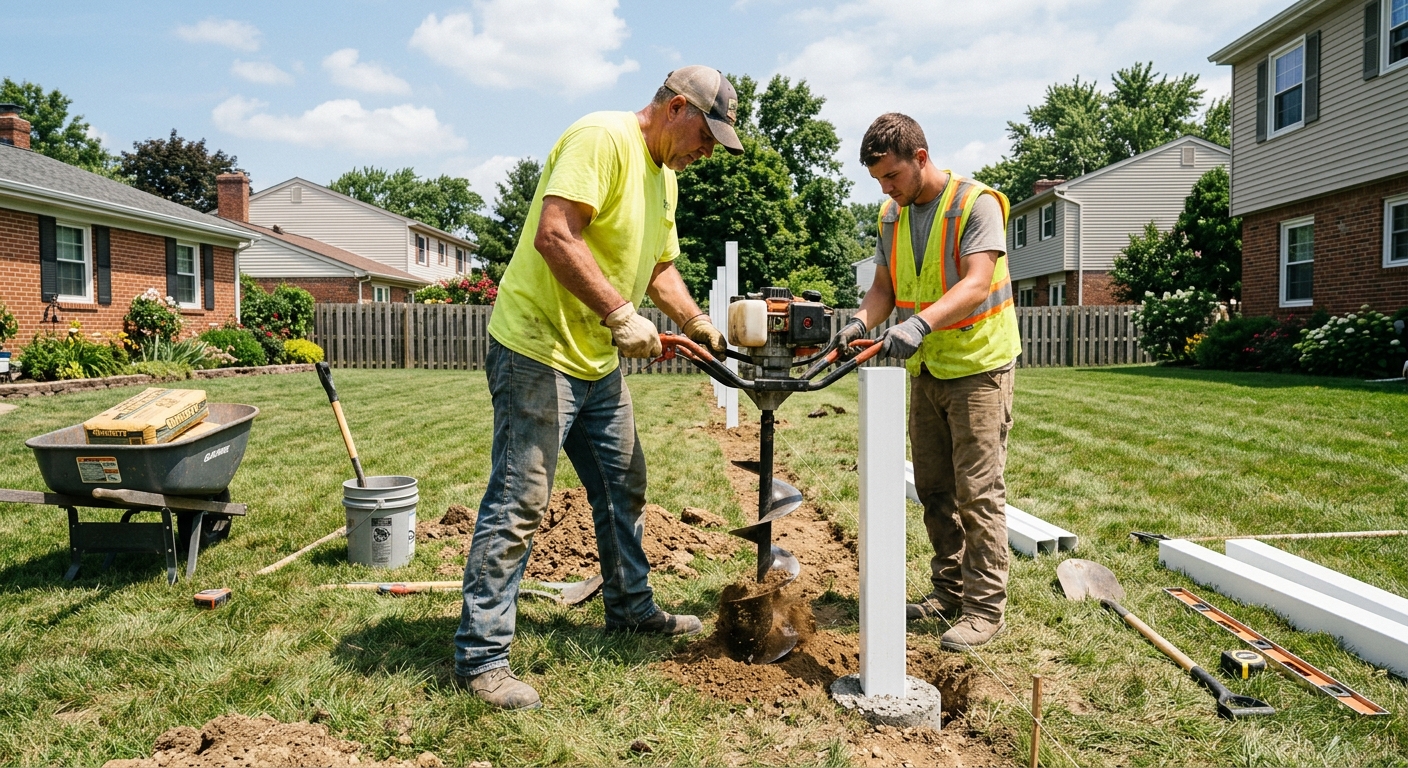
Toronto fencing costs are shaped by Southern Ontario’s freeze/thaw cycle. The frost line is commonly estimated around 42"–48", which means posts for 6–8 ft privacy fences are typically set deep—often 3.5–4 ft—to reduce frost heave and keep panels straight for years. That extra digging time, plus concrete-setting costs, is why you’ll usually see higher pricing for solid privacy styles than for light chain-link. Labour availability also affects timing: peak-season demand can add scheduling premiums, while off-season work may come with better pricing.
Trade demand is especially noticeable around higher-traffic residential stretches near the Rexdale-Kipling corridor and shopping-adjacent streets, where homeowners frequently replace fences that take repeated snow plough hits or get bumped by delivery access. Below is a practical comparison table to help you benchmark your quote before you book a site visit.
| Material |
Lifespan |
Maintenance |
Privacy Rating |
Price per Linear Foot |
| Pressure-treated pine (standard wood) |
10–15 years |
Stain/seal every 2–3 years; inspect for warping |
Medium–High (solid boards/panel styles) |
$65–$120 |
| Cedar (natural rot resistance) |
15–25 years |
Light staining every 3–4 years; more resistant to rot |
High (solid privacy boards) |
$90–$150 |
| Vinyl / PVC (no-maintenance) |
20–30 years |
Occasional rinse; check hardware after storms |
High (solid infill and picket systems) |
$75–$130 |
| Chain-link (galvanized steel) |
20–35 years |
Rare; wash off dirt/salt residue as needed |
Low (open mesh) |
$45–$85 |
| Aluminum ornamental |
30–40 years |
Occasional hose-down; check for loose fitment |
Low–Medium (ornamental spacing) |
$90–$160 |
| Composite / recycled material |
20–30 years |
Minimal; inspect for colour fade/fastener wear |
Medium–High (solid panel options) |
$100–$170 |
Prices are estimates only and vary by project scope, site access and material selection.
What affects the price of fencing in Rexdale-Kipling
In Rexdale-Kipling, two homeowners can receive quotes for the “same” fence that differ by 30–50% because Toronto jobs rarely match on the details: post setting depth, access for equipment, gate count, and whether the crew is removing an old fence or tying into existing corners. The frost-and-thaw pattern is the biggest Ontario driver. Contractors generally set posts about 4–6 inches below the design frost depth to prevent heaving, and in Southern Ontario that often means roughly 1.5–2.0 m into the ground. For 6–8 ft privacy fences, this pushes labour (digging, concrete, curing time) and materials (longer posts, heavier rails) upward.
Wind and panel rigidity also matter. While the GTA isn’t as wind-exposed as the Prairies, taller solid privacy fences still need tighter spacing and heavier post sizing to resist racking. That’s why “privacy wood” can price higher than “looks similar but shorter” options. By contrast, chain-link labour is simpler and posts are typically lighter, keeping costs in the $45–$85 per linear foot range.
Concrete examples from local projects: (1) A backyard replacement on a narrow driveway can require hand digging or smaller equipment access, which often increases labour versus an open yard, pushing a wood job toward the $65–$120 band. (2) A corner lot with more exposure and gate openings can require stronger bracing and extra hardware, nudging vinyl/PVC toward the $75–$130 band. (3) Yards with clay-heavy soil often need a proper concrete set for stability—gravel packs alone can shift over seasons—raising total cost but improving long-term alignment.
| Price Factor |
Why It Matters |
Cost Impact |
| Fence length in linear feet |
The fence is sold and installed by run length, including rails and posts |
Largest driver; costs rise proportionally |
| Post depth required |
Frost line determines hole depth to prevent heaving and lean over time |
Deeper posts raise labour and concrete volume |
| Post setting method |
Concrete-set posts resist movement better than driven posts |
Concrete typically adds material + labour time |
| Material choice |
Vinyl vs. cedar vs. chain-link changes hardware, rails and install steps |
Can shift you from low-cost chain-link to higher-end privacy systems |
| Gate count and type |
Gates need stronger frames, hinges, latches, and often diagonal bracing |
More gates = higher structural cost |
| Grade and terrain |
Slopes require stepped designs or raked panels for a level look |
Extra labour and additional components |
| Old fence removal and disposal |
Demolition adds crew time and dump/haul costs |
Often adds a meaningful surcharge, especially with heavy posts |
| Permit fees and survey / property line locate |
Some taller fences require permits; locating avoids encroachment disputes |
Small to moderate cost, but prevents costly corrections |
Permits & regulations in Ontario
In Ontario, the need for a permit is often triggered when a fence reaches common height thresholds: fences above about 2.0 m (6.5 ft) at the rear, and roughly 1.0–1.2 m (3–4 ft) at the front or corner, may require a building permit depending on location and municipal rules. In all cases, you must keep the fence within your property line and follow municipal setback rules.
Before digging any post holes, arrange utility locates through Ontario One Call to mark buried services. This step is essential for both safety and to avoid service disruption. Also, get a survey or a property pin locate before installing: in established Rexdale-Kipling neighbourhoods, boundary misunderstandings can happen when older fences were built before modern boundary documentation. If you share a fence line, shared ownership and line-fence responsibilities are governed by Ontario’s line-fences legislation.
How to verify a contractor in Ontario (step-by-step): (1) Ask for a copy of their Ontario business licence/registration information where applicable and confirm the company is in good standing. (2) Request current liability insurance and review the certificate of insurance for active coverage and the correct jobsite address. (3) For workers, ensure WSIB coverage (or the applicable coverage arrangement) is in place—your contractor should be able to provide clearance or proof. (4) Confirm permit responsibility in writing: know whether the contractor pulls the permit or you do, and which party covers fees.
Choosing the right fence material for Rexdale-Kipling
Choosing the right fence in Rexdale-Kipling is less about “what looks best” and more about matching material to Toronto’s winter conditions, your privacy needs, and how often you’re willing to maintain it. Pressure-treated pine is usually the budget entry point, but it typically requires staining/sealing every 2–3 years to prevent grey weathering and to keep moisture from degrading boards. Cedar has better natural rot resistance and a nicer look, but it’s still not “zero maintenance”—expect periodic staining to maintain colour and reduce surface drying. Vinyl/PVC is the low-work option for most homeowners because it doesn’t need painting, though extreme cold can make some components more brittle, so correct installation hardware and post anchoring matter. Chain-link is the longest-life low-cost option, but it provides little privacy without slats or screening.
Post-depth is the hidden equalizer across materials. With Southern Ontario’s frost line commonly estimated at about 42"–48", the safe practice for many Toronto privacy fences is to set posts deeper—often 3.5–4 ft—using concrete-set posts for stability on clay and mixed soils. Whether you choose wood or vinyl, concrete setting reduces shifting over freeze/thaw seasons and helps prevent racking in wind. For solid privacy runs, heavier posts and closer centres are also important to handle snow loading and gusts.
Where the price difference makes sense: if you’re comparing pressure-treated pine at roughly the $65–$120 per linear foot range versus vinyl/PVC around $75–$130, vinyl can be worth it when you want to avoid staining labour and want long-term alignment after multiple winters. If you’re cost-sensitive and plan to maintain on schedule, pine can be justified—especially on shorter runs with easier access.
| Material |
Cold Tolerance |
Lifespan |
Annual Maintenance |
Best For |
Price Band |
| Pressure-treated pine |
Good with proper sealing and good post setting |
10–15 years |
Low–Moderate: 0–1 inspections; stain every 2–3 years |
Budget privacy; homeowners willing to maintain |
$65–$120 |
| Cedar |
Very good; handles freeze/thaw well when installed correctly |
15–25 years |
Low–Moderate: periodic staining/sealing every 3–4 years |
Appearance + rot resistance |
$90–$150 |
| Vinyl / PVC |
Good; components must be installed with proper tolerances |
20–30 years |
Very low: occasional rinse and hardware checks |
Low maintenance and long-term privacy panels |
$75–$130 |
| Chain-link |
Excellent (steel frame is resilient) |
20–35 years |
Very low: occasional wash and tension checks |
Security and long-life perimeter fencing |
$45–$85 |
| Aluminum ornamental |
Excellent; powder-coated finish resists winter wear |
30–40 years |
Low: hose-down + quick inspections |
Street-facing curb appeal with partial visibility |
$90–$160 |
| Composite / recycled material |
Good; performance depends on fastening and base prep |
20–30 years |
Low: periodic cleaning and fastener inspection |
Durable privacy with low upkeep |
$100–$170 |
How to choose a fencing contractor in Rexdale-Kipling
Choosing the right fence contractor in Rexdale-Kipling comes down to proof, process, and clarity. First, verify Ontario coverage and credentials: ask for a certificate of liability insurance—confirm it’s current, shows adequate limits for construction work, and matches the jobsite. Next, confirm worker coverage (WSIB/WCB as applicable) and request clearance/proof so you’re not exposed if there’s an injury on site. Finally, ensure the contractor is legitimate and responsive: a reputable fencing company should provide a written scope, itemised quote, and a schedule you can hold them to.
Get 2–3 itemised written quotes—not lump sums. You want labour and materials broken out (posts, rails, panels, hardware, concrete amount, gate frame, and demolition/disposal). Read the exclusions carefully: is old fence removal included? Is permit pulling included if required? Are utility locates listed as part of the job or handled by you? Also check warranty details: workmanship warranty length, the manufacturer’s product warranty, and whether the warranty transfers to a homeowner. Payment should be staged sensibly—never more than about 10–15% upfront. Hold back the remainder until you’ve verified the finished fence line, alignment, gates, and disposal are complete.
For timing, request a start date and completion estimate in writing, and ask who coordinates inspections/locates if permits apply. If a contractor won’t put these basics in the contract, that’s a sign to keep looking.
- Request proof of liability insurance (valid certificate) before work starts.
- Confirm WSIB/WCB coverage and ask for clearance/proof documentation.
- Ask whether permits are required and who is responsible to pull them.
- Get utilities locate included or confirm Ontario One Call is handled.
- Compare quotes on identical scope (same height, post depth, and layout).
- Prefer concrete-set posts for Toronto privacy fences where conditions call for it.
- Confirm gate hardware brand/type and whether hinges are upgrade-rated.
- Ask for an itemised breakdown: posts, rails, panels, hardware, concrete, labour.
- Clarify demolition and disposal: dump fees and haul included or extra.
- Check warranty terms in writing (workmanship and product/manufacturer).
- Limit upfront payment to roughly 10–15%; hold back until final inspection.
- Get start and completion dates in the written contract or work order.
Red flags in the Rexdale-Kipling market: a quote that only states “fence installed” without post depth or setting method; refusing to show insurance/WSIB documentation; adding “after-the-fact” charges for permits, concrete, or disposal; vague warranty language (“we stand behind it”) with no written duration; and asking for a large upfront payment well beyond 10–15%.
Frequently asked questions — fencing in Rexdale-Kipling
How do I find my property line before fencing?
Before you build a fence in Rexdale-Kipling, don’t rely on old boundary assumptions or the existing fence line. Start by locating your property pins through a surveyor or a pin locate service; this gives you documented corner and line references you can mark on-site. If you don’t have a recent survey, ask your contractor what they require before digging post holes. Because Ontario fencing disputes can come from encroachment, a proper locate helps avoid costly adjustments. Also call Ontario One Call to mark utilities before any digging—this is separate from the property boundary work, but both steps protect you.
What's the most low-maintenance fence?
For most homeowners in Ontario, the lowest-maintenance choice is usually vinyl/PVC or aluminum ornamental, because you avoid regular staining and board rot. In Rexdale-Kipling, vinyl/PVC privacy systems are often a practical fit for long Toronto winters, provided posts are properly set and hardware is correctly fastened. If you’re budgeting, chain-link is also low maintenance, but it offers limited privacy. As a baseline, vinyl/PVC typically lands in the $75–$130 per linear foot range, while wood options may require staining every 2–3 years to stay looking clean.
How tall can my fence be in Rexdale-Kipling?
Fence height limits can vary by location (front/corner vs rear) and municipal rules, so you should confirm with your municipality. In Ontario practice, fences above about 2.0 m (6.5 ft) at the rear and roughly 1.0–1.2 m (3–4 ft) at the front or corner often trigger a building permit requirement. Even when a permit isn’t required, setbacks and property-line rules still apply. If you’re planning a 6–8 ft privacy fence, expect additional attention to post depth for frost stability and stronger hardware for wind resistance. Your contractor should ask for your intended height and run location before finalising the quote.
Should fence posts be set in concrete here?
In Rexdale-Kipling, for most tall privacy fences (especially 6–8 ft styles), concrete-set posts are commonly recommended because Southern Ontario’s frost line is often estimated around 42"–48". The goal is to set posts below the design frost depth so freeze/thaw doesn’t heave and cause leaning or misalignment. That typically means drilling deeper holes and using concrete around the post base—more labour, but better long-term stability on local clay and mixed soils. Driven posts can be cheaper upfront, but they’re more likely to shift over seasons in frost-prone ground. If your fence includes gates, concrete setting is even more important for structural posts.
What's the best fence for privacy?
For privacy in Rexdale-Kipling, solid privacy systems with tight spacing are the best bet. Vinyl/PVC and cedar/pressure-treated wood are the most common options because you can use solid board or solid panel designs. Vinyl/PVC tends to win when you want low maintenance; it’s often priced around the $75–$130 per linear foot range. Wood can be a strong value choice—pressure-treated pine often comes in around $65–$120 per linear foot—if you’re comfortable with staining every 2–3 years to prevent weathering. Regardless of material, your privacy performance depends on correct post spacing and robust hardware to resist racking from wind and snow loading in winter.
How do I compare fencing quotes?
To compare quotes fairly in Ontario, insist on like-for-like scope: same fence height, same layout length, same gate count, and most importantly the same post method and post depth. Quotes should itemise labour and materials, not just provide a single total. Ask whether demolition and disposal are included, and whether utilities locate and permits (if required) are handled or billed separately. A major “hidden variable” is concrete setting—if one contractor uses concrete-set posts and another uses lighter methods, the cheaper quote may fail earlier. Use the local price bands as a sanity check: wood installations commonly fall in the $65–$120 range, vinyl/PVC around $75–$130, and chain-link around $45–$85 per linear foot. Finally, verify contractor insurance/WSIB coverage before signing.