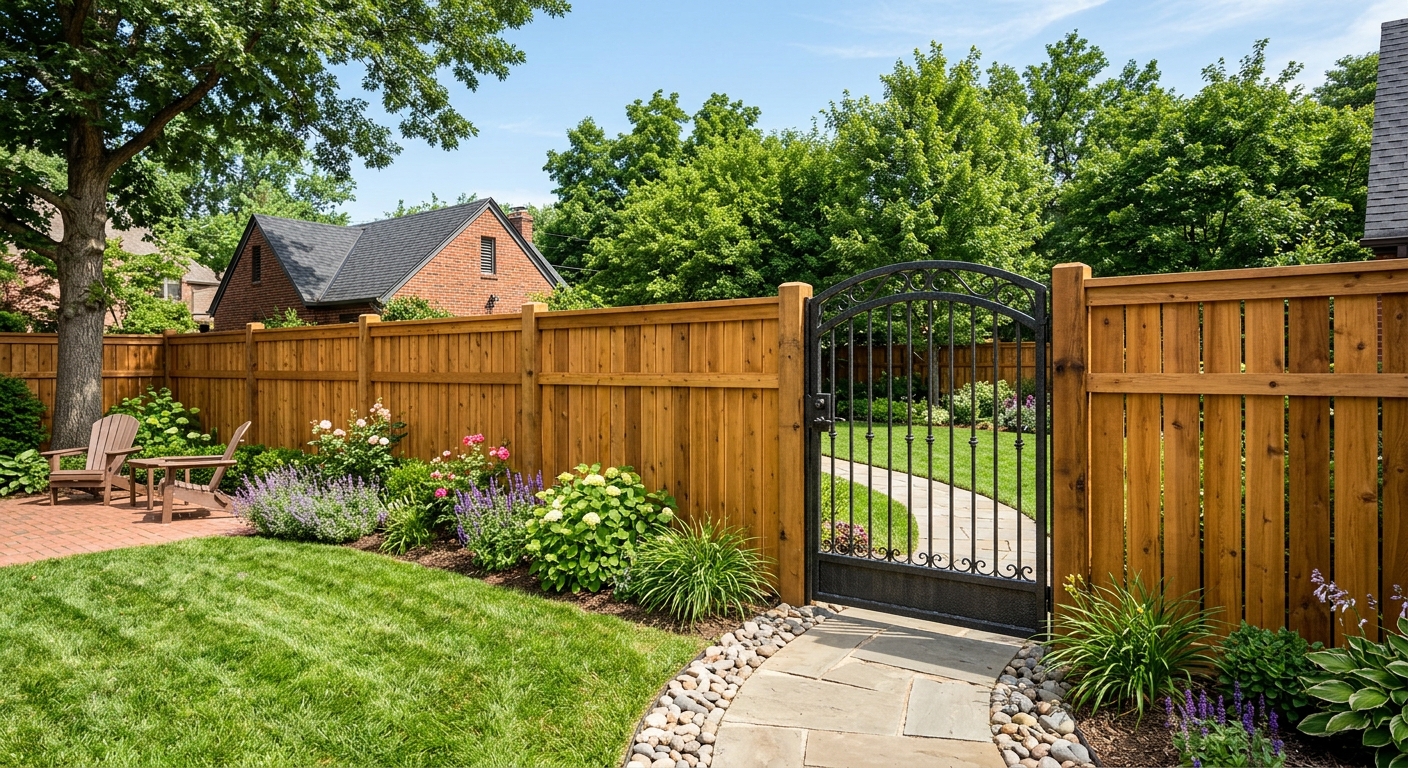
Fencing options and costs in Tobermory
Tobermory is a small community on the Bruce Peninsula, and fencing demand tends to track household growth: with a population of 1,427 (Statistics Canada, 2021 Census), you’re often seeing fence work tied to property renovations, seasonal upgrades, and cottage-to-year-round conversions. In a town like this, “who needs a fence?” usually comes down to how many detached homes are being maintained and expanded, since those properties typically use fences for privacy, yard separation, and pet control.
In the Toronto economic region, contractor pricing is heavily shaped by freeze–thaw cycles. Even though you won’t get Prairie-level straight-line winds, frost heave still drives design: for 6–8 ft privacy fences, most crews in Southern Ontario plan for concrete-set posts and adequate embedment so the fence doesn’t lift after winter. That’s a key reason why a “quick install” can cost significantly more over time if a contractor uses driven posts or too-shallow holes.
Material selection also matters for coastal-snow wear and damp periods on the Peninsula. In Tobermory—especially around the more built-up areas near the harbour and along the main residential streets—people want fences that look clean year-round and won’t warp or crumble after repeated winters. If you’re comparing materials side by side, the most useful starting point is the typical price band and service life below, then we fine-tune the estimate once we measure length, gate count, and post depth requirements.
| Material |
Lifespan |
Maintenance |
Privacy Rating |
Price per Linear Foot |
| Pressure-treated pine (standard wood) |
10–15 years |
Stain/seal every 2–3 years; inspect for loose boards |
7/10 (solid boards) |
$9–$16 |
| Cedar (natural rot resistance) |
15–25 years |
Seal/stain every 2–4 years; check for warping |
8/10 (solid boards) |
$11–$20 |
| Vinyl / PVC (no-maintenance) |
25–35 years |
Occasional wash; check post stability after storms |
9/10 (solid privacy styles) |
$12–$22 |
| Chain-link (galvanized steel) |
20–30 years |
Minimal; hose/rinse; tighten fittings |
3/10 (security only) |
$7–$13 |
| Aluminum ornamental |
25–40 years |
Minimal; periodic cleaning |
4/10 (visual openness) |
$11–$24 |
| Composite / recycled material |
20–30 years |
Low; wash as needed; replace individual boards if damaged |
8/10 (privacy panels) |
$13–$24 |
Prices are estimates only and vary by project scope, site access and material selection.
What affects the price of fencing in Tobermory
In Tobermory (and across the Toronto economic region), two quotes for what looks like the “same” fence can differ by 30–50% because the hidden variables are usually labour-heavy: how many posts are required, whether posts must be concrete-set, the gate complexity, and how hard the ground is to excavate in winter-ready conditions. Access also matters—if a crew can’t stage materials close to the trench line, your labour rate and crew time go up fast.
The biggest pricing driver in Ontario is embedment. Frost line depth in Southern Ontario is commonly treated around 42"–48", and best practice typically means setting posts several inches below the design frost depth to prevent heaving. In practical terms, that often means 1.5–2.0 m of post depth. Concrete-set posts then add more material cost (ready-mix/aggregate) and more installation time. For a solid privacy fence, taller panels also need heavier hardware and tighter spacing; that can push you toward the higher end of the wood range (for example, wood installations in the $65–$120 band) if the scope is long and includes multiple gates.
Cost can go down too. If you choose chain-link, you generally reduce material and post-embedment complexity because the fence is lighter and often installed with standard framework—so budgets can sit nearer the $45–$85 chain-link band. Two local examples that often change Tobermory pricing: (1) uneven yards near the harbour or older residential lots may require stepped rails and extra labour, and (2) wet, mixed soils can make excavation slower even when the fence is straightforward.
| Price Factor |
Why It Matters |
Cost Impact |
| Fence length in linear feet |
Most costs scale directly with footage and number of rails/panels |
High (primary driver) |
| Post depth required |
Frost protection drives hole depth and post length |
High (materials + labour) |
| Post setting method |
Concrete vs. gravel pack vs. driven posts changes time and structural performance |
Medium–High |
| Material choice |
Vinyl/PVC, cedar, and chain-link differ in weight, install method, and unit cost |
High (range differences) |
| Gate count and type |
Double drive-through gates need stronger posts, hinges, and bracing |
Medium–High |
| Grade and terrain |
Slope often requires stepped sections or raked rails |
Medium |
| Old fence removal and disposal |
Demolition, hauling, and possible site cleanup add crew time |
Medium |
| Permit fees and survey / property line locate |
Compliance paperwork and locating pins prevents encroachment issues |
Low–Medium (project-dependent) |
Permits & regulations in Ontario
In Ontario, fences above typical height thresholds often need a building permit. As a general rule of thumb used by many municipalities, rear yard fences around 2.0 m (6.5 ft) and above may trigger permit requirements, while front/corner areas commonly have lower thresholds around 1.0–1.2 m (3–4 ft). The exact trigger can vary by local bylaw, but the safe homeowner approach in Tobermory is to verify the height and location before you dig. All fences must also respect property lines and municipal setback rules.
Before digging any post hole, you must call for utility locates. Use Ontario One Call to mark buried services; this protects you and the contractor from hazardous strikes. If you don’t already have accurate property line information, obtain a survey or have property pins located so your fence doesn’t encroach on a neighbour’s lot or a municipal right-of-way. Line-fence responsibilities and shared fence ownership disputes are governed by provincial line-fences legislation, but your local setback and height rules still apply.
What typically requires a permit: building new fences over the applicable height threshold, changing fence height, or installing a fence in a regulated location (like certain corner/front areas). What often does not: small repairs to existing fences, replacing like-for-like sections that don’t increase height, and routine maintenance—though any “change” is worth confirming.
To verify contractor legitimacy in Ontario, request your contractor’s Ontario business licensing details (if applicable locally), certificate of insurance (liability), and proof of WSIB clearance or coverage (Workplace Safety and Insurance Board). Look for the certificate validity dates, insured project details, and the clearance letter/coverage status, then match those documents to the quote scope.
Choosing the right fence material for Tobermory
Choosing the right fence in Tobermory is mostly about balancing privacy, low maintenance, and lifespan against winter conditions and labour style in the Toronto market. Pressure-treated pine is the budget-friendly route, but it needs proactive staining or sealing every 2–3 years to slow down grey weathering and moisture damage. Cedar has a nicer look and better natural rot resistance, yet it still needs maintenance—especially in damp seasons—to keep rails and pickets from drying unevenly.
For low maintenance, vinyl/PVC is a strong option: it typically requires little more than a seasonal wash, but it must be installed correctly on stable, frost-protected posts. In extreme cold snaps, panels can become brittle if workmanship or post alignment is off, which is why I prefer concrete-set posts for taller privacy fences—posts set shallow are the real problem, not the vinyl itself. Chain-link is usually the lowest-cost long-life choice and works well for pets/security, but privacy is limited unless you add privacy slats or a secondary screen. Aluminum ornamental offers a clean, rust-resistant appearance with minimal upkeep, though it’s not a privacy solution.
Concrete-set posts are commonly recommended for Toronto-region projects because the frost line (often treated at 42"–48") means deeper embedment is required to reduce heaving—especially for 6–8 ft fences. That affects material cost and labour time, but it’s what keeps solid privacy panels straight through freeze–thaw cycles and heavy snow loads.
Example: if a cedar privacy fence lands nearer the mid-to-upper wood pricing, you might pay roughly $11–$20 per linear foot versus chain-link nearer $7–$13 per linear foot. The difference is justified when you need true privacy year-round, not just boundary definition.
| Material |
Cold Tolerance |
Lifespan |
Annual Maintenance |
Best For |
Price Band |
| Pressure-treated pine |
Good if sealed and installed on frost-stable posts |
10–15 years |
5–20 minutes inspection; stain/seal every 2–3 years |
Budget privacy with planned upkeep |
$65–$120 |
| Cedar |
Good; watch for uneven drying in damp winters |
15–25 years |
Inspect seasonally; seal/stain every 2–4 years |
Better appearance and rot resistance |
$65–$120 |
| Vinyl / PVC |
Very good; depends on alignment and post stability |
25–35 years |
Wash/clean 1–2 times per year; no sealing |
Low maintenance privacy |
$75–$130 |
| Chain-link |
Excellent; minimal material issues in cold |
20–30 years |
Visual check and hose rinse as needed |
Security and boundary marking |
$45–$85 |
| Aluminum ornamental |
Excellent; no rust with proper hardware |
25–40 years |
Minimal cleaning; check fasteners periodically |
Curbs, front yards, visibility |
$90–$160 |
| Composite / recycled |
Good; behaves consistently if installed properly |
20–30 years |
Low—wash as needed; replace damaged boards |
Maintenance-light privacy with modern look |
$75–$130 |
How to choose a fencing contractor in Tobermory
Choosing the right fencing contractor in Tobermory starts with proof of coverage and a quote you can actually compare. In Ontario, confirm liability insurance (request the certificate of insurance and ensure it’s current), and verify WSIB/WCB coverage status—your contractor should provide a clearance letter or coverage documentation showing they’re insured to work legally on job sites. Ask for the paperwork before work begins so there are no surprises after excavation starts.
Then get 2–3 itemised written quotes. The best bids break pricing into labour and materials (posts, rails, pickets/panels, hardware, concrete/aggregate, gate components), and they specify post setting method and embedment expectations. Avoid “lump sum” quotes with vague language like “standard installation”—in Southern Ontario, “standard” embedment is where fences either last or heave.
Read the scope carefully. Does the quote include permit pulls (if required), property-line locating, and Ontario One Call utility marking? Is old fence removal and disposal included, or billed separately? Confirm what’s excluded: landscaping patching, deck tie-ins, concrete slab cutting, and any required regrading. Warranty matters too: look for a workmanship warranty (often 1–5 years depending on the contractor) and a manufacturer/product warranty (varies by material). Ask whether the warranty is transferable to future owners.
On payment schedule, never accept more than about 10–15% upfront. Hold back the remainder until substantial completion and final alignment checks are done. Finally, ask for a written start date and a completion timeline so you can plan around winter conditions and material lead times.
- Ask to see valid liability insurance and confirm coverage dates.
- Request WSIB/WCB clearance or coverage documentation (Ontario compliance).
- Get 2–3 itemised quotes (labour + materials) not one-page lump sums.
- Verify post embedment plan for frost protection (concrete-set where appropriate).
- Confirm whether gates include additional bracing and upgraded hardware.
- Ask whether permit pulls are included when required by height/location.
- Ensure Ontario One Call utility marking is included.
- Clarify if property pins/survey locate is included or billed separately.
- Confirm old fence removal and disposal scope (dump fees/hauling).
- Check the warranty: workmanship length, product warranty terms, transferability.
- Use a payment schedule with a small deposit and a holdback until final walkthrough.
- Require a written start date and completion estimate.
Concrete red flags I see in Tobermory: (1) contractors who refuse to discuss post depth or concrete-set methods, (2) quotes that omit gate hardware specs or bracing details, (3) no proof of insurance or WSIB/WCB coverage, (4) “permit not needed” statements without checking height/location, and (5) vague warranty language that limits coverage to “materials only” with no workmanship term.
Frequently asked questions — fencing in Tobermory
How do I handle a fence dispute with a neighbour in Ontario?
In Ontario, fence disputes usually come down to property-line location, fence placement, and responsibility for costs where a fence is considered shared. In Tobermory, start by comparing your fence position to your property pins or a survey. If you don’t have accurate locate information, request a property-line locate before you argue the “who installed it first” angle—fences built even a short distance off a line can create long-term conflict. Next, put your discussion in writing: date the concerns, include photos, and propose a joint solution (for example, a correction along the measured line). If you’re dealing with a shared fence situation, provincial line-fences rules can guide how costs are split, but you still must follow local setback and height bylaws. If an agreement isn’t possible, talk to a legal professional about next steps.
What fence style offers the best wind resistance in Tobermory?
Wind resistance is less about “Prairie gusts” in Tobermory and more about how the fence transfers wind loads into posts and footings. For best performance, I usually recommend solid privacy styles installed with properly sized posts set at frost-protected depths and with strong bracing around corners and gates. Fully solid panels can catch wind, so the solution is correct post spacing, heavier posts, and good hardware—rather than thinner posts or wide spacing. If you want a lighter feel but better wind behaviour than solid board fences, consider a board-on-board or slatted privacy pattern, still using concrete-set posts. For budget, chain-link is the easiest to keep structurally straight in wind, but it won’t provide privacy. For pricing context, most homeowners end up in the wood band of $65–$120 or vinyl/PVC at $75–$130 when they choose privacy-focused designs with the extra anchoring required.
How much does a fence cost in Tobermory?
Fence cost in Tobermory depends mainly on linear footage, post depth (frost protection), material choice, and how many gates you’re adding. As a planning estimate, fencing in the Toronto economic region often lands in the following install bands: chain-link around $45–$85, wood about $65–$120, vinyl/PVC about $75–$130, and aluminum/metal about $90–$160. In Southern Ontario, the reason estimates can move quickly is that frost heave protection typically means longer posts and often concrete-set posts, especially for 6–8 ft privacy fences. Add gate hardware and demolition/removal of an existing fence and you can see meaningful jumps even on “small” projects. The best way to avoid surprises is to ask for an itemised quote that includes post setting method, embedment depth assumptions, and disposal/haul-away scope.
How deep should fence posts be for Tobermory's frost?
In Tobermory and across Southern Ontario, the frost line is commonly treated around 42"–48". Best practice is to set posts below the design frost depth so the concrete foot and post remain stable through freeze–thaw cycles. In practical terms, that often means setting posts about 1.5–2.0 m into the ground (and using concrete-set posts for taller privacy fences) so the fence doesn’t lift over winter. For 6–8 ft privacy fencing, shallow holes are where you see the fence buckle or lean after the first few winters. Your exact depth should follow the contractor’s embedment plan based on soil conditions and fence height, but you should expect deeper holes than people assume. A reputable installer will explain the embedment depth and setting method clearly before work begins, not after the posts are already set.
Wood vs vinyl vs aluminum fence — which is best?
The “best” choice in Tobermory depends on whether you want privacy, low maintenance, or curb-style appearance. Wood (pressure-treated pine or cedar) offers strong privacy options but requires periodic staining/sealing—typically every 2–3 years for pressure-treated and often every 2–4 years for cedar—to prevent weathering and moisture damage. Vinyl/PVC is usually the lowest-maintenance privacy option because it doesn’t require painting or staining; however, it still needs frost-stable concrete-set posts and correct alignment to prevent movement. Aluminum is long-lasting and rust-resistant with minimal upkeep, but it’s ornamental, so privacy is limited. If you want privacy and minimal ongoing effort, vinyl/PVC often wins; if you want a classic look and you’re comfortable with maintenance, cedar is a great fit. For reference, privacy installations commonly fall in the wood band of $65–$120 or vinyl/PVC at $75–$130, while aluminum/metal is typically in the $90–$160 range depending on height and design.
Do I need a permit to build a fence in Ontario?
Sometimes, yes—especially if you plan a taller fence in Ontario. Many municipalities use height thresholds that commonly put rear yard fences around 2.0 m (6.5 ft) and higher into permit territory, while front/corner fences often have lower thresholds around 1.0–1.2 m (3–4 ft). The exact application can vary locally, so the best approach for a Tobermory homeowner is to confirm the height and placement with your municipality before installation. Regardless of permit requirements, you must respect property lines and local setback bylaws. Also, call Ontario One Call before digging post holes to mark utilities. To avoid issues, ask your contractor whether permits are needed for your specific project and whether the permit process is included in the quote. In most cases, like-for-like repairs that do not increase height typically don’t trigger the same level of review, but any height change should be verified.