Fencing options and costs in Waterfront Communities-The Island
In Waterfront Communities-The Island, your fence choice is shaped by how the neighbourhoods are built—condo-adjacent backyards, older residential pockets, and a lot of mature landscaping where gates and access matter. With a population of 65,913 (Statistics Canada, 2021 Census), there’s steady demand for fencing upgrades as owners try to balance privacy with walkable, urban lot constraints. Detached homes and their yards are a big driver of local fencing activity, and Toronto’s high contractor availability generally helps keep scheduling competitive, but it also means quotes can vary if one crew sizes your posts “standard” and another sizes for wind loads and Toronto’s winter freeze conditions.
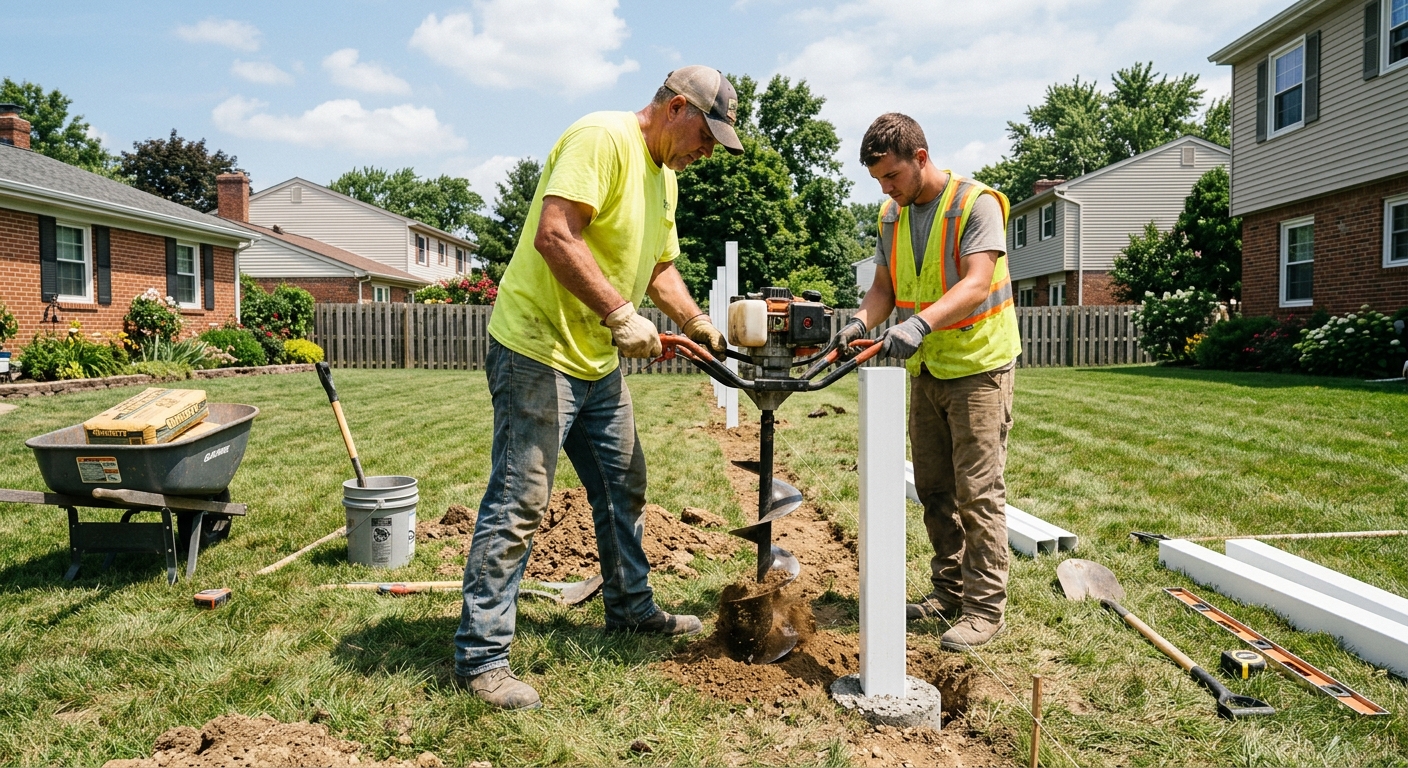
For Southern Ontario, the commonly used frost line range is about 42"–48". In practical terms, that usually means setting posts about 3.5–4 feet deep (often guided by local site conditions) to reduce frost heave risk—especially for 6–8 ft privacy fences. Because many yards here sit over clay or mixed soils, most contractors recommend concrete-set posts rather than simply driven posts. That adds labour time and ready-mix costs, but it improves long-term stability when the freeze–thaw cycle hits.
Trade demand is especially strong around the East Harbour / Waterfront Toronto-adjacent planning areas and older residential blocks nearby, where lots often need defined boundaries and privacy screening. If you’re comparing materials, the table below gives typical lifespan, maintenance expectations, and realistic installed price bands per project scope—then you can tighten your estimate with a site measurement and access review.
| Material |
Lifespan |
Maintenance |
Privacy Rating |
Price per Linear Foot |
| Pressure-treated pine (standard wood) |
10–15 years |
Stain/seal every 2–3 years |
High (solid panels) |
$15 – $25 |
| Cedar (natural rot resistance) |
15–25 years |
Seal/stain every 2–4 years |
High (solid panels) |
$18 – $32 |
| Vinyl / PVC (no-maintenance) |
25–35 years |
Rinse as needed; no painting |
High (solid styles) |
$20 – $38 |
| Chain-link (galvanized steel) |
20–30 years |
Minimal; rinse/inspect |
Low–Medium (privacy slats optional) |
$12 – $18 |
| Aluminum ornamental |
25–40 years |
Occasional wash |
Low–Medium (decorative pickets) |
$18 – $35 |
| Composite / recycled |
25–30 years |
Low; clean per manufacturer |
High (solid/composite panels) |
$22 – $40 |
Prices are estimates only and vary by project scope, site access and material selection.
What affects the price of fencing in Waterfront Communities-The Island
In Waterfront Communities-The Island, two quotes for the same fence height can still land 30–50% apart because the “hidden” parts of the job differ: post depth and setting method, the number of gates, whether old fencing is removed and hauled away, and how the contractor accounts for winter freeze–thaw. Toronto’s neighbourhood by neighbourhood mix of older lots, narrow side yards, and mature trees also affects labour time and equipment access, so even if the material line item looks similar, the installation scope may not be.
Frost depth is one of the biggest cost drivers. Contractors typically set posts about 4–6 inches below the design frost depth to help prevent heaving, and in cold Ontario this often translates to posts going roughly 1.5–2.0 m into the ground. That means longer posts, deeper auger time, and usually concrete-set hardware. For a tall 6–8 ft privacy fence, that can push wood projects toward the upper end of local installation pricing (for example, Toronto wood fences commonly fall in the $65,000 – $120,000 total band depending on length and gates; for smaller runs it may be lower, but depth and labour still matter).
Wind and racking risk—while not as extreme as the Prairies—still changes engineering choices. Taller solid panels need heavier posts (and often closer spacing), especially on corners or lots with open exposure. Concrete examples: (1) a sloped backyard that needs stepped/raked rails increases installation time and material waste; (2) clay-heavy soils can make holes slower to drill and may increase concrete usage, raising labour and ready-mix costs. Conversely, a short straight run with easy access can keep you nearer the lower side of the $75,000 – $130,000 vinyl/PVC band even with heavier posts.
| Price Factor |
Why It Matters |
Cost Impact |
| Fence length in linear feet |
Materials, posts, rails, and labour scale directly with length. |
Highest impact (often 50–70% of total cost) |
| Post depth required |
Frost line drives hole depth and post length to reduce heaving. |
Can add 10–25% on tall/privacy fences |
| Post setting method |
Concrete-set posts cost more in materials and labour vs gravel pack. |
Typically +$10–$30 per post-equivalent |
| Material choice |
Vinyl/PVC and cedar cost more upfront than basic wood; chain-link is cheaper. |
Material-driven swings often 15–40% |
| Gate count and type |
Gates require heavier hardware, bracing, and precise alignment. |
Each gate can add 10–30% to a project |
| Grade and terrain |
Slopes require stepped panels or raked rails and extra labour. |
Often +5–20% |
| Old fence removal and disposal |
Demolition time, dump fees, and hauling vary widely. |
Commonly +5–25% |
| Permit fees and survey / property line locate |
Some heights and locations trigger permitting; locate work prevents disputes. |
Usually +$300–$1,500 depending on complexity |
Permits & regulations in Ontario
In Ontario, fences above a height threshold often require a building permit—commonly around 2.0 m (6.5 ft) for rear yards and roughly 1.0–1.2 m (3–4 ft) for front yards or corners. Even when a permit isn’t required, all fencing must respect property lines and municipal setback rules. Before any digging, homeowners should arrange utility locates through Ontario One Call to mark buried services. This is essential because Toronto-area properties frequently have service lines, irrigation, and older wiring runs that aren’t always visible.
Step-by-step, here’s how you verify your contractor can do this correctly in Waterfront Communities-The Island: (1) request the exact permit plan in writing (or ask whether the contractor will pull it); (2) confirm the fence layout matches your property line using a survey or a property-pin locate—especially important on older lots where fences may be slightly off from original boundaries; (3) review shared-fence ownership expectations under provincial line-fences principles if the fence is on or near a lot line; and (4) ask for proof of insurance and coverage.
To check an Ontario licence, liability insurance, and WSIB/WCB (Workplace Safety and Insurance Board) clearance, look for the contractor’s registration details through the relevant public registry search results they provide, then request a current clearance letter. Also ask for an up-to-date certificate of insurance naming you as additional insured if your contract requires it. If they can’t provide clear documents, that’s a major planning risk.
Choosing the right fence material for Waterfront Communities-The Island
Choosing a fence material in Waterfront Communities-The Island comes down to matching your priorities—privacy, low maintenance, and lifespan—to Ontario’s freeze–thaw winters and Toronto’s typical lot conditions (clay/mixed soils, snow load, and occasional wind-driven panel stress). Pressure-treated pine is usually the budget-friendly route, but expect staining or sealing every 2–3 years to keep it from greying and to slow surface cracking. Cedar offers better natural rot resistance and a nicer look, but it still benefits from periodic sealing to maintain colour and reduce water penetration.
Vinyl/PVC is popular for low maintenance and clean lines. In extreme cold snaps, some vinyl products can become brittle if installed incorrectly or if the system wasn’t designed for winter; proper post support and panel spacing matter. Chain-link is the lowest-cost option and generally long-lasting, but it won’t give you real privacy unless you add slats or choose a different material. Aluminum ornamental is rust-resistant and mid-priced, but it’s decorative rather than private.
Post depth is non-negotiable for longevity. With Toronto’s frost line around 42"–48", most privacy fences perform best with concrete-set posts set roughly 3.5–4 feet deep so the freeze cycle doesn’t lift the supports. That’s especially important for 6–8 ft solid fences where panel racking and uplift stresses the posts.
Where price differences justify themselves: if you’re choosing between standard wood and cedar, cedar often costs more upfront, but homeowners typically justify it when they want a longer service life and better appearance with less aggressive deterioration. For many Toronto projects, wood installation commonly lands in the $65 – $120 per linear foot range, while vinyl/PVC tends to sit higher—often in the $75 – $130 band—because you’re paying for materials that don’t need painting.
| Material |
Cold Tolerance |
Lifespan |
Annual Maintenance |
Best For |
Price Band |
| Pressure-treated pine |
Good when properly post-set and stained |
10–15 years |
Inspect + stain/seal every 2–3 years |
Budget privacy with straightforward upkeep |
$65 – $120 |
| Cedar |
Good to excellent with regular sealing |
15–25 years |
Inspect + seal/stain every 2–4 years |
Longer-lasting privacy with better aesthetics |
$75 – $130 |
| Vinyl / PVC |
Very good in Ontario with correct installation |
25–35 years |
Rinse/inspect; no painting |
Low maintenance and clean modern lines |
$75 – $130 |
| Chain-link |
Very good (metal durability) |
20–30 years |
Minimal; occasional rinse/repair |
Security, pets, and budget boundary fencing |
$45 – $85 |
| Aluminum ornamental |
Very good; no rust |
25–40 years |
Occasional wash |
Decorative boundary with durability |
$90 – $160 |
| Composite / recycled |
Good; design-dependent performance in cold |
25–30 years |
Low; clean per manufacturer guidance |
Privacy with long service life and low upkeep |
$90 – $160 |
How to choose a fencing contractor in Waterfront Communities-The Island
Start with verification. In Ontario, fencing contractors should be able to provide proof of their Ontario registration where applicable, general liability insurance, and WSIB/WCB coverage (depending on their structure). To check: request (1) a current certificate of insurance showing coverage limits and effective dates; (2) a WSIB/WCB clearance letter; and (3) the company’s registration details. If the contractor can’t send documents promptly or provides expired PDFs, that’s a warning sign.
Next, get 2–3 itemised written quotes that break down labour and materials instead of just a lump sum. Ask for a post-depth and post-setting method statement (concrete-set vs gravel pack vs driven), plus panel and gate hardware specifications. Scope clarity matters here: confirm what’s included for demolition of the old fence, disposal/haul-away, permit handling (if required), and any property line locate or survey reliance. If one quote includes disposal and another doesn’t, the difference can easily look like a 20–30% price gap for the same fence height.
Warranty matters too. Require a workmanship warranty length (commonly 1–3 years for installation work) and separate product/manufacturer warranty details. Ask whether warranties are transferable if you sell the home.
For payment schedule, never pay more than 10–15% upfront. Hold back remaining payments until the job is complete, inspected, and gates operate smoothly.
- Confirm concrete-set post depth plan for Southern Ontario frost behaviour (especially for privacy fences).
- Ask what happens if buried utilities are encountered; verify utility locate responsibility.
- Require a written start date and completion estimate.
- Get a site access plan for narrow Toronto side yards.
- Ensure quotes list gate count, gate width, and whether gates are single or double.
- Check whether rail spacing and post spacing match the fence height and wind exposure.
- Verify old fence removal and dump fees are explicitly included or excluded.
- Confirm permit pull responsibility and whether costs are included in the quote.
- Ask for warranty terms: workmanship vs product warranty.
- Request insurance certificate and WSIB/WCB clearance letter before signing.
- Use contract language for change orders (what triggers extra costs).
- Do not accept “verbal only” scope—insist on itemised line items.
Red flags I see often in Waterfront Communities-The Island: quotes that omit post depth and setting method, proposals that rely on driven posts for tall privacy fences, refusal to provide insurance/WSIB paperwork, vague scope language like “materials as required” without specs, and schedules that start without a written timeline or without addressing old fence removal/disposal.
Frequently asked questions — fencing in Waterfront Communities-The Island
What's the best fence for privacy?
For privacy in Waterfront Communities-The Island, a solid privacy system is usually the right answer: cedar or pressure-treated wood, vinyl/PVC in a solid style, or composite panels where you want minimal upkeep. Your biggest long-term driver is how the posts are installed for Ontario winters—Toronto’s freeze–thaw means contractors commonly set posts deeper (often about 3.5–4 feet) using concrete-set methods for stability. If you’re budgeting, pressure-treated wood is often the starting point; many Toronto installations for wood privacy fences price into the $65 – $120 per linear foot band depending on length, gates, and access. For low-maintenance privacy, vinyl/PVC typically costs more upfront, but you’ll usually avoid staining cycles.
How do I compare fencing quotes?
Compare fencing quotes like-for-like. Ask every contractor to itemise: total linear feet, number of posts, post spacing, post depth and setting method (concrete vs gravel pack vs driven), rail configuration, and exactly what gate hardware is included. Then check whether demolition and disposal of your old fence are included, whether permits are the contractor’s responsibility, and whether the quote assumes a survey/property line locate. In the Toronto market, gaps often come from installation scope—one quote might use “standard” posts while another sizes for Toronto frost performance and winter wind/racking risk. Use a consistent benchmark: for instance, if one quote is in the wood $65 – $120 band and the other is in the vinyl $75 – $130 band, confirm the work method is truly comparable, not just the materials.
How long does fence installation take in Waterfront Communities-The Island?
Typical fence installs in Ontario range from one to several days, but in Waterfront Communities-The Island the timeline often depends on access. A straight run with good driveway/side-yard access and minimal obstacles can go faster, while narrow lots, mature trees, or steep/uneven grade add time for layout, stepped sections, and cleanup. Tall privacy fences also take longer because of deeper post holes, more careful alignment for gates, and concrete curing logistics (even though you can typically continue the build once posts are set, curing and final hardware adjustment still matter). For many projects, plan for at least a couple of working days for installation plus final touches the same week. If you need old fence removal and hauling, add time accordingly.
Can I install a fence on a slope in Waterfront Communities-The Island?
Yes, you can install on a slope in Waterfront Communities-The Island, but how it’s done affects cost and appearance. Contractors typically use stepped panels (where the fence “steps” in increments) or raked rails (where the rails follow the slope). Stepped fences are common for privacy styles because they keep panel tops consistent and reduce gaps. Raked systems can look smoother but require precise planning, and on sharper grades they may increase labour. Expect some added material waste and extra layout time for sloped yards, which is why slope is often a cost factor in Toronto quotes. Also confirm frost-stable post depth at each point along the slope so every post sits correctly rather than trying to “eyeball” hole depth.
What is the most weather-resistant fence for Waterfront Communities-The Island's climate?
“Most weather-resistant” usually means best stability through cold winters, moisture, and freeze–thaw. In Toronto, aluminum ornamental is excellent against rust because it doesn’t suffer wood rot or metal corrosion the same way (though it’s not the highest privacy option). For true privacy and strong weather performance, vinyl/PVC and properly installed cedar tend to hold up well because they resist rot and don’t require repainting. However, the installation method is what makes the biggest difference: deeper, concrete-set posts help prevent frost heave and keep panels from loosening. If you want a practical benchmark, many homeowners choose vinyl/PVC when they want long-term reliability in Ontario weather and are comfortable with the higher installed cost band (often within the $75 – $130 per linear foot range, depending on the project).
How do I prevent wood fence rot in Waterfront Communities-The Island?
Wood rot prevention is mostly about water management and installation quality. In Ontario, the rot risk increases where moisture sits at the base of posts and along rail ends, so insist on correct post depth and post-setting method—concrete-set posts typically reduce water wicking compared with shallow or gravel-only setups. Use pressure-treated components rated for ground contact (and ensure the installer uses proper fasteners and hardware designed for outdoor use). For maintenance, stain or seal on a schedule—pressure-treated pine often needs attention about every 2–3 years, while cedar usually benefits from sealing every 2–4 years to slow colour fade and surface cracking. If you’re replacing an older fence, it’s also worth correcting drainage issues in the yard so water doesn’t pool against the fence line.