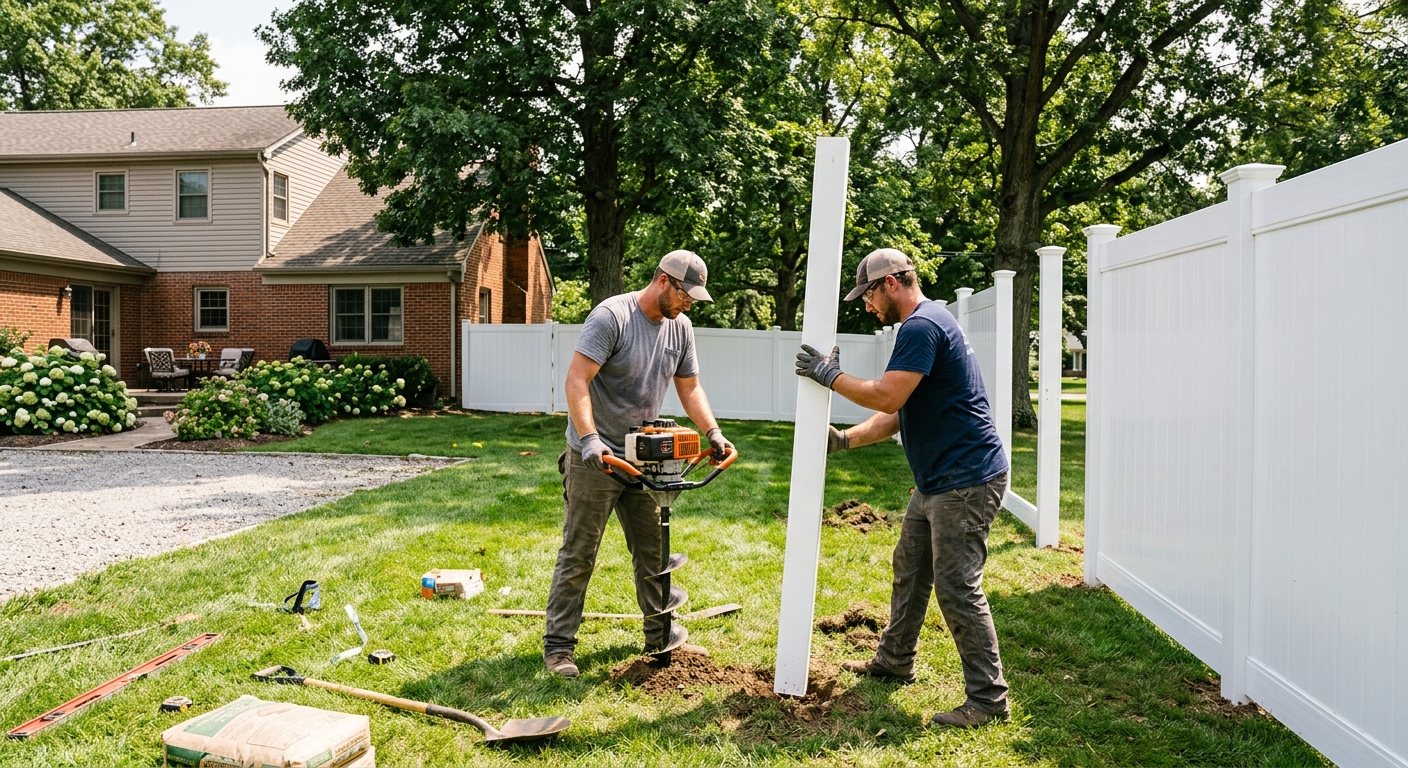
Fencing options and costs in Stratford
Stratford homeowners have a wide range of fencing options, but the best choice usually comes down to privacy, maintenance comfort, and what your yard can handle during Ontario winters. With 65.8% of households owning their homes (Statistics Canada, 2021 Census), most fencing work is driven by owner-occupied neighbourhood upgrades—especially where many properties are single-detached homes (52.9% of dwellings). That steady local demand is why you’ll find contractors gearing up for seasonal installs from spring through early fall.
In the Stratford–Bruce Peninsula area, two cost drivers show up repeatedly in quotes: frost depth and wind loading. Even though Stratford isn’t as exposed as the Prairies or coastal sites, frost still matters because posts must be set deep enough to prevent heaving in clay and mixed soils. Southern Ontario’s practical frost line is around 1.2 m (4 ft), so many residential installations set posts about 0.9–1.2 m (3–4 ft) deep with concrete footings. That extra labour and hardware raises the real-world cost versus “shallow post” installs you might see in milder climates.
At the same time, areas with more open frontage—such as parts of the east end near Perth County roads—often need tighter post spacing and sturdier panels for winter gusts and spring freeze-thaw movement. You can also see this in privacy-style wood and vinyl fences, which act like a sail.
Below is a practical cost comparison to help you budget before you request an itemised quote.
| Material |
Lifespan |
Maintenance |
Privacy Rating |
Price per Linear Foot |
| Pressure-treated pine (standard wood) |
10–15 years |
Stain/paint every 2–3 years |
High (solid boards) |
$55–$85 |
| Cedar (natural rot resistance) |
15–20 years |
Light staining every 2–4 years |
High (solid boards) |
$65–$95 |
| Vinyl / PVC (no-maintenance) |
20–30 years |
Wash as needed (rare repairs) |
High (solid panels) |
$75–$115 |
| Chain-link (galvanized steel) |
25–35 years |
Occasional tension/hardware check |
Low–Medium (see-through) |
$35–$55 |
| Aluminum ornamental |
25–40 years |
Wash/clean 1–2 times per year |
Low–Medium (open pickets) |
$90–$150 |
| Composite / recycled material |
20–30 years |
Minimal cleaning; rare repairs |
High (board-style) |
$95–$135 |
Prices are estimates only and vary by project scope, site access and material selection.
What affects the price of fencing in Stratford
Even when homeowners request the same “style” of fence, Stratford–Bruce Peninsula pricing can swing by roughly 30–50% across nearby sites and by more versus other Ontario areas. The reason is that fencing is labour-heavy where the ground is hardest to work—particularly around post holes below the winter frost line—and because wind exposure can force contractors to use tighter layouts and stronger components. In a market where many homes were built before 1981 (64.5% of dwellings), you’ll also find more older fence lines, uneven property layouts, and mature landscaping that can increase installation time.
Frost line depth is the biggest structural driver. In cold Ontario, posts typically need to go about 1.5–2.0 m into the ground to reach below the frost zone and reduce the risk of heaving. Practically, that often means concrete-set posts (and longer posts), which raises both materials and excavation time. Wind exposure is the second driver: heavier privacy systems (wood/vinyl) may need closer post spacing and more robust rails so the panels don’t flex and rack during gusty freeze-thaw periods.
Concrete examples we see in Stratford: (1) a backyard line on mixed clay often requires more careful hole excavation and more concrete, pushing wood and vinyl projects toward the upper end of the $55–$85 and $75–$115 bands; (2) a chain-link fence on a flatter lot with easy access can stay near the lower end of the $35–$55 range because post holes can be quicker and the fence tolerates minor ground movement better; (3) removing an old fence with buried anchors or decayed posts adds haul-away time, which can noticeably narrow your “budget window” even if you keep the same material.
| Price Factor |
Why It Matters |
Cost Impact |
| Fence length in linear feet |
More lineal footage means more posts, rails, and labour time |
Highest impact (directly proportional) |
| Post depth required |
Frost line determines hole depth and post length |
Can add substantial labour + concrete |
| Post setting method |
Concrete-set posts resist heaving better than shallow gravel packs in cold soils |
Concrete setting increases material and rig time |
| Material choice |
Vinyl vs. cedar vs. chain-link changes material costs and rail/post specs |
Usually shifts you into different price bands |
| Gate count and type |
Gates require extra bracing, hinges, and heavier hardware |
Double-drive gates cost more than walk-through |
| Grade and terrain |
Slopes require stepped or raked panels and more layout time |
Moderate to high (depends on steepness) |
| Old fence removal and disposal |
Demolition, hauling, and disposal time add labour and dump fees |
Often a noticeable one-time uplift |
| Permit fees and survey / property line locate |
Locate work prevents encroachment disputes and supports permit processes |
Can add fixed costs to the project |
Permits & regulations in Ontario
In Ontario, fence rules are tied to height thresholds, property line/setback requirements, and local bylaws. In many Stratford residential situations, fences above a typical rear threshold of 2.0 m (6.5 ft) and above roughly 1.0–1.2 m (3–4 ft) at the front or corner often require a building permit. Even when a fence doesn’t need a permit, it still must stay on your side of the property line and follow municipal setback bylaws.
Before digging any post holes, call for utility locates through Ontario One Call to mark buried services. Also, get a survey or property-pin locate if you’re unsure where the boundary is—this is one of the fastest ways to prevent disputes and rework. Shared fence ownership is handled through Ontario’s line-fences concepts: neighbours can have rights and responsibilities depending on where the fence sits, what the agreement is, and how maintenance costs are shared.
Here’s the practical split on permitting: a permit is typically required for taller fences (and in some cases for corner/front heights), while standard rear yard fences below the threshold often don’t require one—but you still must respect property lines and bylaws. For contractor accountability in Stratford, verify your fencing contractor’s Ontario licence status (where applicable to their business type), request a certificate of insurance with liability coverage, and confirm they carry WSIB/WCB coverage. Ask for documentation before work starts: (1) insurance certificate (COI), (2) WSIB/WCB clearance letter or proof, and (3) licensing details from the relevant online registry so you can match the company name exactly.
Choosing the right fence material for Stratford
Choosing the right fence material in Stratford means matching your priority—privacy, low maintenance, budget, or lifespan—to what the ground and weather will do over time. Stratford and the Stratford–Bruce Peninsula region have enough winter severity that frost-related movement is a real design consideration, and that typically pushes installations toward concrete-set posts at effective frost-safe depths. Whether that’s essential depends on soil and fence type, but it’s a common reason contractors price wood and vinyl on the higher side compared with “light duty” installs.
Pressure-treated pine is usually the lowest upfront option, but it tends to need staining or repainting every 2–3 years to prevent grey weathering and to keep joints looking solid. Cedar offers better natural rot resistance and a nicer finish, but it still isn’t “set and forget.” Vinyl/PVC delivers low maintenance and strong privacy when using solid panels, yet in very cold snaps it can become more brittle than wood if rails or hardware are underspecified—so the post depth and bracing matter. Chain-link costs less and lasts long, but it won’t provide privacy. Aluminum ornamental looks sharp, won’t rust, and offers mid-range longevity, but it’s open-style and not for full privacy.
Concrete value example: if you’re comparing pressure-treated pine near the $55–$85 band against vinyl near the $75–$115 band, the extra cost can be justified when you want minimal weekend maintenance and a longer service life, especially if your yard has limited access for frequent staining. For exposed yard lines, we also plan for wind and snow impact on rails and hardware; solid privacy fences usually get more robust spacing and bracing than open fences.
| Material |
Cold Tolerance |
Lifespan |
Annual Maintenance |
Best For |
Price Band |
| Pressure-treated pine |
Good if posts are frost-set and boards are sealed/stained |
10–15 years |
Light inspection; stain/paint every 2–3 years |
Budget privacy with standard upkeep |
$55–$85 |
| Cedar |
Very good in freeze-thaw when properly installed |
15–20 years |
Wash/inspect; stain lightly every 2–4 years |
Better look and rot resistance |
$65–$95 |
| Vinyl / PVC |
Good; needs proper spacing and hardware in cold snaps |
20–30 years |
Minimal—rinse or wash as needed |
Low maintenance privacy |
$75–$115 |
| Chain-link |
Excellent; strong galvanized base |
25–35 years |
Occasional tension/hardware check |
Security with low upfront cost |
$35–$55 |
| Aluminum ornamental |
Excellent; resists rust in wet winters |
25–40 years |
Wash/clean 1–2 times per year |
Curb appeal and long-life fencing |
$90–$150 |
| Composite / recycled |
Good; performs best with correct install and post setting |
20–30 years |
Low—inspect and clean |
Premium privacy with minimal upkeep |
$95–$135 |
How to choose a fencing contractor in Stratford
For Stratford homeowners, the fastest way to avoid cost overruns is to hire a contractor who can prove coverage and who gives you an itemised scope—not just a single lump-sum number. Start with Ontario licensing as applicable to their business setup, then verify liability insurance with a valid certificate of insurance showing the correct legal business name. Next, confirm WSIB/WCB coverage: ask for a clearance letter or proof of account coverage before work begins. If anything looks outdated or doesn’t match the company you’re dealing with, treat that as a serious red flag and request an updated document.
Get 2–3 written quotes that are itemised by labour and materials (posts, rails, concrete/footings, gates, hardware, and removal if included). Make sure each quote states whether permits are included, whether disposal is included, and who handles any property line locate requirements. Read the scope exclusions line-by-line: for example, “rock excavation,” “uneven grade adjustments,” “replacement of damaged landscaping,” and “utility conflicts” can dramatically change final cost if not addressed.
Ask about warranties too: you want a workmanship warranty (how long they stand behind installation), plus the manufacturer warranty for the material components. Clarify whether the warranty is transferable if you sell your home. On payment, never pay more than about 10–15% upfront; hold back the remainder until the job is complete and cleaned up.
Finally, request a start date and completion estimate in writing, including weather-related schedule notes for frost days and heavy rain.
- Confirm liability insurance COI matches the contractor’s exact legal name.
- Request WSIB/WCB clearance or proof before the crew mobilises.
- Ask whether permits are included or excluded in the written quote.
- Require an itemised breakdown: labour + materials + concrete/footings + hardware.
- Verify gate specs (hinges, latch type, bracing) are included in the quote.
- Check post depth and setting method (concrete-set vs gravel pack) for your yard soil.
- Confirm whether old fence removal and disposal are included.
- Ask how they handle slopes (stepped vs raked panels) and uneven ground.
- Require a clear warranty on workmanship and the manufacturer’s warranty details.
- Agree on a payment schedule with a holdback until final walkthrough.
- Get the installation schedule and start/completion windows in writing.
- Request before/after photos at completion for your records.
Red flags in Stratford: (1) quotes that only provide a single number with no itemised labour/materials breakdown, (2) contractors who won’t show insurance and WSIB/WCB documentation, (3) vague language about concrete footings or post depth (“standard install” only), (4) no clear permit/disposal scope despite fence height requirements, and (5) asking for a large upfront payment (well beyond 10–15%) before any work starts.
Frequently asked questions — fencing in Stratford
How do I prevent wood fence rot in Stratford?
In Stratford, preventing wood rot is mostly about stopping moisture at the right spots. The biggest issues are posts sitting in wet ground and fastener/rail areas that trap water. Make sure the fence is installed with frost-safe post depth for your soil and that posts are concrete-set where needed so they don’t shift during freeze-thaw. Use proper exterior-grade lumber and corrosion-resistant hardware, and keep ground contact minimized (boards should not sit in standing water or soil). If you choose pressure-treated pine, plan for staining or sealing every 2–3 years; cedar helps, but it still benefits from periodic maintenance. A well-installed fence can hold up much longer than a “cheap build” because rot typically starts where the post meets moisture and movement.
What is the cost per linear foot for fencing in Stratford?
For Stratford pricing, the most reliable way to think about cost per linear foot is to use the local material bands and then adjust for posts, gates, and site conditions. Wood (pressure-treated pine) typically lands around $55–$85 per linear foot depending on post depth, concrete footings, and how many gates you add. Vinyl/PVC privacy fences commonly fall in the $75–$115 range, while chain-link security often comes in lower, around $35–$55. Aluminum ornamental tends to be higher, roughly $90–$150. If your yard requires extra work (sloped grade, dense landscaping, or full old fence removal), the quote can move toward the top of the band even with the same material.
Should I repair or replace my old fence in Stratford?
In Ontario winters, the decision usually comes down to how many posts and rails have failed and whether the fence line is still structurally straight. If rot is limited to a few boards and fasteners (common with older pressure-treated sections), a targeted repair can be cost-effective and extend service life. But if multiple posts have shifted due to frost movement, or if the bottom rails are repeatedly failing, replacing is often cheaper over the long run because you’ll avoid repeated labour trips and partial rework. Also consider whether the fence is out of alignment with your current property-pin location—replacing can let you reset to a clean boundary. If you’re close to a high-privacy rebuild, vinyl or cedar upgrades can make sense because you reduce maintenance demands compared with painting/staining every couple of years.
How do I handle a fence dispute with neighbour in Ontario?
Start by documenting what’s wrong: take photos, note heights and distances, and compare against your property line information. If there’s any uncertainty, order a survey or ask for a property-pin locate so you know where the boundary truly is. Ontario’s line-fences concepts affect who can require work and how shared maintenance costs may apply, but the practical first step is agreeing on the boundary and the scope of responsibility. Keep communication calm and in writing (email/text followed by a letter if needed). If you hired a contractor, ensure the quoted work respects the located property line and that permits (if required for height) are handled correctly. If the dispute escalates, consider mediation or legal advice before construction—rebuilding a fence on the wrong line is one of the most expensive outcomes.
What fence style offers the best wind resistance in Stratford?
For Stratford, wind resistance usually comes from solid construction details rather than just the “type” of fence. Privacy wood and vinyl can perform very well when built with properly braced rails, correct post spacing, and frost-safe post depth. In open areas (farm-field frontage and some rural approaches), we typically plan for stronger lateral loads by using sturdier hardware and tighter post spacing so the panels don’t rack. Chain-link is more forgiving in high winds because the airflow passes through, but it won’t provide privacy. If you’re choosing a privacy fence, ask your contractor how they’re addressing gust loads—especially in yards with tall trees, open side lots, or exposure toward main roads.
How much does a fence cost in Stratford?
The total cost depends on linear footage, gate count, and how the ground needs to be handled for frost protection. As a planning range, wood privacy fencing often budgets around the $55–$85 band per linear foot, while vinyl privacy typically sits in the $75–$115 range. Chain-link projects are commonly lower at $35–$55 per linear foot, and aluminum ornamental ranges about $90–$150. Your quote may increase toward the higher end if the site has sloped grade requiring stepped panels, if old fence removal and disposal are included, or if concrete-set posts are needed at effective frost-safe depths. Because many homes here were built before 1981 (Statistics Canada, 2021 Census), older fence lines and landscaping obstacles are also a common reason bids vary.