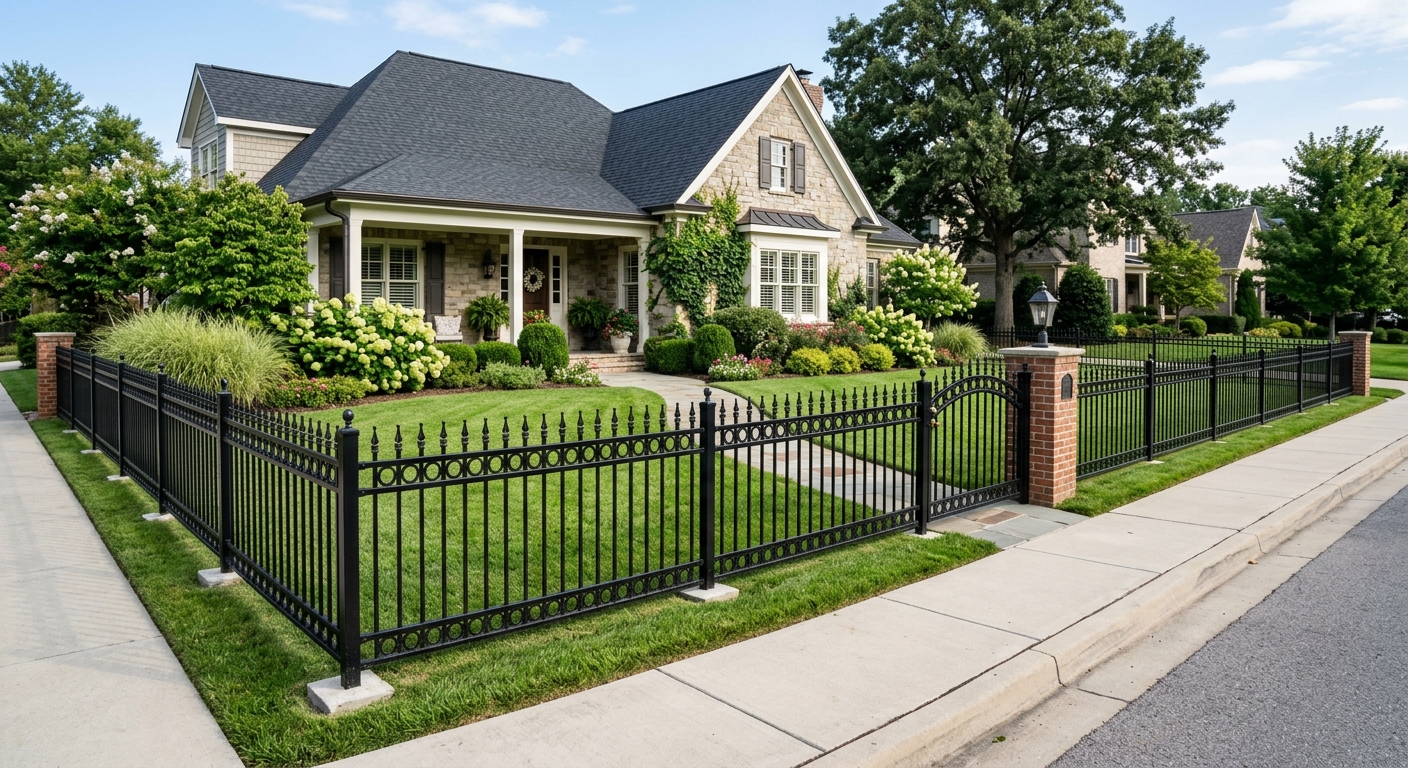
Fencing options and costs in Greenway-Chaplin
Greenway-Chaplin homeowners typically start their fence search by balancing curb appeal, privacy, and how long the fence will last through Toronto-area freeze–thaw cycles. With a population of 14,146 (Statistics Canada, 2021 Census), the area has steady residential turnover, and fence replacements are a common improvement for older lots. Toronto’s housing mix also matters because detached properties create a stronger “boundary need” than some other forms of housing, which is why fencing demand stays consistent in neighbourhoods around Yonge corridor commutes and established family pockets. (Statistics Canada, 2021 Census)
Pricing in the Toronto economic region is shaped by the cold-weather foundation work: the design frost line is commonly estimated at about 42"–48", so most contractors plan for concrete-set posts rather than simple driven posts—especially for taller 6–8 ft privacy fences. Local clay and mixed soils also increase the labour time for augering, setting, and getting holes at the right depth, which pushes labour and ready-mix costs up. At the same time, Greenway-Chaplin’s mix of mature lots and practical backyard layouts keeps material logistics predictable, which helps keep quotes competitive compared with more rural access-constrained sites.
Trade demand is especially high where backyards are longer and where residents often upgrade from aging pickets to privacy panels—commonly seen in the older residential sections closer to the main streets of Greenway-Chaplin. Once you know your preferred look and privacy level, you can compare typical ranges side-by-side in the table below.
| Material |
Lifespan |
Maintenance |
Privacy Rating |
Price per Linear Foot |
Price per Linear Foot |
| Pressure-treated pine (standard wood) |
10–15 years |
Stain/seal every 2–3 years |
High (solid boards) |
$65–$120 |
| Cedar (natural rot resistance) |
15–20 years |
Stain/maintain every 2–3 years (for best colour) |
High (solid boards) |
$75–$130 |
| Vinyl / PVC (no-maintenance) |
20–30 years |
Occasional wash; no staining |
High (solid/woodgrain styles) |
$75–$130 |
| Chain-link (galvanized steel) |
25–35 years |
Minimal; rinse debris, occasional tensioning |
Low–Medium (privacy slats optional) |
$45–$85 |
| Aluminum ornamental |
25–40 years |
Minimal; occasional cleaning |
Low–Medium |
$90–$160 |
| Composite / recycled |
20–30 years |
Low; periodic cleaning |
High (privacy styles available) |
$85–$150 |
Prices are estimates only and vary by project scope, site access and material selection.
What affects the price of fencing in Greenway-Chaplin
In Greenway-Chaplin and across the wider Toronto economic region, fencing quotes for the “same” fence can swing by roughly 30–50% because contractors price the unseen parts differently: how deep posts must go, what soil conditions require, how many rails and braces are used, and how much work is needed for gates, demolition, and cleanup. Two backyards can look similar, but one may have clay that needs extra excavation time while the other has easier access for equipment.
The biggest driver in Southern Ontario is frost depth planning. Local best practice generally takes the design frost line at about 42"–48", then sets posts about 4–6 inches below that effective depth to reduce heaving risk. Practically, that often means post holes in the 1.5–2.0 m range in colder stretches, which increases material (longer posts) and labour (deeper auger time) and usually favours concrete-set posts. For taller 6–8 ft privacy fences, heavier panels also mean sturdier post sizing and closer post spacing (often 6–8 ft centres), adding hardware and installation time.
Concrete examples that commonly affect costs in Greenway-Chaplin include: (1) a backyard with tight side access where a contractor can’t bring in a fence machine, forcing more manual hole digging; (2) sections near damp ground where extra drainage measures or thicker concrete footings are used to prevent settlement; and (3) corners where higher wind loading calls for extra bracing and heavier rails, even if the exposure isn’t “Prairie-level.” If you’re comparing budgets, chain-link often aligns with the $45–$85 range per linear foot, while vinyl/wood privacy fences typically track the $65–$130 band depending on height, rails, and gate count.
| Price Factor |
Why It Matters |
Cost Impact |
| Fence length in linear feet |
Most materials (rails, pickets/panels, mesh) and labour scale directly with run length. |
High; can shift total cost substantially. |
| Post depth required |
Frost line depth drives hole depth and post length to prevent heaving. |
High; deeper holes increase labour and concrete. |
| Post setting method |
Concrete vs. gravel pack vs. driven posts changes footing stability. |
Medium–High; concrete-set usually costs more but performs better. |
| Material choice |
Vinyl, cedar/wood, and chain-link have different component costs and hardware needs. |
Medium; vinyl and privacy woods typically higher than chain-link. |
| Gate count and type |
Gates require heavier frames, hinges, latches, and often diagonal bracing. |
Medium; each additional gate adds cost and labour. |
| Grade and terrain |
Slopes require stepping/racking, plus additional labour and sometimes custom cuts. |
Medium; can add hours and waste. |
| Old fence removal and disposal |
Demo can be labour-intensive and disposal fees may apply. |
Medium; often overlooked in “starter” quotes. |
| Permit fees and survey / property line locate |
Some fence work triggers permits or requires verified locations to avoid disputes. |
Low–Medium; depends on scope and documentation needs. |
Permits & regulations in Ontario
In Ontario, whether you need a building permit for a fence depends mainly on the fence height and where it sits on your property. As a practical rule of thumb for many residential situations, fences above about 2.0 m (6.5 ft) at the rear and around 1.0–1.2 m (3–4 ft) at the front or corner often trigger a permit requirement. However, municipal setback bylaws and local bylaw details can vary—so you should confirm with your local municipal office or the program that handles building/bylaw inquiries before digging.
Regardless of permits, you must respect property lines and municipal setback requirements. Before you dig post holes, call for utility locates through Ontario One Call so crews can mark underground services. It’s also wise to obtain a survey or at least verify your property pins/locate your property line before installing—fence encroachments can become costly disputes with neighbours.
Shared fence ownership and responsibilities typically follow the province’s line-fences framework: unless an agreement says otherwise, neighbours may share responsibilities for maintaining the boundary fence. To verify contractor readiness in Greenway-Chaplin, ask for proof of liability insurance and evidence of required workplace coverage (WSIB/WCB) if applicable to their workers, then check their Ontario licence status through the appropriate online registry. Finally, request a certificate of insurance that matches the jobsite address and dates, and confirm what work is covered by the workmanship warranty.
Choosing the right fence material for Greenway-Chaplin
Choosing the right fencing material in Greenway-Chaplin comes down to matching your priorities—privacy, low maintenance, lifespan, and budget—to how Ontario weather treats materials. Pressure-treated pine is the usual entry point, but it benefits from regular staining or sealing every 2–3 years to avoid grey weathering and premature wear. Cedar looks better longer and has natural rot resistance, yet it still needs maintenance for the best appearance and longevity. Vinyl/PVC offers true low maintenance (clean it occasionally), but extreme cold snaps can make some lower-quality panels more brittle—so it’s worth selecting a product meant for Ontario freeze–thaw cycles and proper installation details. Chain-link is the most cost-effective option and has a long life, but it delivers limited privacy unless you add slats or screens. Aluminum ornamental is mid-range in cost and won’t rust, but it’s not a privacy fence unless you add screening.
For privacy fences in Toronto-area freeze–thaw conditions, post depth matters as much as material. With the design frost line often taken around 42"–48", concrete-set posts are typically recommended, particularly for 6–8 ft privacy builds, because deeper, stable footings reduce heaving risk. Wind and snow load considerations matter in panel selection: heavier solid sections can rack if spacing, bracing, or hardware is underbuilt.
Here’s a real-world justification example: if a cedar privacy fence quote is in the $75–$130 per linear foot range and a pressure-treated pine privacy fence comes in the $65–$120 range, the extra for cedar can be worth it when you want better long-term appearance and improved rot resistance—especially along shaded or damp sections. If you mainly want budget, chain-link stays closer to the $45–$85 band, but you’ll likely pay again later if you add privacy slats.
| Material |
Cold Tolerance |
Lifespan |
Annual Maintenance |
Best For |
Price Band |
| Pressure-treated pine |
Good (with proper staining and installation) |
10–15 years |
Seasonal check; stain/seal every 2–3 years |
Budget-first privacy fencing |
$65,XXX – $120 |
| Cedar |
Good (handles freeze–thaw well) |
15–20 years |
Inspect annually; stain/seal every 2–3 years |
Better appearance and rot resistance |
$75,XXX – $130 |
| Vinyl / PVC |
Very good (use Ontario-rated products) |
20–30 years |
Rinse/clean as needed; occasional inspection |
Low maintenance privacy |
$75,XXX – $130 |
| Chain-link |
Excellent |
25–35 years |
Low; rinse debris, check tension and posts |
Perimeter security on a budget |
$45,XXX – $85 |
| Aluminum ornamental |
Excellent |
25–40 years |
Low; periodic wash and hardware checks |
Decorative boundary with security |
$90,XXX – $160 |
| Composite / recycled |
Good (quality depends on product) |
20–30 years |
Low; clean and check for fastening issues |
Privacy with low upkeep |
$85,XXX – $150 |
How to choose a fencing contractor in Greenway-Chaplin
For fencing in Greenway-Chaplin, start by confirming that the contractor is properly set up to work in Ontario. Ask for their Ontario business licence details (where applicable), then verify liability insurance by requesting a certificate of insurance that lists the correct insured business name, the work address, and coverage dates. If they’ll have workers on site, request proof of WSIB/WCB coverage (as applicable) and confirm they’re insured to protect both your property and their crew. Don’t accept “we’re covered” without documents—good contractors provide them quickly.
Next, get 2–3 itemised written quotes, not just a lump sum. The best quotes break out labour (excavation, setting posts, assembly, gate install) and materials (posts, rails, fasteners, brackets, panels/mesh) and they should show how they’ll handle the frost-line depth and post setting method. Read the exclusions: will permit pulling be included if required, who handles utility locate coordination, and is old fence removal/disposal part of the price? Disposal and extra hauling can be a major surprise if it’s not stated.
Warranty is crucial. Ask for a written workmanship warranty length and whether it covers post setting, rail alignment, and gate hardware. Also check the manufacturer warranty on the fence product and whether it’s transferable if you sell your home. For payments, keep upfront deposits modest—generally no more than 10–15%—and use a holdback until the final walk-through and any punch-list items are complete. Finally, request a start date and an estimated completion timeline in writing so you’re not left guessing in shoulder-season weather.
- Provide proof of liability insurance (certificate with jobsite dates and address).
- Provide proof of WSIB/WCB coverage (as applicable) for workers.
- Show experience installing concrete-set posts for frost stability in Southern Ontario.
- Use itemised labour + materials quotes (not one blanket line).
- State whether utility locates are arranged and who schedules Ontario One Call.
- Confirm post depth plan (typical frost-line approach) and post setting method.
- Clarify gate hardware brand/type and how gates will be braced.
- List what’s included in demolition and disposal of old fencing.
- Confirm survey/property line responsibility if pins aren’t visible.
- Specify warranty terms for workmanship and for the fencing product.
- Set a clear payment schedule with ≤10–15% upfront and final holdback.
- Put start date and completion estimate in the written contract.
In Greenway-Chaplin, common red flags include: quotes that don’t specify post depth or setting method; contractors who won’t share insurance/coverage documents; vague scopes that omit gate hardware details or disposal; asking for large upfront payments without a signed agreement; and workmanship warranties that are shorter than the industry norm or aren’t provided in writing.
Frequently asked questions — fencing in Greenway-Chaplin
Wood vs vinyl vs aluminum fence — which is best?
For Greenway-Chaplin (Toronto-area freeze–thaw), the “best” choice depends on how much privacy and maintenance you want. Wood privacy fences (pressure-treated pine or cedar) typically sit around the $65–$120 band for standard installs, but you should plan on staining/sealing every 2–3 years. Vinyl/PVC is usually in the $75–$130 range and is a strong fit if you want low maintenance and consistent panel look. Aluminum is often a mid-to-higher cost option (commonly $90–$160) and shines for durability and curb appeal, but it won’t give the same privacy as solid wood or vinyl panels. If wind racking is a concern, your post depth and spacing matter as much as material.
Do I need a permit to build a fence in Ontario?
In Ontario, permits are commonly triggered when fence height exceeds local thresholds—often around 2.0 m (6.5 ft) at the rear and about 1.0–1.2 m (3–4 ft) at the front or corner, though the exact requirement can vary by municipality and placement. In Greenway-Chaplin, the safest approach is to confirm the height/location rules with the local building or bylaw office before ordering materials. Even if a permit isn’t required, you still must respect property lines and municipal setback/bylaw requirements. Also, call Ontario One Call before digging so utilities are marked. A reputable fence contractor should tell you whether a permit is likely and include it clearly (or exclude it clearly) in the quote.
How long does a wood fence last in Greenway-Chaplin?
With proper installation for Toronto-area conditions, a pressure-treated pine wood fence often lasts about 10–15 years, while cedar can reach 15–20 years. The lifespan is strongly tied to post setting and frost stability: posts should typically be set deeper to reduce heaving during freeze–thaw cycles, and many contractors recommend concrete-set posts for tall privacy fences to improve long-term alignment. Maintenance also matters—plan on staining or sealing roughly every 2–3 years to limit grey weathering and moisture damage. If you skip upkeep, you may see faster warping or splitting at rail and picket ends, especially in shaded or low-drainage corners.
Who owns and maintains a shared fence?
For shared boundary fences in Ontario, responsibility and ownership typically follow Ontario’s line-fences approach unless there’s a separate agreement between neighbours. In practical terms, it’s common that both property owners share maintenance responsibilities and costs, but the exact split can depend on how the fence was built and what each party contributed or agreed to. If you and your neighbour disagree, a survey or property line locate can help confirm the boundary. For Greenway-Chaplin homeowners, it’s also smart to document decisions in writing (photos, agreed scope, and who pays for which materials). Your contractor can usually work within a shared-fence plan, but the homeowners still need to align on responsibilities.
How do I find my property line before fencing?
Before installing a fence in Greenway-Chaplin, you want to confirm the boundary to avoid encroachment. Start with your survey documents (if you have them) or hire a surveyor to locate property pins and provide boundary confirmation. If pins are visible, you can often identify them with the help of the survey plan and a contractor’s layout. Either way, you should verify setbacks and property line placement—especially at corners and along irregular lot lines where fence placement disputes are most likely. If your planned fence alignment depends on exact placement, ask your contractor whether they include a property line locate step or whether you’ll need to arrange it separately.
What's the most low-maintenance fence?
In Ontario climates like Greenway-Chaplin, the lowest-maintenance option is usually vinyl/PVC or aluminum. Vinyl is typically installed within the $75–$130 band and generally requires only occasional rinsing and quick hardware checks—no staining. Aluminum ornamental (often around $90–$160) also needs minimal upkeep because it won’t rust like steel or rot like wood. For the least hassle, avoid wood unless you’re ready for a maintenance routine every 2–3 years. Note that “low maintenance” doesn’t mean “no installation care”: solid privacy styles still need correct post depth and spacing so the fence doesn’t shift as the ground freezes and thaws.