Fencing options and costs in Brampton
Brampton homeowners typically want fencing that looks sharp, resists our freeze–thaw cycles, and holds up through spring thaws. With 656,480 residents and 142,480 homeowner households (78.1% of households own) (Statistics Canada, 2021 Census), there’s steady demand for backyard privacy fences, especially across older established areas. Toronto’s wider economy influences what contractors can staff and how quickly crews can schedule installs, so pricing can tighten during peak spring and early summer.
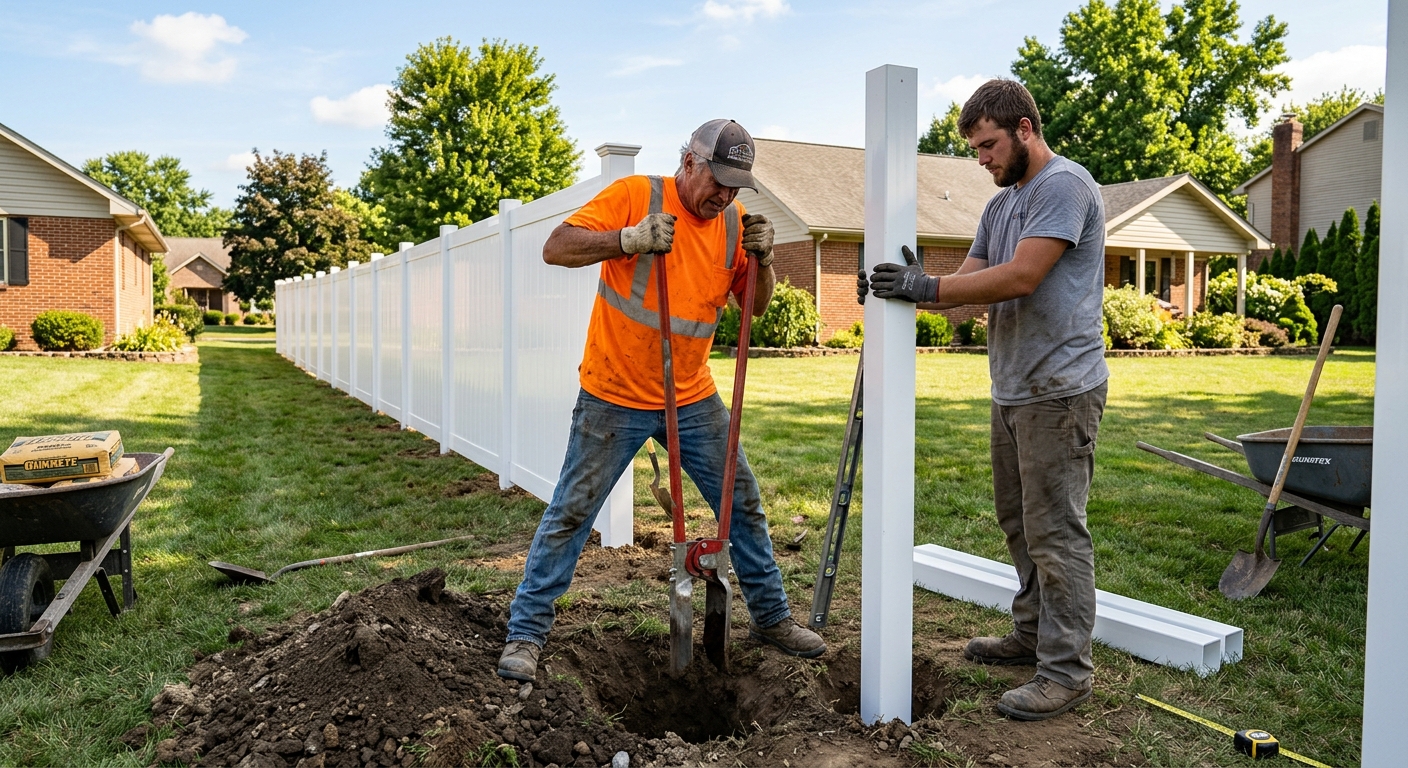
In the Brampton/Greater Toronto area, the frost line is commonly planned at about 42”–48” in Southern Ontario. That means most fences need posts set a minimum of 3.5–4 feet down to reduce frost heave risk—particularly for 6–8 ft privacy runs. Add clay and mixed soils in many neighbourhoods, and you’ll usually see quotes steer toward concrete-set posts instead of driven posts. For homeowners in family-heavy pockets like the Mount Pleasant North / Bramalea corridor, trades are especially in demand because lots are frequently updated with bigger, more solid fences.
Below is a practical cost overview by material. Use it as a baseline, then we adjust for your exact linear footage, gate count, and whether you need concrete-set posts, removal of an old fence, and any panel changes for a sloped yard.
| Material |
Lifespan |
Maintenance |
Privacy Rating |
Price per Linear Foot |
| Pressure-treated pine (standard wood) |
8–15 years |
Stain or seal every 2–3 years |
Good (solid boards) |
$65–$120 |
| Cedar (natural rot resistance) |
15–25 years |
Stain/seal every 2–3 years (often lighter upkeep) |
Very good (solid boards) |
$80–$135 |
| Vinyl / PVC (no-maintenance) |
20–30 years |
Rinse as needed; occasional panel cleaning |
Very good (solid or semi-solid styles) |
$75–$130 |
| Chain-link (galvanized steel) |
20–35 years |
Minimal; occasional tension/hardware check |
Low to fair (works better with screening) |
$45–$85 |
| Aluminum ornamental |
25–40 years |
Minimal; wash 1–2x per year if needed |
Low to fair (open pickets) |
$90–$160 |
| Composite / recycled material |
20–30 years |
Minimal; periodic wash |
Good (if built as solid boards) |
$110–$185 |
Prices are estimates only and vary by project scope, site access and material selection.
What affects the price of fencing in Brampton
In Brampton and the broader Toronto economic region, two quotes for what looks like the “same” fence can differ by 30–50% because the hidden parts of the job change: post depth, panel design, concrete volume, site access, and how many extras are included. The city’s housing mix also matters—there are many homes built before 1981 (23.4% of dwellings), and older properties can have unexpected grading, older buried services, or fence lines that need careful re-location work.
For frost protection, fencing pricing is strongly tied to how deep posts must be set. Best practice in Southern Ontario is commonly to set posts at roughly 1.5–2.0 m deep (about 3.5–4.0 ft), which generally means concrete-set posts and longer materials. Longer posts increase both material waste and labour time (digging, setting, and bracing). In Toronto-market builds, you’ll also see wind considerations affect post size and spacing for taller privacy fences; the goal is to limit racking and uplift during gusty days. Brampton isn’t as wind-lashed as the Prairies, but we still need solid fastening and correct centres when you go to 6–8 ft solid styles.
Concrete examples of cost movement in Brampton: (1) clay soil can slow excavation and increase concrete volume for stable footing, nudging a wood fence toward the upper end of the $65–$120 band; (2) a job with a sloped backyard often requires stepped or raked sections, which can add labour and hardware compared to a flat run; (3) if you’re switching from chain-link at about $45–$85 to vinyl/PVC around $75–$130, the material jump can be worth it when you want real privacy without recurring staining.
When you book a quote, ask how the contractor is handling frost-depth setting, whether the fence is post-and-panel versus shadow-box, and what exact extras (removal, disposal, and gate hardware) are included.
| Price Factor |
Why It Matters |
Cost Impact |
| Fence length in linear feet |
Most costs (posts, panels, rails, hardware) scale directly with length |
High (usually the biggest driver) |
| Post depth required |
Frost planning determines post length and hole depth |
Medium to high (more depth = more labour + concrete) |
| Post setting method |
Concrete-set posts add material and labour versus simple gravel/drive |
Medium to high (often a key stability upgrade) |
| Material choice |
Vinyl/PVC and cedar cost more up front than chain-link |
Medium to high (switching materials can move budgets by tens of percent) |
| Gate count and type |
Drive-through gates need heavier frames, hinges, and latches |
Medium (commonly 10–25% of total for added gates) |
| Grade and terrain |
Slopes require stepped panels or raked rails |
Medium (more cuts, layout time, and hardware) |
| Old fence removal and disposal |
Hauling time, disposal fees, and labour vary by material |
Low to medium (can rise on overgrown/embedded posts) |
| Permit fees and survey / property line locate |
Depending on height/location, you may need documentation and accurate boundary verification |
Low to medium (often essential for avoiding rework) |
Permits & regulations in Ontario
In Ontario, many fence projects still come down to local municipal bylaws, but there are common height thresholds homeowners should plan for. Fences above a typical threshold of about 2.0 m (6.5 ft) at the rear and around 1.0–1.2 m (3–4 ft) at the front or corner often trigger a building permit requirement in practice. Even when a permit isn’t required, you still need to respect property lines and municipal setback requirements.
Before anyone digs post holes, you must complete utility locates through Ontario One Call so you don’t hit underground services. This step is non-negotiable—most contractors will not start excavation without confirmation. Next, confirm your boundary: if you don’t have your pins or a recent survey, plan on a locate/verification before install. This protects you from encroachment disputes with neighbours, which is especially important when you’re replacing older fencing where line drift may have occurred over time. Shared fence ownership is handled by provincial line-fences principles, so it’s smart to document neighbour agreements in writing.
Step-by-step: (1) ask your contractor whether your intended fence height/location will require a permit; (2) verify their Ontario licence and request a certificate of insurance; (3) request proof of WSIB/WCB coverage; (4) confirm the exact post-hole plan (depth and concrete-set approach); and (5) get a written start date and completion estimate so any permit delays are clear.
Choosing the right fence material for Brampton
Choosing the right fence material for Brampton comes down to balancing privacy, low maintenance, and budget through our freeze–thaw winters and humid summers. Pressure-treated pine is the budget-friendly option, but it typically needs staining or sealing every 2–3 years to reduce grey weathering and keep it looking consistent. Cedar offers a better natural look and stronger rot resistance, yet it still benefits from periodic maintenance to maintain colour and prevent surface breakdown. Vinyl/PVC is the low-maintenance favourite for many homeowners—no staining, just occasional washing—but in extreme cold it can become more brittle if installed with poor spacing or incorrect hardware. Chain-link is usually the longest-life budget route with minimal upkeep, but it won’t deliver privacy unless you add slats or a vegetative screen. Aluminum ornamental won’t rust and holds its shape well, but it’s best for containment and curb appeal, not privacy.
For most Brampton privacy fences, frost-depth planning means concrete-set posts are commonly recommended. With our Southern Ontario frost depth considerations (about 42”–48”), posts often need set depths of roughly 3.5–4 ft so the fence doesn’t heave. That usually makes all materials perform better when the foundation is done correctly. Wind and snow loads also push you toward stronger rails and correct post spacing for taller solid fences—especially when you want 6–8 ft coverage.
Where the price difference is justified: if you’re comparing pressure-treated pine (often starting in the $65–$120 range for wood installation) to vinyl/PVC (commonly $75–$130), the extra cost can be worth it when you want to avoid recurring staining and you plan to stay in the home long enough to amortize upfront spending.
| Material |
Cold Tolerance |
Lifespan |
Annual Maintenance |
Best For |
Price Band |
| Pressure-treated pine |
Good (with proper sealing and post depth) |
8–15 years |
1–2 hrs wash; stain/seal every 2–3 years |
Budget privacy and traditional look |
$65–$120 |
| Cedar |
Very good (natural resistance) |
15–25 years |
Wash 1x; stain/seal every 2–3 years |
Appearance-first homeowners wanting privacy |
$80–$135 |
| Vinyl / PVC |
Good (best with correct installation) |
20–30 years |
Minimal; rinse as needed |
Low-maintenance privacy and long-term budgeting |
$75–$130 |
| Chain-link |
Excellent (galvanized hardware) |
20–35 years |
Minimal; tension/hardware check 1x |
Security and pet containment |
$45–$85 |
| Aluminum ornamental |
Excellent (powder-coated) |
25–40 years |
Wash 1–2x per year if needed |
Curb appeal, containment, not privacy |
$90–$160 |
| Composite / recycled |
Good (varies by brand; needs correct fastening) |
20–30 years |
Minimal; periodic wash |
Solid look with reduced maintenance |
$110–$185 |
How to choose a fencing contractor in Brampton
Choosing the right contractor in Brampton starts with proof. In Ontario, verify the business licence where applicable, request a current certificate of insurance (general liability) and confirm coverage status for workers through WSIB/WCB. When you ask for documents, don’t accept “we have it” verbally—ask for the certificate numbers and expiry dates, and ensure the certificate lists your project address or at least the named insured properly. Many reputable contractors also provide a clearance letter or direct confirmation upon request.
Next, get 2–3 written, itemised quotes. The best quotes break down labour and materials separately (posts, rails, panels, concrete, gate frames, hardware), and clearly list inclusions such as permit pull (if required), utility-locate responsibility, and disposal of old materials. Avoid lump sums that don’t show how they’ll handle frost-depth post setting; in our region, that’s a major stability driver.
Check warranty details: workmanship warranty length, product/manufacturer warranty, and whether the warranty transfers to a new homeowner. Payment schedules should be conservative—never pay more than 10–15% upfront, and keep a holdback until the job is fully complete and gates are adjusted for smooth latching.
Finally, insist on a written timeline: proposed start date, how long materials will be on-site, and an estimated completion window. If the contractor won’t put timelines and scope in writing, that’s a risk for you, especially during peak GTA scheduling.
- Request proof of Ontario business licence (where applicable) and current general liability insurance.
- Confirm WSIB/WCB coverage with documentation (not verbal confirmation only).
- Ask whether posts will be concrete-set to frost-safe depth (and what depth they plan).
- Get 2–3 itemised quotes: labour + materials line items, not just a total.
- Confirm what’s included for gates: frame, hinges, latches, and alignment adjustments.
- Clarify whether permits and inspections are included or billed separately.
- Ask who pays for utility locates and whether excavation starts only after locate clearance.
- Confirm old fence removal and disposal: hauling, dumping fees, and cleanup standards.
- Ensure the quote states panel layout for sloped yards (stepped vs raked) and any extra labour.
- Check hardware standards: post caps, fasteners, and corrosion-resistant hinges for gates.
- Review warranty terms in writing: workmanship length and manufacturer coverage details.
- Use a sensible payment schedule: small deposit, then progress payments with a holdback.
Red flags I see too often in Brampton include: (1) a quote that doesn’t specify post depth or concrete-set approach for privacy fences; (2) refusing to provide insurance/WSIB paperwork or giving expired documents; (3) lump-sum pricing with no itemised gate and removal scope; (4) demanding a large upfront payment beyond 10–15%; and (5) no written start/completion estimate, which makes schedule disputes likely.
Frequently asked questions — fencing in Brampton
How do I find my property line before fencing?
In Brampton, the safest way to confirm your property line is to use your property pins (if you have them) or order a survey/locate through a qualified service before any posts go in. If you’re replacing an older fence, don’t assume the existing line is correct—fences can shift over decades, especially on older lots. Also, before digging, ensure utility locates are completed through Ontario One Call so excavation doesn’t hit buried services. When you talk to a contractor, ask how they’ll mark the line and whether they’ll use your pins/survey to lay out the fence footprint. This reduces the chance of encroachment disputes and makes the quote more accurate.
What's the most low-maintenance fence?
For many Brampton homeowners, vinyl/PVC is typically the lowest-maintenance choice because it doesn’t require staining. In Southern Ontario, you still want a contractor who installs with correct hardware and allowance for temperature movement so panels don’t stress in winter. Chain-link is also very low maintenance, but it won’t provide true privacy unless you add slats, lattice, or screening. If you’re considering budget-friendly options, pressure-treated pine can be low-cost up front but needs staining/sealing roughly every 2–3 years to maintain appearance, and that labour is where maintenance time adds up. Cost-wise, vinyl/PVC often lands around the $75–$130 band, while wood installations commonly start in the $65–$120 range depending on your fence style and post setting.
How tall can my fence be in Brampton?
Brampton fence height limits usually depend on whether the fence is in the front yard/corner area versus the rear yard, and local bylaws typically include common thresholds. As a planning guideline in Ontario, rear fences may need a building permit around 2.0 m (6.5 ft), while front/corner fences are often lower (about 1.0–1.2 m or 3–4 ft). Because bylaws can be specific to location on the lot and proximity to streets, you should confirm with the municipal bylaw requirements or your contractor if they routinely handle permitting. Ask your contractor to state in writing the intended fence height, exact location, and whether a permit is expected. This avoids demolition or redesign if an installation exceeds allowable limits.
Should fence posts be set in concrete here?
In Brampton and the broader Toronto area, concrete-set posts are commonly recommended for privacy fences because frost protection is crucial. Southern Ontario frost planning (often about 42”–48”) typically means posts need to be set well below the frost-affected zone—often in the range of roughly 3.5–4 feet deep depending on design conditions—especially for 6–8 ft solid fences. Concrete setting improves long-term stability in mixed soils, including clay found in many areas, and reduces the risk of posts heaving after winter. It’s not that gravel packs never work, but for taller solid styles and long runs, concrete-set posts are the best-practice approach most contractors build into their quotes.
What's the best fence for privacy?
For true privacy in Brampton, solid board wood (pressure-treated or cedar), vinyl/PVC privacy styles, or composite solid designs generally perform best because they minimize sight lines and reduce gaps. Fence height matters too—most privacy needs are in the 6–8 ft range—so you should plan for frost-safe post depth and sturdier rail/post spacing to resist wind-induced racking. If you want low maintenance, vinyl/PVC privacy fences are a common choice and often fall into the $75–$130 band for many installed configurations. Cedar can look excellent and has better natural rot resistance, but it still typically requires periodic staining to maintain colour. Chain-link can provide security, but it usually isn’t “private” on its own.
How do I compare fencing quotes?
To compare quotes fairly in Brampton, make sure you’re comparing identical scope. Ask for itemised estimates that separate labour and materials (posts, rails, panels, concrete, hardware, gate frames, and removal/disposal). Confirm what post setting is included (concrete-set versus other methods) and what depth they plan for frost conditions. Also verify whether permit pull (if required for height/location) is included, and who handles utility locates. Many homeowners get surprised by gate pricing—walk-through vs drive-through double gates can materially change totals. Finally, check warranty terms and payment schedule: a reasonable deposit is typically around 10–15%, with a holdback until completion. If one quote is in the $45–$85 chain-link band while others are $75–$130 or higher, you’re probably not comparing the same privacy level or fence construction.