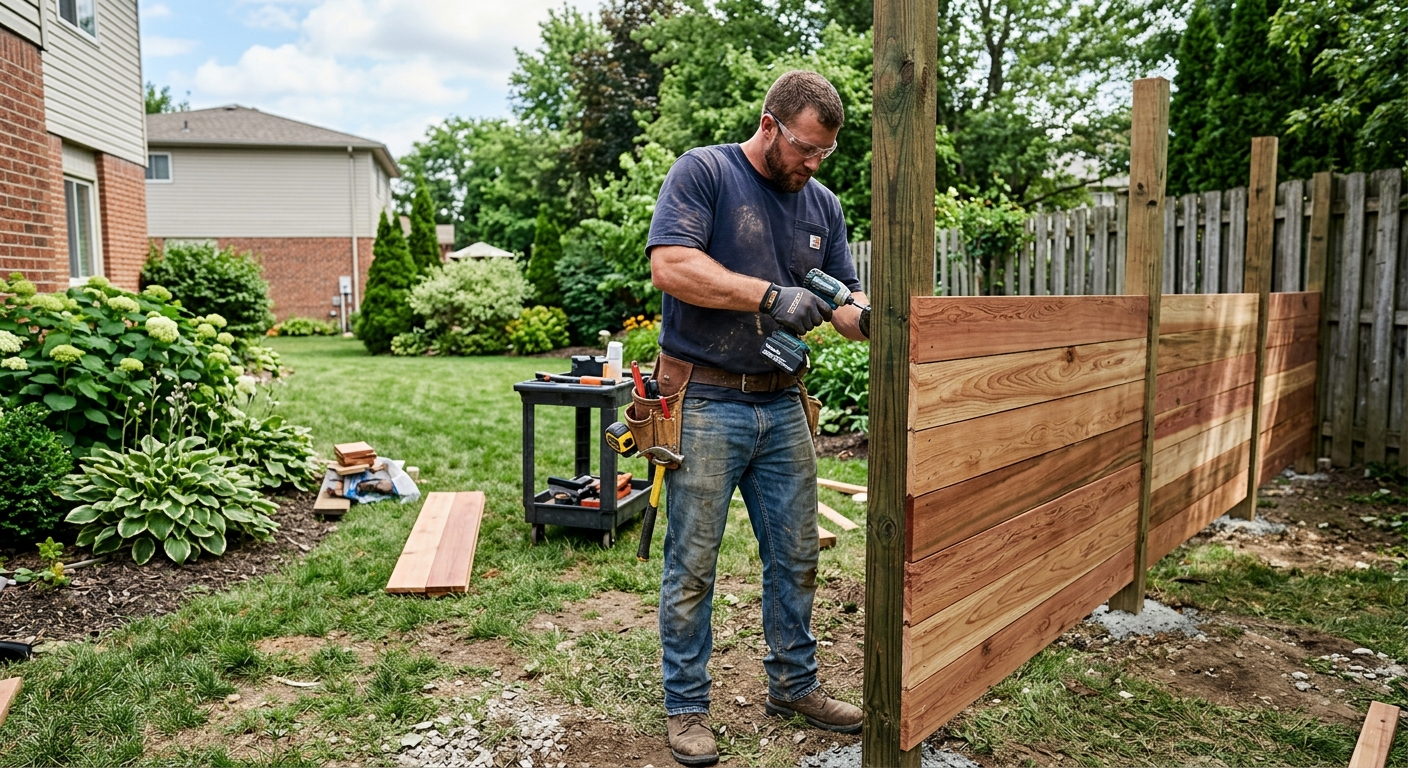
Fencing options and costs in Atikokan
Fencing costs in Atikokan depend on what you’re trying to achieve—privacy, durability, or a simple boundary—and your choice of material. With 82.5% of Atikokan households owning their homes (Statistics Canada, 2021 Census), demand is steady for backyards and side-yard boundaries, especially where detached homes (91.7% of dwellings) create lots of fence lines to maintain. The Northwest Ontario climate is a big cost driver: deeper frost penetration means fence posts typically need to be set close to 4 ft (1.2 m+) below grade to reduce frost heave, which increases excavation time and concrete volume. Wind exposure also matters in open stretches common near highway corridors and lakeside properties, often pushing contractors toward closer post spacing and heavier panel choices to keep the fence from racking in storms.
In practice, you’ll see the strongest trade demand where properties have larger lots and more fencing runs—often around the older, established neighbourhoods near town services (for example, areas off Dawson Street and the adjoining residential grid) where homeowners refresh sagging fence lines before winter.
Below is a clear starting point to compare options in Atikokan. Use these ranges to sanity-check bids, then match the material to your maintenance tolerance and how much privacy you need.
| Material |
Lifespan |
Maintenance |
Privacy Rating |
Price per Linear Foot |
| Pressure-treated pine (standard wood) |
10–15 years |
Stain/seal every 2–3 years |
High (solid boards) |
$55–$90 |
| Cedar (natural rot resistance) |
15–25 years |
Light staining every 3–4 years |
High (solid boards) |
$70–$110 |
| Vinyl / PVC (no-maintenance) |
20–30 years |
Occasional wash only |
Medium-High (with solid panels) |
$75–$120 |
| Chain-link (galvanized steel) |
25–35 years |
Minimal (rinse/repair tension) |
Low (security only) |
$35–$65 |
| Aluminum ornamental |
30–40 years |
Rinse as needed |
Low-Medium (decorative pickets) |
$80–$140 |
| Composite / recycled material |
20–30 years |
Occasional cleaning |
Medium-High (privacy styles) |
$90–$150 |
Prices are estimates only and vary by project scope, site access and material selection.
What affects the price of fencing in Atikokan
In Atikokan, two bids for the “same” fence can land 30–50% apart because the hidden variables are usually the site and the structure—not just the material. The fence length (linear feet), post depth, and how solidly the posts are set drive most of the spread, while labour availability in Northwest Ontario can tighten scheduling and increase mobilization costs. Your yard conditions also matter: older lots can have buried services or uneven grades that require extra layout time, and in cold weather the ground can be harder to excavate, particularly once frost is in the soil.
Frost is the big local structural factor. In colder Ontario areas, posts generally need to be set about 4–6 inches below the design frost depth to prevent frost heave. Practically, that often means 1.5–2.0 m embedment, concrete setting (not just a shallow gravel pack), and longer posts—which raises both material and labour. Wind exposure is another pricing lever. While Northwest Ontario is often forested, open corridors can behave like the Prairies, where heavier panels and closer post spacing help reduce racking and loose boards. On the other hand, if you’re in a more sheltered residential pocket, you may need lighter bracing and slightly less robust build-out.
Two common Atikokan examples: (1) a privacy fence that requires concrete-set posts at deeper embedment will typically cost closer to the upper end of the wood band (for instance $55–$90 per linear foot) because of extra excavation and concrete; (2) a chain-link boundary in a fairly level yard may stay nearer the $35–$65 range because the post holes are simpler, and the fence needs less rigid framing. Also, older home fencing often includes full removal—disposal of old pressure-treated boards can add weight and time compared to “install only.”
| Price Factor |
Why It Matters |
Cost Impact |
| Fence length in linear feet |
More feet means more posts, rails, brackets, and installation time |
Largest driver; often 50%+ of total cost |
| Post depth required |
Frost depth determines hole depth and post length |
Can add meaningful labour and material; deeper embedment increases cost |
| Post setting method |
Concrete vs. gravel pack changes labour and structural resistance |
Concrete-set posts typically raise installed cost vs. gravel pack |
| Material choice |
Vinyl/cedar pay for materials upfront; chain-link pays less but still needs proper posts |
Shifts you between bands (for example, wood vs. vinyl or chain-link) |
| Gate count and type |
Gates need stronger frames, hardware, and alignment time |
More gates (and drive-through double gates) raises cost |
| Grade and terrain |
Slopes require stepping, raking, or custom height adjustments |
Extra layout time and extra framing/rails |
| Old fence removal and disposal |
Demolition, hauling, and disposal fees add labour and truck time |
Can add a noticeable premium vs. “install only” |
| Permit fees and survey / property line locate |
Some fence projects need permits and/or a property line locate |
Varies; locating can add cost but prevents costly rework |
Permits & regulations in Ontario
In Ontario, fence requirements usually come down to height limits, placement, and setbacks from property boundaries. As a general guideline many municipalities follow, fences above a height threshold—commonly around 2.0 m (6.5 ft) at the rear and about 1.0–1.2 m (3–4 ft) at the front or corner—often trigger a building permit requirement. Even when a permit is not required, you still must respect the property line and any municipal setback rules.
Before you dig any post holes in Atikokan, call for utility locates through Ontario One Call. This is not optional—posts and rails can cross service corridors, and digging without locates can create dangerous hazards and delays. Next, verify where your property line is. If you don’t have a recent survey, a property line locate can help confirm pin locations so the fence doesn’t encroach on a neighbour’s yard. Shared fence ownership and line-fence expectations are addressed under Ontario’s line-fences framework, so clarity on ownership responsibilities (and maintenance costs) matters if you’re replacing a shared boundary.
What typically DOES require a permit: fences above the commonly used height thresholds (front/corner or rear) and any project a bylaw flags due to height, placement, or special location constraints. What typically does NOT: straightforward replacement of an existing fence in the same location and height, or minor repairs—provided you’re not increasing height or changing placement. To be safe, ask your contractor to confirm with the municipal office before scheduling excavation.
To verify a contractor in Ontario, ask for their licence info (and check the online registry), request a current certificate of liability insurance showing fencing-related work, and confirm WSIB/WCB coverage where applicable. Look for the certificate’s expiry date, the insured company name matching the quote, and whether the policy includes subcontractors if they plan to use any.
Choosing the right fence material for Atikokan
Choosing a fence material in Atikokan is mainly about matching the product to cold weather performance, wind exposure, and how often you’re willing to maintain it. Northwest Ontario winters mean freeze-thaw cycles and ground movement, so the post system matters as much as the material. Pressure-treated pine is usually the lowest up-front option, but it typically needs staining every 2–3 years to prevent grey weathering and premature surface wear. Cedar costs more than standard pine, but its natural rot resistance and appearance often justify the upgrade; it still benefits from periodic staining or sealing to keep it looking sharp and to slow surface deterioration.
Vinyl/PVC offers low maintenance and doesn’t rot, but in extreme cold it can become brittle if a system isn’t built with proper support and correct panel layout; it also tends to cost more than wood in the installed price bands (for example, you may land closer to the $70–$110 range). Chain-link is the most budget-friendly for long boundaries and is extremely durable, though it provides little privacy unless you add privacy slats. Aluminum ornamental gives a tidy, rust-resistant look and generally holds up well in snow and road-salt conditions, but it’s less private.
For Northwest’s frost conditions, you should expect concrete-set posts for true long-term stability where frost heave risk is highest. Even with vinyl or aluminum, the posts and embedment govern performance; shallow installations lead to leaning and racking regardless of the finish. In windier stretches, heavier panels and tighter post spacing help the whole system stay plumb through snow loads and gusts.
A practical price justification: if you’re comparing cedar to standard wood for a privacy fence, the extra material cost can make sense when you plan to keep the fence long-term—cedar’s longer lifespan and better rot resistance can reduce how often you’ll repaint or replace boards. If your priority is security on a boundary and you don’t need privacy, chain-link is where you can usually stay closer to the $35–$65 band without sacrificing structural longevity.
| Material |
Cold Tolerance |
Lifespan |
Annual Maintenance |
Best For |
Price Band |
| Pressure-treated pine |
Good (with proper staining) |
10–15 years |
Seasonal inspection; stain/seal every 2–3 years |
Budget privacy and classic look |
$55–$90 |
| Cedar |
Good (handles moisture cycles better) |
15–25 years |
Light staining every 3–4 years |
Appearance + rot resistance |
$70–$110 |
| Vinyl / PVC |
Very good (if installed on correct post structure) |
20–30 years |
Wash/rinse as needed |
Low maintenance in freeze-thaw |
$75–$120 |
| Chain-link |
Excellent |
25–35 years |
Minimal; tension checks and patching |
Security + long boundary lines |
$35–$65 |
| Aluminum ornamental |
Excellent |
30–40 years |
Rinse as needed |
Attractive curbline boundary |
$80–$140 |
| Composite / recycled |
Good (system-dependent) |
20–30 years |
Occasional cleaning; inspect fasteners |
Privacy panels with long life |
$90–$150 |
How to choose a fencing contractor in Atikokan
When you’re hiring a fencing contractor in Ontario, verify three things early: licensing/qualification where required, liability insurance, and WSIB/WCB coverage. Start by asking for documentation before any work begins. Look for the contractor’s Ontario business details and licence information via the applicable online registry. For insurance, request a certificate of liability showing fencing-related construction work; make sure the name on the certificate matches the legal business name on the quote and that it’s current (not expired). For WSIB/WCB, ask whether coverage applies to their workers and subcontractors, and request proof/clearance documentation—then confirm the coverage status in writing.
Next, get 2–3 itemised written quotes. You want labour and materials breakdowns: posts and rails, panel type, gate hardware, concrete quantities, excavation, and disposal. A proper quote should also specify whether permit pull is included (when required), whether a property line locate is included, and what happens if the site requires extra post depth due to soil conditions. Read the scope carefully for exclusions like “limited disposal,” “no removal,” or “assumes level grade.”
Warranty matters too. Ask for both workmanship warranty length (how long they stand behind the install) and product/manufacturer warranty (covering materials). Confirm whether the warranty is transferable to a new homeowner if you sell your Atikokan property.
For payment, plan a schedule that never requires paying more than 10–15% upfront. Hold back a portion until the job is complete and the fence is properly aligned, posts are cured where concrete is used, and gates latch smoothly. Finally, insist on a start date and an estimated completion timeline in writing—weather and ground conditions affect scheduling, but your contract should still state an expected window.
- Ask for proof of liability insurance (current certificate) before signing anything.
- Confirm WSIB/WCB coverage and whether subcontractors are included.
- Use itemised quotes: list posts, concrete, rails, panels, hardware, gates, and disposal separately.
- Require post depth and setting method in the scope (concrete vs. gravel pack).
- Clarify whether permit pull is included for height/placement triggers.
- Confirm who provides utility locate coordination and whether excavation follows locates.
- Check warranty terms: workmanship length and product warranty details.
- Insist on a written start date and completion estimate.
- Set a payment schedule with only 10–15% upfront; hold back until punch-list completion.
- Make sure gate hardware is specified (hinge type, latches, and whether it’s rated for snow loads).
- Ask how the contractor handles sloped yards (stepped vs. raked panels) and rail alignment.
- Confirm how they dispose of old fence material and whether hauling fees are included.
Red flags I see in Atikokan include: quotes that don’t specify post embedment depth and concrete setting, refusing to provide insurance/coverage documents, offering only a lump-sum without a scope breakdown, scheduling work without a written start/completion window, and demanding large upfront payments (beyond 10–15%).
Frequently asked questions — fencing in Atikokan
How do I handle a fence dispute with a neighbour in Ontario?
Start by documenting everything: photos of the line, when damage occurred, and any prior agreements. Then verify the property line—if you don’t have a current survey, ask for a property line locate so the fence location is based on pins, not assumptions. In Ontario, line-fences rules influence shared boundary expectations, including who maintains what and how disputes are approached. A practical step is to discuss a shared replacement plan in writing (scope, material, and split responsibilities), especially if you’re replacing an older fence where 90.1% of homes built before 1981 may already have settled or leaned. If the disagreement continues, consider mediation or legal advice—don’t remove sections or alter the boundary until you’re confident about the location, because rework after a correction can erase any savings. Also, avoid digging until locates are done (Ontario One Call) to prevent harm even during dispute resolution.
What fence style offers the best wind resistance in Atikokan?
For Atikokan, the most wind-resistant approach usually pairs a solid-privacy layout with a structural post system designed for deep embedment. Because frost can push posts out of position, contractors commonly set posts about 4 ft (1.2 m+) below grade in colder Northwest Ontario conditions, often with concrete to resist movement. In wind-exposed spots near open roads or lakeside properties, choose heavier panels, tighter post spacing, and strong rails; these reduce racking when gusts hit the fence face. Solid board privacy fences generally outperform lattice or very open styles because the structure is braced as a unified plane. Just remember that “solid” also means higher wind load on the fence, so installation quality matters. If you want a more budget-friendly build, chain-link can handle wind well structurally, but it won’t block wind and snow the same way as a solid privacy fence.
How much does a fence cost in Atikokan?
Fence cost in Atikokan depends mostly on linear feet, gate count, post embedment, and material. As a quick reality check, wood privacy installations often price into the $55–$90 per linear foot band when the post depth and concrete setting are included. If you move to vinyl/PVC, you’ll commonly see higher installed pricing (often around the $70–$110 range depending on the style and gate hardware). Chain-link tends to be the lowest-cost option at roughly $35–$65 per linear foot, while aluminum ornamental is usually mid-to-high (often $80–$140). The biggest swing factor is whether you need deeper, concrete-set posts due to frost heave risk and whether you’re also removing and disposing of an old fence. Because 82.5% of households own homes, many projects are replacements, which can add disposal and re-layout time versus new boundary runs.
How deep should fence posts be for Atikokan's frost?
In Atikokan and the Northwest Ontario region, frost penetration is deeper than in southern Ontario, so fence posts typically must be set close to 4 ft (1.2 m+) below grade to reduce frost heave. In practice, that often means embedding posts around 1.5–2.0 m into the ground depending on site conditions and the design frost depth for your area. A contractor should explain the reasoning and specify the hole depth and post length in the quote. The key is not just the post length—it’s the setting method. Concrete-set posts help lock in position against freeze-thaw movement. If you see a quote that suggests shallow “just gravel” settings without discussing frost, treat it as a warning sign for long-term leaning. Finally, soil type matters: clay or mixed soils can require extra attention to footing stability, and sloped yards may require stepped adjustments to keep top rails straight.
Wood vs vinyl vs aluminum fence — which is best?
“Best” depends on your priorities in Ontario’s cold winters. Wood (pressure-treated pine) is usually the best value up front; expect maintenance like staining every 2–3 years to prevent weathering, and pricing commonly aligns with the $55–$90 band. Cedar costs more but handles rot resistance better and can look great longer, often pushing you into the $70–$110 range depending on the build. Vinyl/PVC is popular for low maintenance because it doesn’t rot, and it often lands above wood (commonly within the $70–$110 band), but it still depends on correct post embedment and panel support in extreme cold. Aluminum ornamental is durable and rust-resistant and can fall in the $80–$140 range; it’s a great look and good longevity, but it provides less privacy than solid board fences. If privacy and wind blocking are top priorities, solid wood or cedar is typically best; for minimal upkeep, vinyl wins; for curb appeal without heavy privacy, aluminum fits.
Do I need a permit to build a fence in Ontario?
In Ontario, permits are commonly required when fences exceed height thresholds—often around 2.0 m (6.5 ft) for rear locations and about 1.0–1.2 m (3–4 ft) near the front or corners—though exact triggers can vary by municipality. Even when not required, your fence must still meet property line rules and municipal setbacks. In Atikokan, the safest path is to confirm the fence height and location with the contractor and your municipal requirements before digging. Also, call Ontario One Call for utility locates before post holes, and confirm your property line—survey or locate your pins if there’s any doubt—to avoid encroachment disputes. If you replace a fence in the same position and height, you may not need a permit, but increasing height or changing placement often brings permit requirements into play.