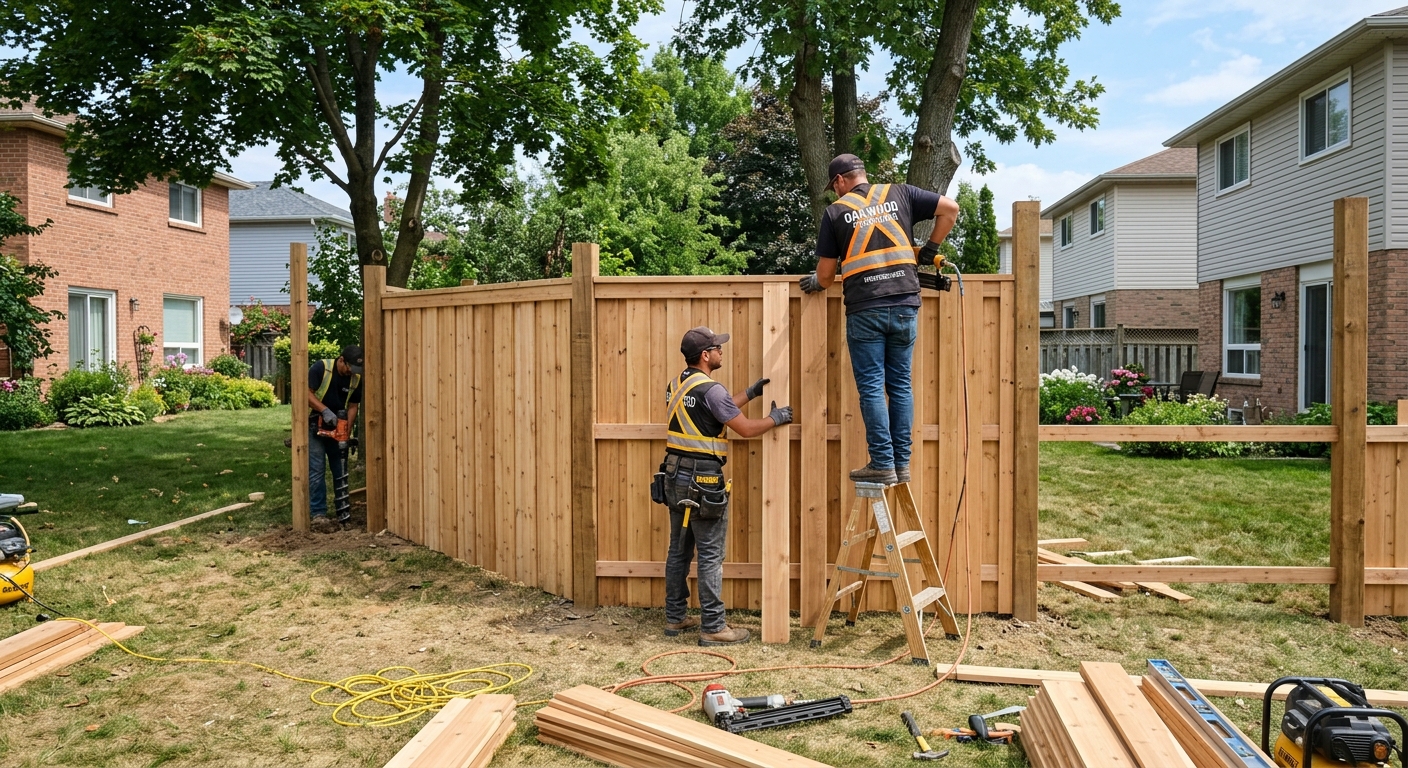
Fencing options and costs in Willowdale
In Willowdale, fencing is a practical upgrade for privacy, pets, and curb appeal—especially for homeowners along busy arterial roads like Yonge Street and in more residential pockets where backyard boundaries matter. With a population of 79,440 in the 2021 Census (Statistics Canada, 2021 Census), demand stays steady year-round, and demand is strongest where lots are common and yards are actively maintained. For many houses, the fence line is part of the “stay comfortable at home” plan—detering noise, defining space, and protecting gardens.
In Toronto’s climate and building practice, the biggest cost drivers are buried footings and wind-tolerant design. Southern Ontario’s frost line is commonly estimated around 42"–48", so contractors typically set posts at least 3.5–4 feet deep for 6–8 ft privacy fences, often using concrete-set posts rather than driven posts. That approach increases labour time and ready-mix costs, but it materially improves long-term stability in clay and mixed soils.
In Willowdale, you’ll also see a lot of demand in established neighbourhoods where property lines haven’t changed much and homeowners refurbish older fences rather than replacing posts alone. Areas around Earl Bales Park and the surrounding residential streets are where we commonly see schedule pressure in spring and early fall—when weather supports digging and curing.
Below are typical ranges you’ll see for common materials, before site-specific factors like gate count, slope, and old-fence removal. Use this table as the starting point when you compare itemised quotes.
| Material |
Lifespan |
Maintenance |
Privacy Rating |
Price per Linear Foot |
| Pressure-treated pine (standard wood) |
10–15 years |
Stain/seal every 2–3 years |
7/10 (solid panels) |
$65–$120 |
| Cedar (natural rot resistance) |
15–25 years |
Light stain/finish every 2–4 years |
8/10 (solid panels) |
$75–$130 |
| Vinyl / PVC (no-maintenance) |
20–30 years |
Rinse as needed |
9/10 (solid styles available) |
$75–$130 |
| Chain-link (galvanized steel) |
20–35 years |
Occasional rinse/spot touch-ups |
3/10 (see-through) |
$45–$85 |
| Aluminum ornamental |
25–40 years |
Wash seasonally |
4/10 (decorative openings) |
$90–$160 |
| Composite / recycled material |
20–30 years |
Minimal; rinse and inspect |
8/10 (solid with posts) |
$95–$160 |
Prices are estimates only and vary by project scope, site access and material selection.
What affects the price of fencing in Willowdale
In Willowdale, you can see the same fence concept come back with bids that differ by 30–50% across Toronto and the wider Ontario market. The gap usually isn’t “because one contractor is cheaper”—it’s because one quote assumes standard post spacing and simple finishing, while another builds in the winter-proof details you actually need here: frost-depth setting, heavier hardware, and proper panel alignment. Even when the material looks similar, the labour plan around digging, concrete, and installation method changes the total.
Toronto-area frost depth is commonly estimated around 42"–48", and best practice is to set posts about 4–6 inches below the design frost line. In practical terms, that often means digging roughly 1.5–2.0 m into the ground for taller privacy fences, which increases both the length of posts and the amount of concrete used. Those factors push you toward concrete-set posts rather than gravel packs or driven posts. When frost heave is a risk, a “low up-front” post plan can end up costing more later through loosened rails, misaligned panels, and added labour.
Wind also plays a role. While the GTA isn’t as exposed as prairie open fields, taller solid fences can rack during seasonal storms. Contractors respond by using appropriately sized posts (often 4x4 or 6x6 for wood, and heavier support systems for vinyl/PVC) and tighter spacing. By contrast, BC’s wet climate tends to accelerate untreated wood rot; in Willowdale, you’ll still want the right treatment and post depth, but the immediate driver is frost.
Concrete examples: (1) a 6–8 ft wood privacy fence with 3.5–4 ft concrete-set footings typically lands in the wood backbone of $65–$120 per linear-foot equivalent, because labour and ready-mix go up; (2) upgrading to vinyl/PVC often moves you toward $75–$130 because of higher material cost, but you may reduce long-term staining labour; (3) adding two gates and a sloped run can add significant extra framing and alignment work.
| Price Factor |
Why It Matters |
Cost Impact |
| Fence length in linear feet — the primary cost driver |
More sections means more posts, rails, and assembly |
Large; often the biggest driver of total price |
| Post depth required — frost line determines post length and hole depth |
Deeper footings reduce frost heave and panel movement |
High; more digging + more concrete |
| Post setting method — concrete vs. gravel pack vs. driven posts |
Concrete-set posts stabilize in clay/mixed soils |
Medium-to-high; concrete adds materials and labour |
| Material choice — vinyl vs. cedar vs. chain-link |
Materials have different hardware and installation requirements |
Medium; vinyl/cedar higher, chain-link lower |
| Gate count and type — walk-through vs. drive-through (double) |
Gates need stronger posts, hinges, and latching hardware |
Medium-to-high; gates add framing and adjustment labour |
| Grade and terrain — sloped yards require stepped or raked panels |
Slopes change layout, cutting, and panel alignment |
Medium; can add labour and material waste |
| Old fence removal and disposal |
Demolition can add time and dump fees |
Medium; removal is often overlooked in estimates |
| Permit fees and survey / property line locate |
Ensures compliant placement and reduces dispute risk |
Low-to-medium; location-dependent |
Permits & regulations in Ontario
In Ontario, fences above a height threshold—typically 2.0 m (6.5 ft) at the rear and 1.0–1.2 m (3–4 ft) at the front or corner—often trigger a building permit requirement. Even when a permit is not required, all fences must respect property lines and municipal setback bylaws, which can vary by street type and corner lots. In Willowdale, where many properties are older and lots are tight, it’s especially common for placement to be questioned when a fence creeps even slightly toward a neighbour’s side.
Before anyone digs a post hole, homeowners should arrange utility locates through Ontario One Call to mark buried services. Then, if you don’t have clear documentation, get a survey or at least a locate of property pins before installation so you aren’t building on the wrong side of the line. Shared fence ownership rules are handled under provincial line-fences legislation, but in practice the municipality still enforces placement and height limits.
Step-by-step checks for a contractor in Willowdale: (1) ask for their Ontario business/contractor licence details (if applicable to their work scope); (2) request a current certificate of liability insurance and verify coverage limits; (3) confirm WSIB/WCB coverage where required for their workers; and (4) request proof of permit pulling if your fence scope needs one. For the actual fence placement, insist on documented measurements from corner stakes or a survey—don’t rely on assumptions.
Choosing the right fence material for Willowdale
Choosing a fence material in Willowdale is really about matching your priorities—privacy, low maintenance, lifespan, and budget—to a Toronto freeze-thaw season that stresses posts and rail connections. Pressure-treated pine is the budget-friendly workhorse, but to keep it looking consistent you typically need staining or sealing every 2–3 years to reduce grey weathering and surface checking. Cedar offers better natural rot resistance and an attractive finish, though you still need maintenance to preserve colour and prevent premature surface wear. Vinyl/PVC is popular for low upkeep, but in extreme cold snaps it can become more brittle if the system isn’t installed with appropriate expansion considerations and solid post stability.
Chain-link is the longest-life, lowest-cost option in many cases, but it’s not designed for privacy—unless you plan on adding privacy slats or landscaping screening. Aluminum ornamental gives a clean, rust-resistant look and generally holds up well through winter; however, it won’t provide the solid privacy that many Willowdale homeowners want along backyard patios or rear lanes. Composite/recycled materials can deliver a near-privacy look with minimal maintenance, though pricing typically sits closer to higher-end options.
Because of the local frost line, ask your installer whether concrete-set posts are planned. For 6–8 ft privacy fences, concrete-set posts set at frost-safe depths are usually recommended, and that detail improves performance regardless of whether you pick wood or vinyl. In wind-prone runs (open corners, long straight sections, or yards with more exposure), hardware quality and post spacing matter as much as the material.
Example: if you’re choosing between pressure-treated wood and vinyl, a vinyl upgrade may cost you toward the $75–$130 range versus standard wood closer to $65–$120. That difference can be justified when you value reduced ongoing maintenance and want fewer seasonal tasks after the initial install—especially for homeowners with limited time during the busy Ontario spring and summer.
| Material |
Cold Tolerance |
Lifespan |
Annual Maintenance |
Best For |
Price Band |
| Pressure-treated pine |
Good (with concrete-set posts and proper sealing) |
10–15 years |
1–2 times per year check; stain/seal every 2–3 years |
Budget-conscious privacy with routine upkeep |
$65–$120 |
| Cedar |
Very good (natural rot resistance) |
15–25 years |
Inspect and apply finish as needed, typically every 2–4 years |
Better appearance and longer natural durability |
$75–$130 |
| Vinyl / PVC |
Good (best when installed with stable footings and proper hardware) |
20–30 years |
Minimal; rinse and check posts/rails |
Low-maintenance privacy |
$75–$130 |
| Chain-link |
Excellent (galvanized steel withstands freezes) |
20–35 years |
Minimal; occasional rinse |
Security perimeter with minimal cost |
$45–$85 |
| Aluminum ornamental |
Excellent (no rust) |
25–40 years |
Minimal; wash seasonally |
Decorative boundaries with open visibility |
$90–$160 |
| Composite / recycled |
Good (stability depends on post depth and framing) |
20–30 years |
Low; periodic rinse and inspection |
Privacy look with reduced upkeep |
$95–$160 |
How to choose a fencing contractor in Willowdale
Picking the right fencing contractor in Willowdale comes down to proof: proof they’re permitted to work, insured for the job, and set up to handle Ontario-specific requirements and winter realities. Start with Ontario licensing/registration details (where applicable to their business model) and ask for a certificate of liability insurance—then verify the policy is current and covers fencing installation activities. Next, confirm WSIB/WCB coverage (as required for their workers) so you’re not exposed if a labourer is injured on your property. A clear “paper trail” is the fastest way to separate professional crews from casual operators.
For pricing, request 2–3 itemised written quotes. You want line items that separate labour from materials: post fabrication/lengths, concrete/ready-mix, rail hardware, gate framing, demolition and hauling, plus any permit-related tasks. Avoid a single lump-sum with vague notes—fencing costs in Toronto swing heavily based on frost-depth post setting and disposal. Confirm what’s excluded: is old fence removal included, are dump fees included, and does the quote include permit pulling if one is required? If the quote is silent, assume it’s excluded and ask.
Warranty matters. Get the workmanship warranty length in writing (for example, rails/fasteners/panel alignment issues) and the manufacturer warranty for the product itself. Also ask whether the warranty is transferable to future owners, which matters if you plan to sell. Payment scheduling should be cautious: never pay more than 10–15% upfront; hold a balance back until the job is fully complete and cleaned. Finally, insist on a start date and completion estimate in writing—especially because post curing and winter conditions can affect timelines.
- Provide WSIB/WCB clearance and the current certificate of liability insurance
- List the project supervisor/crew lead and confirm who is on-site day to day
- Use itemised quoting (labour, posts, rails, concrete, gates, disposal separately)
- Confirm post depth plan for Southern Ontario frost protection (concrete-set where required)
- Specify material grades (e.g., treated pine type, cedar grade, galvanized chain-link gauge)
- Show gate hardware brand/type and hinge method for driveway or double gates
- State whether permit pulling is included (and provide permit documentation if applicable)
- Confirm property line verification method (survey pins/locate) before setting posts
- Include disposal/hauling for demolition and confirm where debris goes
- Provide a clear warranty for workmanship and manufacturer product terms
- Give a realistic schedule with weather/weatherproof curing expectations
- Limit upfront payment to 10–15% and document the holdback amount
Red flags we see in Willowdale: contractors who won’t put the frost-depth post plan in writing; quotes that skip disposal/dump fees yet assume demolition; cash-only or no insurance/WCB proof; vague warranties (“standard coverage”) with no workmanship term; and schedules that promise installation without addressing permit checks or utility locates.
Frequently asked questions — fencing in Willowdale
What is the cost per linear foot for fencing in Willowdale?
In Willowdale, most installed fencing estimates commonly land in the city’s typical Toronto ranges. For budgeting, many homeowners see chain-link around $45–$85 per linear-foot equivalent, pressure-treated wood roughly $65–$120, and vinyl/PVC often in the $75–$130 band. Ornamental aluminum usually trends higher, around $90–$160. Your total can still swing up or down based on frost-safe post depth, gate count, and old fence removal. Because Southern Ontario frost requires deeper post setting for taller privacy fences, concrete-set footings can increase labour and ready-mix costs compared with quick, shallow installs.
Should I repair or replace my old fence in Willowdale?
Repair is usually worth considering if the posts are solid, panels are salvageable, and the fence line is still straight. If you have wobbling sections, lifted posts, or widespread rot (common on exposed end posts and bottom rails), replacement is often more cost-effective than patching. In Willowdale’s winter conditions, frost movement can weaken even pressure-treated wood when post depth or concrete setting wasn’t done correctly. Get a contractor to assess post stability by checking for looseness at the base and rail attachment points, not just surface damage. If only a small run is failing, you may be able to replace sections and keep the rest—just confirm the remaining posts are frost-secure and aligned.
How do I handle a fence dispute with a neighbour in Ontario?
Start by documenting everything: your original measurements, photos of damage, and any fence-related communications. In Ontario, shared boundary issues often involve the provincial line-fences framework, but the practical first step is agreeing on whether the fence is on the correct property line. If there’s any uncertainty, a survey or property-pin locate is the quickest way to prevent ongoing cost and conflict. Next, discuss scope: whether one party repairs, shares cost, or whether a full replacement is required. From a homeowner standpoint in Willowdale, keep the conversation focused on height/placement compliance and workmanship. If you do proceed, ensure the contractor includes clear measurements and a written plan, so you’re not arguing later about what was actually built.
What fence style offers the best wind resistance in Willowdale?
For wind resistance in Willowdale, a well-built solid privacy fence typically performs better than a flimsy open design—provided it’s designed for racking and installed on frost-safe footings. The key is heavier, properly spaced posts and solid panel alignment, not just material thickness. Taller solid fences (wood or vinyl/PVC) generally need stronger posts (often 4x4 or 6x6 for wood) and closer spacing to reduce uplift and wobble. Rail bracing and quality hardware also matter. In long, straight runs where wind pressure can build, upgrading post spacing and using thicker rails can be money well spent because it prevents the “wave” effect you see when wind repeatedly flexes a fence through freeze-thaw seasons.
How much does a fence cost in Willowdale?
Total fence cost in Willowdale depends on length, height, materials, and how many gates you want. As a planning approach, compare your quote to the local backbone ranges: wood is commonly around $65–$120, vinyl/PVC around $75–$130, chain-link around $45–$85, and aluminum around $90–$160. Then adjust for site details like sloped terrain (stepped or raked panels), gate count (each gate adds framing and stronger posts), and old fence removal. Because Willowdale sits in Southern Ontario’s frost-depth zone, taller privacy fences usually require deeper post holes and concrete-set posts, which pushes pricing higher than “basic” fence estimates.
How deep should fence posts be for Willowdale's frost?
For Willowdale and the broader Southern Ontario climate, a common best-practice guideline is to set posts about 4–6 inches below the estimated design frost depth, which is often taken around 42"–48". That typically translates to digging roughly 3.5–4 feet deep for many privacy-fence builds, especially for 6–8 ft heights where frost heave risk is higher. In practical site terms, many contractors plan around approximately 1.5–2.0 m of embedment, particularly in clay and mixed soils. For stability, concrete-set posts are usually recommended rather than simple driven posts or shallow gravel packs for taller fences. Always confirm your contractor’s post depth plan in writing before the first hole is dug.