Fencing options and costs in Niagara Falls
Niagara Falls is a great place to be outdoors, but it’s also a place where homeowners notice fence failures—warping boards, leaning posts, and loose gates—after freeze–thaw cycles. With many detached properties in the region (single-detached houses make up 66.1% of dwellings, and Niagara Falls sits on an owner-occupied base where 70.4% of households own their homes) (Statistics Canada, 2021 Census), fencing demand is steady year-round, especially in neighbourhoods with older housing stock (60.8% of homes were built before 1981) (Statistics Canada, 2021 Census). Those older areas often have mature landscaping, narrower access, and long driveway runs that can affect how crews stage materials and how long installation takes.
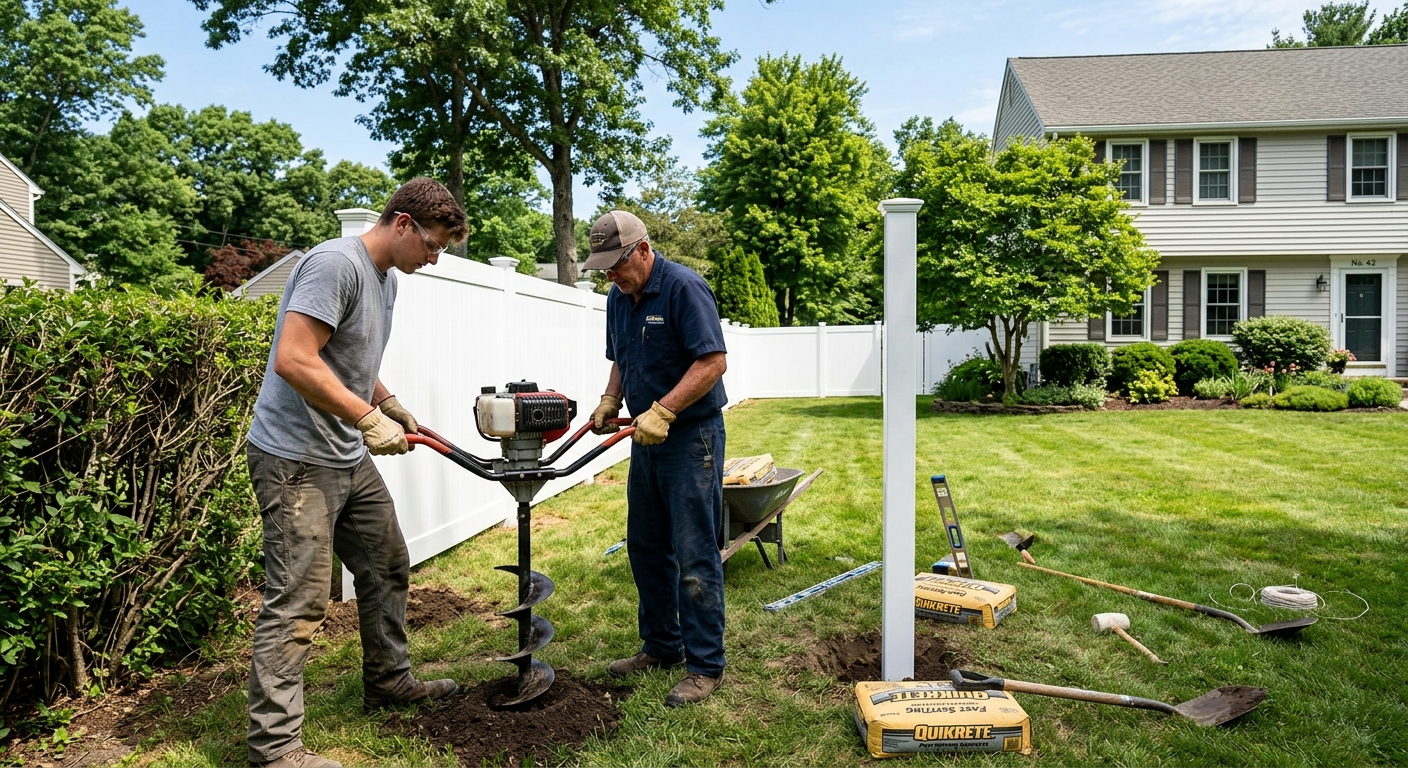
In the Hamilton–Niagara Peninsula market, the biggest cost lever is post depth. Local frost penetration is about 1.2 m (4 ft), so posts typically need to be set below the frost line to reduce heave and leaning over time. Contractors often use 36–42 inch (about 0.9–1.1 m) post depths for typical 6 ft residential fences, and push deeper in heavier clay soils common locally. Because freeze–thaw is repeated, concrete-set posts are the standard for long-term stability, adding labour and concrete mix cost compared to simple backfill. Wind exposure can also influence panel spacing and gate hardware, particularly on hilltop or near-lakeshore lots in Niagara Falls.
If you’re in areas like Port Robinson (or nearby residential pockets with established yards), expect strong demand because many lots have long fence lines and trees that require careful removal and disposal before installation. Use the comparison below to estimate typical price points before you request an itemised quote.
| Material |
Lifespan |
Maintenance |
Privacy Rating |
Price per Linear Foot |
| Pressure-treated pine (standard wood) |
10–15 years |
Stain/seal every 2–3 years |
High (solid boards) |
$17 – $28 |
| Cedar (natural rot resistance) |
15–25 years |
Light staining or sealing every 3–4 years |
High (solid boards) |
$22 – $36 |
| Vinyl / PVC (no-maintenance) |
20–30 years |
Rinse as needed |
High (solid panels) |
$24 – $42 |
| Chain-link (galvanized steel) |
20–35 years |
Occasional rust checks/tightening |
Low (open mesh) |
$13 – $22 |
| Aluminum ornamental |
25–40 years |
Occasional cleaning |
Medium (decorative gaps) |
$26 – $48 |
| Composite / recycled material |
20–30 years |
Rinse and inspect fasteners |
High (solid styles) |
$28 – $50 |
Prices are estimates only and vary by project scope, site access and material selection.
What affects the price of fencing in Niagara Falls
In Niagara Falls and across the Hamilton–Niagara Peninsula, two homeowners can receive quotes for “the same” 6 ft fence that differ by 30–50% once the details are priced in. The main reason is that post installation isn’t a one-size job: frost depth and soil conditions determine how deep holes go and whether concrete is required, while wind, terrain, and gate hardware determine how much labour and material the job really needs. That’s why contractors may quote different total costs even when the final look is similar.
For southern Ontario, frost penetration is about 1.2 m (4 ft). To reduce heaving and leaning, most professional installs set posts about 4–6 inches below the design frost depth—meaning deeper holes and longer posts than people expect. In clay soils common locally, drilling and concrete setting take more time, raising both material and labour costs. If your yard also has grade changes, crews may need stepped rails or raked panels, which adds cutting, measuring, and sometimes custom gate sizing.
Wind load can influence spacing and panel choice. Niagara Falls is not as exposed as the open Prairies, but hilltop lots and near-lakeshore properties still see enough wind to warrant sturdier posts and heavier hardware, particularly for privacy-style solid panels. On the other hand, properties with easy access (wide gates, straight runs, minimal removals) can bring costs toward the lower end of local price bands.
Here are a few Niagara Falls scenarios that change the final number: (1) a 30 m run on compacted clay often increases post drilling time, pushing wood installs toward the higher end of the wood fence installation ($45–$80) band; (2) adding a large double drive gate can move you toward the higher side of vinyl / PVC ($70–$120) even if the fence panels are mid-range; and (3) removing an existing fence with old concrete footings can add disposal and demolition hours, sometimes narrowing what savings you’d get from cheaper materials.
| Price Factor |
Why It Matters |
Cost Impact |
| Fence length in linear feet |
Most materials and labour scale directly with linear footage. |
Major (often the largest line item) |
| Post depth required |
Frost line determines hole depth and post length. |
Medium to major (more concrete and drilling) |
| Post setting method |
Concrete vs. gravel pack vs. driven posts changes stability and time. |
Medium (concrete adds cost but reduces failures) |
| Material choice |
Vinyl, cedar and chain-link have different hardware and installation methods. |
Major (big spread between materials) |
| Gate count and type |
Drive-through and custom privacy gates need stronger frames and hinges. |
Medium to major |
| Grade and terrain |
Slopes require raked/stepped rails and extra labour. |
Medium |
| Old fence removal and disposal |
Demo time, haul-away, and hidden footings add work. |
Medium (can be substantial) |
| Permit fees and survey / property line locate |
Accuracy affects layout; certain heights can trigger permitting requirements. |
Low to medium (varies by project) |
Permits & regulations in Ontario
In Ontario, fencing rules are typically tied to property boundaries and municipal bylaws, and permits can come into play when fences exceed height thresholds. As a general homeowner reference, fences above about 2.0 m (6.5 ft) in the rear and about 1.0–1.2 m (3–4 ft) at the front or corner often require a building permit. Even when a permit isn’t required, the fence must respect property lines and any municipal setback requirements that apply in Niagara Falls.
Before you dig any post holes, you must arrange utility locates through Ontario One Call. That’s non-negotiable for homeowner safety and for avoiding utility strikes. Next, verify your layout with a survey or property pin locate. This step helps prevent encroachment disputes—especially in older neighbourhoods where boundary markers can be obscured by landscaping or previous fencing.
Shared fence ownership rules are governed by provincial line-fences legislation, which can affect responsibilities for repairs and the cost split.
To verify a contractor properly, ask for proof of: (1) Ontario licence (as applicable to their work category—check any posted registration/credential info), (2) liability insurance with an appropriate coverage limit, and (3) WSIB coverage where required. You can check insurance certificates and request clearance letters if the contractor is required to carry WSIB. Always keep copies of certificates before work starts.
Choosing the right fence material for Niagara Falls
Choosing a fence material in Niagara Falls is mostly about matching your priorities—privacy, low maintenance, and budget—to what the local climate and soil will do over time. With Hamilton–Niagara’s frost conditions (about 1.2 m / 4 ft), it’s smart to plan for posts set below the frost line. That usually means longer posts and, for long-term stability, concrete-set posts to reduce heaving and leaning. In heavier clay sections (common in the region), drilling and concrete work take longer, so material “savings” can disappear if the quote doesn’t include robust post installation.
Pressure-treated pine is typically the lowest upfront option, but wood needs protection. Expect staining or sealing about every 2–3 years to prevent grey weathering and surface checks. Cedar looks better and resists rot more naturally, but it still benefits from periodic maintenance to keep it looking sharp. Vinyl/PVC is attractive if you want no painting or staining; however, extreme cold can make panels more brittle, so choosing quality profiles and correct installation method matters. Chain-link is the long-life, lowest-cost option, but it won’t deliver privacy unless you add privacy slats or climbing plant options. Aluminum offers a neat ornamental look, won’t rust, and is mid-range cost, but it’s not a privacy fence.
For Niagara Falls homeowners, a concrete example: if you’re comparing a budget wood run at roughly $45–$80 per install band versus vinyl at $70–$120, the vinyl difference can be justified when you want fewer future maintenance visits and a cleaner look over 20+ years—especially if your yard is shaded and you’d rather not manage staining repeatedly. If you’re staying on a tight timeline or budget, pressure-treated pine can make sense when maintenance is scheduled.
| Material |
Cold Tolerance |
Lifespan |
Annual Maintenance |
Best For |
Price Band |
| Pressure-treated pine |
Good with proper staining |
10–15 years |
Low (plan 1–2 full maintenance cycles every few years) |
Lower upfront cost with scheduled upkeep |
$45 – $80 |
| Cedar |
Good; naturally resistant to rot |
15–25 years |
Light (stain/seal periodically) |
Better appearance and rot resistance |
$55 – $95 |
| Vinyl / PVC |
Good (choose quality profiles for cold snaps) |
20–30 years |
Very low (rinse as needed) |
Low-maintenance privacy |
$70 – $120 |
| Chain-link |
Very good |
20–35 years |
Minimal (tighten/inspect) |
Security with long service life |
$35 – $60 |
| Aluminum ornamental |
Good |
25–40 years |
Very low |
Attractive, rust-free perimeter fencing |
$80 – $150 |
| Composite / recycled |
Good (install correctly; avoid improper anchoring) |
20–30 years |
Low (inspection and rinse) |
Privacy with reduced wood-like maintenance |
$85 – $140 |
How to choose a fencing contractor in Niagara Falls
To choose the right fencing contractor in Niagara Falls, start with verification. In Ontario, reputable fence builders should be able to provide: (1) proof of the appropriate Ontario licensing/registration that applies to their trade activities, (2) liability insurance (ask for a certificate of insurance showing coverage in force), and (3) WSIB coverage where required for workers. When you review documentation, look for active dates, matching company name, and coverage amounts—don’t accept photos of expired certificates.
Next, request 2–3 itemised written quotes rather than a lump sum. Good quotes break out labour and materials separately: posts (including depth and whether concrete is used), rails, pickets/panels, gate frames and hardware, fasteners, and any required excavation. Confirm what’s included or excluded: is permit pulling included (if applicable), are utility locates coordinated, and is disposal of old fencing included?
Warranty matters too. Ask for the workmanship warranty length (for example, post installation and alignment) and the manufacturer product warranty for the materials. Confirm if the product warranty is transferable to you if you sell the home.
Payment scheduling should be conservative. A common safe approach is to keep the upfront payment around 10–15%, with the remainder paid after key milestones and only when the work is complete. Finally, get the schedule in writing—start date and an estimated completion window—so you can plan around weather delays.
- Ask for proof of liability insurance (certificate of insurance) before any site work.
- Confirm WSIB coverage status with the contractor’s documentation if workers are involved.
- Request the Ontario business/credential details and verify they match the quote and invoices.
- Get at least 2–3 quotes with itemised labour and materials (not one blanket number).
- Ensure the quote states post depth and method (concrete-set vs. backfill/gravel pack).
- Ask what fence style and wind bracing method is used for privacy panels in your lot.
- Confirm gate hardware is rated for Niagara Falls winter use (hinges, latches, reinforcement).
- Check whether rail spacing changes on slopes (stepped vs. raked panels) and how it’s measured.
- Verify disposal haul-away for old fence and whether old posts in concrete are included.
- Confirm whether utility locates are booked and who pays if re-locates are needed.
- Ask if permits are required and whether the contractor handles them or leaves it to you.
- Set a payment schedule with a small deposit (10–15%) and holdback until final walk-through.
Common Niagara Falls red flags: the contractor won’t put post depth and setting method in writing; they ask for a large upfront payment (beyond 10–15%) with no timeline; they provide only “total price” without material/parts breakdown; they can’t show active liability insurance/WSIB documentation; or they minimize Ontario permit/utility locate steps with “we’ll handle it later.”
Frequently asked questions — fencing in Niagara Falls
How tall can my fence be in Niagara Falls?
In Niagara Falls (and across Ontario municipalities), fence height rules are usually tied to where the fence sits on your lot—front/corner versus rear—and to municipal setback/bylaw requirements. As a practical reference, fences over about 2.0 m (6.5 ft) at the rear and about 1.0–1.2 m (3–4 ft) at the front or corner often trigger permit requirements. That doesn’t mean everything automatically needs a permit; it depends on the location and the final height. Before you buy materials, confirm the proposed height with the municipality and have your contractor include permitting steps in the quote if required. If your yard backs onto a road allowance or has unusual corner-line exposure, verify height and location carefully to avoid having to adjust after installation.
Should fence posts be set in concrete here?
For most Niagara Falls installations, yes—concrete-set posts are the standard for long-term stability. The reason is Ontario’s freeze–thaw cycle and local frost penetration (about 1.2 m / 4 ft). If posts are set too shallow, frost heave can lift the footing, which leads to leaning panels and sagging gates over time. A concrete set (often paired with proper hole depth) costs more than tamped backfill, but it reduces the likelihood of recurring failures. In local quotes, make sure the contractor states post depth and the setting method. If you’re comparing options, the difference usually won’t be enormous compared to the cost of redoing posts later—especially for privacy fences on clay-heavy yards or sloped property lines.
What's the best fence for privacy?
For privacy in Niagara Falls, the best choices are typically solid-board wood, vinyl/PVC, or composite privacy styles. Chain-link and aluminum ornamentals can help with security and curb appeal, but they won’t block views unless you add slats, screening, or landscaping. Between wood and vinyl, consider maintenance and long-term appearance: pressure-treated pine is usually the budget-friendly route (often in the $45–$80 installation band), while vinyl tends to cost more upfront (commonly tied to the $70–$120 band) but offers near “no-maintenance” ownership. Regardless of material, ensure proper wind bracing and post depth—Niagara Falls winter conditions and repeated freeze–thaw mean privacy fences must stay rigid at the posts, especially on longer runs or properties with exposed wind.
How do I compare fencing quotes?
To compare Niagara Falls quotes fairly, insist on itemised pricing and identical assumptions. Ask each contractor to list: fence length (linear feet), post depth, post spacing, and setting method (concrete vs. gravel pack/backfill), plus the exact material grade (pressure-treated vs. cedar), hardware quality, and gate count. Also confirm what’s included in labour: excavation scope, disposal of old fence, and whether utility locates are handled. If one quote is much cheaper, the difference is usually in post depth, concrete use, material quality, or exclusions like permit pulling. A well-prepared quote can still land in different ranges depending on whether you choose wood or vinyl (for example, wood often aligns with the $45–$80 band while vinyl often aligns with the $70–$120 band), but apples-to-apples details should match.
How long does fence installation take in Niagara Falls?
Installation time varies mostly by fence length, number of posts, gate complexity, and whether there’s old fence removal. For many residential projects in Niagara Falls, crews can complete a straightforward run in about 1–3 days, but longer lines or jobs requiring post drilling in clay, custom gates, or stepped panels can take longer. Weather also matters: freezing temperatures can slow drilling and concrete work, and crews may adjust schedules during heavy rain. If your job includes concrete-set posts, expect the install to take the planned labour time plus curing considerations for certain steps. Your best step is to ask for a written start date and completion estimate. If a contractor gives only “sometime next week” rather than a dated timeline, it’s harder to plan and easier for delays to become expensive.
Can I install a fence on a slope in Niagara Falls?
Yes—fencing on slopes is common in Niagara Falls, and most reputable contractors handle it with either stepped sections or raked rails. The key is how the slope is measured and how the fence stays level or evenly stepped while maintaining consistent privacy and structural strength. A steep slope usually adds cutting, fitting time, and sometimes additional posts to prevent panels from twisting. During freeze–thaw, properly set posts are even more important on slopes because shifting ground can amplify misalignment. When you get quotes, ask exactly how they’ll build on your grade (and how they’ll handle gates so they close correctly). Also confirm whether your layout relies on property lines and if you need a survey/property locate before digging.