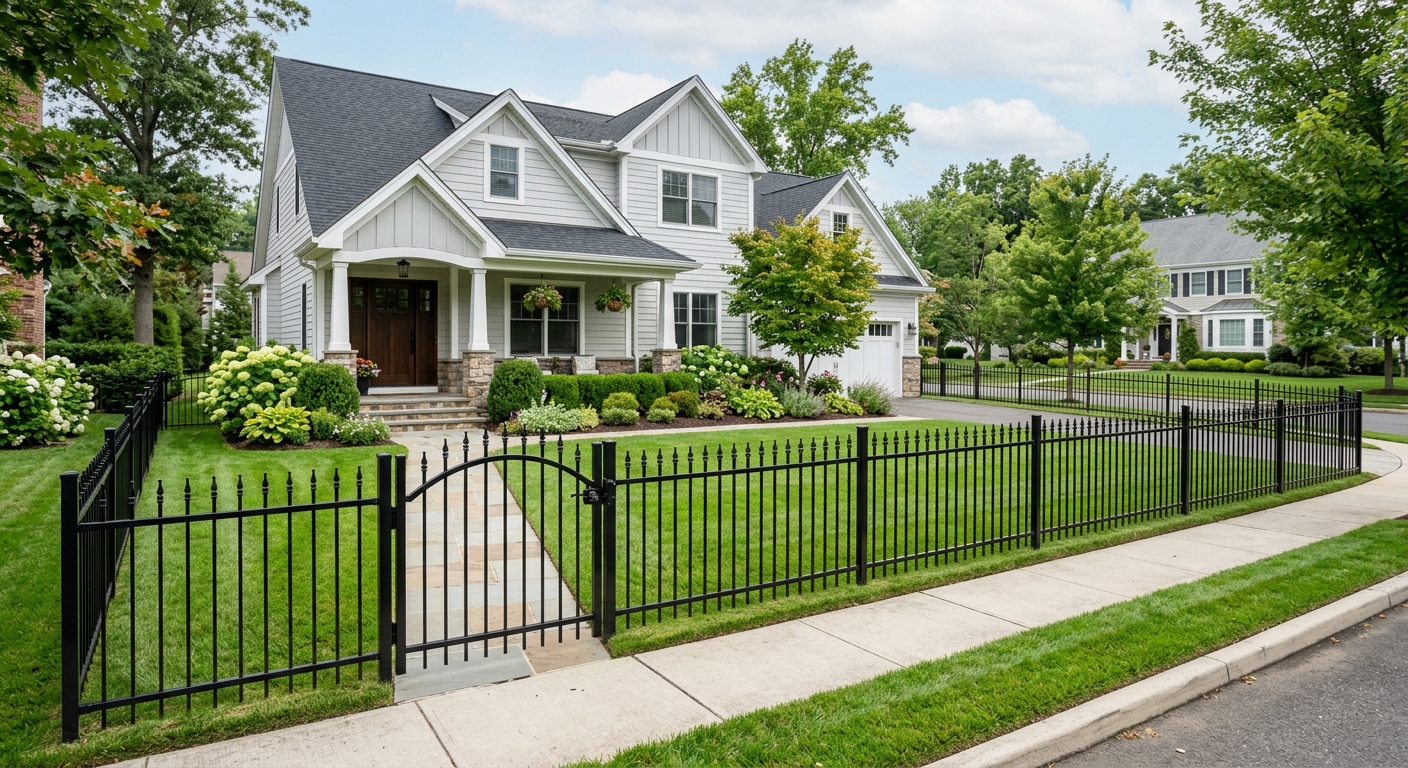
Fencing options and costs in York University Heights
York University Heights is a well-established Toronto neighbourhood with a healthy base of detached housing, which makes fencing a frequent home-improvement need. With a population of 27,593 (Statistics Canada, 2021 Census), there’s steady demand for backyard privacy and property-definition projects—especially in older pocket streets where yards back onto schools, parks, and busy collector roads. In this part of the Toronto economic region, fencing costs are shaped less by “style” and more by jobsite fundamentals: post depth for frost protection, panel strength for wind, and how easy access is for delivery trucks and post-hole augers. Contractor availability is also influenced by seasonal timing; spring and early summer installs often command stronger scheduling because multiple crews compete for the same labour and equipment.
In York University Heights, frost is the big cost driver. Local best practice assumes a frost-line range of roughly 42"–48" in Southern Ontario, so privacy fences typically need concrete-set posts rather than simple driven posts. That approach improves long-term stability in clay and mixed soils, but it raises labour time and ready-mix costs. For homeowners near areas that draw regular foot traffic (including park-adjacent backyards), solid privacy options are especially in demand, because they reduce viewlines and noise from sidewalks and nearby streets.
Below is a practical snapshot of common materials so you can compare realistic expectations before you request itemised quotes.
| Material |
Lifespan |
Maintenance |
Privacy Rating |
Price per Linear Foot |
| Pressure-treated pine (standard wood) |
10–15 years |
Stain/seal every 2–3 years |
High (solid boards) |
$65 – $120 |
| Cedar (natural rot resistance) |
15–20 years |
Re-stain every 2–4 years |
High (solid boards) |
$85 – $135 |
| Vinyl / PVC (no-maintenance) |
20–30 years |
Occasional rinse; no painting |
High (solid panels) |
$75 – $130 |
| Chain-link (galvanized steel) |
15–25 years |
Minimal; tighten and rinse |
Low–Medium (see-through) |
$45 – $85 |
| Aluminum ornamental |
25–40 years |
Minimal; occasional wash |
Medium (open pickets) |
$90 – $160 |
| Composite / recycled material |
20–30 years |
Low; wash as needed |
High (solid or semi-solid) |
$105 – $165 |
Prices are estimates only and vary by project scope, site access and material selection.
What affects the price of fencing in York University Heights
In York University Heights, two quotes for the same “6–8 ft privacy fence” can easily differ by 30–50% across the Toronto market because crews price the unseen parts of the job: excavation, frost-depth post setting, panel hardware, gate framing, and removals. Even when the material line looks similar, labour methodology changes the total cost. In Southern Ontario, frost protection is the anchor—posts are generally set about 4–6 inches below the design frost depth so they don’t heave. Practically, that means many installs require posts set about 1.5–2.0 m into the ground, concrete setting, and longer materials, which raises both material and labour costs.
Wind also matters for racking and uplift. While the GTA isn’t exposed like open prairie sites, heavier solid panels still benefit from tighter post spacing and stronger frames, which can increase installed costs compared to lighter, more open designs. On the other end of the spectrum, BC’s wet coastal climate accelerates wood rot if treatment is inadequate—Ontario jobs are different, but they still demand proper sealing and hardware for freeze-thaw cycles.
Concrete examples from Toronto-area projects: (1) If your backyard has mixed clay and roots, auger time increases and you may need larger holes for concrete-set posts—often adding labour. (2) A fence line that starts/ends with masonry or a solid retaining edge may require custom base plates or extra bracing, increasing hardware and install time. (3) If you’re switching from a low fence to a full privacy height, you’ll typically upgrade posts and panels, pushing you toward the higher end of the wood or vinyl bands—such as $65–$120 for wood installations or $75–$130 for vinyl—because the structure has to resist wind load and snow drift. In areas with older housing stock, foundation edges can also make post-depth work more complex, which is where a cheaper “driven post” quote can become expensive later.
| Price Factor |
Why It Matters |
Cost Impact |
| Fence length in linear feet — the primary cost driver |
More linear feet means more posts, rails, and labour hours. |
Large swing; often the biggest portion of the estimate. |
| Post depth required — frost line determines post length and hole depth |
Deeper holes and frost-safe placement require longer posts and more excavation. |
Commonly increases labour and materials noticeably. |
| Post setting method — concrete vs. gravel pack vs. driven posts |
Concrete-set posts resist frost heave better than driven posts. |
Concrete adds ready-mix, disposal of excess soil, and labour time. |
| Material choice — vinyl vs. cedar vs. chain-link |
Material unit cost and hardware differ; privacy panels require stronger framing. |
Vinyl and privacy woods typically cost more than chain-link. |
| Gate count and type — walk-through vs. drive-through (double) |
Gates need heavier hinges, latches, and often reinforced framing. |
Each gate can add a significant fixed cost to the project. |
| Grade and terrain — sloped yards require stepped or raked panels |
Slope affects labour, cutting, and the number of custom adjustments. |
Can raise costs with extra framing and labour time. |
| Old fence removal and disposal |
Demolition time varies with rust, embedded posts, and disposal rules. |
May add hours plus hauling and dump fees. |
| Permit fees and survey / property line locate |
Some fence heights or locations trigger permit/survey work. |
Small-to-moderate adders; avoids costly rework. |
Permits & regulations in Ontario
In Ontario, fence rules are tied to height thresholds and where the fence sits on your property. As a practical baseline used across many Ontario municipalities, fences above roughly 2.0 m (about 6.5 ft) at the rear and around 1.0–1.2 m (about 3–4 ft) at the front or corner often require a building permit. Setbacks from property lines may also apply, especially in corner lots, and every installation must respect property boundaries. Before anyone digs a post hole, you should arrange utility locates through Ontario One Call (and never skip this step even if you “know” where services are).
Step-by-step, here’s how a York University Heights homeowner can protect themselves when hiring a contractor. First, confirm the contractor’s Ontario licence status (or eligibility to perform the work if a specific trade licence applies), and request proof in writing before scheduling excavation. Second, ask for a current certificate of insurance naming you and/or the property owner as applicable; it should clearly show liability coverage limits. Third, verify coverage for workers through WSIB (or WCB coverage where applicable) so you’re not exposed if a worker is injured on your site.
Also, if you don’t already have a recent survey, obtain a survey or request a property line locate so the contractor doesn’t build on the wrong line. If you’re replacing a shared boundary fence, shared fence ownership expectations are governed by Ontario’s line-fence rules—so document what your neighbour agrees to before work starts.
Choosing the right fence material for York University Heights
Choosing the right fence in York University Heights comes down to matching your priorities—privacy, low maintenance, and lifespan—to Toronto’s freeze-thaw climate and typical suburban yard conditions. Pressure-treated pine is the budget starting point, but it generally needs staining or sealing every 2–3 years to slow grey weathering and water penetration. Cedar looks great and naturally resists rot better, yet it still benefits from periodic maintenance to keep the finish even and prevent early warping. Vinyl/PVC is popular for low maintenance and cleaner lines; however, it’s not “indestructible”—in extreme cold it can be more sensitive to impact, so correct post spacing and proper bracing matter. Chain-link is the lowest-cost long-life option, but it offers little privacy unless you add slats or a privacy screen. Aluminum is attractive and rust-resistant, typically with minimal maintenance, but it’s more ornamental than private.
Because Southern Ontario frost commonly drives posts deeper (and Toronto builds with frost-safe best practice), many privacy fences benefit from concrete-set posts rather than driven posts. When posts are set deeper—often roughly 1.5–2.0 m depending on the design—your material has to support a heavier, sturdier framework to resist wind racking and uplift. Snow drift and wind gusts can also stress taller solid fences, so stronger rails and hardware are worth it in neighbourhoods with open backyard angles and consistent winter weather.
To make the price difference concrete: if a wood privacy fence comes in around $65 – $120 per linear foot and a vinyl privacy fence is $75 – $130 per linear foot, the vinyl premium can be justified when you want to avoid ongoing staining schedules and labour. For busy households, the maintenance time you save over the years often matters as much as the upfront difference.
| Material |
Cold Tolerance |
Lifespan |
Annual Maintenance |
Best For |
Price Band |
| Pressure-treated pine |
Good with proper sealant and hardware |
10–15 years |
2–3 year stain/seal cycle (not necessarily yearly) |
Budget-friendly privacy with easy repairs |
$65 – $120 |
| Cedar |
Good; responds well to winter care |
15–20 years |
Re-stain every 2–4 years |
Appearance-first privacy |
$85 – $135 |
| Vinyl / PVC |
Very good in cold; needs correct installation |
20–30 years |
Occasional rinse |
Low maintenance and consistent look |
$75 – $130 |
| Chain-link |
Excellent with galvanized steel |
15–25 years |
Minimal tightening and rinse |
Security boundary, pet containment |
$45 – $85 |
| Aluminum ornamental |
Excellent; doesn’t rust |
25–40 years |
Occasional wash |
Attractive front boundary fencing |
$90 – $160 |
| Composite / recycled |
Good; resists rot in freeze-thaw cycles |
20–30 years |
Low; wash as needed |
Solid privacy with reduced upkeep |
$105 – $165 |
How to choose a fencing contractor in York University Heights
When you hire a fencing contractor in York University Heights, “licensed” and “insured” need to be verified, not assumed. Start with liability insurance: request a current certificate of insurance and confirm the coverage is active on your project dates. Next, verify workers’ compensation coverage—ask for proof of WSIB/WCB clearance so you’re protected if someone is injured on-site. Then look for evidence the contractor routinely works on fences with frost-safe post setting: ask how they handle concrete-set posts, how they excavate, and what they do when they hit roots or buried materials.
For pricing, don’t accept a single lump-sum number without an itemised breakdown. Get 2–3 written quotes showing labour and materials separately (posts, rails, panels, brackets, gates, concrete, fasteners), plus line-item excavation and disposal. Read the scope carefully: is demolition included, is permit pulling included if required, and are dump/hauling fees covered? A “cheap” quote that excludes disposal or assumes driven posts can become far more expensive once excavation conditions are confirmed.
Warranty should be explicit: separate workmanship coverage (how long the installer guarantees the build) from product/manufacturer warranty (the material’s defect coverage). Ask whether workmanship warranty transfers if you sell the home—many homeowners plan for resale within a few years.
Finally, be cautious with payment. Never pay more than 10–15% upfront. Use a holdback plan so payment is tied to completion and punch-list items. Get the timeline in writing, including a start date and estimated completion, so you can coordinate access and yard usage.
- Request proof of liability insurance before any work begins.
- Ask for WSIB/WCB coverage proof (or clearance letter) for the workers on your site.
- Confirm who pulls permits (if needed) and whether that’s included in the quote.
- Insist on an itemised labour/materials line-by-line quote.
- Ask the contractor to describe post-depth and setting method for Ontario frost protection.
- Clarify gate hardware: hinge type, latching, and whether gate framing is reinforced.
- Verify disposal/hauling is included for old fence removal and excess soil.
- Check whether the quote includes utility locate fees and protection measures.
- Require a written start date and completion estimate.
- Ask for a workmanship warranty length and what it covers (settling, post movement, panel alignment).
- Confirm if warranties are transferable to future owners.
- Use a payment schedule with no more than 10–15% upfront and a holdback until completion.
Local red flags I see around York University Heights include: quotes that assume “driven posts” for privacy height without discussing frost depth; certificates of insurance that don’t match the project dates or don’t list the correct insured limits; unclear disposal terms after demo; no written scope for gates, rails, and hardware; and pressure to pay the majority upfront before any excavation starts.
Frequently asked questions — fencing in York University Heights
How do I find my property line before fencing?
In Ontario, the safest way to locate your fencing line is to use your property pins with a professional locate, or start with your survey if you have one from when the home was purchased or refinanced. For York University Heights homeowners, I recommend confirming the line before the first post hole because a small offset can create neighbour disputes and forced rework. Ask your contractor whether they’ll coordinate a property line locate and note where corner markers and pins are located. If you don’t have a recent survey, order a land surveyor locate before installation so your layout aligns with your boundary. Also confirm gate clearances and any setback requirements in your area, since those are easier to adjust on paper than after concrete is poured. (Statistics Canada, 2021 Census)
What's the most low-maintenance fence?
In Ontario climates like York University Heights, the most low-maintenance options are typically vinyl/PVC, well-installed aluminum, or composite materials—mainly because they don’t require staining or sealing. Vinyl/PVC is commonly chosen when homeowners want a consistent look year-round; it’s usually estimated around $75 – $130 per linear foot depending on height, post type, and gate count. Aluminum is also low-maintenance and won’t rust, though it tends to be more ornamental than fully private. For maximum “set it and forget it,” choose solid-panel systems with correct post spacing and proper frost-safe concrete setting where appropriate. Even low-maintenance fences still benefit from periodic rinsing and keeping shrubs trimmed so moisture doesn’t get trapped along the base rails.
How tall can my fence be in York University Heights?
Fence height rules are usually tied to location (rear vs. front/corner) and sometimes require permits above certain thresholds. A common Ontario baseline is around 2.0 m (about 6.5 ft) for rear sections and roughly 1.0–1.2 m (about 3–4 ft) for front or corner areas, with permits often triggered above those levels. In York University Heights, your best next step is to confirm the exact requirements with your municipality and ensure your fence respects property line and setback rules. If your plan is a taller privacy fence, don’t rely on verbal assumptions—ask your contractor to explain whether a permit is required and whether that permit work is included in the quote. This matters because an unpermitted fence can lead to delays or required adjustments after inspection.
Should fence posts be set in concrete here?
For most privacy fences in Southern Ontario, yes—concrete-set posts are usually the best long-term approach because frost can push lighter installations out of position. With the Toronto region’s typical frost line range of roughly 42"–48", posts generally need to be set deep enough to prevent heaving, often landing around 1.5–2.0 m into the ground depending on design and site conditions. That’s why many contractors recommend concrete-set posts rather than simple driven posts, particularly for 6–8 ft fences that catch wind. If your quote claims you’ll “drive posts for speed” on a solid privacy fence without discussing frost protection, consider it a red flag. The added concrete and labour time can cost more upfront, but it reduces future sagging and alignment issues—problems that are far more expensive to fix later.
What's the best fence for privacy?
The best privacy fencing in York University Heights is usually a solid-panel system: pressure-treated wood, cedar, vinyl/PVC, composite, or a solid version of a panel privacy design. Privacy rating depends on whether the boards/panels are tightly spaced and whether your frame is rigid enough to resist wind racking in winter. For budget-first homeowners, wood privacy can land around $65 – $120 per linear foot, while vinyl/PVC privacy is often in the $75 – $130 per linear foot range. Cedar can be higher, but it offers a premium look and good rot resistance. The biggest practical decision isn’t just material—it’s ensuring posts are set with frost-safe depth and reinforced for 6–8 ft heights. A well-built vinyl or wood system with correct framing will outperform a cheaper, poorly braced fence in both wind and snow seasons.
How do I compare fencing quotes?
To compare quotes fairly in Ontario, insist on like-for-like details: length in linear feet, fence height, material type, post spacing, post setting method (concrete-set vs. gravel pack vs. driven), gate count and gate type, and what’s included for demo and disposal. Request itemised written quotes rather than lump sums so you can see the labour vs. materials breakdown and understand how frost protection is being handled. Also check warranty terms: workmanship coverage length and product/manufacturer warranty terms. For price context, wood installation often falls around $65 – $120 per linear foot and vinyl around $75 – $130, while chain-link tends to be lower (often $45 – $85). If one quote is dramatically lower, look for exclusions like disposal, permit support, or an under-specified post depth approach. Finally, verify insurance and WSIB/WCB coverage before signing anything.